
Executive Overview
For decades, the public perception of environmental advocacy has been inextricably linked to the marble corridors of Washington, D.C. Mainstream narratives frequently focus on federal legislation, Supreme Court interventions, and broad executive actions originating from inside the Beltway. Yet, a quieter, more durable conservation revolution is unfolding far from the federal capital.
Across the United States, the state and regional offices of the National Audubon Society are forging an unprecedented string of policy victories. By working directly with state legislators, local policymakers, grassroots partners, and frontline community leaders, Audubon is transforming regional priorities into permanent habitat protections, major public funding allocations, and robust regulatory frameworks.
The scope of these initiatives is both broad and deeply localized. From securing tens of millions of dollars for arid river systems in the American Southwest and safeguarding critical shorebird migratory stops along the Atlantic coast, to filling regulatory vacuums left by retreating federal protections in the Rocky Mountains, Audubon’s network has demonstrated that enduring environmental stewardship relies on local expertise, robust coalitions, and mobilized public support.
This comprehensive report examines the strategic anatomy of Audubon’s recent state-level successes. By analyzing targeted legislative funding, defensive legislative battles, administrative rulemaking, and ecosystem-scale preservation efforts, we explore how regional persistence is yielding monumental dividends for both wildlife and human communities nationwide.
Detailed Chronology: Region-by-Region Conservation Victories
1. The Southwest: Securing Water and Wildlife in Times of Scarcity
The American Southwest presents a complex web of ecological challenges characterized by acute water scarcity, rapid urban expansion, and heightened wildfire risks. Navigating these pressures requires legislative agility and intense multi-stakeholder collaboration.
New Mexico: Historic Investments in Rivers and Habitat
During New Mexico’s compressed 30-day legislative session—running from January 20 through February 19—Audubon Southwest spearheaded a remarkably successful push for water and wildlife funding. Despite the extreme time constraints, the organization’s advocacy bore fruit on March 11, when Governor Michelle Lujan Grisham signed a landmark state budget into law.
The legislative package included two critical financial allocations:
- $13 million dedicated to the state’s River Stewardship Program, which directly funds projects aimed at restoring river health, improving water quality, and rehabilitating degraded riparian zones.
- $10 million allocated to the Strategic Water Reserve, empowering the state to acquire and manage water rights to keep vital flows in rivers during drought years, protecting both aquatic ecosystems and local communities.
Compounding these budgetary triumphs, lawmakers successfully passed a sweeping modernization bill for the New Mexico Department of Game and Fish. This reform effort, backed by years of dedicated advocacy from conservation groups, updates the agency’s operational framework to better address contemporary biodiversity and habitat management needs.
Arizona: Defending Critical Baseline Funding
In neighboring Arizona, Audubon Southwest faced a fundamentally different political and economic reality during the budget cycle. Operating against a backdrop of tight state revenues and intense fiscal scrutiny, the primary objective was defensive: safeguarding existing conservation funding from budgetary cuts.
When the legislative session concluded, Audubon’s strategic intervention had successfully protected vital assets. Funding for the Arizona Department of Water Resources remained entirely intact. Moreover, lawmakers preserved a critical financial commitment to wildfire management and prevention:
- $10 million secured for immediate wildfire response capabilities.
- $30 million dedicated to proactive forest health and watershed resilience projects in high-risk communities across the state.
These targeted investments directly protect the dense pine forests and high-elevation watersheds upon which countless avian species—such as the Mexican Spotted Owl and Northern Goshawk—rely, while simultaneously safeguarding human infrastructure from catastrophic wildfire damage.
2. The Atlantic Coast: Protecting Ancient Migratory Lifelines in New York
While Western states grapple with water rights and forest fires, the Atlantic seaboard presents distinct ecological crises tied to coastal development and commercial overexploitation. Chief among these is the plight of the horseshoe crab (Limulus polyphemus) and its symbiotic relationship with long-distance migratory shorebirds.
Following decades of sustained, grassroots pressure from Audubon members, conservationists, and ornithological experts across New York State, lawmakers finally took decisive action to protect the ancient marine arthropod. Governor Kathy Hochul signed the Horseshoe Crab Protection Act in December 2025, with the comprehensive ban on commercial harvesting taking full effect this year.
The Red Knot Imperative
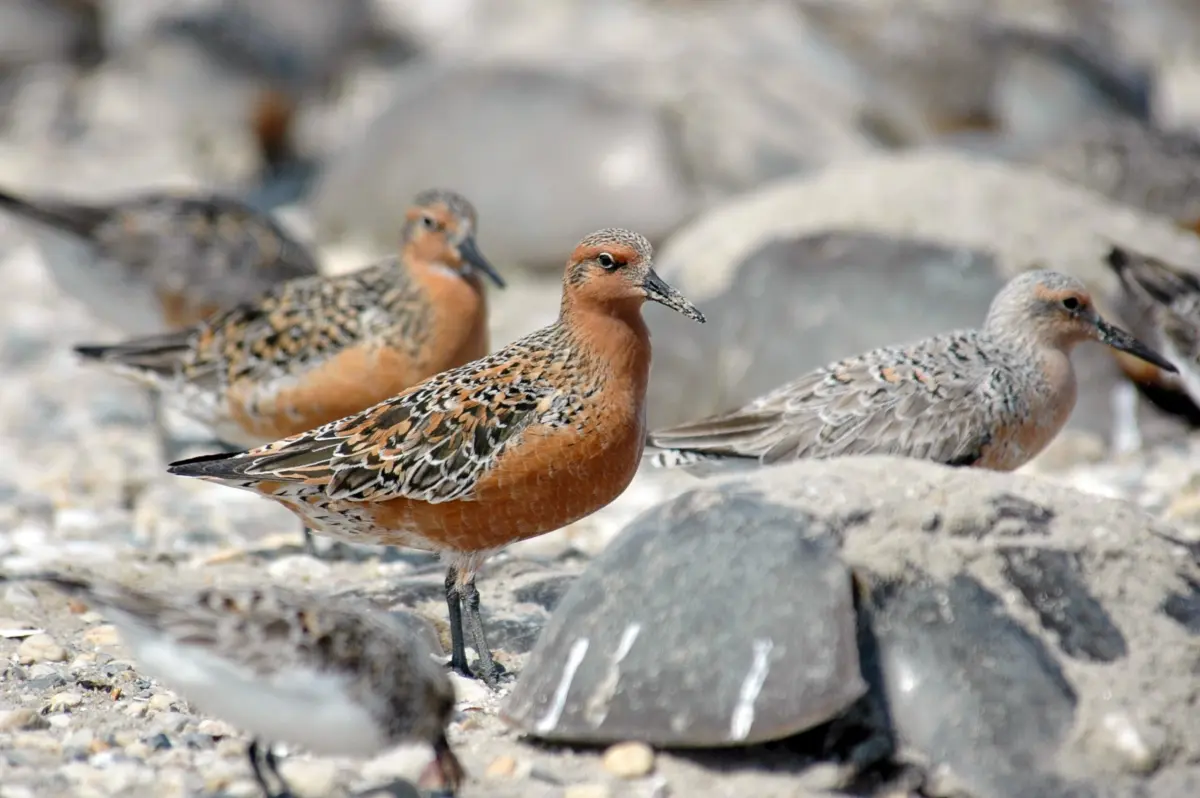
Horseshoe crabs are facing compounding ecological threats, including coastal habitat degradation, shoreline armoring, and intensive commercial fishing. Their drastic population declines have triggered a five-alarm emergency for migratory shorebirds, most notably the Red Knot (Calidris canutus rufa).
The Red Knot undertakes one of the most punishing migrations in the animal kingdom, flying more than 9,000 miles from the southern tip of South America to the breeding grounds of the Arctic Circle. Timing their arrival in the Delaware Bay to coincide with the annual horseshoe crab spawning season, the birds gorge themselves on nutrient-dense crab eggs to double their body weight in a matter of weeks. Without this crucial nutritional pitstop, the birds lack the energetic reserves to complete their journey.
By enacting the commercial harvest ban, New York joins neighboring states—Connecticut, Massachusetts, and New Jersey—in closing a regional loophole that threatened the entire Atlantic flyway population. This coordinated interstate protection represents a watershed moment for coastal biodiversity.
3. The Rocky Mountains: Filling the Federal Regulatory Void in Colorado
In the wake of sweeping changes to federal environmental law, local and state governments have increasingly been forced to step into the breach to prevent ecological degradation.
Following the U.S. Supreme Court’s contentious 2023 ruling in Sackett v. EPA, federal protections under the Clean Water Act were stripped away from a vast majority of the nation’s geographically isolated wetlands and intermittent streams. For headwater states like Colorado, the decision left thousands of miles of vital aquatic habitats legally exposed to unregulated dumping, dredging, and industrial filling.
The Birth of Regulation 87
Recognizing the imminent danger posed to state watersheds, Audubon helped build a powerful, diverse coalition to advocate for a robust state-level legislative solution. In 2024, Colorado lawmakers passed a groundbreaking bill establishing a state regulatory framework designed to protect waters stripped of federal oversight.
However, passing the statute was only the first hurdle; the real battle shifted to the administrative rulemaking process. For 18 months, Audubon’s regional experts served as the primary environmental voice before the Colorado Water Quality Control Commission. Providing rigorous scientific data and technical recommendations on wetland and stream functionality, Audubon ensured that the implementing rules possessed genuine regulatory teeth.
In early 2026, the commission officially approved Regulation 87, establishing Colorado’s first comprehensive state-administered dredge-and-fill permitting program. Today, Audubon is actively assisting practitioners, landowners, and municipal decision-makers in navigating and implementing these essential protections, ensuring that the state’s headwaters remain resilient in a post-Sackett era.
4. Florida: Safeguarding Public Lands and the River of Grass
In the Southeast, Audubon’s Florida network focused on a trifecta of achievements: enhancing transparency in public land management, strengthening coastal resilience, and securing full funding for the nation’s most ambitious ecosystem restoration project.
Combating Land Swaps and Bolstering Coasts
Controversy erupted in Florida following a proposed, controversial land swap at the Guana River Wildlife Management Area just south of Jacksonville. Recognizing the vulnerability of state-held conservation parcels, Audubon mobilized its membership to demand greater administrative accountability.
The resulting public outcry and advocacy pressure led the state legislature to unanimously pass House Bill 441. The new law mandates a minimum 30-day public notice period and significantly enhanced disclosure requirements before the state can legally sell, trade, or exchange designated conservation lands.
Simultaneously, lawmakers passed Senate Bill 302, which strengthens statutory protections for Florida’s aquatic preserves and incentivizes nature-based approaches to coastal resilience, such as mangrove restoration and living shoreline stabilization, over traditional, destructive seawalls.
Full Funding for Everglades Restoration
Perhaps the most monumental achievement in the Sunshine State was the inclusion of $645 million in full funding for Everglades restoration within the 2026 state budget.
This financial commitment was achieved despite a tightening overall state budget, proving the enduring bipartisan recognition of the Everglades’ ecological and economic importance. The funding directly supports ongoing Comprehensive Everglades Restoration Plan (CERP) projects designed to re-engineer water flows, drastically improve water quality, and restore historic habitat connectivity across South Florida, benefiting wading birds like the Wood Stork and Roseate Spoonbill.
5. Mississippi: Winning Through Strategic Defense
Conservation advocacy is not always about passing proactive bills or securing new budgetary line items; frequently, the most consequential victories involve successfully blocking harmful, poorly conceived legislation.
During Mississippi’s 2026 legislative session, state lawmakers introduced three separate bills aimed at severely restricting or halting the development of onshore wind energy installations. Citing unfounded claims regarding wildlife displacement and habitat disruption, the proponents of the bills threatened to erect insurmountable barriers to clean energy expansion in the state.
Recognizing that climate change poses the single greatest long-term threat to North American bird populations—with two-thirds of species at risk of extinction due to warming temperatures—Audubon took immediate defensive action.
Rather than engaging in partisan rhetoric, Audubon’s regional team provided key legislative leaders and committee staff with concise, peer-reviewed technical resources. These packets debunked common misinformation regarding wind turbines and avian mortality, supplying policymakers with the rigorous data needed to objectively evaluate the proposals. Armed with factual clarity, lawmakers allowed all three restrictive measures to stall in committee, ensuring that the path remained open for responsibly sited renewable energy infrastructure that coexists safely with regional bird populations.
Supporting Context & Metrics
To fully appreciate the scope of Audubon’s 2026 legislative and administrative achievements, it is necessary to examine the quantitative impact of these policy frameworks across the United States.
| State / Region | Policy Initiative / Legislation | Financial Allocation / Scope | Primary Ecological Target |
|---|---|---|---|
| New Mexico | River Stewardship Program & Strategic Water Reserve | $13 million (Rivers) / $10 million (Water Reserve) | Riparian zones, aquatic species, arid river basins |
| Arizona | State Budget & Wildfire Defense Funding | $10 million (Fire Response) / $30 million (Forest Health) | Watersheds, high-elevation forests, avian habitats |
| New York | Horseshoe Crab Protection Act | Statewide commercial harvest ban | Red Knots, migratory shorebirds, marine biodiversity |
| Colorado | Regulation 87 (State Dredge-and-Fill Program) | 18-month rulemaking process / Statewide jurisdiction | Headwater streams, isolated wetlands |
| Florida | HB 441, SB 302, & Everglades Funding | $645 million (Everglades) / Enhanced land-swap transparency | Public conservation lands, aquatic preserves, wading birds |
| Mississippi | Technical opposition to anti-wind bills | 3 legislative bills defeated | Regional migratory corridors, clean energy transition |
Official Statements and Expert Perspectives
The diverse array of victories secured across the American landscape underscores a unified operational philosophy. Leadership within the National Audubon Society emphasizes that regional resilience is built from the ground up, utilizing science as an anchor and community engagement as the primary engine for change.
"Conservation policy is not merely written in the halls of Congress; it is forged in the river basins, coastal bays, and state legislatures where everyday citizens interact directly with their environment," noted a senior policy strategist for Audubon Southwest. "Our success this year in New Mexico and Arizona proves that when you combine rigorous ecological data with active, localized public engagement, lawmakers respond with durable, generational investments in our natural heritage."
Reflecting on the monumental triumph of the Horseshoe Crab Protection Act in New York, coastal conservation advocates highlighted the interconnected nature of marine and avian ecosystems.
"The Red Knot is a living barometer of the health of the Western Hemisphere," stated an Audubon Atlantic flyway coordinator. "By securing New York’s ban on commercial harvesting, we have closed a critical gap in a multi-state network of protection. We are giving an ancient marine species the breathing room it needs to recover, which in turn guarantees that the skies above the Atlantic coast will continue to witness one of nature’s most awe-inspiring migrations."
On the administrative front, the long-term implications of state-level rulemaking in the face of federal rollbacks cannot be overstated. Commenting on the successful adoption of Colorado’s Regulation 87, environmental legal experts pointed to the state program as a national blueprint.
"When the Supreme Court stepped back from protecting our nation’s wetlands, it created a perilous regulatory vacuum," said a regional conservation director in the Rocky Mountains. "Through eighteen months of meticulous technical advocacy, Audubon and our coalition partners helped build a bridge from federal uncertainty to state-level permanence. Colorado’s new dredge-and-fill permitting program is proof that states can—and must—step up to protect the headwaters that sustain us all."
Future Outlook: The Road Ahead for State-Level Conservation
As the environmental and political landscapes continue to shift rapidly, the strategic importance of state and regional advocacy will only intensify. The successes of recent legislative sessions provide a clear roadmap for the future of American conservation:
- Defending Regional Gaps: As federal environmental statutes face ongoing judicial and legislative challenges, regional networks must remain vigilant, utilizing state-level statutes to protect wetlands, watersheds, and migratory corridors left vulnerable by federal rollbacks.
- Integrating Climate Resilience with Biodiversity: Future conservation funding must increasingly focus on proactive measures, such as forest health management, wildfire mitigation, and water banking, which simultaneously protect human communities and wildlife habitats from the accelerating impacts of climate change.
- Mobilizing Grassroots Networks: The ultimate strength of any conservation organization lies in the informed voices of its members. Sustaining local engagement remains the most effective counterweight to well-funded opposition and misinformed policy proposals.
Ultimately, Audubon’s nationwide achievements demonstrate that while ecological challenges are immense, localized persistence yields lasting results. By uniting rigorous science, deep community roots, and unwavering political engagement, the organization continues to secure a resilient future where both birds and people can thrive.