
Executive Overview
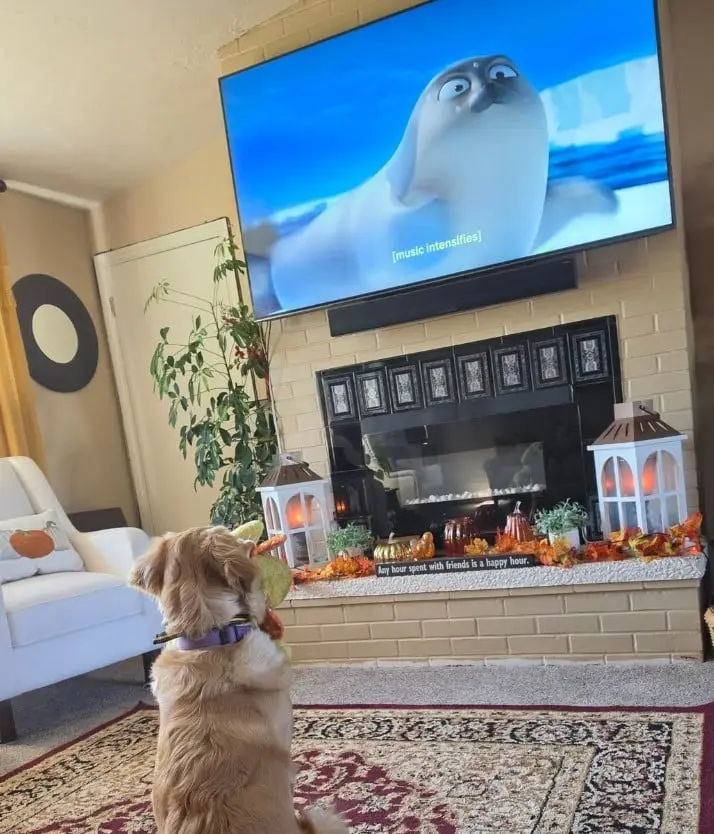
In the rapidly evolving landscape of digital media, an unexpected demographic has emerged as one of the most highly engaged consumer segments: domestic dogs. Over the past several months, social media platforms have been flooded with footage of canines—ranging from Golden Retrievers to Pugs—sitting transfixed in front of television screens. The source of their collective obsession is Sealook, a South Korean CGI-animated short-form comedy series streaming on Netflix.
Originally produced by Million Volt and WildBrain as a whimsical, dialogue-free children’s show, Sealook has inadvertently captured a massive, highly attentive secondary audience of household pets. This phenomenon has transitioned from a series of isolated viral videos into a globally recognized trend, even garnering coverage from major national news outlets such as USA Today.
This investigative report explores the mechanics of the Sealook phenomenon. By analyzing the intersection of canine ophthalmic biology, behavioral psychology, modern television technology, and digital algorithms, we examine why these round, bouncing animated seals have become an overnight sensation in the pet world, and what this trend reveals about the future of pet-directed media.
Detailed Chronology: From Kid’s Show to Canine Sensation
The Genesis of Sealook (Late 2022–2023)
Sealook was conceived as a high-quality, non-verbal animated series centering on a group of cartoon seals residing in a pristine, icy wildlife sanctuary. Developed by the animation studio Million Volt and distributed internationally by WildBrain, the series made its debut on YouTube and subsequently on Netflix in early 2023. Designed primarily for toddlers and young children, the episodes rely on physical comedy, exaggerated movements, and a bright, minimalist visual palette to convey narrative without spoken language.
The Organic Social Media Spark (Mid-2023–2024)
While the show performed well among its target human demographic, pet owners began noticing an unusual side effect. Dogs that historically ignored household televisions were suddenly stopping in their tracks when Sealook was on the screen.
The trend gained significant momentum when pet owners began documenting these reactions on TikTok, Instagram, and Facebook Reels. One of the early viral catalysts involved a Golden Retriever named Rio. His owners, curious about the online chatter surrounding the show, decided to play an episode to gauge his reaction. Rather than offering a passing glance, Rio moved directly in front of the television set, sitting in rapt attention, his eyes tracking the animated seals as they slid, bounced, and waddled across the screen.
[Timeline of the Sealook Phenomenon]
  |
  +-- Late 2022: Million Volt & WildBrain develop 'Sealook' as a non-verbal kids' show.
  |
  +-- Early 2023: 'Sealook' premieres on Netflix and YouTube.
  |
  +-- Mid-2023: Isolated social media posts show dogs transfixed by the series.
  |
  +-- Late 2023 - 2024: Viral explosion on TikTok/Reels; clips of dogs like Rio the Golden Retriever gain millions of views.
  |
  +-- 2025 - Present: Mainstream media coverage (e.g., USA Today) cements 'Sealook' as a cultural pet phenomenon.
Mainstream Penetration
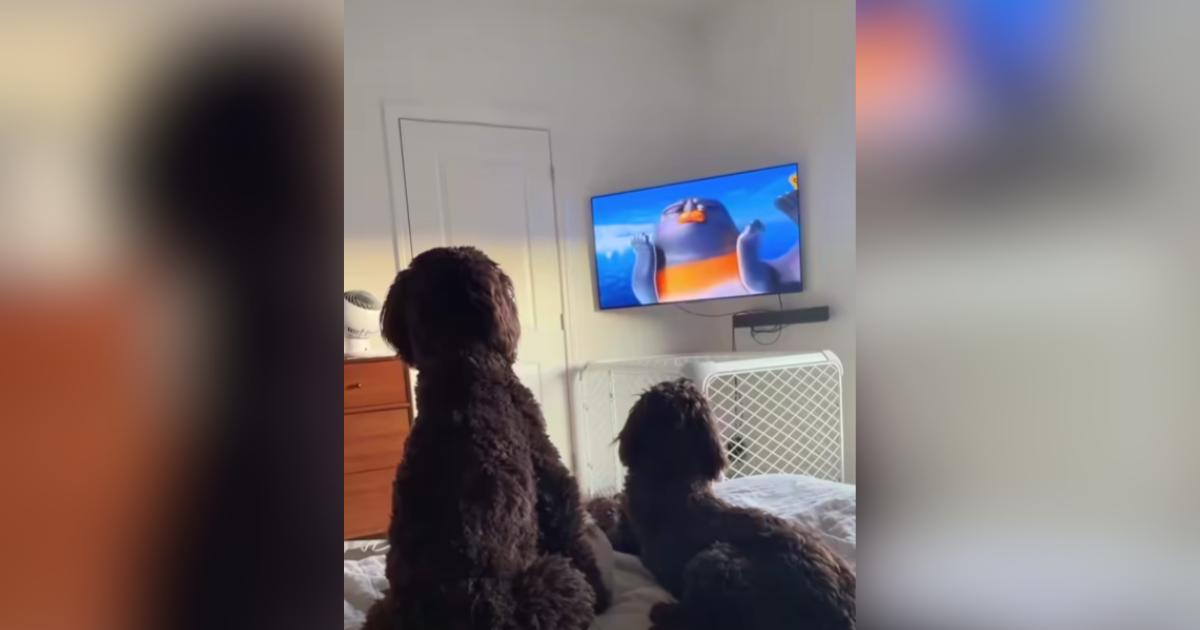
By late 2024 and early 2025, the volume of user-generated content featuring dogs watching Sealook had reached a tipping point. Thousands of videos showcased diverse breeds—including Sheepadoodles, French Bulldogs, and Pugs—demonstrating identical behavior: sitting, head-tilting, and tracking the cartoon seals with intense focus. This groundswell of organic engagement caught the attention of national lifestyle and news desks, elevating Sealook from a niche viral trend to a documented cultural curiosity.
Supporting Context & Metrics: The Science Behind the Screen
To understand why Sealook exerts such a powerful pull on domestic dogs, it is necessary to move beyond internet folklore and examine the biological and technological factors at play. A persistent myth circulating on social media claims that Sealook was secretly engineered using a color palette and sound design calibrated specifically for cats and dogs. While Netflix and the production studios have confirmed that the show was designed strictly for human children, the series accidentally aligns perfectly with the unique sensory profile of canines.
1. Dichromatic Vision and the Blue-Yellow Spectrum
A common misconception is that dogs see the world strictly in black and white. In reality, dogs possess dichromatic vision. While humans possess three types of color-detecting cone cells (red, green, and blue), dogs possess only two, which are sensitive to wavelengths of light corresponding to blue and yellow.
- Red-Green Blindness: To a dog, red, green, and orange are perceived as muted shades of gray, yellow, or brown.
- The Blue-Yellow Advantage: Blue and yellow stand out with remarkable clarity and intensity to a dog’s eye.
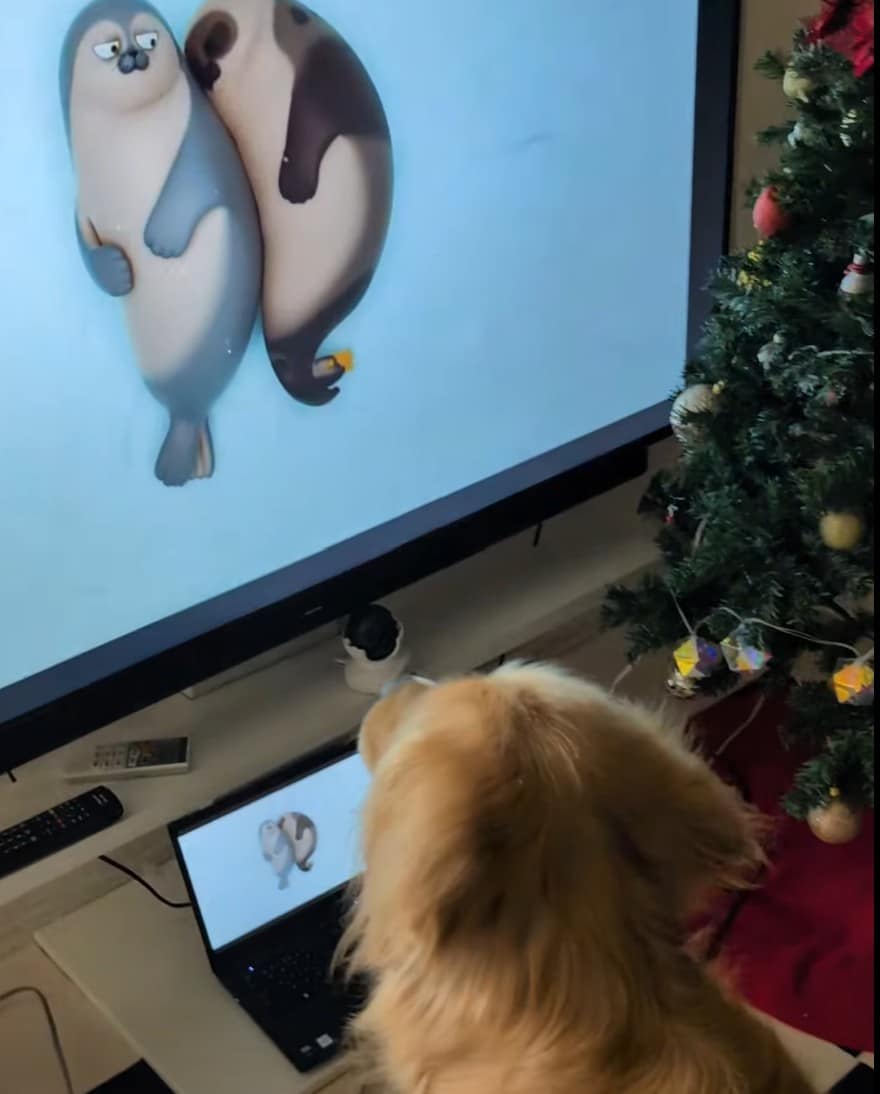
Sealook is set in a polar environment. The visual landscape of the show is dominated by deep blues, icy cyan gradients, bright white snow fields, and high-contrast pastel accents. Because the show’s background consists almost entirely of colors within a dog’s optimal visual spectrum, the screen appears incredibly vibrant and highly defined to a canine viewer, unlike standard television programming which is often saturated with reds and greens.
| Color Category | Human Perception | Canine Perception | Presence in Sealook |
|---|---|---|---|
| Blues & Cyans | Rich Blue / Turquoise | Vivid Blue | Extremely High (Ice, water, sky backgrounds) |
| Yellows | Bright Yellow | Clear Yellow | Moderate (Character accents, comedy props) |
| Reds & Greens | Deep Red / Forest Green | Gray / Dull Brown | Extremely Low (Minimalist polar landscape) |
2. High Contrast and Simplified Outlines
In addition to color, dogs have lower visual acuity than humans; their vision is roughly estimated to be 20/75. This means that highly detailed, complex cinematic backgrounds often blur together for them.
Sealook features bold, simplified, round character designs with stark black outlines set against clean, uncluttered backgrounds. The seals themselves are bulbous, high-contrast shapes that stand out sharply against the blue ice. This minimalist animation style makes it exceptionally easy for a dog’s eyes to distinguish the characters from their environment.
3. Motion Sensitivity and Modern Display Technology
Historically, dogs paid little attention to television because of old Cathode-Ray Tube (CRT) monitors. Dogs have a higher flicker fusion threshold than humans. While humans perceive a smooth, continuous image at around 50 to 60 Hertz (Hz), dogs require a refresh rate of approximately 70 to 80 Hz to see a continuous picture. On older televisions, a dog would see a distracting, rapidly flickering strobe light.
The widespread adoption of modern LED, OLED, and QLED displays with high refresh rates (60Hz, 120Hz, and higher) has made television screens look like smooth, realistic motion to dogs. Because Sealook features highly kinetic, fluid animation—with characters constantly sliding, bouncing, swimming, and waddling—it triggers the dog’s highly developed motion-detection pathways, which are biologically optimized to track fast-moving prey.
4. Auditory Triggers
The sound design of Sealook is highly non-verbal and relies on a soundscape of whistles, squeaks, grunts, pops, and high-pitched vocalizations. These frequencies closely mimic the sounds of small prey animals or squeaky toys, immediately activating a dog’s auditory orienting reflex.
Official Statements & Expert Analysis
To contextualize the phenomenon, veterinary ophthalmologists and canine behaviorists have weighed in on the sudden rise of canine television viewership.
Dr. Sarah Evans, a veterinary behaviorist specializing in companion animal enrichment, emphasizes that the trend is a testament to how domestic animals adapt to human environments:
"Dogs are incredibly observant creatures, and their sensory world is highly attuned to movement and specific acoustic cues. What we are seeing with Sealook is a perfect storm of sensory alignment. The high-contrast blue backgrounds match their dichromatic visual field, the smooth frame rates of modern TVs make the motion fluid and believable, and the squeaks and vocalizations of the characters mimic prey-like sounds that naturally trigger curiosity. It is not magic; it is evolutionary biology meeting modern digital design."
Despite the obvious appeal of the show, animal behaviorists urge owners to view television as a supplement to, rather than a replacement for, physical and mental enrichment. While leaving Sealook on for an anxious pet might offer temporary distraction, experts warn against using screens as a primary tool for pet containment.
Canine cognitive researchers also point out that interest in television is highly individualized. Just as some humans dislike watching television, many dogs will show zero interest in Sealook, preferring to rely on their primary sense—olfaction—rather than visual stimuli. A dog’s breed, age, and individual prey drive all play significant roles in whether they will join the ranks of the show’s "superfans."
Future Outlook: The Rise of Pet-Centric Media
The viral success of Sealook among canine audiences highlights a significant, largely untapped market frontier: media designed for multi-species households.
                  [The Pet-Centric Media Ecosystem]

   +-------------------------------------------------------------+
   |  Pioneering Specialized Outlets                             |
   |  - DOGTV (Subscription-based, scientifically color-tuned)   |
   +-------------------------------------------------------------+
                                 |
                                 v
   +-------------------------------------------------------------+
   |  Accidental Mainstream Hits                                 |
   |  - 'Sealook' (Netflix)                                      |
   |  - Nature documentaries, high-contrast children's cartoons  |
   +-------------------------------------------------------------+
                                 |
                                 v
   +-------------------------------------------------------------+
   |  Future Industry Shift                                      |
   |  - "Pet-friendly" viewing modes on mainstream platforms     |
   |  - Interactive pet entertainment and sensory design         |
   +-------------------------------------------------------------+
The Commercialization of Pet Entertainment
While platforms like DOGTV have existed for years—offering subscription-based programming scientifically color-corrected and paced for dogs—mainstream streaming giants are beginning to realize the value of pet-appealing content. As streaming platforms face saturated markets and intense competition for subscriber retention, content that keeps both the owner and the pet engaged offers a unique value proposition.
Technological and Creative Adaptations
Industry analysts predict that we may soon see major studios intentionally incorporating "pet-friendly" viewing modes or color-grading presets. Much like modern televisions feature "Game Mode" or "Filmmaker Mode," future smart TVs could theoretically offer a "Canine Mode" that shifts color spectrums toward blues and yellows and increases the frame rate output to maximize pet engagement.
Implications for Domestic Pet Care
As urbanization increases and pets spend more time indoors while owners are at work, the demand for passive enrichment tools is projected to grow. High-contrast, motion-rich programming like Sealook serves as a low-cost, accessible tool to help mitigate separation anxiety and environmental boredom.
Ultimately, the Sealook craze is more than a fleeting social media gag. It represents a fascinating moment of cross-species technological integration, proving that in the modern digital age, the next big television audience might just have four paws, a wet nose, and a deep appreciation for animated polar adventures.