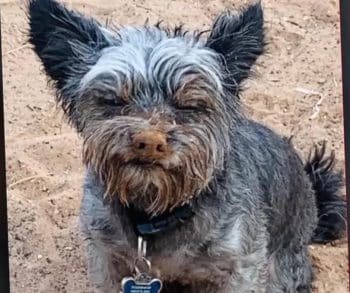
In December 2021, a family in the scenic high-desert town of Sedona, Arizona, experienced a sudden and devastating loss. What was intended to be a routine pre-holiday grooming appointment turned into a multi-year search when their beloved dog, Owl, reportedly escaped from a local grooming facility. Despite aggressive search campaigns, community-wide flyer distributions, and endless physical sweeps of the surrounding rugged red-rock terrain, Owl seemed to have vanished without a trace. As months bled into years, the family was forced to grapple with the agonizing reality of "ambiguous loss"—the painful state of having no closure regarding a loved one’s fate.
Four years later, the silence was shattered by a phone call from the Pinetop-Lakeside Police Department, located approximately 150 miles east in the forested White Mountains of Arizona. Patrol officers had discovered a stray, heavily neglected dog wandering along a local roadway. A standard microchip scan revealed the dog’s identity: it was Owl.
While the reunion has brought immense emotional relief to his owners, it has also raised profound questions regarding animal welfare, pet theft, and the legal responsibilities of those who harbor found animals. Owl’s physical state upon recovery—marked by extreme, debilitating coat matting that severely compromised his vision, hearing, and mobility—strongly suggests he was kept in isolation or neglected for a significant portion of his four-year absence. This investigative report details the timeline of Owl’s disappearance, analyzes the geographical and statistical context of pet recovery, examines the legal and veterinary implications of the case, and outlines the family’s path forward as they seek both healing and justice.
Detailed Chronology
[December 2021] ──> Owl disappears from Sedona groomer; family launches immediate search.
       │
[2022 - 2025]   ──> Four years of silence; family copes with "ambiguous loss."
       │
[Late 2025]     ──> Pinetop Police find neglected stray; microchip scan identifies Owl.
       │
[Reunion]       ──> Emotional reunion; family confronts Owl's severe physical neglect.
       │
[Present/Future]──> Owl begins veterinary rehab; family pursues potential legal/police action.
The Disappearance (December 2021)
The ordeal began during the busy holiday season of late December 2021. Owl’s family dropped him off at a commercial grooming establishment in Sedona, expecting to pick up a clean, pampered pet later that afternoon. Instead, they received an emergency phone call from the groomer, who claimed that Owl had managed to slip away and flee the premises.
The family immediately mobilized. Because Sedona is bordered by vast tracts of Coconino National Forest land—characterized by steep canyons, arid cliffs, and native predators like coyotes and mountain lions—time was of the essence. The family organized search parties, distributed hundreds of physical posters, posted on digital lost-and-found pet forums, and notified local veterinary clinics and animal shelters. Despite these exhaustive efforts, no credible sightings were reported in the days and weeks that followed.
The Missing Years (2022–2025)
As the search went cold, the family was left to navigate a painful emotional landscape. In the absence of a body or any physical evidence of harm, they struggled to find closure. Over the next four years, the family slowly adjusted to life without Owl, comforting themselves with the hope that if he had passed away, he had done so quickly and peacefully, or that he was perhaps being cared for by someone unaware of his true origin.
The Recovery in Pinetop
The breakthrough occurred when municipal police officers in Pinetop, Arizona, spotted a small, disheveled dog wandering unattended along the shoulder of a public road. Recognizing the immediate danger posed to the animal by both traffic and local wildlife, officers secured the dog and transported him to be scanned for a microchip—a standard operating procedure for stray animals recovered by law enforcement and animal control.
The scan was successful. It read a unique radio-frequency identification (RFID) number registered to Owl’s family in Sedona. Law enforcement immediately contacted the owners, delivering news that seemed to defy mathematical and logistical probability.
The Reunion and Shock of Neglect
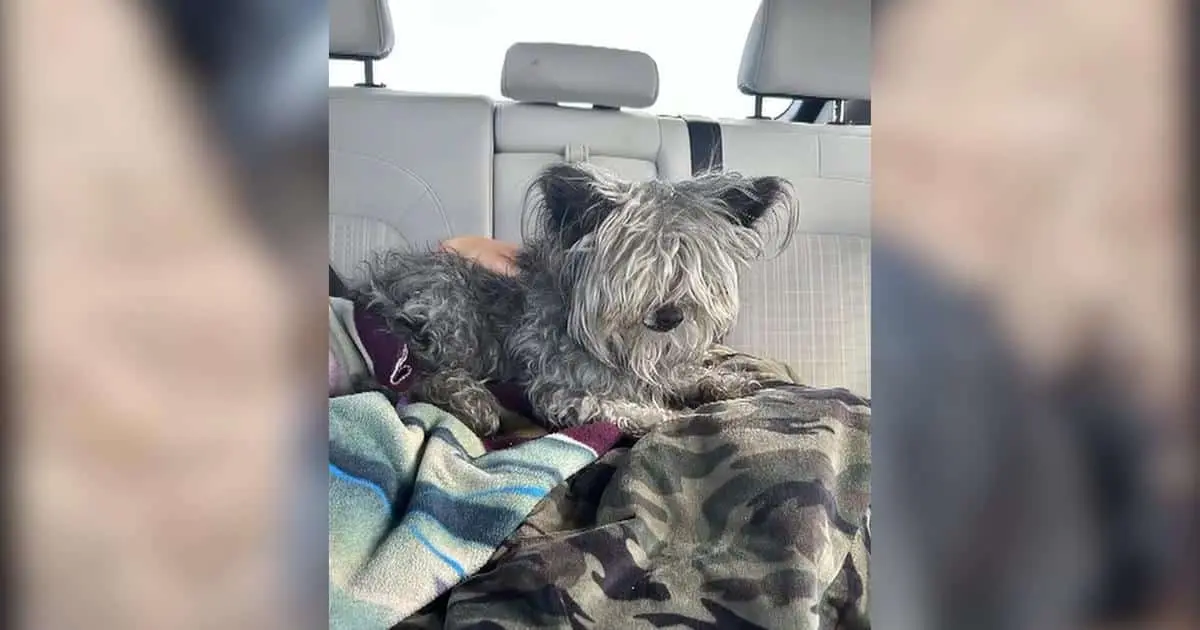
The family immediately made the three-hour drive from Sedona to Pinetop. The initial euphoria of the news, however, was quickly tempered by the sobering reality of Owl’s physical condition.
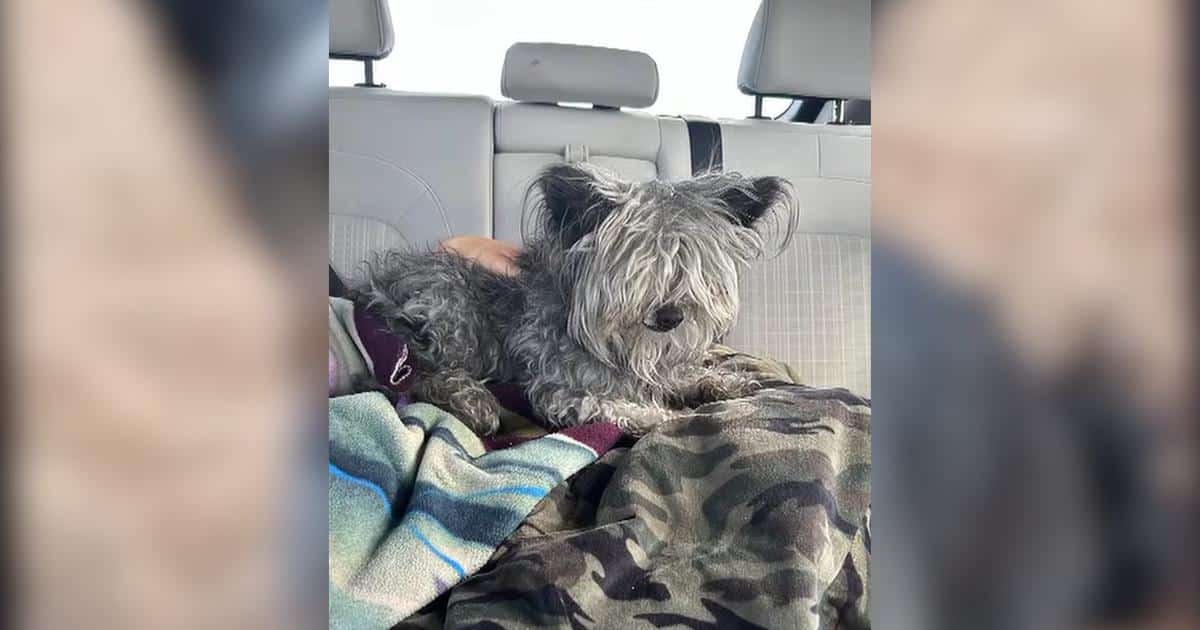
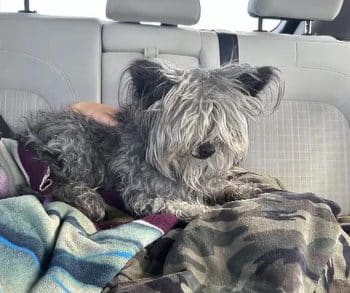
Years of complete grooming neglect had transformed Owl’s coat into a dense, felted armor of severely matted fur. The matting was particularly acute around his head and face, forming thick blocks of hair that completely obstructed his eyes and mouth, rendering him partially blind and deaf to his immediate surroundings. The constriction of the tight matting against his skin had also compromised his natural gait, making movement difficult and painful.
Despite his physical state, the emotional bond remained intact. For family member Mason, who was a young child when Owl first disappeared, the reunion was described as deeply "surreal." The dog they had mourned for nearly half a decade was back in their arms, beginning a long journey of physical and psychological rehabilitation.
Supporting Context & Metrics
Geographical Analysis: The Improbability of Self-Dispersal
The geographical distance between Sedona and Pinetop is roughly 150 miles. To evaluate the likelihood of Owl traveling this distance on his own, we must examine the intervening terrain:
Metric
Details
Straight-Line Distance
~115 miles
Driving/Road Distance
~150 miles
Intervening Terrain
Coconino National Forest, Mogollon Rim, Apache-Sitgreaves National Forest
Elevation Profile
Sedona (~4,300 feet) to Pinetop (~7,200 feet)
Apex Predators
Mountain lions, black bears, coyotes, Mexican gray wolves
Given the extreme physical barriers, significant elevation gain of nearly 3,000 feet, and the abundance of apex predators across the Mogollon Rim, wildlife biology and veterinary experts agree it is virtually impossible for a small, domesticated dog to have traversed this distance independently over any timeframe. This geographical reality strongly points to human intervention: Owl was almost certainly transported by vehicle from Sedona to the Pinetop area shortly after his disappearance.
The Science and Efficacy of Microchipping
Owl’s recovery is a textbook demonstration of the efficacy of microchip technology. According to a landmark study published in the Journal of the American Veterinary Medical Association (JAVMA), the presence of a registered microchip drastically increases the likelihood of a lost dog being reunited with its owner:
Without a Microchip: Only about 21.9% of lost dogs in shelters are successfully returned to their owners.
With a Microchip: The return-to-owner rate jumps to 52.2% (a 240% increase).
The Registry Factor: In cases where microchipped dogs were not returned, it was almost exclusively due to incorrect or disconnected phone numbers in the registry database, emphasizing the need for pet owners to keep their contact information updated.
Official Statements & Family Perspectives
The family’s emotional response to Owl’s return has been a complex mixture of profound gratitude and righteous indignation. Speaking on the surreal nature of the reunion, the family noted that seeing Owl again was a moment they had eventually trained themselves to stop expecting, making the actual event feel almost dreamlike.
However, the joy of the reunion has been accompanied by serious concerns regarding how Owl was treated during his four-year absence. The family has publicly stated that they suspect Owl was kept by someone who knew—or should have known—that he was a lost pet, and who deliberately chose not to scan him for a microchip or seek his rightful owners.
The family issued the following perspective regarding potential legal action:
"We are overjoyed to have Owl home, but we cannot ignore the state in which he was found. He did not survive in the wild in this condition; he was kept, and he was severely neglected. If we can secure concrete evidence pointing to the individual or individuals responsible for taking him, keeping him, and allowing his condition to deteriorate to this point, we are fully prepared to involve law enforcement and press criminal charges."
Future Outlook
Veterinary Rehabilitation Protocol
Owl’s immediate future is defined by a rigorous veterinary recovery plan. The physical consequences of long-term coat neglect are severe and require delicate medical management:
Therapeutic Sedation and Dematting: Removing years of matted fur cannot be done with standard grooming tools. It requires medical-grade clippers, often performed under mild sedation, to prevent the tearing of thin, compromised skin underneath the mats.
Dermatological Treatment: Tight mats trap moisture, urine, and fecal matter against the skin, creating an ideal breeding ground for bacterial and fungal infections. Owl is currently undergoing treatment for localized dermatitis and skin sores.
Sensory Re-adaptation: Having had his eyes and ears obstructed by mats for an extended period, Owl must slowly readapt to normal visual and auditory stimuli to prevent sensory overload and anxiety.
Mobility Therapy: Joint stiffness and muscle atrophy resulting from restricted movement are being evaluated to ensure he regains his full range of motion.
The Investigative Angle: Uncovering the Missing Years
The legal investigation into Owl’s missing four years remains open but faces significant hurdles. Because pet theft is classified as a property crime in Arizona, the statute of limitations and the difficulty of establishing a chain of custody over a four-year period present challenges for prosecutors.
However, animal cruelty and neglect laws could apply if investigators can identify the domicile where Owl was kept. The Pinetop-Lakeside community and local veterinary networks have been alerted to look for any records of a dog matching Owl’s description who may have been brought in for unlicensed care, or seen in residential yards prior to his discovery on the roadside.
Systemic Takeaways for Pet Owners
Owl’s bittersweet story serves as a powerful case study for pet owners nationwide. It underscores that a microchip is a permanent, tamper-proof form of identification that remains viable for the lifetime of the animal. Even when physical collars are lost or intentionally removed, the microchip remains the ultimate safeguard.
As Owl slowly acclimates to his old life—returning to his favorite Sedona parks and resting in familiar rooms—his family hopes his story will inspire other grieving pet owners to maintain hope, while serving as a stark warning to those who harbor found animals without taking the legal and ethical step of scanning them for a chip.