
Executive Overview
For pet owners navigating the modern landscape of companion animal travel, ensuring both comfort and crash-tested safety remains a high-stakes puzzle. Traditional travel crates and soft-sided carriers often present a frustrating dichotomy: they either offer the sprawling room a dog needs for a multi-hour road trip or they pass rigorous, standardized safety evaluations. Rarely do they achieve both.
This tension drives the journey of canine travel advocates who refuse to compromise. When a popular, long-trusted soft-sided car containment solution—the PetEgo Pet Tube—failed miserably during independent crash testing, it exposed a chilling reality: many products marketed as pet safety solutions are little more than containment bins designed to keep a dog from distracting the driver, offering virtually no protection in a high-speed collision.
The search for a superior alternative led to the evaluation of the AirPupSaver, an innovative, inflatable car seat system designed specifically for small-to-medium dogs. Unlike rigid crates or restrictive traditional carriers, the AirPupSaver operates on a unique shock-absorption mechanism reminiscent of a baseball catcher’s mitt. By combining high-density padding with strategically placed, air-inflated chambers, the system aims to catch and decelerate a pet safely during sudden impacts.
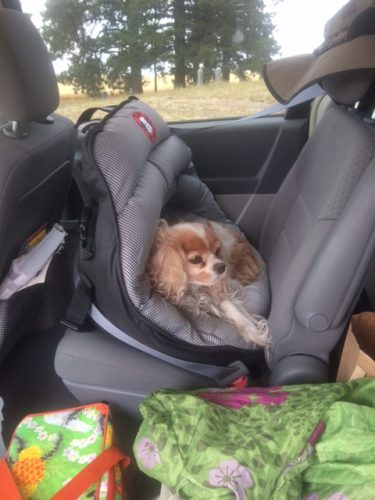
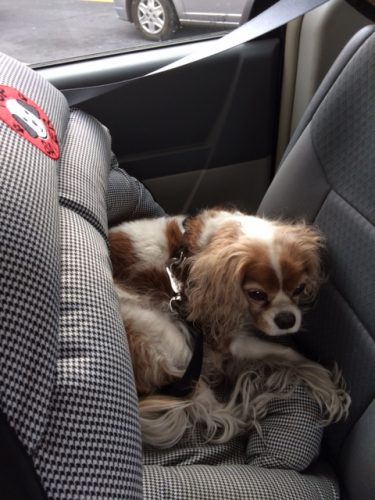
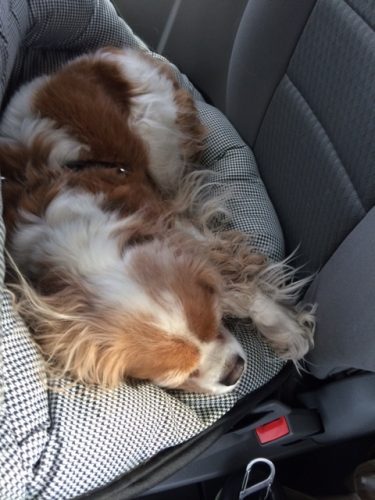
This investigative review chronicles a month-long, real-world stress test of both the AirPupSaver 25 and the AirPupSaver 45 models, utilized by a 15-pound dog named Chloe across diverse vehicle layouts, including a Chrysler Town & Country minivan and a station wagon. While the product emerges as a strong, credible contender in a market severely lacking high-performance options for "larger small dogs," the investigation reveals critical operational hurdles: complex installation routines, a permanent-fixture footprint, and meticulous maintenance requirements regarding air pressure. Ultimately, for pet parents seeking verified crash safety without sacrificing canine comfort, the AirPupSaver proves to be a transformative, albeit demanding, solution.
Detailed Chronology: The Evolution of a Safety Journey
Phase I: The Illusion of Security and the Pet Tube Failure
The quest began years prior with a simple mandate: find a car bed spacious enough for Chloe to sprawl out in comfortably during long hauls, yet engineered to withstand the brutal physics of a vehicular crash. The PetEgo Pet Tube initially appeared to be the holy grail of canine travel gear. It was lightweight, collapsible, visually unobtrusive, and gave Chloe ample room to stretch.
However, faith in the Pet Tube evaporated abruptly upon reviewing its performance in controlled crash testing. The footage revealed catastrophic structural failures under stress, demonstrating that the materials and anchoring systems were wholly inadequate for managing kinetic energy during an accident. The sense of security was instantly shattered, sending the search back to square one.
Phase II: Industry Standards and the Sizing Dilemma
Returning to the drawing board meant turning a critical eye toward the gold standard of pet transport safety: the Center for Pet Safety (CPS). Reviewing the CPS’s comprehensive carrier evaluation metrics highlighted two top-performing products:
- The Pet Ego Jet Set Forma Frame Carrier (featuring ISOFIX-Latch connections).
- The Sleepypod Mobile Pet Bed (featuring the PPRS Handilock system).
While both earned high marks for crashworthiness, they immediately presented a size constraint barrier. The largest configuration of the Pet Ego Jet Set measures 22 inches long, 10 inches wide, and 13 inches high—dimensions the manufacturer claims can accommodate a 22-pound dog. Real-world analysis dismantled this claim. Though slightly longer and taller than a large SturdiBag, it is two inches narrower in the body. Putting a 22-pound dog into such cramped quarters for a substantial road trip is entirely unfeasible; the absolute limit for comfortable travel in this carrier is roughly 15 pounds.
Similarly, the Sleepypod Mobile Pet Bed is a marvel of engineering, boasting exceptional build quality and ventilation. Yet, its largest iteration—the Sleepypod Medium—measures 13 inches high and 17 inches round on the exterior, translating to a significantly tighter interior usable space. While a dream product for dogs weighing 10 pounds or less, it creates an uncomfortably snug environment for a 15-pound animal.
This left a distinct gap in the market: What options exist for the "larger small dog"—canines weighing between 15 and 45 pounds who require genuine crash protection without being forced into overly restrictive enclosures?
Phase III: Discovering the AirPupSaver and Month-Long Field Testing
Prompted by community recommendations from experienced pet travelers, attention turned to the AirPupSaver. Though notably absent from the 2015 Center for Pet Safety lineup, the manufacturer provided documentation of independent crash-testing procedures and results.
Intrigued, two units were acquired: the AirPupSaver 25 (marketed for dogs up to 25 lbs.) and the AirPupSaver 45 (marketed for dogs up to 45 lbs.). Over a rigorous 30-day testing period—comprising daily urban errand runs and an extensive, multi-hour interstate road trip—both models were subjected to daily wear, complex installations, and close behavioral observation of the passenger.
Supporting Context & Metrics: Design Mechanics and Specifications
To understand how the AirPupSaver functions, one must examine its structural philosophy. The product is engineered around the biomechanics of a catcher’s mitt.
Core Structural Anatomy
- The "Palm": The base of the unit where the dog rests. It is heavily padded and features a reinforced floor opening through which a secure strap emerges to connect with an approved canine harness.
- The "Fingers": The raised perimeter surrounding the front and sides of the bed. This section contains two to three independent air chambers (depending on the model) that are manually inflated using an included air pump.
- The Deceleration Zone: In the event of a frontal collision, the dog is hurled forward. Instead of hitting a rigid dashboard or seatback, the kinetic energy is absorbed by the cushioned, air-filled "fingers," which catch and cradle the animal, distributing the G-force across a broader surface area.
Comparative Sizing Matrix
| Feature / Metric | AirPupSaver 25 | AirPupSaver 45 |
|---|---|---|
| Weight Capacity | Up to 25 lbs. | Up to 45 lbs. |
| Vehicle Footprint | Moderate; fits easily in minivans. | Substantial; requires larger backseats. |
| Overhead Straps | Seatbelt-secured only (no top tethers). | Includes seatbelt clamp + 2 top tether straps. |
| Best Suited For | 15 lb. dogs (e.g., Chloe) needing stretch room. | True medium-sized dogs up to 45 lbs. |
| Portability | Difficult to move frequently. | Extremely cumbersome; designed to stay put. |
Operational Realities: Installation, Usability, and Maintenance
Transitioning from a collapsible soft tube to the AirPupSaver requires a paradigm shift in how owners interact with their vehicle’s interior space.
The Installation Labyrinth
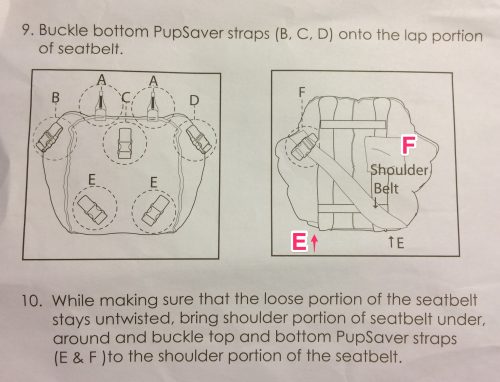
Manufacturer instructions span multiple printed guides and online video demonstrations, yet none provide a completely frictionless setup experience.
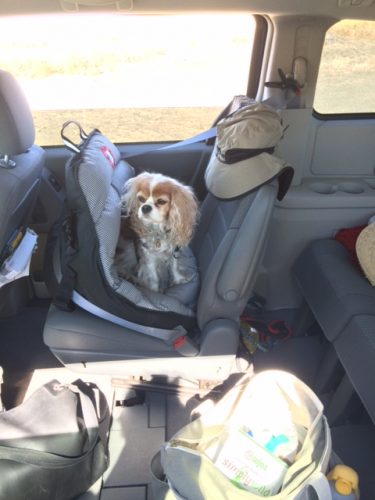
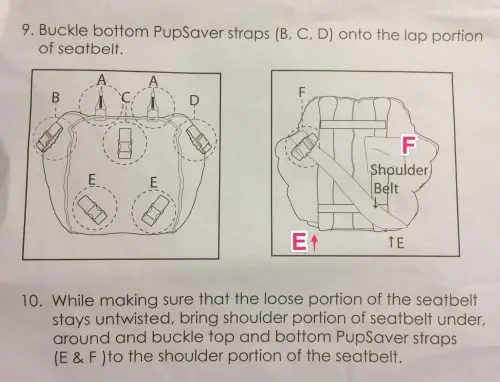
- The AirPupSaver 25 (Minivan Installation): Secured via two lower anchor hooks (Latch bars) and the vehicle’s standard seatbelt, which is reined in near the cabin wall using a heavy-duty mechanical clamp. This clamp allows the precise amount of slack required for the safety system to engage correctly during an impact without letting the belt pull the top of the bed inward.
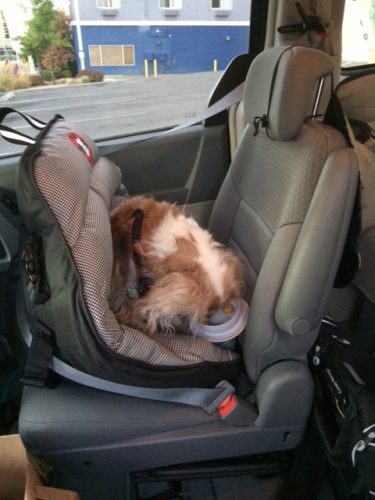
- The AirPupSaver 45 (Station Wagon Installation): Significantly more complex. Alongside the lower Latch hooks and seatbelt clamps, the 45-pound model introduces dual overhead top-tether straps stretching from the handle at the top of the bed, over the rear of the vehicle seat, and down to the passenger seat’s rear anchor point.
Daily Usability and Safety Ergonomics
Living with the AirPupSaver exposes specific practical trade-offs:
- Loading and Unloading: Securing a wiggly dog into the internal harness takes approximately 30 seconds—far more tedious than zipping a pet tube shut. Furthermore, urban pet owners (such as those navigating tight parking spaces in Seattle) face ergonomic challenges: leaning entirely into a vehicle’s back seat while keeping lower extremities exposed to traffic requires careful maneuvering. A revised workflow—entering the backseat entirely alongside the pet—mitigates this vulnerability.
- Vehicle Permanence: Unlike lightweight carriers that can be tossed into the trunk or flattened into a pancake between trips, the AirPupSaver is a semi-permanent fixture. Reinstalling or moving it between vehicles is sufficiently labor-intensive that owners will actively avoid doing so.
- Air Pressure Vigilance: The inflatable chambers are vital. If the air channels lose pressure, the protective "fingers" fold inward like a soft taco, causing immediate distress for the animal. Consequently, keeping the manual air pump stored permanently in the vehicle is mandatory.
- Harness Compatibility Warnings: The kit includes a heavy-duty safety harness, but sizing runs exceptionally large. A 15-pound dog requires an Extra-Small harness tightened to its absolute limit. Owners must verify that any substitute harness is structurally rated for crash safety and clips exclusively behind the shoulder blades—never to a front-chest ring or a standard collar.
Future Outlook: The Trajectory of Pet Safety Innovation
The evolution of canine automotive travel products reflects an industry transitioning from mere "convenience containment" to rigorous, scientifically validated crash protection. As organizations like the Center for Pet Safety continue to raise consumer awareness, pet product manufacturers are under mounting pressure to publish transparent, independent crash-test data rather than relying on unverified marketing claims.
For the segment of pet owners with "larger small dogs"—animals too big for ultra-compact certified carriers yet too small to safely ride unrestrained—products like the AirPupSaver point toward a promising future of kinetic-absorption engineering. However, the path forward must address consumer pain points:
- Simplified Installation: Future iterations must streamline latch and belt-clamping mechanisms to allow for quick removal without sacrificing structural integrity.
- Integrated Air Maintenance: Self-inflating materials or more durable, micro-leak-proof internal bladders will likely replace manual hand pumps.
- Universal Harness Standardization: Clearer, universally compliant sizing metrics for included safety harnesses will eliminate consumer guesswork and enhance baseline safety compliance.
Until an all-in-one, effortless, ultra-portable, and fully CPS-certified solution emerges for medium-small canines, the AirPupSaver stands out as a triumph of functional safety engineering. It trades away the casual convenience of lightweight carriers to deliver what matters most: peace of mind, physical comfort, and the reassurance that a beloved companion is genuinely protected when the unexpected happens on the open road.