
Executive Overview
In the sprawling, labyrinthine waterways of the Sundarbans mangrove forest, a quiet revolution in wildlife conservation may be underway. A groundbreaking new study published in the peer-reviewed journal Wildlife Research has cast a fresh light on the rehabilitation of one of the planet’s most formidable apex predators: the saltwater crocodile (Crocodylus porosus). For decades, conservationists attempting to rebuild depleted populations through reintroduction programs have faced a persistent, baffling obstacle: the animals’ formidable homing instinct. When wild crocodiles are relocated or introduced into unfamiliar habitats, they routinely exhibit a relentless drive to navigate back to their point of origin, often rendering release initiatives futile.
However, this latest scientific inquiry suggests a promising paradigm shift. According to the research, saltwater crocodiles born or raised in captivity do not possess the same compulsion to return to their breeding centers once released into the wild. Instead, these captive-reared adults appear capable of seamlessly integrating into new ecosystems, staking out localized home ranges much like their wild counterparts.
This behavioral distinction could fundamentally alter global conservation strategies. Traditionally, reintroduction programs have relied heavily on releasing fragile hatchlings—a method plagued by exceptionally high mortality rates and decades-long waits before the animals reach reproductive maturity. The new findings indicate that utilizing older, subadult, and mature captive-bred crocodiles may offer a viable, highly effective shortcut to bolstering collapsing wild populations. Co-authored by an international coalition of researchers, including behavioral ecologist and Murdoch University Adjunct Associate Professor Ru Somaweera, the study offers a beacon of hope for critically endangered and fragmented populations lingering on the brink of ecological erasure.
Detailed Chronology & Scientific Methodology
The Historical Backdrop: From Overhunting to Protection
To understand the significance of this study, one must examine the precarious state of saltwater crocodiles in South Asia, particularly within Bangladesh. Historically, the Sundarbans—spanning the delta of the Ganges, Brahmaputra, and Meghna rivers—served as a thriving sanctuary for these apex predators. However, heavy commercial hunting for crocodile skins decimated populations throughout the region until the practice was reined in during the 1970s.
Despite being granted legal protection in Bangladesh in 1973, the nation’s saltwater crocodile population has stubbornly refused to stage a measurable recovery. Today, the vast majority of Bangladesh’s remaining wild crocodiles are isolated within the Sundarbans. Even within this vast mangrove stronghold, the population remains perilously small; the most recent comprehensive surveys estimate a mere 140 mature individuals remaining in the wild. With such low numbers, natural recovery is agonizingly slow, making active human intervention not just beneficial, but fundamentally essential for the species’ survival.
Addressing the Homing Dilemma
Within the animal kingdom, homing behavior—the ability to navigate back to a familiar home site—is a crucial evolutionary trait tied to survival and reproduction. While many species make short daily trips to nests or burrows, others navigate vast, uncharted distances across weeks or months. Crocodilians are legendary for this behavior.
"Crocodilians, the largest predators in most tropical, subtropical freshwater and brackish environments, are a unique case when it comes to homing behavior," explained Dr. Ru Somaweera. "Crocodiles are remarkably good at finding their way home, often returning to their original capture sites and limiting the success of relocation programs. What we still don’t fully understand, though, is how this behavior plays out in individuals that have been bred or kept in captivity for long periods before being released back into the wild."
Past conservation efforts routinely ran aground because adult crocodiles, when moved away from conflict zones or released into new protected areas, expended massive amounts of energy trying to return home, frequently resulting in exhaustion, starvation, or dangerous human-wildlife encounters. Conversely, relying on hatchlings meant dealing with dismal survival rates due to predation and environmental stressors.
The Experimental Design and Satellite Tracking
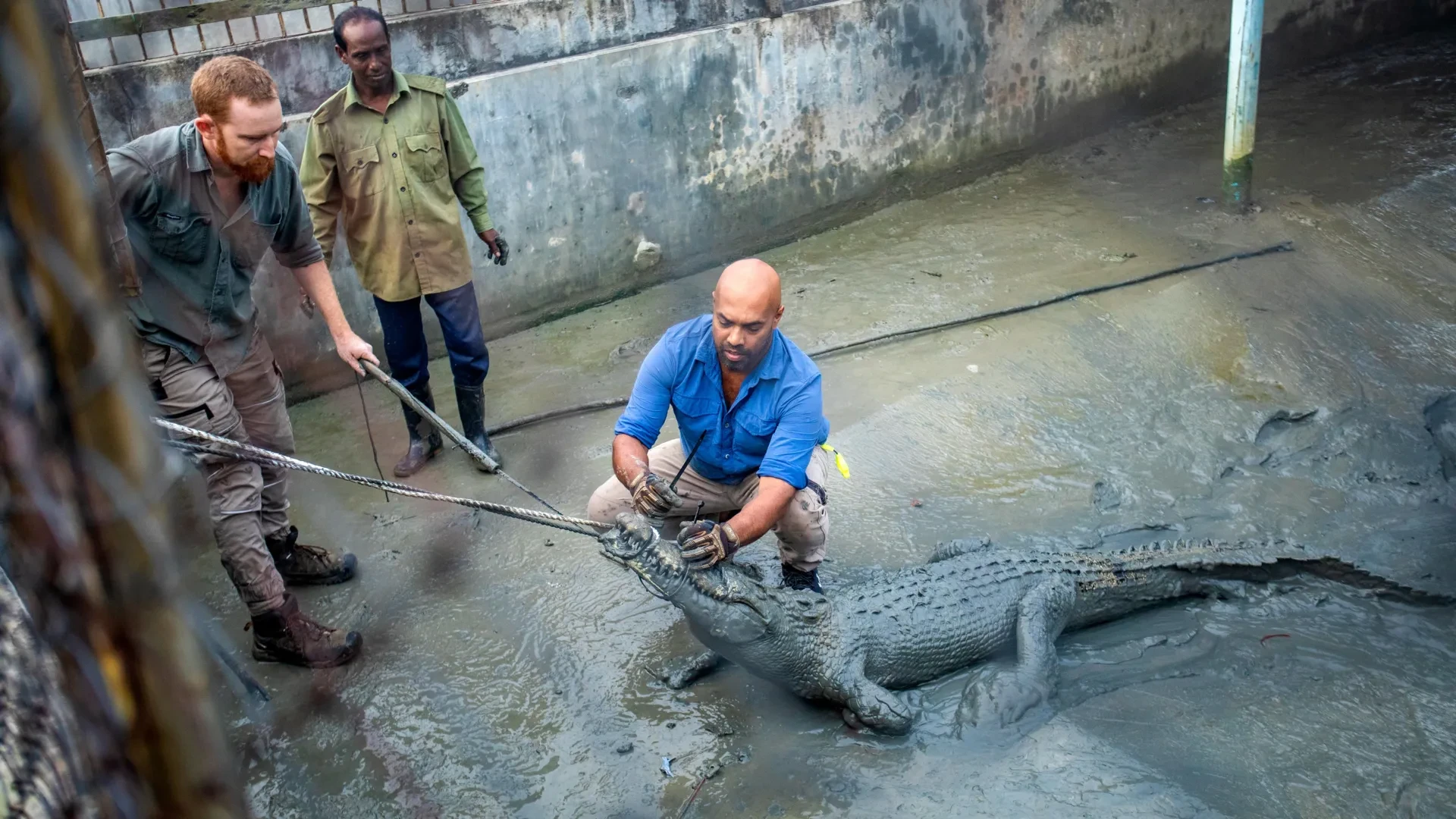
To bridge this critical knowledge gap, researchers launched a targeted tracking study in the Sundarbans. The scientific team outfitted five mature saltwater crocodiles with advanced satellite tracking devices to monitor their minute-by-minute movements, spatial distributions, and behavioral adaptations over a period of several months.
The test cohort was meticulously structured to compare different backgrounds:
- The Captive Cohort: Three mature, captive-reared females that had spent between 8 and 22 years living strictly within captive breeding facilities.
- The Local Wild Control: One native wild crocodile captured locally and released directly back into its original habitat.
- The Translocated Wild Control: One wild crocodile, designated as "Jongra," which was captured and then relocated (translocated) over a significant distance away from its home territory.
Following the releases, the research team monitored the subjects using satellite telemetry, mapping their daily travels, habitat selections, and directional trajectories.
The Divergent Fates of Captive and Wild Subjects
The telemetry data yielded stark contrasts that immediately captured the attention of conservation biologists.
The three captive-reared females shattered conventional expectations. Across months of tracking, none of the individuals exhibited any behavioral indicators of attempting to navigate back to the breeding facilities where they had spent the vast majority of their lives. Rather than wandering aimlessly or embarking on frantic journeys to find their childhood enclosures, these animals quietly settled into small, well-defined geographic areas. Their movement patterns closely mirrored those of the local wild control subject, indicating that they were fully equipped to adapt to the ecological realities of their new wild environment.
In stark contrast, the translocated wild crocodile, Jongra, behaved precisely as historical models predicted. Translocated roughly 132 kilometers away from his native home territory, Jongra immediately initiated intensive homing behaviors.
"Unfortunately, the results weren’t as good for the wild crocodile Jongra, who was translocated about 132km from his home before being released," Dr. Somaweera noted. "Although Jongra didn’t make it back to his original capture site during the study, his movements were very clearly going in that direction. He traveled far more each day than any other crocodile we tracked, covered an exceptionally large area, and even recorded single-day movements of more than 30 kilometers: all typical signs of homing behavior."
Supporting Context & Metrics
| Parameter / Metric | Captive-Reared Females ($n=3$) | Translocated Wild Male ("Jongra") | Local Wild Control ($n=1$) |
|---|---|---|---|
| Time in Captivity | 8 – 22 years | None (Wild adult) | None (Wild adult) |
| Relocation Distance | N/A (Released into new habitat) | ~132 kilometers | 0 km (Released at capture site) |
| Homing Behavior Observed | None. No directional travel toward facilities. | Yes. Intense, purposeful directional movement. | None. Remained within native range. |
| Daily Travel Distance | Low to moderate; localized patterns. | Exceptionally high (>30 km in single days). | Moderate; typical native activity. |
| Habitat Integration | Settled quickly into small, distinct home ranges. | Expansive roaming territory; highly agitated. | Fully established home range. |
| Conservation Implication | Highly viable candidates for wild reintroduction. | Requires intensive pre-release management to curb homing. | Standard baseline for wild behavior. |
The empirical divergence between captive-reared crocodiles and displaced wild crocodiles provides quantitative backing for a new framework in crocodilian management. While wild adults possess deeply ingrained cognitive maps and spatial memories that make them prone to high-stress, energy-draining homing attempts when moved, captive-reared animals lack this experiential anchor to a specific geographic coordinate in the wild. Consequently, their neurological development in sterile, controlled environments appears to disable or fail to construct the complex mental mapping required for long-distance homing, allowing them to treat their release site as a clean slate.
Official Statements & Expert Analysis
The implications of the study extend far beyond the muddy banks of the Sundarbans, offering a new blueprint for wildlife managers dealing with declining apex predator populations across the tropics.
"If crocodiles who are bred and raised in captivity subsequently return to their enclosures or breeding facilities after being released, attempts to reintroduce them into the wild as part of conservation efforts will ultimately fail," Dr. Somaweera emphasized, underscoring the high stakes of the research. "The traditional approach has been to use hatchlings in reintroduction programs, but their survival rates are extremely low and they take a long time to reach reproductive maturity. Understanding whether larger, captive-bred crocodiles can be used instead represents an important knowledge gap."
By proving that captive-reared adults can bypass the debilitating homing phase, the study opens the door to utilizing older, more robust individuals that possess a drastically higher chance of surviving natural predation.
"These findings suggest that releasing subadult and adult captive-reared crocodiles can be a viable strategy to strengthen wild populations," Dr. Somaweera stated. "For translocated crocodiles, it’s important there is careful release planning to manage their tendencies to return home."
The institutional backing of the research reflects its global conservation significance. The project was funded by the Deutsche Gesellschaft für Internationale Zusammenarbeit (GIZ) and spearheaded through a collaborative leadership model involving IUCN Bangladesh and the Bangladesh Forest Department. Conservation leaders in the region view the findings as a vital technical upgrade to ongoing species recovery frameworks, providing the empirical justification needed to alter institutional breeding and release protocols.
Future Outlook & Conservation Implications
As biodiversity loss accelerates globally, the management of apex predators remains one of conservation biology’s most complex challenges. Because apex predators like the saltwater crocodile play a disproportionately massive role in maintaining the health, balance, and structural integrity of aquatic and mangrove ecosystems, their localized extinction can trigger severe trophic cascades.
The revelation that captive-reared saltwater crocodiles can be successfully transitioned into wild environments without the handicap of homing compulsions changes the calculus for recovery programs. Moving forward, conservation planners can optimize captive breeding facilities not merely as tourist attractions or holding pens, but as dynamic nurseries capable of supplying mature, ecologically competent adults directly to depleted river systems.
However, researchers caution that translating these findings into widespread practice will require nuanced management strategies:
- Targeted Age-Class Selection: Conservation programs should increasingly shift away from vulnerable hatchling releases, incorporating subadult and mature captive-bred individuals that boast superior survival metrics.
- Strict Zoning and Release Site Selection: Captive-reared crocodiles should be introduced into protected, high-prey-density habitats where they can easily establish localized home ranges without immediate exposure to intense human-wildlife conflict.
- Advanced Mitigation for Wild Translocations: For wild-caught crocodiles that must be moved away from human settlements, traditional translocation must be paired with extensive spatial barriers, long-distance deterrence, or specialized soft-release enclosures to prevent dangerous, exhaustive homing journeys like the one observed in Jongra.
Ultimately, the study—What is home? Post-release movements of captive-reared and translocated mature saltwater crocodiles in Bangladesh—provides conservationists with a powerful new tool. By understanding the psychological and behavioral differences between captive-born and wild-trapped predators, humanity stands a far better chance of returning the undisputed king of the mangrove estuaries to its rightful place at the top of the food chain.