
August 3, 2020
By Thom Somes, President and Co-Founder of Pet Tech
Executive Overview
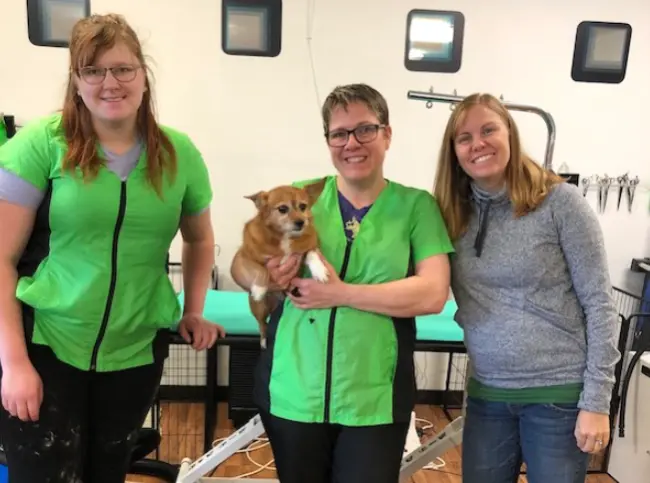
In the high-stakes, fast-paced world of professional pet care, emergencies can strike without warning. Within seconds, a routine grooming appointment can transform into a life-or-death scenario, demanding absolute composure, precise knowledge, and immediate physical intervention. This was precisely the reality faced by a team of professional groomers when a challenging client—a dog affectionately known as Max, renowned for being "fired" from multiple salons across town—suddenly lost consciousness mid-groom.
Thanks to rigorous, hands-on emergency training provided by Pet Tech, the salon staff did not freeze in panic. Instead, they executed prompt, textbook pet CPR and first aid protocols that ultimately revived the dog before he even reached the veterinary clinic.
This dramatic incident, captured entirely on newly installed salon security cameras, underscores an undeniable truth in the pet care industry: comprehensive, tactile pet CPR and first aid training is not merely an optional credential; it is an absolute necessity. This comprehensive report explores the chronology of the incident, the underlying medical factors contributing to Max’s collapse, the invaluable role of security technology in modern salon management, and the broader implications for pet safety education spearheaded by industry leaders like Pet Tech.
Detailed Chronology of the Incident
To fully understand how a routine grooming session escalated into a critical medical emergency, we must examine the sequence of events as they unfolded on the salon floor—and as they were later verified by high-definition security footage.
The Setup and the Collapse
The day began like any other at the bustling grooming salon. Elizabeth, a skilled professional groomer, was working on Max, a canine client with a notorious reputation. Known among local groomers as a difficult animal who had previously been dismissed by multiple other establishments due to behavioral challenges, Max required a patient, experienced handler.
While Elizabeth was actively engaged in grooming the dog, Max suddenly experienced a catastrophic medical event, losing consciousness entirely. Panic could easily have taken over in such a scenario, particularly given the dog’s history and the suddenness of the collapse. However, the salon’s leadership and staff had previously invested time in professional-grade emergency preparation.
Immediate Action and Revival
Upon recognizing that Max was unresponsive and in critical distress, swift action was taken. Trained personnel immediately initiated life-saving measures, including chest compressions and airway management techniques learned through specialized pet safety curricula.
The turning point of the emergency was captured vividly on video. Salon owner Lara recalled the precise moment the tide turned during the intervention:
"When you see me pick him up and say ‘get my keys’ it’s because when I went to pull his tongue out past the canines, he flinched. He started coming to after that and was totally awake in route [to the veterinarian]."
By the time Max and his handlers arrived at the veterinary office, the dog was fully conscious, alert, and miraculously interacting with the staff. Subsequent veterinary evaluations confirmed that the prompt application of CPR and timely intervention were the vital factors that preserved the dog’s life.
Supporting Context & Metrics: The Anatomy of Pet Medical Emergencies
Pet grooming salons are dynamic environments. Animals are subjected to various sensory inputs—noise from clippers, the hum of dryers, unfamiliar smells, and physical handling—all of which can induce stress. When underlying, undiagnosed medical conditions intersect with the mild stressors of grooming, emergencies can occur.
The Role of Underlying Health Conditions
Following the incident, Max underwent a battery of diagnostic evaluations, including thoracic x-rays designed to assess his ribs for any structural trauma resulting from chest compressions. The imaging yielded a reassuring report: the ribs were entirely intact and undamaged, a testament to the precise, controlled administration of CPR techniques taught in professional courses.
However, the diagnostics revealed a critical underlying anomaly: Max’s trachea appeared abnormally small at the point where it enters the lungs. Veterinarians surmised that this congenital or acquired tracheal hypoplasia/collapse was a primary contributing factor and the underlying catalyst for his sudden loss of consciousness. The minor exertion and stress of the grooming process proved too much for his compromised respiratory pathway, precipitating the crisis.
The Human Element: Managing Staff and Client Reactions
An emergency in a public-facing business tests not only technical skills but also emotional intelligence and communication.
- The Co-Worker’s Experience: Elizabeth, the groomer handling Max at the time of the collapse, was understandably shaken by the event. Yet, the salon environment fostered a culture of support rather than blame. Because the salon leadership understood the unpredictable nature of animal behavior and medical anomalies, Elizabeth was met with empathy rather than reprimand.
- The Power of Technological Oversight: Intriguingly, the salon had installed security cameras just one week prior to the incident. While the initial motivation for the installation was standard business security and liability protection, the footage served an unexpected, invaluable purpose. Upon reviewing the recordings, leadership confirmed with 100% certainty that Elizabeth had executed her duties correctly and protocol was strictly followed.
- The Pet Parents’ Response: When informed of the near-fatal incident, Max’s owners displayed remarkable composure. Their immediate, pragmatic question was telling: "Did he bite someone?"—a reflection of the dog’s troubled history at other salons. Upon learning the truth, they expressed profound gratitude for the staff’s preparedness, absolved the team of liability, and even insisted on paying for the grooming services rendered.
Official Statements and Professional Debriefs
The aftermath of the emergency extended into the local veterinary community, shedding light on inter-professional relationships and the validation of emergency protocols.
The Veterinary Encounter
Lara recounted an initial misunderstanding at the veterinary clinic. Because she brought Max to a clinic facility associated with her regular vet—though attended by an unfamiliar examining veterinarian—the initial reception was guarded and skeptical.
"At first, the vet was seriously wondering WTF (from my standpoint)," Lara noted, describing the clinician’s initial protective stance regarding the dog’s sudden trauma.
However, the dynamic shifted dramatically once Lara’s primary, trusted veterinarian arrived on the scene. The regular vet, who regularly collaborates with Lara’s salon and refers challenging clients that other groomers refuse to handle, immediately understood the context. The two professionals embraced, discussed mutual clients whose dogs required specialized, high-patience grooming, and reviewed the incident. Once the attending vet was fully briefed on the precise chain of events and the successful application of pet CPR, their demeanor shifted entirely to one of immense praise and support.
The Philosophy of Hands-On Training
Incidents of this magnitude validate the core mission of organizations dedicated to animal safety. Thom Somes, President and Co-Founder of Pet Tech—widely known throughout the industry as "The Pet Safety Guy"—emphasizes that theoretical knowledge read from a manual or watched passively on a screen is insufficient when real lives are on the line.
"This is a perfect example of why a hands-on, in-person training (skill practice with coaching) has always been the ideal way to learn the skills and techniques of pet CPR & First Aid," Somes states. "Pet Tech teaches in such a way that when needed in the event of a pet medical emergency, you will be able to access the skills and jump into action."
This philosophy forms the bedrock of modern pet safety education. Muscle memory, tactile feedback during chest compressions, and real-time coaching from certified instructors bridge the gap between knowing what to do in theory and executing it flawlessly under high-stress conditions.
Future Outlook: Raising the Standard of Pet Care Safety
As the pet care industry continues to expand—with millions of households investing heavily in the health, grooming, and wellbeing of their companion animals—the expectations placed upon pet care professionals are higher than ever.
The Imperative for Universal Certification
Stories like Max’s serve as a powerful catalyst for industry-wide reform. While veterinary clinics remain the gold standard for definitive medical treatment, grooming salons, boarding facilities, and dog-walking enterprises are the frontline responders in thousands of daily scenarios. If staff members across these industries are not equipped with certified pet CPR and first aid training, countless animals with hidden vulnerabilities—such as undetected tracheal issues, congenital heart defects, or stress-induced syncope—remain at unnecessary risk.
Moving Forward: Prevention, Preparation, and Partnership
In the wake of this successful intervention, salon operations have adapted. Lara has made a personal commitment regarding Max’s future care: "In the future, only I will be grooming him just to be on the safe side." This decision highlights the deep bond of trust that can develop between specialized pet care professionals and high-needs animals, where experience and established rapport outweigh routine scheduling convenience.
Furthermore, the integration of technological tools like security surveillance, combined with mandatory emergency response training, establishes a new benchmark for salon safety. Pet Tech continues to pioneer international training initiatives designed to empower both everyday pet parents and seasoned animal care professionals. By fostering proactive education, strengthening communication channels between groomers and veterinarians, and championing hands-on emergency preparedness, the pet care community moves steadily toward a safer, more secure future for our four-legged family members.
About the Author: Thom Somes is the President and Co-Founder of Pet Tech, the first international training center dedicated to educating pet parents and pet care professionals in emergency pet care and wellness. A best-selling author, futurist, and keynote speaker, Somes remains dedicated to helping families enjoy happier, healthier, and longer relationships with their pets.