On August 18, 2026, a groundbreaking formal complaint was lodged with the U.S. Government Accountability Office (GAO), uncovering systemic programmatic mismanagement, misallocation of federal funds, and selective regulatory enforcement within the Food and Drug Administration’s Center for Veterinary Medicine (FDA CVM). Filed by prominent consumer advocate Susan Thixton on behalf of American pet owners and the Association for Truth in Pet Food, the six-page document delivers a blistering critique of the agency’s failure to uniformly enforce statutory food safety laws across the multi-billion-dollar commercial pet food industry.
At the core of the grievance is the assertion that the FDA CVM has abandoned its statutory obligation under federal law to protect pets from contaminated, diseased, and unwholesome ingredients. Rather than applying federal standards equitably, the agency stands accused of exercising arbitrary "enforcement discretion"—effectively granting key industry players immunity while turning a blind eye to illegal ingredients, deceptive marketing practices, and dangerous manufacturing standards.
The complaint outlines a startling reality: taxpayer dollars allocated by Congress to safeguard the nation’s feed and pet food supply are instead being weaponized to facilitate a secret, federally shielded waste disposal mechanism. By permitting rendered animal tissues from diseased stock, condemned meats, and non-slaughtered carcasses to be integrated into commercial pet foods without clear labeling disclosures, the FDA CVM has compromised consumer trust, compromised animal health, and misled millions of pet owners nationwide.
Detailed Chronology
The escalation toward formal GAO intervention represents the culmination of years of administrative inaction, unaddressed citizen petitions, and widening gaps in regulatory oversight.
                                  CHRONOLOGY OF EVENTS

     April 2019                    Jan - June 2024*               August 18, 2026
  +--------------+               +------------------+           +------------------+
  | FDA admits   |               | 1,705 Adverse    |           | Formal GAO       |
  | policy of    | ------------> | Reports logged   | --------> | Complaint filed  |
  | "Enforcement |               | regarding Purina |           | alleging systemic|
  | Discretion"  |               | (206 deaths)     |           | mismanagement    |
  +--------------+               +------------------+           +------------------+
                                           |
                                           v
                                    Feb - Sept 2025*
                                 +------------------+
                                 | Delayed response:|
                                 | 8% investigated; |
                                 | superficial      |
                                 | plant inspection |
                                 +------------------+
  *6-month evaluation & 7-month follow-up windows noted in filing
1. The Policy of "Enforcement Discretion" Confirmed (April 2019)
The regulatory breakdown was formally memorialized in April 2019 when the FDA responded to Citizen Petition FDA-2016-P-3578. In its official response, the agency made an unprecedented admission, stating:
"We do not believe that the use of diseased animals or animals that died otherwise than by slaughter to make animal food poses a safety concern and we intend to continue to exercise enforcement discretion."
This declaration established an official administrative stance: the FDA would consciously ignore statutory prohibitions set forth in the Federal Food, Drug, and Cosmetic Act (FD&C Act) regarding adulterated food ingredients, allowing material from diseased animals ("4-D" meat: dead, dying, diseased, or disabled) to enter the animal food chain without notifying consumers.
2. The Purina Adverse Event Crisis (Recent 6-Month Window)
The systemic flaws of this policy manifested during a critical six-month window when the FDA received an unprecedented wave of consumer warnings. Over this period, the agency logged 1,705 adverse event reports directly linked to Purina Pet Foods products, detailing severe illness and 206 potential pet deaths.
Despite the staggering volume of complaints, the agency issued no Warning Letters to the manufacturer. It took the FDA seven months to release a public alert, which revealed a troubling metric: the agency had actively investigated only 8 percent of the 1,705 adverse reports received.
3. The Superficial Inspection Audit
In response to widespread public outcry, the FDA dispatched inspectors to perform a singular "Preventive Controls Surveillance" inspection rather than a rigorous "for-cause" investigation. The audit was conducted at just one of Purina’s more than 20 domestic manufacturing facilities. Public records indicate that during this single inspection, investigators discussed a mere 24 consumer complaints with plant management—nine of which were archived files dating back to 2007.
4. Filing of the Formal GAO Complaint (August 18, 2026)
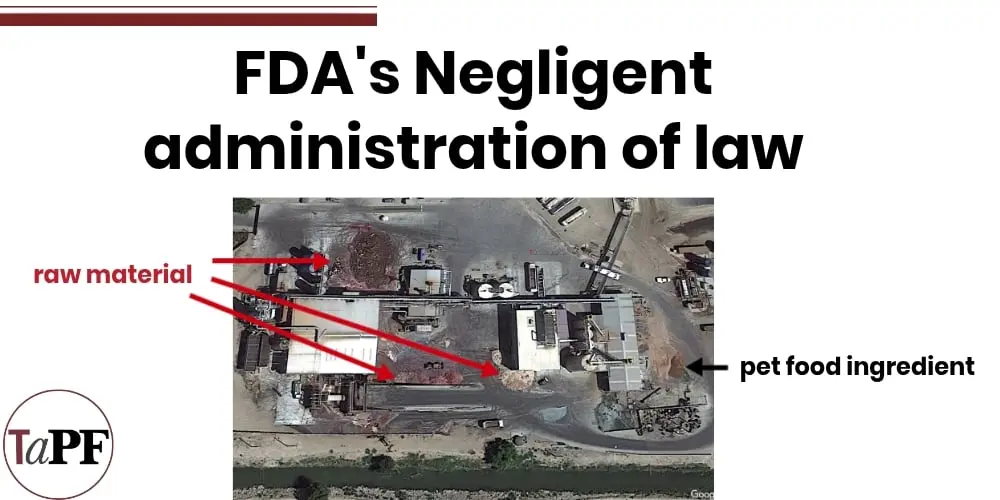
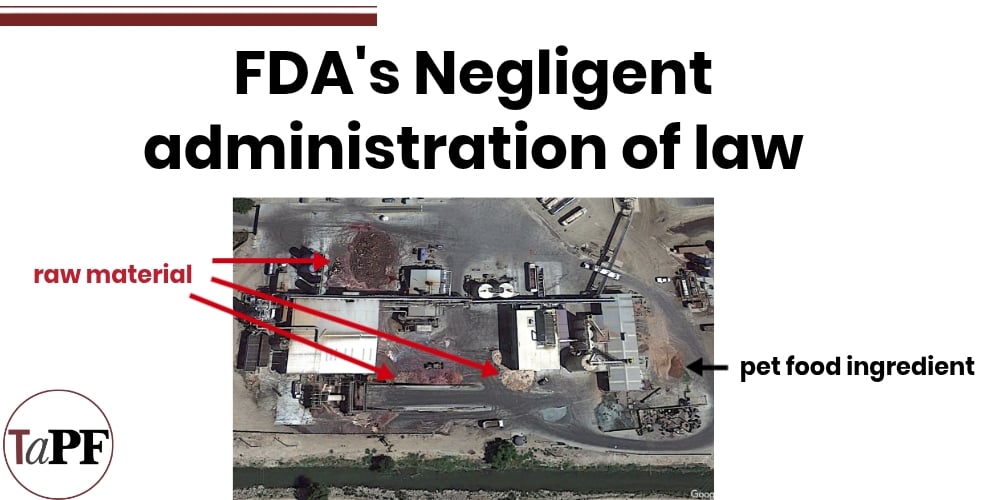
Citing a complete collapse in institutional accountability, Susan Thixton and the Association for Truth in Pet Food submitted their six-page complaint to the Government Accountability Office on August 18, 2026. Armed with administrative records, regulatory admissions, and photographic documentation of rendering plant operations, the advocates petitioned the federal watchdog agency to initiate a full investigative audit of the FDA CVM’s operational and financial management.
Supporting Context & Metrics
To understand the scope of the allegations presented to the GAO, it is necessary to examine the operational metrics and legal frameworks governing commercial pet food oversight in the United States.
Metric / Dimension
Documented Standard / Claim
Actual FDA CVM Execution
Adverse Event Monitoring
1,705 filed reports (206 pet deaths)
8% total investigation rate
Facility Oversight
20+ manufacturing plants (Purina network)
1 facility inspected; 0 "for-cause" audits
Consumer Complaint Review
Comprehensive historical audit required
24 complaints discussed (37.5% outdated)
Ingredient Adulteration
Direct violation of FD&C Act Sec. 402(a)(5)
"Enforcement discretion" applied systematically
Labeling Integrity
Common/Usual name must reflect origin
Condemned/4-D poultry labeled as standard "Chicken"
    [1,705 Total Adverse Event Reports Received]
    │
    ├── 136 Reports Investigated (8%)  ===> [ FDA Action ]
    │
    └── 1,569 Reports Ignored (92%)    ===> [ NO Investigation / Unchecked ]
Statutory Violations and the Dual Regulatory Standard
Under Section 402(a)(5) of the Federal Food, Drug, and Cosmetic Act, a food is deemed adulterated if it is, in whole or in part, the product of a diseased animal or an animal that has died otherwise than by slaughter. While this statute is strictly enforced within human food manufacturing, the FDA CVM maintains a permissive secondary standard for pet food.
By unilaterally waiving these statutory requirements without congressional authorization, the FDA has created an uneven playing field that penalizes transparent manufacturers while rewarding entities that utilize low-cost, condemned animal materials.
The GAO complaint highlights how the FDA CVM permits misleading product labeling that prevents consumers from making informed purchasing choices:
Name Equivalence: The FDA allows condemned chicken or poultry derived from non-slaughtered, diseased birds to be listed on pet food ingredients panels under the standard term "Chicken"—the identical legal common name assigned to USDA inspected and passed human-grade chicken.
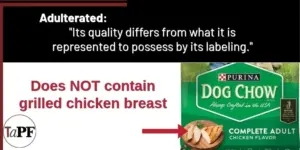
Deceptive Marketing Claims: Manufacturers are permitted to print promotional statements such as "Made with Real Chicken" accompanied by imagery of whole, roasted, human-edible chicken breasts, even when the underlying batch utilizes rendered 4-D byproduct meal or condemned carcass material.
Lack of Scientific Safety Proof: In its response to Citizen Petition FDA-2016-P-3578, the FDA acknowledged its practice of enforcement discretion while failing to present peer-reviewed, long-term toxicological or biological safety studies proving that consumed 4-D materials and rendered pharmaceuticals (e.g., euthanasia agents, veterinary drugs) carry no chronic health risks for pets.
Official Statements
Excerpts from the GAO Complaint
In the formal notice delivered to federal auditors, advocate Susan Thixton detailed the structural mismanagement within the agency:
"We bring this formal notice to the Government Accountability Office to evidence the FDA Center for Veterinary Medicine (CVM) is engaged in programmatic mismanagement, misallocating its congressional funding. The agency has a regulatory history of selectively targeting some pet food manufacturers/some pet food ingredients and targeting enforcement activities only with some federal laws, failing to consistently enforce all federal laws across all pet food manufacturers."
The complaint directly addresses the economic deception sanctioned by federal regulators:
"Congressional funding allocated to FDA CVM is directly supporting a (secret to consumers) waste disposal system via pet food; a secret disposal system 100% facilitated by FDA CVM… The FDA CVM allows condemned chicken or chicken that died other than by slaughter to be identified on the pet food label as ‘chicken’ — the identical name of USDA inspected and passed chicken… allowing US pet food consumers to be deceived."
Perspective of Consumer Advocacy Groups
Speaking on behalf of pet owners nationwide, the Association for Truth in Pet Food framed the issue as both a regulatory failure and an ethical breach:
"No pet food should contain undisclosed diseased animal material or decomposing animal material. No consumer should be deceived by misleading marketing on pet food labels. We are right with our frustration with FDA CVM ignoring federal laws. However, our right will only be acknowledged if we let our members of Congress know about FDA’s wrongs."
FDA CVM Regulatory Rationale
Historically, the FDA CVM has justified its operational posture through public guidance documents and administrative responses, arguing that:
The thermal processing involved in commercial pet food manufacturing (rendering, extrusion, canning) neutralizes microbiological pathogens in raw materials, including 4-D meats.
Exercising "enforcement discretion" allows the agricultural sector to utilize protein coproducts efficiently, preventing massive environmental burdens associated with disposing of non-slaughtered livestock waste.
Agency resources must be prioritized based on immediate risk vectors (e.g., acute pathogen contamination like Salmonella or Listeria) rather than legal technicalities surrounding ingredient sourcing.
Critics counter that this position directly defies the statutory text mandated by Congress and leaves animals exposed to non-thermal hazards, such as chemical residues, heavy metals, and heat-resistant toxins.
Future Outlook
The filing of the GAO complaint marks the beginning of a decisive legislative oversight phase. Consumer advocacy organizations are orchestrating a grassroots campaign targeting key congressional committees that exercise direct jurisdiction over the FDA’s administrative and budgetary authorizations.
Advocates are focusing pressure on two pivotal Congressional bodies:
The House Committee on Energy & Commerce: Responsible for overseeing food safety regulations, public health policies, and FDA operations.
The Senate Committee on Health, Education, Labor and Pensions (HELP): Holds regulatory jurisdiction over the Department of Health and Human Services and its sub-agencies, including the FDA.
Pet owners and consumer rights groups are asking lawmakers to demand a formal GAO audit into how CVM allocates its congressional funding, why it selectively waives federal statutes, and whether its enforcement decisions prioritize industry convenience over consumer protection.
Potential Regulatory and Legislative Outcomes
If the GAO accepts the complaint for investigation and Congress initiates formal inquiries, several structural reforms could follow:
Legislative Mandates on Label Transparency: Mandatory statutory language requiring commercial pet foods containing rendered 4-D animal tissues to clearly state on the front-of-package labeling: "Includes ingredients derived from non-slaughtered or diseased animals."
Elimination of Enforcement Discretion: Federal court challenges or legislative amendments explicitly prohibiting the FDA CVM from ignoring Section 402(a)(5) of the FD&C Act, compelling the agency to apply uniform safety standards across both human and animal foods.
Restructuring of Surveillance Protocols: A complete overhaul of the FDA’s adverse event reporting infrastructure, requiring mandatory for-cause facility inspections whenever a brand accumulates a statistically significant threshold of illness or death reports.
Budgetary Conditions: Congressional appropriations committees placing strict conditions on the FDA CVM’s annual budget, conditioning federal funding on total compliance with statutory food safety laws.
The outcome of this complaint could reshape the regulatory landscape of the commercial pet food industry. As congressional leaders weigh constituent calls for accountability, the FDA CVM faces mounting pressure to repair its public credibility, enforce federal standards consistently, and uphold the integrity of the nation’s pet food supply.