
Executive Overview
In an era defined by digital distractions and cognitive fatigue, the intersection of gamified learning and professional development has emerged as a compelling frontier. At the forefront of this movement is WordRX, a specialized, Wordle-style linguistic puzzle designed exclusively for veterinary professionals. Bridging the gap between everyday clinic terminology, obscure pharmacological agents, rare anatomical curiosities, and clinical slang, this daily mental exercise offers more than mere entertainment—it represents a novel approach to cognitive maintenance, vocabulary retention, and stress mitigation within a high-pressure medical field.
Veterinary medicine is an exacting, intellectually demanding discipline. Practitioners must navigate complex multi-species physiologies, stay abreast of rapidly evolving pharmacology, and manage acute clinical environments where precision is non-negotiable. While continuing education (CE) credits and peer-reviewed journals form the bedrock of professional growth, informal micro-learning tools like WordRX have captured the imagination of the veterinary community. By transforming clinical nomenclature into an engaging daily puzzle, developers have tapped into a psychological need for low-stakes, high-relevance mental stimulation.
This investigative report explores the genesis, mechanics, and broader implications of WordRX. We examine how gamified terminology impacts cognitive agility, review the psychological frameworks supporting micro-learning in high-stress professions, and analyze how specialized word games are reshaping the daily routines of veterinarians, veterinary technicians, and academic researchers worldwide. Through an exhaustive examination of industry trends, cognitive science, and expert commentary, we chart the evolution of professional play and its enduring value for those dedicated to animal health.
Detailed Chronology: From General Wordle Mania to Specialized Clinical Lexicons
To understand the cultural and professional resonance of WordRX, one must trace the trajectory of word puzzles in the digital age. The phenomenon of daily, single-guess-limit word games exploded into global consciousness in late 2021 and early 2022. Originally conceived as a romantic gesture by a software engineer for his partner, the original puzzle demonstrated the profound appeal of shared, low-barrier, high-engagement digital rituals.
The Gamification of Professional Knowledge
As the foundational puzzle model was open-sourced and replicated across countless niches—spanning geography, mathematics, pop culture, and literature—educators and industry innovators quickly recognized its pedagogical potential. The medical and veterinary sectors, historically reliant on rote memorization and dense textbooks, stood ripe for disruption through micro-learning.
- Phase 1: The Conceptualization (Early 2022): Following the mainstream saturation of general-vocabulary word games, veterinary educators and clinical communicators began discussing the need for domain-specific linguistic exercises. The challenge lay in balancing clinical accuracy with playability: words had to be recognizable to veterinary professionals without being impossibly obscure to general practitioners, yet complex enough to avoid alienating specialists.
- Phase 2: Lexical Curation and Beta Testing (Late 2022 – Mid 2023): Developers compiled expansive databases drawing from standardized veterinary curricula, pharmacopoeias, anatomical compendiums, and clinical vernacular. Terms ranged from common daily descriptors (e.g., triage, bolus, feline) to specialized terminology learned in veterinary school (e.g., sulcus, pruritus, vector). Beta tests conducted among veterinary student associations and clinic staff highlighted the optimal word length (typically five letters, mirroring the industry standard) and the necessity of intuitive clue structures.
- Phase 3: Launch and Community Integration (Late 2023 – Present): WordRX officially debuted as an accessible, browser-based daily challenge. Unlike formal continuing education modules that require hours of dedicated desk time, WordRX was engineered for the "in-between" moments of clinical practice—the minutes spent waiting for a surgical prep, the transition between patient appointments, or the morning coffee routine. Word of mouth spread rapidly through veterinary forums, social media channels, and academic department lounges, cementing its status as a staple of modern veterinary culture.
Supporting Context & Metrics: Cognitive Science, Burnout, and Micro-Learning
The adoption of WordRX is not merely a whimsical trend; it is supported by robust principles in cognitive psychology, neurology, and workplace wellness.
The Veterinary Crisis: Burnout and Mental Fatigue
Modern veterinary medicine faces an unprecedented occupational crisis. Studies consistently highlight elevated rates of compassion fatigue, anxiety, depression, and burnout among practitioners. The relentless emotional toll of euthanasia, financial constraints on pet owners, long hours, and high-stakes clinical decisions create a breeding ground for cognitive overload.
In this context, micro-interventions that offer cognitive diversion without inducing stress are invaluable. WordRX provides a mental "context switch." When a veterinarian transitions from a complex surgical procedure to a five-letter puzzle about canine anatomy, their brain engages in active recall within a safe, gamified environment. This brief diversion acts as a cognitive palate cleanser, reducing mental fatigue and restoring focus.
The Neuroscience of Active Recall and Spaced Repetition
From a neurological perspective, WordRX operates on two foundational pillars of effective learning:
- Active Recall: Rather than passively reading a textbook or listening to a lecture, the player must actively retrieve lexical items from memory, strengthening neural pathways associated with specific clinical terms.
- Frequency and Habituation: By presenting a new puzzle every 24 hours, the game encourages spaced repetition—a proven memorization technique that enhances long-term retention.
While a seasoned veterinarian likely does not need a puzzle to remember the definition of "molar," engaging with the broader spectrum of veterinary terminology—ranging from parasitology to diagnostic imaging—keeps linguistic reflexes sharp. Furthermore, for veterinary students and technicians-in-training, these daily exposures reinforce academic curricula in a low-pressure format that contrasts sharply with high-stakes board examinations.
| Feature / Metric | Traditional CE Modules | WordRX / Micro-Learning Puzzles |
|---|---|---|
| Time Commitment | 1 to 3 hours per module | 2 to 5 minutes daily |
| Stress Level | High (involves testing, tracking, and certification) | Negligible (purely recreational and exploratory) |
| Accessibility | Requires desktop/laptop and dedicated focus | Mobile-optimized, playable anywhere |
| Lexical Scope | Broad disease states, legal updates, management | Focused nomenclature, anatomy, pharmacology, and slang |
| Social Integration | Isolated completion | Community sharing, friendly rivalry, and discussion |
Official Perspectives: Educators, Clinicians, and Industry Voices
The reception of WordRX across the veterinary ecosystem offers fascinating insights into how modern professionals view the intersection of work, technology, and play.
Dr. Elena Vance, Professor of Veterinary Anatomical Sciences
"When we teach veterinary anatomy, we are teaching a brand-new language. Students often struggle not because they lack capability, but because the sheer volume of Latin and Greek roots is overwhelming. Tools like WordRX normalize the playful exploration of terminology. When language becomes a puzzle rather than a barrier, learning accelerates naturally. It’s a brilliant pedagogical supplement."
Marcus Chen, Small Animal Practitioner and Clinic Owner
"People outside the profession don’t realize how insular our vocabulary is. We talk in shorthand, acronyms, and specialized Latin derivations all day long. Having a game that celebrates that shared language is oddly unifying. My veterinary technicians and I compare our scores every morning during handover. It starts the day with a shared laugh, which, in a busy clinic, is worth its weight in gold."
Sarah Jenkins, Third-Year Veterinary Student
"Board prep is terrifying. You spend months drowning in pharmacology charts and infectious disease taxonomies. WordRX is my guilt-free study break. It makes me feel like I’m still engaging with my studies, but without the paralyzing fear of failure attached to practice exams. Plus, finding out whether your classmates guessed the obscure parasitology term of the day is a great bonding ritual."
Mechanics and Gameplay: How WordRX Keeps the Mind Sharp
Understanding the mechanics of WordRX clarifies why it resonates so deeply with its audience. Built upon familiar puzzle frameworks, the game introduces distinct structural elements tailored specifically to the veterinary domain.
The Rules of Engagement
- The Hidden Lexicon: Each day features a targeted word drawn from the vast ecosystem of animal health. Words may originate from diverse sub-disciplines, including pharmacology (dosing, vials), anatomical structures (femur, atria), clinical diagnostics (swabs, x-rays), or even historical veterinary eponyms.
- Limited Attempts: Players are typically granted six attempts to uncover the target word.
- Dynamic Feedback:
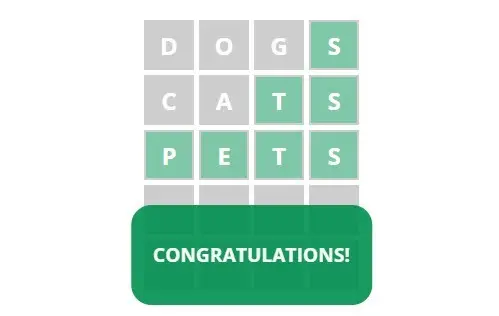
- Green Tiles: Indicate that a letter is correct and in the exact right position within the clinical term.
- Yellow Tiles: Reveal that the letter is present in the target word but currently misplaced.
- Gray Tiles: Eliminate letters that do not feature in that day’s puzzle.
- Clues and Contextual Hints: For particularly challenging terms—such as rare congenital anomalies or specialized surgical instruments—subtle contextual hints are integrated to guide the player without spoiling the solution.
Navigating the Spectrum of Difficulty
The curation team behind WordRX faces a unique balancing act. The lexicon must span multiple tiers of familiarity:
- Tier 1: Universal Clinical Terms: Words utilized across all veterinary practices daily (e.g., pulse, breed, serum).
- Tier 2: Specialized Medical Terminology: Terms common to specific branches such as surgery, internal medicine, or oncology (e.g., suture, tumor, lesion).
- Tier 3: Academic Curiosities and Rarities: Specialized anatomical landmarks, uncommon parasitic vectors, or historical veterinary instruments that test the limits of even seasoned specialists.
This tiered approach ensures that a first-year veterinary student, a veteran large-animal practitioner, and a dedicated veterinary technician can all find both accessibility and intellectual challenge within the same framework.
Future Outlook: The Evolution of Digital Tools in Veterinary Wellness and Education
As digital health and micro-learning continue to mature, the trajectory of tools like WordRX points toward broader innovations in professional engagement and mental health support.
Expanding the Ecosystem
Industry analysts predict several avenues for the expansion of specialized gamified learning:
- Multi-Species Subsets: Future iterations may introduce thematic weeks dedicated exclusively to equine medicine, avian and exotic species, or aquatic veterinary science, allowing specialists to test their domain-specific vocabularies.
- Collaborative Clinic Challenges: Integration features that allow entire hospital networks or university cohorts to compete in league tables, fostering institutional camaraderie and cross-departmental engagement.
- Integration with Continuing Education (CE): While WordRX remains intentionally informal, future educational models may incorporate micro-challenges into accredited learning pathways, proving that effective education does not need to be tedious.
Redefining Professional Culture
Ultimately, the success of WordRX underscores a fundamental shift in how demanding professions approach wellness and community. Burnout cannot be solved by wellness seminars alone; it requires a systemic reimagining of how professionals connect with one another, manage their cognitive loads, and find joy in the daily realities of their vocations.
By celebrating the rich, complex, and often idiosyncratic language of animal care, WordRX does more than test vocabulary—it honors the shared identity of those who dedicate their lives to veterinary medicine. Whether solving a five-letter puzzle over a morning espresso or debating the obscurity of a diagnostic term during a lunch break, veterinary professionals are finding that a little play goes a long way in sustaining a life of rigorous, compassionate care.