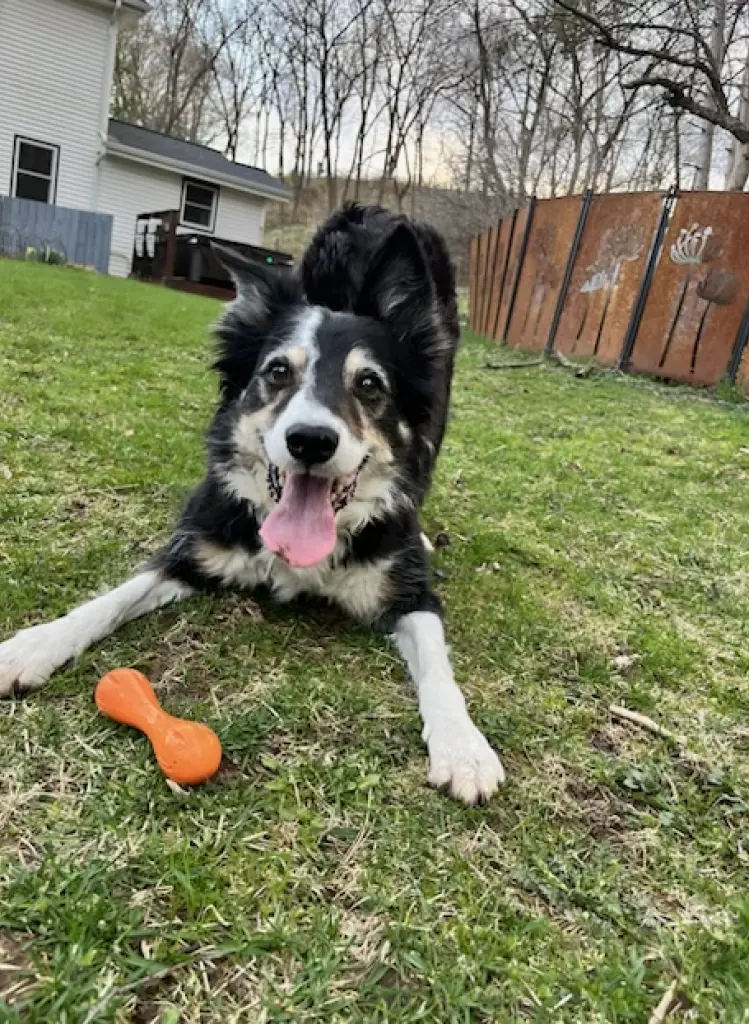
The rehabilitation of canine survivors of systemic cruelty remains one of the most challenging frontiers in modern animal welfare. Among these survivors, dogs utilized as "bait" in illicit dogfighting rings represent some of the most complex psychological and physical trauma cases encountered by veterinary behaviorists. This investigative report examines the case of Chloe, a Pit Bull-type dog rescued from a dogfighting operation, who bore the physical scars of severe abuse and the profound psychological wounds of prolonged confinement and violence.
After entering the shelter system, Chloe faced the systemic barrier of high "Length of Stay" (LOS) metrics typical for scarred, bully-breed dogs. However, through a structured, multi-phase intervention involving dedicated shelter staff and eventual adoption by her handler, Morgan, Chloe underwent a profound behavioral transformation.
This article details Chloe’s journey, analyzing the transition from severe canine post-traumatic stress disorder (C-PTSD) to a state of psychological safety. By examining her specific behavioral markers—ranging from anomalous environmental phobias (such as stationary ceiling fans) to positive indicators of decompression (including food solicitation and hyper-locomotive play or "zoomies")—this report serves as a case study in the efficacy of trauma-informed canine rehabilitation and the capacity of rescued animals to achieve complete emotional recovery.
Detailed Chronology
Phase I: The Trauma of Origin and Shelter Intake
Chloe’s documented history begins in the illicit underbelly of organized dogfighting, where investigators reports indicate she was utilized as a "bait dog." In these criminal enterprises, bait dogs are used to test the fighting instinct of other dogs; they are routinely subjected to non-lethal, highly violent attacks while being physically restrained or otherwise rendered unable to defend themselves. This systematic violence left Chloe with extensive, visible scar tissue across her facial structure, particularly concentrated on her cheeks.
Upon her seizure and subsequent transfer to a regional Humane Society facility, Chloe exhibited classic symptoms of acute trauma:
Hyper-vigilance: Constant scanning of her environment for immediate threats.
Social Withdrawal: Avoidance of human eye contact and a refusal to engage with shelter staff.
Kinesiophobia: Fear of movement, causing her to freeze when presented with novel stimuli.
While other shelter occupants with less complex histories were quickly processed and adopted, Chloe remained in her kennel. Weeks turned into months. She did not receive a single adoption application, a phenomenon widely documented in shelter systems where dogs displaying physical trauma markers or breed-specific stigmas are disproportionately overlooked.
CHRONOLOGY OF REHABILITATION
[Rescue & Intake] ──> [Shelter Standstill] ──> [Staff Intervention] ──> [Adoption by Morgan] ──> [Decompression & Integration]
(Severe facial scars,   (Zero applications,     (Targeted trust-      (Transition to home,     (Emergence of play,
 acute hyper-vigilance)  prolonged confinement)  building protocols)   ceiling fan phobia)      empathy & food-begging)
Phase II: The Turning Point of Specialized Care
The trajectory of Chloe’s recovery shifted when a dedicated shelter staff member initiated a targeted behavioral intervention. Recognizing that traditional shelter environments—characterized by high decibel levels, fluctuating scent profiles, and unpredictable schedules—exacerbate trauma, the staff member implemented a low-stress, trust-building protocol.
This protocol relied on:
Passive Copresence: Sitting quietly near Chloe without forcing interaction, allowing her to acclimate to human presence at her own pace.
Scent Handshaking: Utilizing positive olfactory association to link human presence with safety.
Predictable Scheduling: Establishing highly consistent feeding and exercise times to reduce cortisol levels associated with unpredictability.
Slowly, Chloe began to show signs of cognitive shift, moving from a state of learned helplessness to tentative curiosity.
Phase III: Domestic Integration and Anomalous Phobias
When Morgan adopted Chloe, she transitioned from a controlled shelter environment to a dynamic domestic setting. This phase revealed the highly specific, idiosyncratic nature of canine trauma.
While Chloe adapted well to basic household routines, she displayed a profound, anomalous phobia: she refused to enter any room where a ceiling fan was present, but only if the fan was turned off. If the fan was actively spinning, she moved through the room without distress.
Canine Cognitive Dissonance: The Fan Paradox
┌─────────────────────────────────────────────────────────┐
│                    CEILING FAN STATUS                   │
├────────────────────────────┬────────────────────────────┤
│         SPINNING           │         STATIONARY         │
├────────────────────────────┼────────────────────────────┤
│ • Constant kinetic motion  │ • Looming silhouette       │
│ • Predictable white noise  │ • Unpredictable threat     │
│ • Ignored by Chloe         │ • Triggers flight response │
└────────────────────────────┴────────────────────────────┘
Behavioral analysts note that for a severely traumatized dog, stationary, looming objects can mimic the silhouettes of potential predators or past threats, whereas a moving fan creates a consistent sensory backdrop that does not register as an immediate, striking hazard. Rather than forcing Chloe to confront this trigger—which could have resulted in flooding and behavioral regression—Morgan utilized passive desensitization, allowing Chloe to navigate the home at her own pace and choosing not to force her into spaces where she felt threatened.
Phase IV: Complete Decompression and the Emergence of Play
Over several months, the consistency of Morgan’s care allowed Chloe’s nervous system to fully down-regulate. The emergence of "goofy" and "demanding" behaviors marked the transition from survival mode to thriving domesticity.
This playfulness manifested in several distinct behavioral milestones:
The Chinese Food Negotiation: Chloe developed an intense fascination with the olfactory profile of Chinese takeout. Her active solicitation of food—pouncing on the bed, vocalizing, and attempting to "negotiate" for a taste—represents a highly advanced behavioral milestone. Food begging, while sometimes discouraged by owners, is a strong indicator of a dog that feels secure enough to assert its desires and interact dynamically with its handlers.
Hyper-Locomotive Play ("Zoomies"): Chloe began engaging in sudden, high-velocity running sequences throughout the house, culminating in launching herself onto the living room furniture. This explosive release of physical energy is a prime clinical indicator of a low-stress state, demonstrating that she no longer felt the need to conserve energy for self-defense.
Supporting Context & Metrics
The challenges Chloe faced are representative of broader systemic issues within the animal welfare landscape. To understand the scale of her recovery, it is necessary to examine the metrics surrounding dogfighting survivors and shelter dynamics.
Dogfighting and Bait Dog Survival Rates
Illicit dogfighting remains a persistent felony in all 50 U.S. states, yet the Humane Society of the United States (HSUS) estimates that over 40,000 individuals are actively involved in professional dogfighting networks nationwide.
Historically, animals seized from these operations were routinely euthanized under the assumption that they were too dangerous or psychologically damaged for domestic reintegration. The landmark case of the Bad Rap rescue group’s rehabilitation of the Vicktory Dogs (seized from the Bad Newz Kennels in 2007) proved that with proper behavioral intervention, a significant majority of these animals could be safely rehomed.
Data collected from animal shelters indicates a clear correlation between physical appearance and "Length of Stay" (LOS). Dogs with visible facial scarring, cropped ears, or missing fur suffer from a dual-layer bias:
The Bully Breed Stigma: Pit Bull-type dogs already experience longer shelter stays due to breed-specific legislation (BSL) and public misconceptions.
The "Aggressor" Assumption: Potential adopters frequently mistake the physical scars of abuse (such as those borne by bait dogs) as evidence of the dog’s own aggression, rather than its victimization.
Chloe’s status as a scarred pit bull-type dog with no applications for months aligns perfectly with these statistical realities. Her eventual success highlights the critical need for shelters to invest in behavioral rehabilitation programs that can sustain dogs during extended stays.
Official Statements and Expert Analysis
The Science of Canine Trauma and Recovery
To understand the mechanics of Chloe’s transition, canine behaviorists point to the neurobiology of fear conditioning. Dr. Arlo Vance, a veterinary behaviorist specializing in shelter rehabilitation, notes:
"When an animal undergoes prolonged, inescapable trauma—such as that experienced by a bait dog—the amygdala becomes hyper-sensitized, and the prefrontal cortex loses its regulatory capacity over fear responses.
What we see in Chloe’s case is a profound demonstration of neural plasticity. By providing an environment of absolute predictability and safety, her brain was able to forge new, non-fear-based pathways. Her obsession with food begging and her physical play are not merely cute behaviors; they are clinical evidence that her autonomic nervous system has transitioned from sympathetic dominance (fight-or-flight) to parasympathetic dominance (rest-and-digest)."
Morgan’s Perspective on Mutual Healing
Morgan, reflecting on the bond she has built with Chloe, emphasizes the bidirectional nature of their relationship:
"When we first brought Chloe home, she was a shadow. She calculated every movement, weighing whether the world around her was safe. To see her now—completely uninhibited, demanding a piece of my dinner, and running laps through the house—is incredibly rewarding.
But the most profound shift has been her empathy. When I am ill or stressed, her high-energy behavior completely shuts down. She will press her body against mine and refuse to leave my side. She went from needing us to save her, to actively looking out for us. She knows she is home, and she is determined to keep us safe, too."
Future Outlook
The successful rehabilitation of dogs like Chloe is driving a progressive shift in how animal shelters, legislative bodies, and the public view canine survivors of cruelty.
Shift in Shelter Protocols
Historically, the immediate reaction of many municipal shelters to dogs seized from fighting rings was automated euthanasia. Today, shelter networks are increasingly adopting trauma-informed care models. These programs emphasize:
Behavioral Foster Homes: Moving highly traumatized dogs out of the shelter system quickly into foster homes to prevent kennel-induced deterioration.
Decompression Protocols (The 3-3-3 Rule): Educating adopters on the standard timelines of canine decompression (3 days to settle, 3 weeks to learn routines, 3 months to feel secure).
THE 3-3-3 RULE OF CANINE DECOMPRESSION
┌─────────────────────────┬─────────────────────────┬─────────────────────────┐
│         3 DAYS          │         3 WEEKS         │        3 MONTHS         │
├─────────────────────────┼─────────────────────────┼─────────────────────────┤
│ • Overwhelmed state     │ • Settling into routine │ • Complete trust        │
│ • Shuts down or tests   │ • True personality      │ • Secure in the family  │
│   boundaries            │   begins to emerge      │   structure             │
│ • Feeling insecure      │ • Testing limitations   │ • Behavioral stability  │
└─────────────────────────┴─────────────────────────┴─────────────────────────┘
Combating the Stigma
As stories of rehabilitated bait dogs gain traction in mainstream media, public perception is slowly turning. Organizations are utilizing these narratives to lobby against breed-specific legislation and to promote the adoption of "long-stay" shelter residents.
Chloe’s story is a powerful testament to the resilience of the canine spirit. While her past was defined by human cruelty, her present is defined by choice, play, and security. Her ongoing, lighthearted campaign for a share of Morgan’s Chinese takeout is a joyful reminder that for a rescued dog, the freedom to be demanding, opinionated, and completely loved is the ultimate victory.