
Executive Overview
In the realm of canine behavioral science and positive reinforcement training, certain foundational cues are frequently overlooked in favor of obedience mainstays like "sit," "stay," and "heel." However, renowned animal behaviorist and author Dr. Patricia McConnell argues that one particular gesture—the humble play bow—stands out as the single most effective, transformative, and scientifically supported "trick" a dog can learn.
Originally featured in a widely discussed 2019 essay and recently resurfaced alongside personal reflections from the spring of 2025, McConnell’s insights bridge the gap between emotional rehabilitation in rescue animals and physical longevity in canine athletes. By examining how a simple physical posture can melt away fear, prevent soft tissue injuries, and redirect reactive behaviors, trainers and pet owners alike are forced to reconsider the hierarchy of canine communication.

This report explores the mechanics of the play bow, its physiological and psychological benefits as outlined by canine sports medicine experts, and how everyday resilience—both in our four-legged companions and in human life—can be cultivated through intentional practice and patience.
Detailed Chronology: From Rescue to Recovery and Reflection
The narrative surrounding the play bow is rooted in real-world rehabilitation cases that highlight the profound vulnerability and adaptability of dogs.

The Monty Case Study (Spring 2019)
In early 2018, a starving dog later named Monty was discovered abandoned on a porch, teetering on the brink of survival. Physical rehabilitation brought him back to health, but the psychological scars remained deeply embedded. Monty exhibited severe fear-based reactivity, particularly at the sight of unfamiliar dogs—a common hurdle for rescue animals with uncertain pasts.
Under the guidance of dedicated owner Debby G. and a professional training team, Monty’s primary objective was straightforward yet challenging: to walk down a public street without experiencing a panic response upon encountering another canine. Alongside parallel walking sessions alongside a steady, unreactive Goldendoodle, McConnell introduced a specialized behavioral intervention: teaching Monty to execute a play bow on cue.

The Science of Interrupting Fear
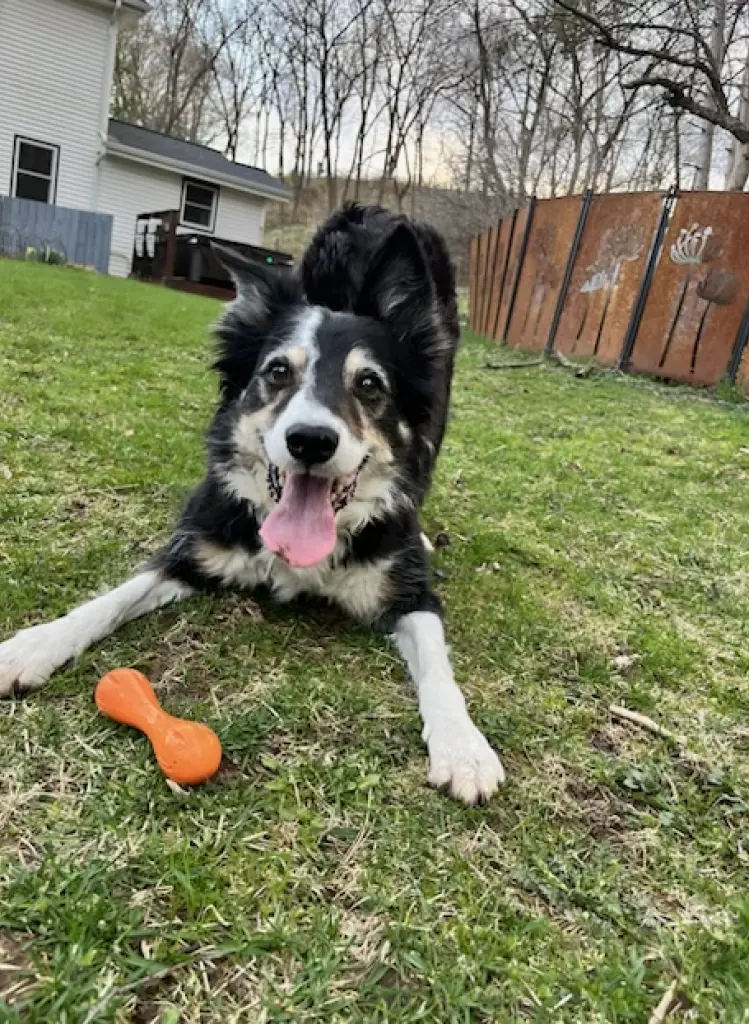
In behavioral psychology, a fundamental rule of thumb dictates that it is neurologically difficult for an animal—or a human—to experience acute fear and playfulness simultaneously. The play bow, universally recognized among canines as an invitation to engage and disarm tension, requires a dog to stretch its front legs forward while lowering its chest to the ground and keeping its rear end elevated.
By placing this instinctive greeting on a reliable cue, trainers provide nervous dogs with a behavioral "escape hatch." Over time, dogs like Monty and McConnell’s own late companion Willie learned to offer the play bow autonomously when encountering stressors, short-circuiting their reactive panic loops with a posture rooted in safety and joy.

The Spring 2025 Update: Farm Life and Resilience
Fast-forwarding to the spring of 2025, McConnell’s personal chronicle mirrors the themes of endurance seen in her rescue dogs. Navigating a complex constellation of health challenges—including a bout of COVID-19 compounded by COPD, asthma, Postural Orthostatic Tachycardia Syndrome (POTS), and Chronic Fatigue Syndrome (CFS)—McConnell shared a candid look at life on her farm.
Supported by her husband Jim, a dedicated canine nurse (her dog Maggie Mae), and routine medical care, the recovery process has been gradual. Interspersed with updates on struggling asparagus patches, thriving strawberries, and a resilient columbine flower defying daily foot traffic and garden hoses, the 2025 dispatch serves as a poignant reminder that growth and persistence often happen in the most hostile conditions.

Supporting Context & Metrics: Why the Play Bow Reigns Supreme
To understand why McConnell champions the play bow above all other cues, one must examine the intersection of behavioral psychology, physical physiology, and daily management.
1. Neurological and Psychological De-escalation
When a dog is triggered by external stimuli—such as a mail carrier at the door, a passing dog outside a window, or an unfamiliar environment—their sympathetic nervous system shifts into a fight-or-flight response. Traditional commands like "sit" or "down" require the dog to halt forward momentum and suppress impulse, which can sometimes increase internal frustration.

Conversely, the play bow is inherently prosocial. It signals cooperation rather than subjugation. When executed on cue, it floods the dog’s cognitive pathways with associations of safety, play, and mutual understanding, effectively lowering cortisol levels and mitigating anxiety.
2. Canine Physiology and Injury Prevention
Beyond its psychological utility, the play bow is celebrated by veterinary professionals for its physiological benefits. Dr. Chris Zink, a leading authority in canine sports medicine, physiology, and structure, emphasizes the critical role of pre-exercise stretching in preventing canine injuries.

Data from sports medicine seminars hosted by the Association of Professional Dog Trainers (APDT) indicate that the vast majority of injuries in athletic and companion dogs are not acute trauma events, but rather chronic soft-tissue injuries stemming from repetitive use and tight muscles. Because these injuries often develop insidiously, they frequently go undetected by general practitioners and owners alike.
A standard play bow functions as a natural, active stretch for the shoulders, triceps, back, and hindquarters. Incorporating it into a pre-walk or pre-play routine primes the musculoskeletal system, dramatically reducing the risk of progressive wear-and-tear injuries.

3. The Ultimate "Incompatible Behavior"
In professional dog training, addressing an unwanted behavior is often most successfully achieved by teaching an incompatible behavior—an action that physically or mentally prevents the dog from performing the undesirable habit simultaneously.
- Window Barking: Instead of bolting to the glass to bark at a neighbor, a dog trained to offer a play bow upon seeing a trigger redirects its nervous energy into a relaxed, communicative posture.
- Door Scratching: If a dog resorts to scratching interior door frames to signal a need to go outside, redirecting that anticipatory energy into a structured bow provides a clean, civilized alternative.
Official Perspectives and Expert Insights
Industry leaders continue to validate the utility of alternative behavioral cues in modern obedience frameworks.

- Dr. Patricia McConnell on Behavioral Hierarchy: "If I were queen, I’d decree it be a part of every dog training class in the universe… A play bow moves down and backwards, but the move is friendly, relaxed, and an invitation for lots of action in the near future."
- Dr. Chris Zink on Canine Conditioning: Through her extensive research on canine biomechanics, Dr. Zink has consistently advocated for structured physical preparation. Her work underscores that mental cues which simultaneously promote physical conditioning—such as active stretching via bowing—yield exponential health dividends over a dog’s lifespan.
- The Training Community: Renowned online educators, including training platform creators like Kikopup, have widely adopted step-by-step tutorials for teaching the bow from a stand or a down position, cementing its status as an essential modern skill rather than a mere parlor trick.
Future Outlook: Integrating Mindfulness and Movement
As the landscape of animal care continues to evolve away purely aversive methods toward relationship-based, holistic training models, the emphasis on emotional well-being has never been more prominent.
The enduring lesson of Monty’s recovery and McConnell’s ongoing farm reflections points toward a unified philosophy: resilience is built through small, deliberate actions. Whether it is teaching a reactive rescue dog to lower its chest in a gesture of playful defiance against fear, or watching a resilient columbine bloom despite being trampled by a garden hose, the message remains clear.

For dog owners looking to deepen their bond and enhance their pet’s quality of life, the path forward is simple. As experts suggest, setting aside a few minutes each day to shape a play bow not only unlocks a powerful tool for behavior modification and physical conditioning, but it also guarantees a shared moment of joy between human and hound.
What is your dog’s go-to cue for breaking tension? The conversation surrounding foundational training methods remains wide open.