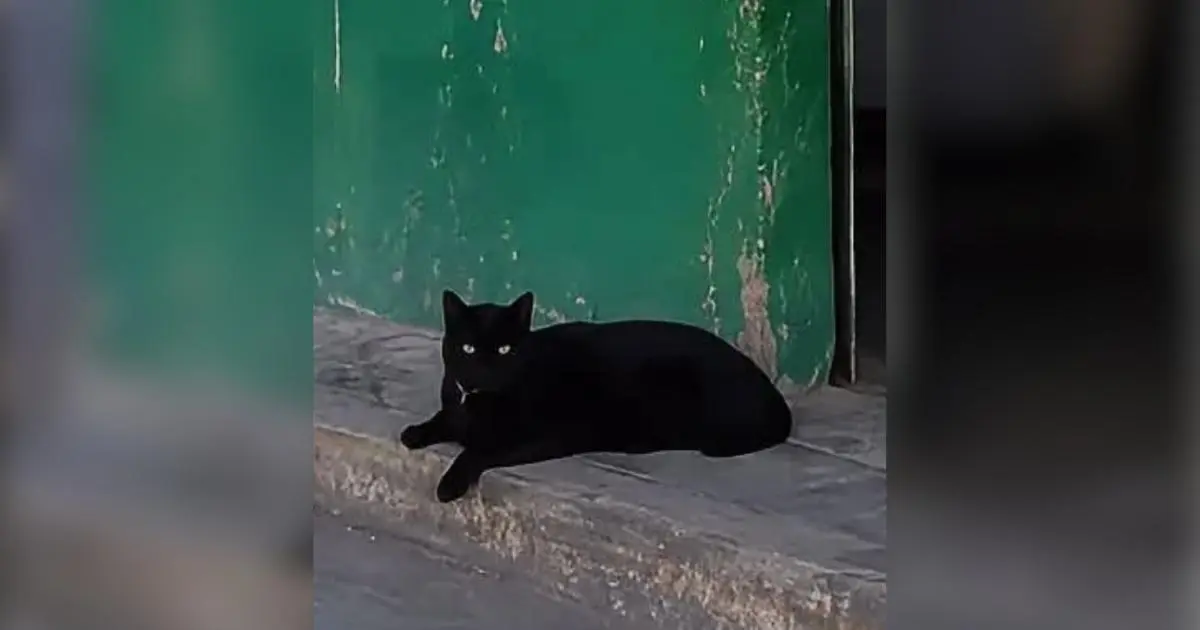
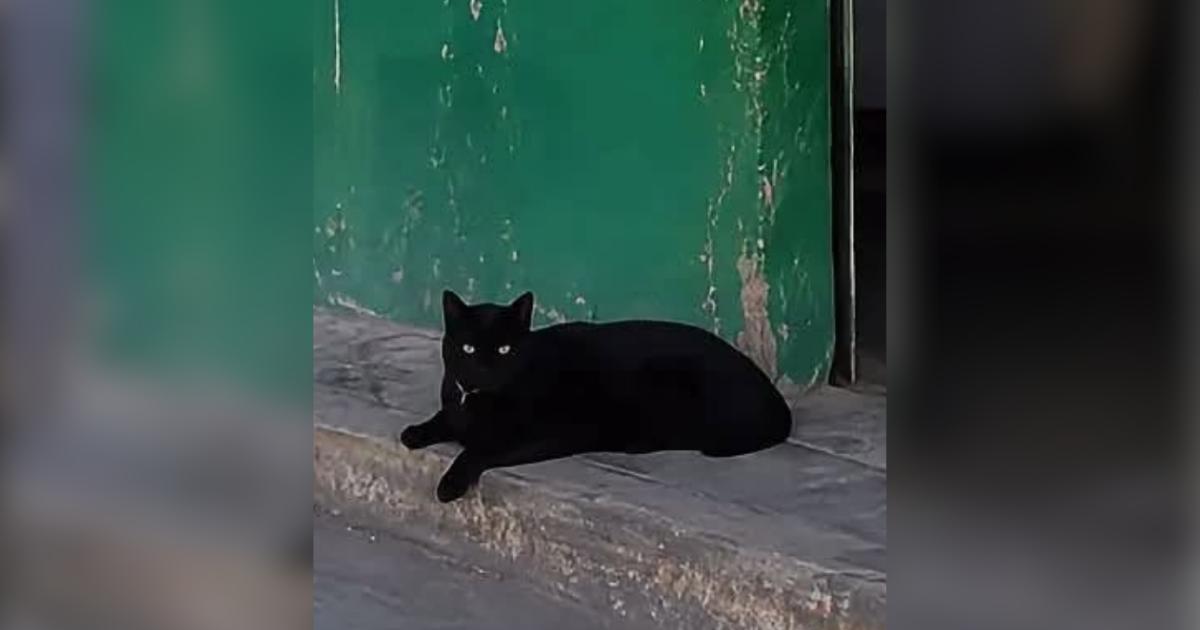
In the bustling neighborhoods of Mexico, the daily rhythm is frequently punctuated by the sights, sounds, and aromas of small, family-owned enterprises. Among these, the traditional tortillería serves not merely as a commercial establishment providing a dietary staple, but as an indispensable anchor for the local community. It was within one such unassuming shop that a profound narrative of survival, empathy, and enduring partnership unfolded. This is the chronicle of Pachuco—a feline whose trajectory shifted from the precarious existence of an unhoused street kitten to the co-eponymous figurehead of a thriving local institution.
This investigative profile examines the convergence of urban stray animal welfare and grassroots community building in Mexico. Through a detailed analysis of Pachuco’s integration into the business owned by Señora Mago—affectionately known to patrons as “La Güera”—this report explores the socioeconomic dynamics of neighborhood commerce, the psychological impacts of compassion on vulnerable fauna, and the rare phenomenon of a stray animal becoming legally and culturally enshrined in a commercial enterprise. By synthesizing firsthand observations, community impacts, and the operational evolution of the shop, this article provides an authoritative account of how a single act of mercy generated multi-year community enrichment.
Detailed Chronology
The Genesis of an Unlikely Partnership
The narrative of Pachuco begins in the unregulated, unpredictable terrain of the urban streets. As a young, scrawny black kitten navigating a landscape fraught with scarce resources, Pachuco’s daily routine was defined by deprivation. The mechanics of survival required constant vigilance: evading vehicular hazards, competing with larger feral animals for scraps, and enduring extreme weather without reliable shelter. In zoological terms, juvenile street cats face high mortality rates due to malnutrition, parasitic loads, and environmental exposure. Pachuco was no exception; his physical frame was thin, his coat lacked the luster of proper nutrition, and his behavioral disposition was shaped by hyper-vigilance.
The turning point occurred on an ordinary afternoon when an irresistible olfactory stimulus cut through the ambient city noise: the rich, earthy, comforting aroma of freshly pressed and baked corn tortillas. Drawn by hunger, the kitten tracked the scent to a partially open doorway of a neighborhood tortillería.
Stepping across the threshold, Pachuco encountered an environment entirely foreign to his lived experience. The shop was a symphony of industrial hums, rhythmic presses, and human activity. The air was thick with warmth and steam—a stark contrast to the biting cold or harsh heat of the pavement outside. Approaching the counter with the halting, defensive gait characteristic of an animal accustomed to hostility, the kitten prepared for the inevitable expulsion.
The Intercession of Señora Mago
Behind the counter stood Señora Mago, locally celebrated as La Güera. Having dedicated over two decades to the meticulous craft of tortilla-making, La Güera’s daily routine was anchored in consistency. She had witnessed the ebb and flow of the neighborhood—its economic shifts, generational changes, and countless transient customers. Yet, the visitor who presented himself at her counter on that particular day did not belong to the human ledger.
Confronted with a fragile, hungry black kitten, La Güera exercised a choice that diverged sharply from standard commercial protocols. Rather than sweeping the intruder away or prioritizing sterile operational environments, she made an intuitive decision rooted in empathy. She permitted the cat to remain.
For Pachuco, this momentary suspension of hostility served as an immediate physiological and psychological reprieve. Without the imperative to instantly resume his search for sustenance and safety, the kitten was able to rest. This foundational act of hospitality dissolved the rigid defensive barriers typical of feral juveniles, establishing the bedrock for a relationship that would span years.
Consolidation and Community Integration
Following his initial introduction to the shop, Pachuco’s visits transitioned from opportunistic forays to a formalized routine. Animal behaviorists note that stray felines operating within urban environments quickly map resource-rich territories. However, Pachuco’s return to the tortillería transcended mere caloric acquisition; it was an investment in spatial security and social bonding.
Day by day, the kitten’s physical condition improved. Regular access to food, combined with the ambient warmth of the industrial machinery, facilitated healthy development. Concurrently, the psychological transformation was palpable. The once-frightened animal began to exhibit relaxed postures, utilizing the shop as both a domicile and a lookout post.
As months elapsed, Pachuco’s presence became institutionalized within the micro-economy of the store. Regular patrons—ranging from local merchants to school children—began to anticipate his presence. The black kitten evolved from an anonymous stray into a localized celebrity. Children would stop by not only to purchase provisions but to interact with the shop’s resident feline, while adult customers integrated the cat into their routine social exchanges with La Güera. What began as a transient encounter cemented itself as a permanent socioeconomic fixture of the neighborhood.
Supporting Context & Metrics
The Socioeconomic Landscape of Urban Animal Welfare in Mexico
To fully comprehend the significance of Pachuco’s integration, one must contextualize the broader systemic challenges regarding stray animal populations in urban centers across Mexico. According to data from animal welfare organizations and municipal health authorities, Mexico possesses one of the highest stray dog and cat populations in Latin America. Millions of unsterilized companion animals inhabit urban and semi-urban zones, placing immense strain on municipal shelter systems and resulting in widespread animal neglect.
Within this macro-level crisis, localized interventions by individual citizens serve as the primary safety net for vulnerable fauna. Small business owners—particularly those operating open-air or semi-open establishments like bakeries, markets, and tortillerías—frequently act as de facto animal caretakers. These commercial spaces offer strategic advantages for stray animals:
Thermal Regulation: Industrial ovens and machinery provide reliable warmth during cooler months.
Sustenance Access: Proximity to food preparation naturally generates organic waste or intentional provisioning by sympathetic workers.
Territorial Security: Enclosed or semi-enclosed structures protect animals from vehicular traffic and aggressive pack animals.
Pachuco’s trajectory is representative of this micro-philanthropic network, demonstrating how informal community structures bridge the gap left by underfunded municipal animal control and welfare frameworks.
Brand Evolution and Legal-Commercial Recognition
The culmination of Pachuco and La Güera’s partnership materialized during a critical operational phase: structural and aesthetic renovations of the storefront. Businesses undertaking rebranding typically focus on modernizing typography, updating color palettes, or emphasizing historical longevity. For La Güera, however, the renovation offered an opportunity to align the legal and visual identity of the enterprise with its lived reality.
After more than a decade of shared operational history, maintaining a single-name sign featuring only the proprietor’s moniker no longer reflected the true identity of the business. The cat had transitioned from a passive beneficiary of the shop’s charity to an active component of its commercial goodwill. Consequently, La Güera authorized a comprehensive update to the storefront’s branding.
The establishment was formally christened “Tortillería La Güera y Pachuco.” Crucially, this renaming was accompanied by professional visual branding elements, including a custom illustration of a black cat integrated into the official signage. This administrative action formalized an informal bond, elevating a neighborhood stray to co-status in a commercial enterprise. In the annals of small business branding, the intentional inclusion of a rescued animal on official signage represents a rare fusion of sentimental loyalty and localized marketing authenticity.
Official Statements & Local Perspectives
While formal corporate press releases are absent in an enterprise of this scale, the collective voice of the neighborhood provides an authentic registry of the impact generated by La Güera and Pachuco. Ethnographic interviews with local patrons reveal a profound appreciation for the narrative embodied by the storefront.
"When you walk into La Güera’s shop, you aren’t just buying food; you are entering a space that has a soul," notes a long-standing resident and neighborhood historian. "Pachuco is as much a part of this street as the cobblestones. Seeing his face on the sign outside makes you realize that compassion isn’t an extra service here—it is the foundation of how business is conducted."
Señora Mago herself, reflecting on the decade-long journey, maintains a humble perspective regarding her initial decision to permit the starving kitten inside.
"He was just a tiny thing looking for warmth," La Güera remarks when recounting the kitten’s arrival. "I didn’t think about rules or what people might say. I just saw a living creature that needed help. I opened the door because it was the right thing to do. I never imagined that he would end up running the place alongside me, or that his name would hang up there on the wall for everyone to see. But looking back, the shop was never just mine after he walked in. It belongs to both of us now."
Local merchants operating adjacent to the tortillería echo these sentiments, noting that the presence of the shop’s feline ambassador has measurably enhanced pedestrian engagement. The storefront frequently acts as a social node where community members pause, converse, and share news—facilitated in large part by the approachable, welcoming atmosphere anchored by La Güera and her feline companion.
Future Outlook
As urban centers across Latin America continue to modernize, traditional family-owned enterprises face increasing pressure from corporate retail chains and shifting consumer habits. In this climate of rapid commercial homogenization, the unique cultural capital held by establishments rooted in authentic local narratives becomes a vital survival mechanism.
The formal integration of Pachuco into the corporate identity of "Tortillería La Güera y Pachuco" secures more than just a permanent home for a formerly destitute animal; it establishes a resilient brand identity impervious to corporate replication. Consumers increasingly prioritize authenticity, ethical business practices, and emotional resonance when supporting local commerce. By enshrining animal welfare into the literal signifiers of her enterprise, La Güera has future-proofed her business through community goodwill.
Looking ahead, the legacy of Pachuco serves as an instructive case study for urban sociologists, animal welfare advocates, and small business strategists alike. It demonstrates that commercial viability and profound social empathy are not mutually exclusive; rather, when combined, they create sustainable, deeply rooted community institutions. Pachuco’s journey—from an anonymous shadow on the streets to an immortalized figure on a neighborhood storefront—stands as an enduring testament to the transformative power of a single, uncalculated act of kindness.