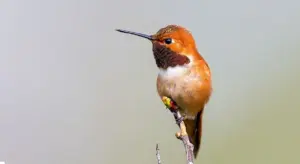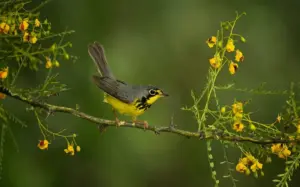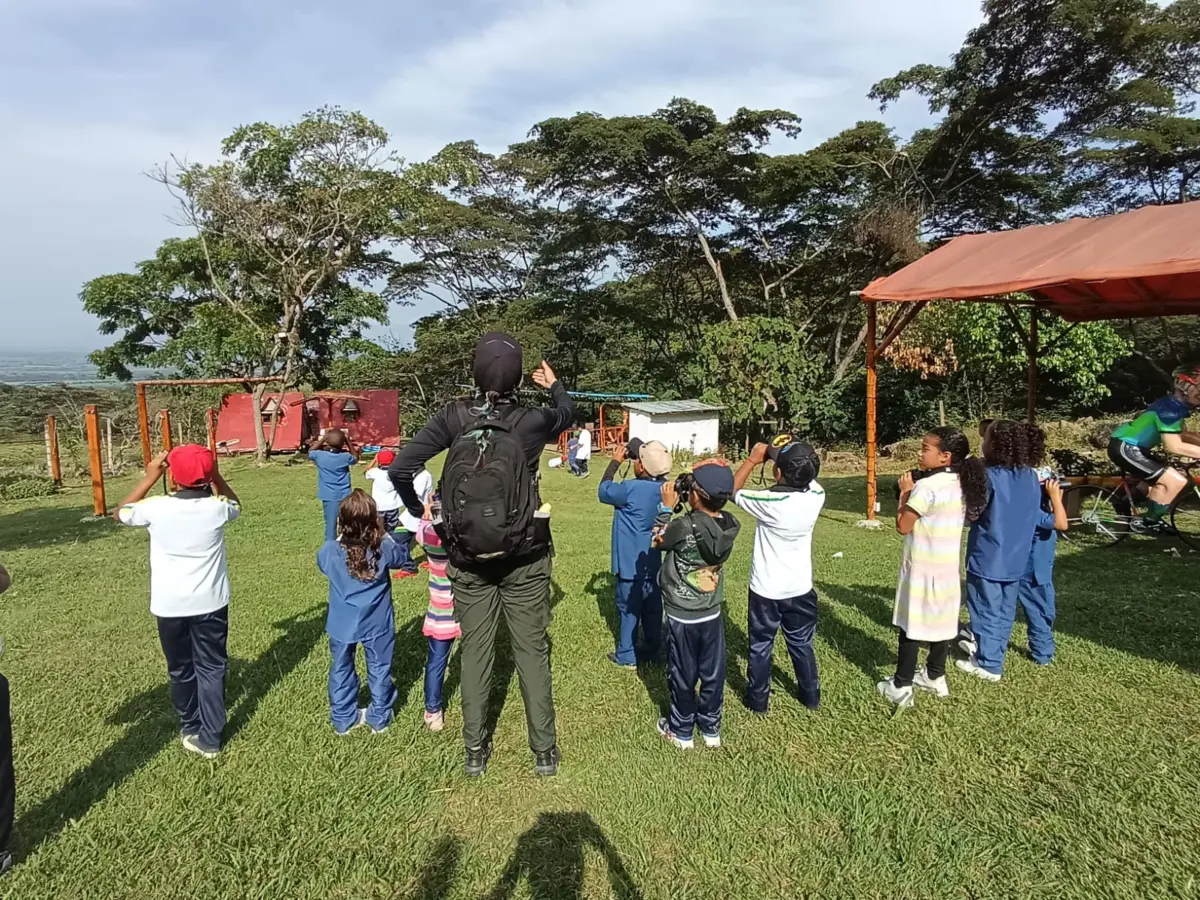

In the rugged terrain of Colombia’s Central Andes and Southwestern regions, a quiet revolution in environmental education is taking root. For generations, the communities nestled within these critical biodiversity hotspots have grappled with systemic poverty, social inequality, and the lingering scars of rural conflict. Yet, amid these socio-economic complexities, a unifying and transformative force has emerged: the humble, awe-inspiring migratory bird.
Through an innovative educational framework spearheaded by the National Audubon Society, local children are learning not merely to identify the feathered visitors passing through their backyards, but to view themselves as vital stewards of the global ecosystem. Launched initially as a collaborative pilot program in 2021 by Audubon Field Conservation Manager Catalina Casas, community education advisor Ligia García, and a coalition of visionary educators, the "Birds to Discover and Conserve" curriculum has fundamentally reshaped how rural schools approach environmental science.
By seamlessly weaving avian conservation into core subjects—ranging from science and mathematics to social studies, language arts, and citizenship education—the initiative transcends traditional classroom boundaries. It marries rigorous academic standards set by the Colombian Ministry of Education with immersive, hands-on outdoor learning. As the program expands its reach and deepens its international partnerships, it offers a compelling blueprint for how localized ecological education can bridge geographical divides, foster cross-border empathy, and convert youthful curiosity into lifelong conservation advocacy.
Detailed Chronology of the Initiative
2021: Planting the Seeds in the Colombian Andes
The genesis of the program dates back to 2021, a period when Audubon sought to address both ecological vulnerability and community resilience in Colombia. Recognizing that birds possess a unique, universal capacity to spark human curiosity, project leaders set out to design a comprehensive educational pilot.
Working closely with a dedicated cohort of rural teachers in the Central Andes and Southwestern regions, Casas and García co-designed a curriculum tailored specifically to schools operating in priority conservation areas. The challenge was multifaceted: create instructional materials that were academically rigorous, culturally resonant, and adaptable to under-resourced classrooms. The result was a suite of teaching guides and illustrated student workbooks that treated the natural environment as an extension of the classroom.
The Pilot Phase: Reaching the Grassroots
During its initial rollout, the pilot program successfully embedded itself within 20 rural schools, directly engaging nearly 700 students. Utilizing a "train-the-trainer" methodology, the initiative empowered educators—who often face immense pedagogical and logistical hurdles in remote areas—with deep knowledge of bird identification, local ecology, and conservation science.
Rather than treating conservation as an isolated elective, teachers integrated avian themes into everyday lessons. Students tracked migration patterns through mathematics, explored the cultural histories of local fauna in language arts, and debated environmental policies in citizenship classes. The impact was immediate: students began creating bird-friendly gardens, mapping local habitats, and documenting traditional ecological knowledge passed down through generations.
2026: Expansion, Reinforcement, and International Bridges
Building on the sustained momentum of the pilot—where participating teachers independently adapted and maintained the curriculum for years—Audubon renewed and supercharged its engagement for 2026. The renewed project extended targeted support to five additional schools, pouring fresh educational resources and enhanced teacher-training frameworks into the region.
Crucially, the 2026 iteration unlocked an entirely new dimension of learning: cross-border virtual exchanges. Recognizing that migratory birds defy human geopolitical boundaries, the project organizers engineered a series of virtual exchange sessions. These sessions connected Colombian students directly with peers across four distinct United States schools and institutional partners, including North Canaan Elementary School, the Sharon Audubon Center, the Columbus Spanish Immersion Academy, World Language Middle School, Columbus International High School, and the Grange Insurance Audubon Center in Ohio.
Through guided research modules, students from vastly different cultural and economic backgrounds investigated shared avian species, charting their migration routes, dissecting their ecological roles, and ultimately answering a unifying, profound question: Why is our school a welcoming place for birds? This cross-cultural dialogue transformed abstract ecological concepts into living, breathing human connections.
Supporting Context & Metrics: Measuring Impact and Reach
To fully appreciate the scope of the "Birds to Discover and Conserve" curriculum, one must examine the socio-ecological landscape it navigates and the systematic metrics used to evaluate its success.
Navigating Adversity in Priority Conservation Areas
The schools participating in this initiative are not located in affluent suburban districts; they are situated in and around high-priority conservation corridors where rural poverty and the echoes of regional conflict have historically strained community resources. In these settings, schools often serve as the emotional and cultural anchors of the community. By embedding environmental conservation into the core curriculum, the program provides psychological respite and civic empowerment, teaching children that their local environment—often globally significant for biodiversity—is a treasure worth defending.
Alignment with Strategic Frameworks
The program’s progression is methodically tracked against the milestones of Audubon’s broader institutional strategy, ensuring that every localized lesson contributes to measurable conservation outcomes. Key performance indicators include:
- Pedagogical Capacity: The number of educators trained and equipped to independently deliver bird-focused environmental curricula.
- Student Engagement: Qualitative and quantitative assessments of students’ expanded knowledge regarding local and migratory species.
- Habitat Enhancement: The physical transformation of school grounds and community spaces into bird-friendly micro-habitats (e.g., native plantings, water stations, and organic gardens).
- Cultural Documentation: The archiving of traditional ecological knowledge, local bird names, indigenous folklore, and community stories.
The Anatomy of the Cross-Border Exchange Metrics
During the 2026 virtual exchange sessions, metrics of success extended far beyond traditional academic testing. Students completed collaborative research portfolios that tracked:
- Species Mapping: Comprehensive documentation of avian traits and habitat dependencies across both hemispheres.
- Cultural Sharing: The exchange of multimedia presentations detailing school life, local community values, and cultural traditions.
- Empathy and Connection: Qualitative reflections demonstrating a shift in how students perceive migration—moving from a purely biological phenomenon to a tangible bond linking distant human communities.
Official Statements and Perspectives
The true measure of any educational initiative lies in the voices of those who implement it on the ground. The human element of the Audubon program is anchored by a passionate network of consulting biologists, cross-continental administrators, and front-line educators.
Recognizing the Coalition of Partners
The success of this binational educational bridge relies on a deeply committed coalition. Special recognition is owed to consulting biologist Kelly Orozco for her technical expertise. In Colombia, the pedagogical heavy lifting is championed by an extraordinary group of educators:
- María Fernanda Beltrán (La Selva School)
- Sussy Dobrisqui (Santa Elena School)
- María Camila Idárraga & Valeria Rubio (Providencia School)
- Henry Rincón (La Inmaculada School)
- María Gilma Cortés Castañeda & Claudia Cortés Castañeda (J.A. Galán School)
Their efforts are mirrored in the United States by a dedicated alliance of educators and community leaders, including Denise Sorrell (North Canaan Elementary School); Wendy Miller (Sharon Audubon Center, CT); Patricia Vázquez and Janie Serna (Columbus Spanish Immersion Academy); Lesly Calhoun (World Language Middle School); Katherine Kimnach (Columbus International High School); and Anne Scott (Grange Insurance Audubon Center, OH).
A Teacher’s Perspective: María Gilma Cortés Castañeda
Few accounts capture the transformative power of the curriculum quite as vividly as the testimony of María Gilma Cortés Castañeda, an educator at the José A. Galán School:
"My name is María Gilma Cortés Castañeda, and I am a teacher at José A. Galán School. In 2022, I joined the teacher training program led by Audubon in partnership with VivoCuenca, where we learned how to use the Birds to Discover and Conserve curriculum.
The experience gave us tools to integrate bird conservation across different subjects and strengthened our commitment to environmental education. The materials and training have been invaluable in helping us develop engaging activities inside and outside the classroom, including games, murals, illustrated bird albums, bird feeders and water stations, and birdwatching field trips.
The most rewarding part has been seeing how our students have embraced the project and now understand the important role birds play in healthy ecosystems. Through school initiatives such as Living Classroom and Imagination Forum, we have encouraged their curiosity about nature while involving families in the learning process.
The continued support from Audubon and VivoCuenca, along with the opportunity to participate in the Bird Tourism Congress, has made this experience even more meaningful and strengthened my commitment to inspiring future generations to care for birds and the natural world."
Future Outlook: Building a Lasting Culture of Stewardship
As the "Birds to Discover and Conserve" initiative looks toward the horizon, its ultimate ambition extends far beyond the immediate lifespan of any single funding cycle or institutional project. The long-term vision is the cultivation of a self-sustaining, intergenerational culture of environmental stewardship throughout rural Colombia and its international partner communities.
Sustainability Through Independence
By prioritizing a "train-the-trainer" model, the program ensures that pedagogical power remains firmly in the hands of local teachers. Armed with illustrated student workbooks, comprehensive teaching guides, and cross-curricular strategies, educators are fully equipped to perpetuate these lessons independently year after year. This decentralization guarantees that new waves of elementary and middle school students will continue to experience the wonders of local ornithology, regardless of external project timelines.
Empowering Youth as Civic Advocates
Education within this framework is purposefully designed to bridge three distinct phases: Awareness, Engagement, and Action. By translating classroom curiosity into tangible community projects—such as organizing bird-themed festivals, designing wildlife-friendly school gardens, and preserving indigenous oral histories—students cease to be passive learners. Instead, they evolve into confident conservation advocates within their families, schools, and broader municipal societies.
A Borderless Future for Conservation
Ultimately, the program serves as a profound metaphor for ecological interdependence. Through the dual lenses of rigorous scientific inquiry and intimate cross-border cultural exchanges, children in the Colombian Andes and the classrooms of Ohio discover a universal truth: migratory birds recognize no political borders, carry no passports, and heed no man-made walls. In safeguarding the habitats that support these magnificent travelers, these young students are discovering that protecting the natural world is a shared human responsibility—one flight path, one classroom, and one community at a time.