
Executive Overview
Every autumn, a staggering invisible highway fills the skies above North America. Billions of migratory songbirds embark on epic, multi-thousand-mile odysseys from boreal breeding grounds in Canada down to wintering habitats in Central America, South America, and the Caribbean. For these featherweight navigators, the journey is an unrelenting gauntlet of physical endurance, natural hazards, and ecological fragmentation. Flying over treacherous mountain ranges, vast agricultural tracts, and sprawling urban lightscapes, they search desperately for vital resting and refuelling stations where land meets water.
In southwest Florida, one particular sanctuary has emerged as a beacon of survival along the Atlantic Flyway: the Audubon-managed Corkscrew Swamp Sanctuary. Spanning 13,000 acres of protected, mosaic habitats—and proudly recognized as a Ramsar-designated Wetland of International Importance—this sanctuary acts as a lifeline for weary travelers.
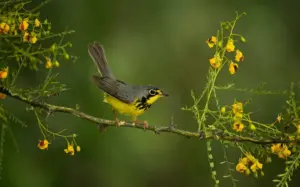
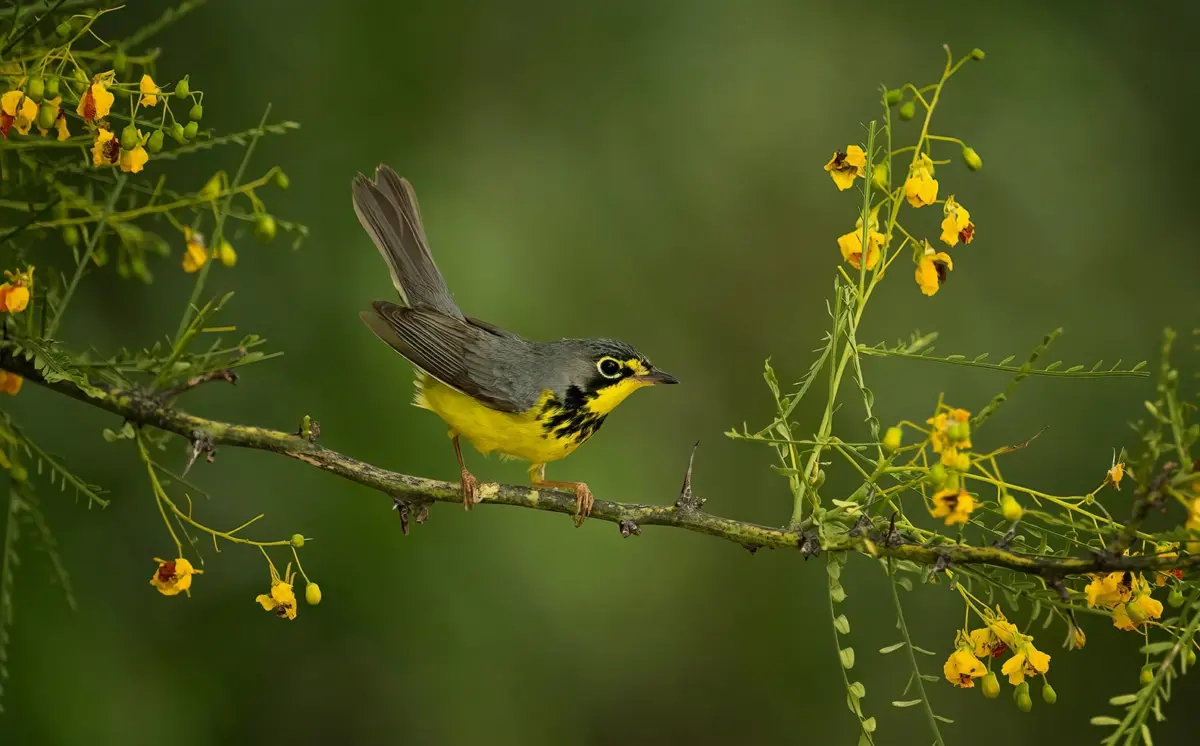
Recently, the sanctuary made headlines within the ornithological community when its director spotted a rare Canada Warbler foraging near North Lettuce Lake. This unexpected sighting highlights a broader, fascinating phenomenon: the arrival of "vagrant" or rare bird species that deviate thousands of miles from their traditional migration corridors. Backed by cutting-edge tracking technologies like the Motus Wildlife Tracking System and Audubon’s Bird Migration Explorer, scientists are beginning to decode the complex mechanics of avian navigation, the disruptions caused by extreme weather and youth, and the evolutionary high-stakes gamble faced by birds pushed off-course.
Detailed Chronology: The Anatomy of a Migratory Journey
To understand the significance of a sanctuary like Corkscrew, one must first retrace the arduous steps of the migratory process. The narrative of a songbird’s flight begins long before it reaches the subtropical wetlands of Florida.
Phase 1: The Departure from the Boreal Forest
The journey typically ignites deep within the boreal forests of eastern Canada during late summer. Driven by shifting photoperiods (day length) and an innate biological clock, songbirds undergo hyperphagia—a period of intense feeding to build up crucial fat reserves. These fat deposits serve as the aviation fuel that will power thousands of miles of nocturnal flight.
Phase 2: Navigating the Flyway
Once aloft, songbirds face a barrage of environmental variables. They rely on an extraordinarily sophisticated suite of navigational tools. Research indicates that migratory songbirds possess specialized light-sensitive proteins (cryptochromes) in their eyes that allow them to "see" the Earth’s magnetic field, providing a geomagnetic compass. Simultaneously, they orient themselves using celestial cues—tracking the rotation of the night sky around the North Star—and integrate this information with an internal genetic migratory program.
However, this system is far from infallible.
- The Inexperience Factor: Juvenile birds making their very first migration rely entirely on their internal genetic "map" without the benefit of past experience. Small atmospheric disturbances, localized wind shears, or slight genetic miscalculations can send them hundreds of miles off course.
- Severe Weather Events: Large-scale meteorological disturbances can completely rewrite a migration path overnight. A prime historical example occurred during Hurricane Idalia in 2023, when fierce winds swept hundreds of American Flamingos off their normal routes between Cuba and Mexico, depositing them deep into Florida and across the Southeast—where many remain to this day.
Phase 3: The Land-Water Interface and Refuge at Corkscrew
For birds moving down the Atlantic Flyway, the Florida peninsula represents a critical geographical funnel. When tired songbirds reach the southern terminus of the mainland, they face a daunting decision: whether to embark on a perilous non-stop trans-oceanic flight across the Gulf of Mexico or the Caribbean Sea, or to navigate the Florida keys.
Before making this leap, they require dense, protected ecosystems to rest, evade predators, and rebuild depleted fat reserves. This is where Corkscrew Swamp Sanctuary steps in. Offering a diverse tapestry of cypress swamps, wet prairies, and marshes, the sanctuary provides a buffet of insects and plant matter essential for recovery. Over the years, ornithologists have documented more than 268 bird species within its borders, cementing its status as an Audubon Important Bird Area and a regional gateway for the Great Florida Birding and Wildlife Trail.
Supporting Context & Metrics: Decoding Vagrant Species and Range Anomalies
The recent sighting of a Canada Warbler at Corkscrew Swamp Sanctuary by Sanctuary Director Keith Laakkonen serves as a fascinating case study in avian vagrancy.
The Canada Warbler Enigma
Typically, Canada Warblers breed in the damp, cool forests of Canada and the northeastern United States. Once their breeding season concludes, standard range maps dictate that they travel west of the Appalachian Mountains, cutting through the Mississippi Flyway toward Mexico and Central America while consciously avoiding the southeastern coastal states.
Yet, avian biology rarely fits neatly inside human-drawn map boundaries. According to Laakkonen, while a small trickle of Canada Warblers moves down through Florida annually—favoring the heavily monitored southeast coast—spotting one in southwest Florida is a rarity. eBird data indicates this was only the third recorded observation of a Canada Warbler at the sanctuary, though at least seven have been documented across Collier County over recent decades. Because Collier County spans a landmass larger than the state of Delaware, experts believe many more individuals pass through unnoticed, perhaps utilizing unconventional routes across the Caribbean. Furthermore, science has identified three genetically distinct populations of Canada Warblers, suggesting that fine-scale genetic differences may heavily influence individual migration trajectories.
A History of Rare Visitors
The Canada Warbler is far from the only anomaly to grace Corkscrew’s canopies. In recent years, staff, researchers, and citizen scientists have logged a parade of extraordinary vagrants, including:
- An overwintering Wilson’s Warbler
- A Western Tanager
- A Lazuli Bunting
These sightings raise a compelling ecological question: What drives birds so far out of bounds, and what becomes of them once they arrive?
Official Statements & Expert Perspectives
To unpack the complexities of vagrancy and survival, avian researchers point to the delicate balance between biological programming and sheer environmental chance.
Dr. Bryant Dossman, Director of the Audubon Everglades Research Station, sheds light on the nature of these misplaced travelers. "Vagrants are interesting in that they are rare occurrences by nature," Dr. Dossman explains. "We find them in Florida sometimes because we are along their general trajectory, but their internal compasses or external conditions have pushed them past their expected boundaries."
Detailing the extreme vulnerability of young migrants, Dr. Dossman emphasizes the steep learning curve built into avian life cycles:
"The first migration is always the most difficult since young birds are relying solely on their internal map and don’t have the luxury of experience to guide them, and so even small disturbances can lead them off course. And sometimes these internal maps can just be wrong when they haven’t experienced migration before."
When asked about the ultimate fate of these misplaced birds, Dr. Dossman notes the sobering reality of wildlife biology. While many perish due to unfamiliar predators, starvation, or unsuitable habitat, some beat the odds:
"Sometimes a bird can get lucky, find good habitat, and survive winter to return north the following spring. Or it could be an early colonizer that returns the following year, potentially founding a population in a new area, which, over long enough timelines, is one way they end up becoming new subspecies."
Echoing these sentiments, Sanctuary Director Keith Laakkonen emphasizes the day-to-day realities of managing such a vital ecological crossroads. "There are always a few Canada Warblers that come down through Florida this time of year," Laakkonen notes, highlighting how crucial localized habitat preservation is for catching these exhausted travelers before they attempt further water crossings.
Future Outlook: Technology, Tracking, and Conservation in a Changing World
As urbanization, habitat fragmentation, and climate change alter the face of the globe, the challenges facing migratory songbirds are intensifying. Protecting critical landscapes like Corkscrew Swamp Sanctuary is no longer just a local conservation priority—it is an international imperative.
The Rise of Advanced Avian Tracking
For decades, the ultimate fate of vagrant songbirds remained a mystery due to the extreme difficulty of following gram-sized animals across thousands of miles. Today, a technological revolution is transforming ornithology:
- The Motus Wildlife Tracking System: Run collaboratively by Birds Canada and international partners, Motus utilizes automated radio telemetry to track small flying animals in real time. Tiny nanotags affixed to birds allow researchers to track their precise movements when they pass within range of automated receiver towers. Notably, the Motus station installed at Corkscrew Swamp Sanctuary has successfully detected 28 birds across 17 distinct species since 2022.
- The Bird Migration Explorer: Developed by Audubon’s Migratory Bird Initiative alongside numerous scientific partners, this comprehensive online platform aggregates data from Motus, satellite telemetry, and citizen science programs. It serves as an accessible digital window for researchers and bird enthusiasts alike, illuminating the heroic annual journeys of more than 450 bird species and identifying the fragile bottlenecks along their routes.
A Century of Stewardship
For more than a century, the National Audubon Society has worked tirelessly to secure and preserve the ecological infrastructure that birds rely upon for breeding, rest, and survival. Sanctuaries like Corkscrew prove their worth year after year, offering a reliable refuge not only for millions of routine migrants but also for the occasional lost wanderer fighting against the odds.
Ultimately, the birds deliver a clear, urgent message: they need connected, protected natural spaces to complete their journeys. As human visitors also turn to Corkscrew Swamp Sanctuary to find solace and connection in the natural world, the preservation of these wetlands stands as a shared commitment to safeguarding the fragile threads of our planet’s biodiversity for generations to come.