
Executive Overview
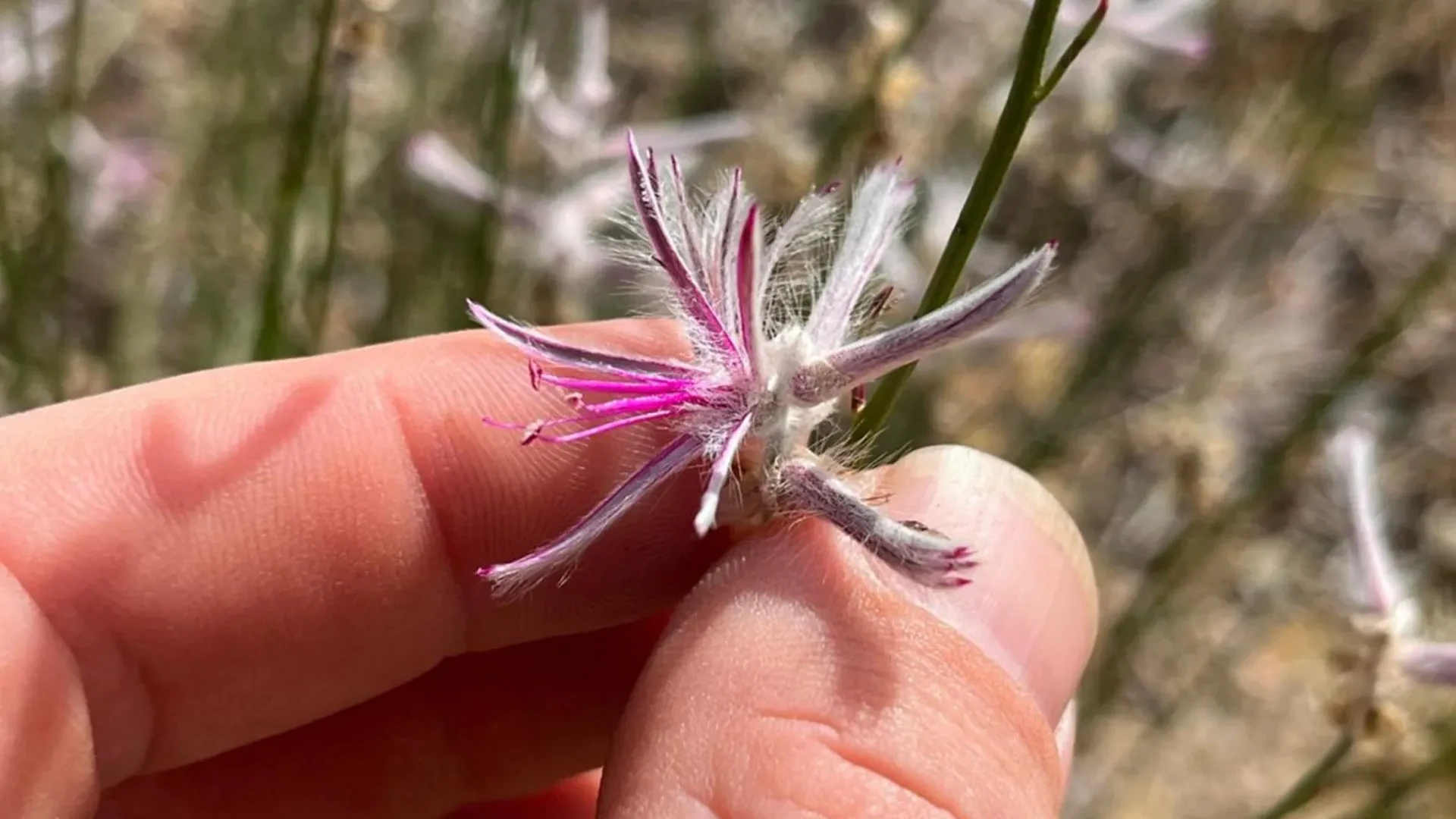
In the vast, sun-bleached expanse of northern Australia’s remote outback, a botanical ghost has stepped out of the shadows. Ptilotus senarius—a delicate, low-growing shrub adorned with vibrant purple-pink blossoms that mimic the brilliant bursts of miniature fireworks—has been officially rediscovered nearly six decades after it was last documented. Long feared lost to the annals of botanical history and widely presumed extinct, the species owes its miraculous resurrection not to a heavily funded, multi-year academic expedition, but to a serendipitous digital photograph captured by a traveling horticulturalist and uploaded to a crowd-sourced citizen science platform.
This remarkable discovery, cataloged near the rugged terrain of the Gulf of Carpentaria in Queensland, marks a watershed moment for modern biodiversity research and conservation biology. It underscores a profound paradigm shift in how scientific discoveries are made: the ivory tower of traditional field research is increasingly being augmented, and sometimes outpaced, by a decentralized global army of everyday naturalists, hikers, landowners, and amateur photographers.
By bridging the gap between casual outdoor observation and rigorous academic taxonomy, platforms like iNaturalist are revolutionizing our understanding of global ecosystems. For Ptilotus senarius, the casual click of a camera shutter has transformed its conservation status from a tragic casualty of the Anthropocene to a beacon of hope. No longer classified among the approximately 900 plant species documented as extinct worldwide since 1750, the plant has been rightfully elevated to the critically endangered list. This pivotal reclassification grants botanists, ecologists, and conservation groups a vital second chance to implement targeted habitat protections, secure viable seed banks, and ensure that this rare jewel of the Australian bush is not lost a second time.
Detailed Chronology: Anatomy of a Botanical Rediscovery
The remarkable journey of Ptilotus senarius back from the brink of oblivion unfolded over several months, driven by a chain of events so improbable that scientists involved have described it as a masterclass in cosmic coincidence.
Phase 1: The Outpost Encounter
The story begins on a sprawling, privately owned pastoral property nestled deep within the rugged, sparsely populated landscapes of northern Queensland. Aaron Bean, a professional horticulturalist by trade, was on-site assisting with wildlife conservation efforts, specifically banding birds to monitor avian populations. Amidst the demanding field work, Bean’s trained eye caught sight of an unfamiliar shrub.
Unlike the resilient yet monotonous flora typical of the arid outback, this particular plant featured striking, delicate foliage and distinctive purple-pink flowers resembling feathered pyrotechnics. Recognizing that the specimen looked unusual—and potentially significant—Bean paused his primary duties to capture several photographs of the plant using his smartphone. At the time, deep in the remote interior, cellular connectivity was entirely absent. The images remained dormant on his device, resting quietly in digital storage while Bean moved on with his day.
Phase 2: The Digital Broadcast
Days later, upon returning to an area with reliable telecommunication infrastructure, Bean synchronized his device and uploaded his outback imagery to iNaturalist, a globally recognized citizen science platform that allows users to record and share observations of biodiversity.
For most users, uploading to iNaturalist is a passive act—a way to crowd-source identifications for curiosities encountered on weekend hikes. For Bean, however, this simple upload acted as a digital beacon cast into a vast ocean of global data. Millions of observations are funneled into the platform annually, creating a monumental haystack of ecological information. Yet, within this digital ecosystem, algorithms and human curiosity occasionally align to unearth profound treasures.
Phase 3: The Expert Eye
Among the countless botanical and zoological snapshots flowing through iNaturalist was the record uploaded by Aaron Bean. By pure statistical fortune, the images caught the attention of Anthony Bean, a senior botanist at the prestigious Queensland Herbarium.
Anthony Bean did not merely recognize the family or genus of the plant; he recognized the species intimately. Ten years prior, Anthony Bean had formally described and named Ptilotus senarius to science. However, despite his deep familiarity with the plant, it had remained a phantom ghost in his professional life. The last verified, physical documentation of the species in the wild dated back to 1967. For nearly sixty years, despite targeted botanical surveys and the passage of generations of researchers, the plant had stubbornly refused to show its face. Decades of fruitless searches had led the scientific community to categorize the species as likely extinct—a silent victim of environmental shifting, land management changes, or stochastic demographic collapse.
Seeing the fresh, vibrant photographs on his screen, Anthony Bean realized instantly that the plant he had written about a decade earlier was not gone after all. It was alive, thriving in a remote corner of the Queensland outback.
Phase 4: Verification and Reclassification
Recognizing the monumental nature of the observation, the two Beans—unrelated by blood but united by a shared passion for Australia’s flora—coordinated with the property owner. With official permission to access the tightly guarded private land, researchers secured physical botanical specimens, verifying the morphological characteristics of the living plants against the original type specimens housed in the herbarium archives.
With the physical evidence secured and authenticated, the scientific community could formally act. The rediscovery was meticulously documented and published in the Australian Journal of Botany, shifting Ptilotus senarius out of the tragic historical ledger of extinct flora and placing it firmly onto the critically endangered list. This administrative shift opened the door for immediate conservation interventions, transforming a fleeting digital photograph into a tangible shield protecting the species’ fragile habitat.
Supporting Context & Metrics: The Paradigm Shift of Citizen Science
The resurrection of Ptilotus senarius is far from an isolated anomaly; rather, it is emblematic of a sweeping revolution in contemporary ecological research. To understand why everyday citizens are suddenly discovering species thought lost for generations, one must examine the logistical realities of biological exploration in the modern era.
The Scale of the Wild vs. The Limits of Science
Australia is a megadiverse continent characterized by staggering ecological richness, ranging from ancient rainforests to hyper-arid deserts. However, this immense biological wealth is matched by formidable geographical challenges. The continent spans approximately 7.69 million square kilometers, much of it comprising punishing terrain, extreme climates, and sparse human infrastructure.
Professional science agencies, university departments, and state herbariums operate under chronic budgetary constraints and finite human resources. It is logistically impossible for professional taxonomists and field ecologists to survey every square kilometer of the Australian landscape on a continuous basis.
Compounding this geographic tyranny is the issue of land tenure. Approximately one-third of the entire Australian landmass is held under private ownership—comprising vast cattle stations, pastoral leases, indigenous protected areas, and privately managed agricultural holdings. These lands are largely inaccessible to the general public and are rarely entered by academic researchers without explicit, hard-to-secure permissions.
When private landowners and rural workers—people who live and work intimately on the land—are equipped with digital tools to document their environment, the scope of scientific surveillance expands exponentially. As biological researchers point out, everyday citizens effectively unlock millions of hectares of previously unmonitored private property.
The Rise of iNaturalist and Global Data Networks
Platforms like iNaturalist have evolved from casual hobbyist forums into indispensable repositories of empirical scientific data. Powered by crowdsourced identification and computer-vision machine learning, these platforms mobilize hundreds of thousands of active users worldwide.
The integration of citizen science into formal academic research is quantifiable:
- Global Reach: Studies analyzing the academic footprint of iNaturalist have revealed that data generated by the platform has been formally cited in peer-reviewed scientific papers spanning 128 countries.
- Taxonomic Breadth: Thousands of distinct plant and animal species—ranging from hyper-local endemic invertebrates to elusive vascular plants—have had their geographic distributions, seasonal behaviors, and conservation statuses updated thanks to platform contributions.
- Rediscovery Rates: Globally, citizen science platforms are increasingly credited with pulling species back from the brink. Whether unearthing plants assumed extinct or identifying entirely new species previously unknown to science, amateur naturalists are closing critical gaps in global taxonomy.
However, researchers emphasize that the utility of citizen science data depends heavily on the quality of the observations submitted. A single, tightly cropped photograph of a blooming flower is frequently insufficient for definitive taxonomic identification, particularly within diverse genera where closely related species share near-identical floral morphologies.
To maximize the scientific value of field observations, leading biologists urge citizen scientists to adopt rigorous documentation practices:
- Holistic Plant Profiling: Beyond capturing the primary flower, observers should photograph leaves, bark, branching patterns, root systems, and the overall habit of the mature plant.
- Contextual Environmental Data: Recording microhabitat details—such as soil composition, moisture levels, slope orientation, and surrounding companion vegetation—provides critical ecological context.
- Behavioral and Sensory Notes: Documenting ephemeral traits that photographs cannot capture, such as distinct plant fragrances, the presence of specific pollinators, or exudates like sap, can provide the definitive clues researchers need to confirm a rare identification.
Official Statements and Expert Perspectives
The intersection of amateur naturalism and professional conservation has elicited profound optimism from the scientific community, even as researchers sound a cautious note regarding the ongoing threats facing rediscovered flora.
Thomas Mesaglio, a prominent researcher from the UNSW School of Biological, Earth and Environmental Sciences who documented the Ptilotus senarius rediscovery for the Australian Journal of Botany, reflected on the extraordinary convergence of factors that made the discovery possible.
"It was very serendipitous," Mesaglio remarked, analyzing the chain of events that brought Aaron Bean’s photographs to the attention of Anthony Bean. "Aaron Bean is an avid iNaturalist user who opportunistically took some photos of a few plants that were interesting on the property. It’s one of these situations where everything had to fall into place and there was a bit of good fortune involved."
Mesaglio emphasized that the true power of these platforms lies in their ability to democratize exploration and penetrate the barriers of private land ownership.
"If you are the property owner or you’re someone who has permission from the owner to be there, then suddenly it opens up this whole new world," Mesaglio explained. "Australia’s enormous size and biodiversity make it impossible for scientists to survey every region themselves. Engaging landholders themselves with science and the natural world and getting them more passionate about diversity makes them far more likely to be interested and invested in protecting that diversity."
Botanists at the Queensland Herbarium have similarly highlighted the critical role that pastoralists and rural landowners play as frontline stewards of biodiversity. By fostering collaborative relationships between academic institutions and private landholders, the scientific community hopes to transform passive landowners into active participants in biological monitoring.
Future Outlook: Institutionalizing Citizen Science
The miraculous return of Ptilotus senarius serves as both a celebration of survival and a compelling call to action for environmental policy makers. As human pressures on natural habitats intensify—driven by climate change, habitat fragmentation, and invasive species—traditional conservation models must adapt to become more inclusive, agile, and technologically integrated.
Expanding Land Libraries and Grassroots Programs
Proactive conservation models are already emerging in various jurisdictions to capitalize on the potential of private land stewardship. For instance, in New South Wales, the Land Libraries project—administered by the state government’s Biodiversity Conservation Trust—provides vital training, resources, and equipment to rural landowners. These initiatives empower landholders to systematically document the flora and fauna residing on their properties, uploading their findings directly to digital biodiversity platforms.
Conservation scientists are strongly advocating for the federal and state governments to expand these funding and educational programs nationwide. By demystifying the scientific process and equipping rural communities with the tools of modern taxonomy, conservationists can establish a robust, nationwide early-warning system for rare and threatened ecosystems.
The Ongoing Battle for Survival
Despite the euphoria surrounding its rediscovery, the immediate future of Ptilotus senarius remains perilous. Moving the species from the "extinct" register to the "critically endangered" list is merely an administrative first step; it does not eliminate the physical threats facing the fragile shrub in the wild.
The rugged terrain of the Gulf of Carpentaria provides some natural isolation from widespread land clearing and industrial agriculture, but the habitat remains vulnerable to shifting fire regimes, extreme weather events driven by climate change, and the encroaching pressure of invasive herbivores and feral animals. Conservation groups are now racing to map the exact population size, study the plant’s reproductive biology, and establish ex-situ conservation measures—such as seed banking in specialized botanical facilities—to insure against localized extinction events.
A New Era of Exploration
Ultimately, the rediscovery of Ptilotus senarius challenges humanity to look closer at the world beneath our feet. It proves that despite centuries of intense human expansion, industrialization, and environmental degradation, the natural world still harbors profound secrets, waiting patiently in the quiet corners of the wilderness.
As millions of digital observations continue to stream into platforms like iNaturalist, the message from the scientific community is clear: the era of discovery is not behind us. With a smartphone in hand, a sharp eye for the unusual, and a collaborative spirit, everyday citizens around the globe are transforming themselves into the frontline guardians of Earth’s irreplaceable biodiversity.