
EXECUTIVE OVERVIEW
A paradigm-shifting study led by researchers at the University of Oxford has thrown one of paleontology’s most enduring assumptions into deep uncertainty. Published on October 2 in Science Advances, the research suggests that the animal kingdom may have originated up to 200 million years earlier than what is clearly documented in the fossil record.
For generations, scientists have grappled with the "Cambrian explosion"—a major evolutionary milestone occurring between 539 and 487 million years ago, during which complex animal life seemed to burst onto the global stage with confounding suddenness. While various indirect markers, such as genetic clocks and chemical traces, frequently hinted at a much deeper, hidden evolutionary history, a fundamental roadblock persisted in the physical fossil record: exceptionally well-preserved, microscopic fossil deposits that completely lacked animal remains.
Chief among these was the Weng’an Biota in China, a 590-million-year-old Ediacaran-age deposit famous for its breathtakingly detailed preservation of microscopic organisms. Because this deposit contained no signs of animal life despite its pristine preservation conditions, scientists long used it as a rigid maximum-age constraint, arguing that animals simply could not have evolved yet.
However, an international research team—including scientists from the University of California Berkeley, ETH Zürich, and Yale University—has dismantled this cornerstone assumption. By studying a similarly pristine, slightly younger fossil assemblage in Mongolia known as the Kheseen Biota, the team proved that even exceptionally preserved environments can entirely fail to capture animals that are historically known to have existed at the time.
By removing the Weng’an Biota as a limiting constraint and instead utilizing much older geological formations dating back 850 to 730 million years, the researchers deployed advanced molecular-clock analyses. The resulting calculations push the hypothetical dawn of animal life back to an astonishing 800 to 700 million years ago. This radical recalibration places the genesis of the animal kingdom squarely before, or directly within, the catastrophic, planet-freezing glaciations of the Cryogenian period—commonly known as "Snowball Earth."
DETAILED CHRONOLOGY: UNRAVELING THE DEEP-TIME PUZZLE
To understand the magnitude of the Oxford-led study, one must trace the timeline of life on Earth and the historical methodologies used by evolutionary biologists to date the first animals (Metazoa).
The Illusion of Sudden Appearance
For over a century, the fossil record presented an evolutionary paradox. While single-celled organisms and simple multicellular structures stretch back billions of years, complex macroscopic animals appear to materialize almost overnight during the early Paleozoic era. This apparent acceleration of evolution bewildered Charles Darwin, who viewed the sudden emergence of complex fossils in Cambrian strata as one of the most formidable objections to his theory of natural selection.
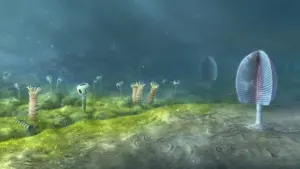
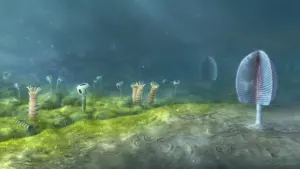
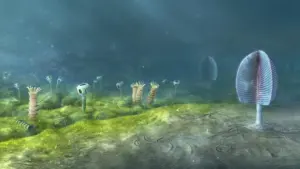
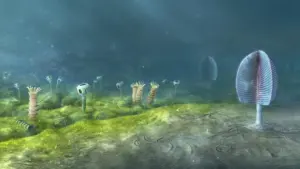
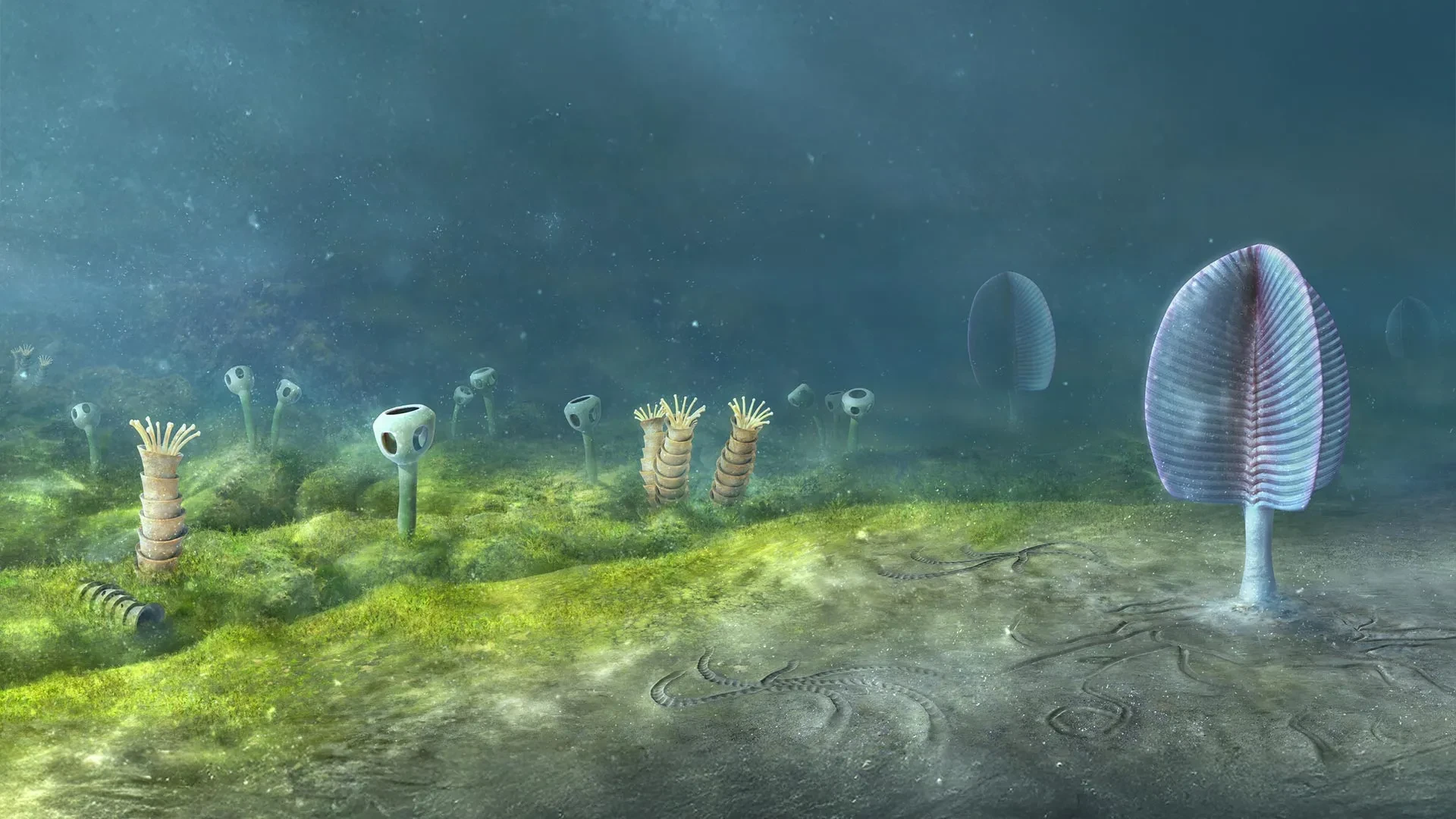
In the decades following Darwin, science developed sophisticated tools to peer behind the curtain of the Cambrian explosion. Paleontologists discovered Ediacaran-age fossils—strange, frond-like, and quilted organisms that populated the global oceans between 635 and 539 million years ago. Yet, even within the Ediacaran period, the lineage leading to modern animal groups remained frustratingly obscured.
The Weng’an Biota Anchor Point
To establish when the first animals must have evolved, geochronologists and paleontologists relied on negative evidence from exceptional fossil deposits, known scientifically as Lagerstätten. Exceptional preservation sites capture soft tissues, embryos, and microscopic structures that are normally lost to decay.
The Weng’an Biota of South China, dated to approximately 590 million years ago, is a prime example. Preserved within phosphate-rich rocks, the deposit yields microscopic algae, bacteria, and complex cell clusters preserved down to the cellular and subcellular levels.
For years, the scientific consensus rested on a straightforward, logical deduction: If animals had been alive 590 million years ago, the biological chemistry and fine-grained mineral replacement processes that made the Weng’an Biota so exquisite would have captured them. Because no definitive animal fossils have ever been discovered in Weng’an, scientists concluded that the deposit predated the origin of the animal kingdom. This established Weng’an as an unyielding maximum age constraint for metazoan evolution.
The Mongolian Test: The Kheseen Biota
The new study breaks this methodological bottleneck by testing the Weng’an assumption against another extraordinary fossil repository: the Kheseen Biota of Mongolia.
The Kheseen Biota is roughly 40 million years younger than the Weng’an Biota, forming during a time when unmistakable animal fossils had already begun appearing at other global locations, including early skeletal and trace fossils found in Namibia and South China. Furthermore, the Kheseen and Weng’an assemblages share several key microfossil species, making them ideal targets for a direct comparative analysis.
An international team of researchers analyzed over 140 rock samples from the Kheseen Biota, including materials gathered from previously undocumented geographic locations. Utilizing advanced scanning electron microscopy, the team uncovered an array of exceptionally preserved microfossils, including intricate acritarchs—spherical single-celled organisms featuring complex spines and branching projections—alongside fragile, embryo-like structures complete with internal cell divisions.
Despite a preservation quality that rivaled or exceeded that of Weng’an, not a single fossil in the Kheseen assemblage could be definitively identified as an animal.
This discovery delivers a fatal blow to the foundational logic of the Weng’an constraint. As the researchers demonstrated, the absolute absence of animal fossils in a pristine microfossil deposit does not mean animals were absent from the planet; it merely indicates that local environmental conditions, ecological niches, or taphonomic (fossilization) biases prevented animal remains from being incorporated or preserved.
SUPPORTING CONTEXT & METRICS
With the Weng’an age constraint invalidated, the research team re-evaluated how paleobiologists calculate evolutionary timelines. They turned their attention to much older, chemically rich geological formations dating from 850 to 730 million years ago.
Re-calibrating the Molecular Clock
The researchers utilized a technique known as molecular clock analysis. This computational method calculates the rate of genetic mutations over time by comparing the DNA or protein sequences of living species. By anchoring these genetic divergence rates with known fossil dates, scientists can step backward through evolutionary history to estimate when common ancestral lineages split.
In previous models, researchers plugged the 590-million-year-old Weng’an constraint into their algorithms, which artificially compressed the timeline and forced the origin of animals into the late Ediacaran period.
In the new study, the Oxford-led team substituted the flawed Weng’an constraint with much older, pre-Ediacaran geological formations capable of preserving delicate life, such as:
- The Svanbergfjellet Formation (Norway) – dating to roughly 800-750 million years ago.
- The Bitter Springs Group (Australia) – dating to approximately 830-800 million years ago.
- The Chuar Group (Arizona, USA) – dating to roughly 780-740 million years ago.
When these older geological parameters were integrated into the molecular clock models, the estimated birth date of the animal kingdom shifted backward by an expansive margin of 200 million years. The models now project the emergence of the earliest animals to a window between 800 and 700 million years ago.
Chemical Fossils and the Search for Soft-Bodied Precursors
This newly calculated window aligns remarkably well with existing biochemical evidence. For years, organic geochemists have studied biomarkers—ancient chemical fossils preserved in rock layers that survive long after biological tissues have vanished.
Lipid biomarkers extracted from rocks dating back at least 650 million years have revealed chemical signatures consistent with demosponges (primitive aquatic sponges). These molecular echoes indicate that simple, soft-bodied organisms were swimming or filtering through ancient seas tens of millions of years before the first macroscopic, hard-shelled animal fossils appeared.
Before the evolution of skeletons, shells, or mineralized teeth, the earliest animals would have been microscopic, gelatinous, and entirely soft-bodied. Their chances of surviving the destructive processes of decay and fossilization were vanishingly small, requiring a rare convergence of precise chemical conditions—a reality that explains why their physical bodies have remained hidden from the pre-Ediacaran record thus far.
The "Snowball Earth" Connection
Pushing the origin of animals back to 800 to 700 million years ago introduces a fascinating environmental context: the Cryogenian Period.
Beginning roughly 720 million years ago, Earth experienced the most severe ice ages in its geological history. During these global glaciations, often referred to as "Snowball Earth" scenarios, ice sheets advanced from the poles all the way to the equator, locking the planet’s oceans beneath thick armor of glacial ice.
Scientists have long debated whether these extreme, civilization-threatening climatic episodes wiped out nascent life or served as an evolutionary crucible that drove the adaptation and diversification of complex organisms. The new Oxford-led findings reopen this intense debate, suggesting that animal life may have either originated before Snowball Earth and survived its icy grip, or evolved during the harsh environmental pressures of the glaciation events themselves.
OFFICIAL STATEMENTS
The implications of the study have reverberated across the global paleontology and evolutionary biology communities. The research team emphasized both the rigorous methodology behind their findings and the humility required when interpreting an incomplete planetary archive.
Associate Professor Ross Anderson, Senior Author of the study from the Oxford University Museum of Natural History, addressed the collapse of the traditional fossil argument:
"The Kheseen Biota breaks the argument that the exceptional microfossils of Weng’an mean we would have seen animal fossils in the assemblage had they existed at the time. The Kheseen microfossils are just as well-preserved, yet animals continue to be absent—despite the fact we know at that point they existed."
Prof. Anderson further elaborated on the ecological and chemical realities of fossilization:
"This suggests animals may have occupied environments different from those represented in the Kheseen deposits, or that the chemical conditions responsible for fossilization there were not suitable for preserving animal remains. Until that evidence becomes available, the precise birth date of the animal kingdom remains uncertain."
Orin Lole Durbin, First Author of the study—who served as an undergraduate student at the University of Oxford during the research and is now pursuing doctoral studies at Virginia Tech—cautioned against over-interpretation while underscoring the breakthrough’s significance:
"Pre-Ediacaran animal body fossils still elude us, and this analysis does not prove that animals existed 800 million years ago. However, our new fossil evidence from Mongolia undermines one of the main arguments for restricting animal origins to the Ediacaran interval. Meanwhile, our molecular-clock analyses show how much further back their evolutionary history could extend."
FUTURE OUTLOOK: THE ROAD AHEAD FOR DEEP-TIME PALEONTOLOGY
As the scientific community digests the findings published in Science Advances, researchers are already charting the next steps in the quest to uncover the true origins of animal life.
Multidisciplinary Exploration
Paleontologists agree that future breakthroughs will not come from relying on a single line of evidence. Instead, the search for the earliest animals must adopt a fully integrated, multidisciplinary approach that combines:
- Exhaustive Fossil Fieldwork: Exploring new, under-sampled pre-Ediacaran rock deposits across diverse geographic regions and paleoenvironments.
- Advanced Taphonomic Research: Utilizing cutting-edge imaging technologies—such as synchrotron X-ray tomographic microscopy and nanoscale chemical mapping—to search for hidden microscopic animal remains or decay products in ancient rocks.
- Biomarker Analysis: Refining organic chemistry techniques to detect increasingly subtle molecular fingerprints of animal life in ancient sedimentary basins.
- Trace Fossil Inventories: Expanding the search for early behavioral evidence, such as microscopic burrows, feeding trails, or bio-erosion marks that indicate active organisms long before body fossils appear.
Rewriting the Textbooks
The realization that animals may have walked, crawled, or filtered through Earth’s oceans 200 million years earlier than previously accepted marks a profound shift in our understanding of planetary history. It demonstrates that the history of life is far more resilient, ancient, and deeply intertwined with Earth’s violent climatic shifts than past generations of scientists ever imagined.
While the definitive, smoking-gun body fossil from 800 million years ago remains unrecovered, the methodological barrier standing in its way has been successfully dismantled. The search for the first animals is officially wide open.