In municipal animal shelters across the United States, the line between survival and euthanasia is often razor-thin, dictated by space, funding, and physical appearance. For a fragile puppy named Scratchy, a severe and highly visible skin condition placed him on the wrong side of that line in a Houston, Texas shelter. Marked for euthanasia due to a lack of resources to treat his condition, the pup’s future appeared bleak until a single photograph bypassed the clinical bureaucracy of the shelter system and reached a young girl.
This report details the rescue, rehabilitation, and profound emotional impact of Scratchy’s journey. Driven by the persistent advocacy of a child and executed through the rapid intervention of Michelle (her mother) and the regional non-profit organization Three Little Pitties Rescue, Scratchy’s case highlights the critical role that foster networks and grassroots digital advocacy play in saving high-risk shelter animals. It also serves as a poignant case study on the capacity of children to drive community-led conservation and animal welfare efforts, turning abstract sympathy into life-saving action.
Detailed Chronology
[Day 1: Social Media Post] ➔ [Day 2-4: The Search] ➔ [Day 5: The Rescue] ➔ [Day 6: The Surprise] ➔ [Month 1-3: Healing]
   *Photo of Scratchy       *Michelle tracks        *Three Little Pitties  *Daughter returns    *Mange treatment
    shared online;           puppy; shelter          pulls Scratchy;        from school to find  & socialization
    euthanasia imminent.     records searched.       foster approved.       Scratchy at home.    in foster home.
Phase I: The Digital Red Alert
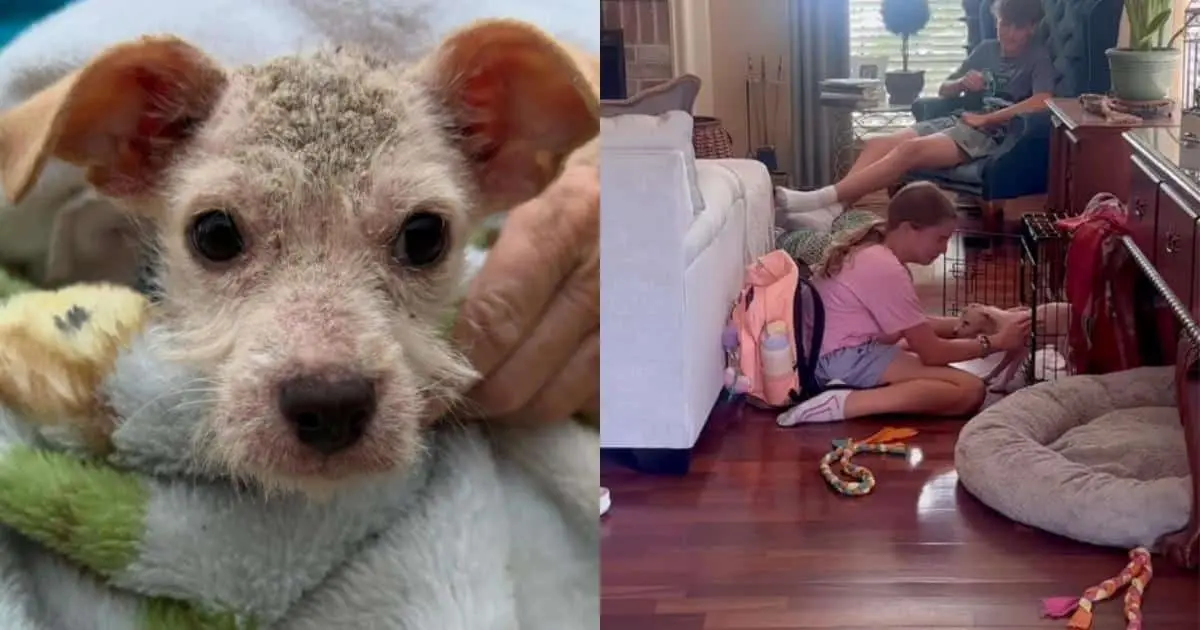
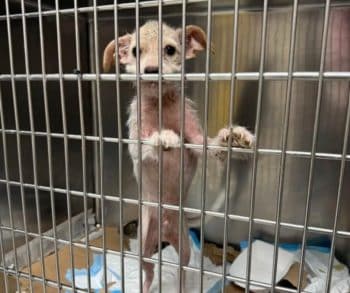
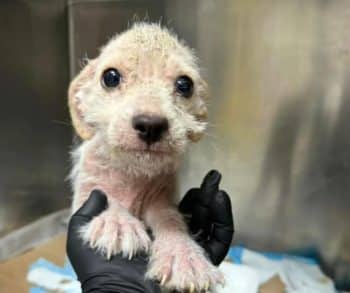
The crisis began when a photograph of Scratchy was posted online by volunteers highlighting dogs on a local municipal shelter’s euthanasia list. The puppy was suffering from an advanced skin condition—likely demodectic or sarcoptic mange—which had left his skin raw, inflamed, and largely devoid of fur. To the casual observer, the puppy looked deeply uncomfortable and fragile; to the shelter’s triage team, his medical needs and appearance made him a low-priority candidate for adoption in an already overcrowded facility.
When Michelle’s young daughter saw the photograph, she did not see a medical liability; she saw a vulnerable animal in desperate need of comfort. Upon learning that Scratchy was scheduled to be euthanized, the young girl implored her mother to intervene.
Phase II: The Obstacles of Tracking and Triage
Determining the location and status of a dog on a euthanasia list is often a race against time, complicated by administrative hurdles. Michelle immediately began contacting local networks to locate Scratchy. Because municipal shelters process hundreds of animals daily, tracking a specific, high-risk puppy can be incredibly difficult.
For several days, Michelle’s daughter asked for updates, fearing that they had run out of time. The psychological toll on the young girl grew as the days passed without news, a stark reminder of the emotional weight children carry when exposed to the realities of animal shelters.
Phase III: Intervention by Three Little Pitties Rescue
The breakthrough came when Michelle discovered that Scratchy had been pulled from the euthanasia list by Three Little Pitties Rescue, a highly active non-profit organization based in Texas. The rescue, which specializes in saving high-risk dogs and cats from municipal shelters, had transferred Scratchy to their facility to begin veterinary treatment for his skin condition.
          +--------------------------------------------+
          |         MUNICIPAL SHELTER SYSTEM           |
          |  - High intake rates   - Overcrowded beds  |
          |  - Strict triage       - Euthanasia list   |
          +---------------------++---------------------+
                                || (Urgent Pull)
                                /
          +--------------------------------------------+
          |         THREE LITTLE PITTIES RESCUE        |
          |  - Veterinary triage  - Medical isolation  |
          |  - Foster network coordination             |
          +---------------------++---------------------+
                                || (Fostering Placement)
                                /
          +--------------------------------------------+
          |               FOSTER HOME                  |
          |  - Medicated baths  - Socialization        |
          |  - Emotional rehabilitation                |
          +--------------------------------------------+
Upon learning that Scratchy was safe, Michelle made a quiet decision: rather than simply informing her daughter, she applied to become Scratchy’s foster parent. After clearing the rescue’s screening process, Michelle picked up the puppy and brought him home, keeping his arrival a secret to prepare an unforgettable surprise for her daughter.
Phase IV: The Reunion
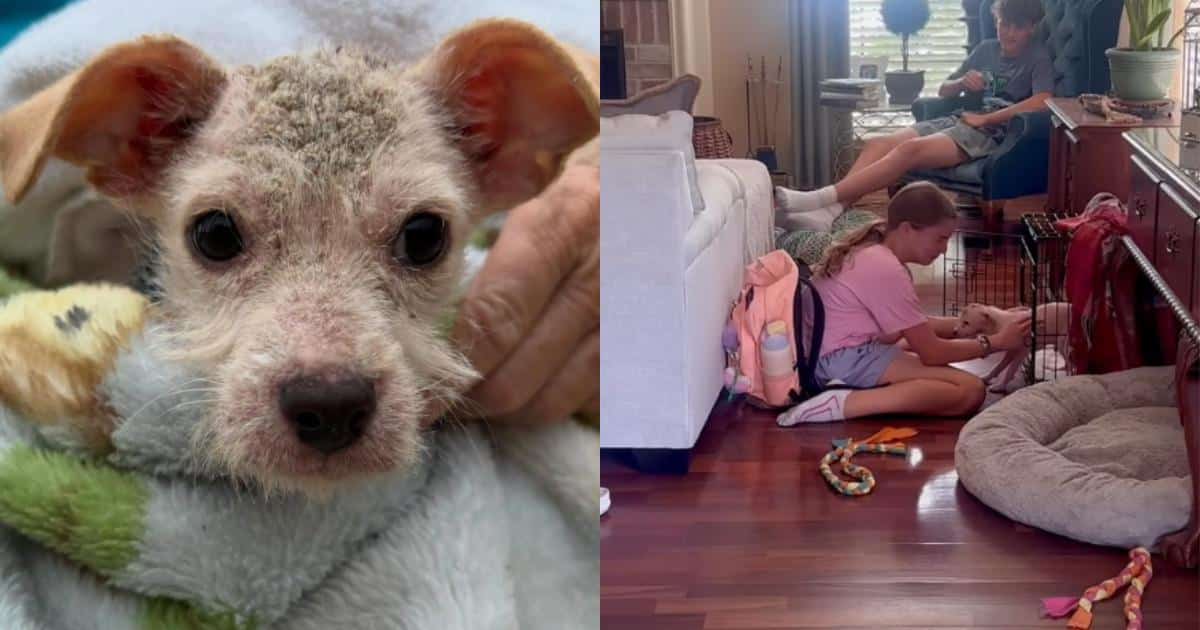
When Michelle’s daughter returned home from school, she was met with the puppy she had spent days worrying about. Overwhelmed by relief, the young girl dropped her school backpack and fell to the floor in tears.
The emotional exchange was mutual. Once released from his crate, Scratchy approached the crying girl and began licking the tears from her face. This interaction, captured in photos and shared by Three Little Pitties Rescue, quickly resonated across social media, illustrating the immediate, intuitive bond between rescued animals and their advocates.
Supporting Context & Metrics
To fully understand the significance of Scratchy’s rescue, it is necessary to examine the broader systemic challenges facing animal shelters in Texas and the medical realities of treating mange.
The Texas Shelter Crisis
Texas consistently ranks among the states with the highest rates of shelter animal euthanasia in the country. According to data from national animal welfare organizations such as the Best Friends Animal Society, Texas shelters face a severe overpopulation crisis driven by several factors:
High Intake Rates: Warm climates contribute to longer breeding seasons, resulting in a continuous influx of puppies and kittens.
Lack of Resources: Many rural and municipal shelters operate on restricted budgets, leaving little room for long-term medical care or isolation facilities for contagious conditions.
Space-Based Euthanasia: When physical kennel capacity is exceeded, shelters are forced to euthanize adoptable or treatable animals to make room for incoming strays.
State
Annual Shelter Intake (Est.)
Euthanasia Rate (Est.)
Primary Contributing Factors
Texas
600,000+
10% – 15%
Overpopulation, lack of spay/neuter resources, extreme climate seasons
High intake during hurricane seasons, feral populations
The Demystification of Mange
Scratchy’s primary barrier to adoption was his severe skin condition, commonly referred to as mange. Mange is an inflammatory skin disease caused by microscopic mites. While it looks alarming—often causing complete hair loss, secondary bacterial infections, crusty scabs, and intense itching—it is highly treatable.
                  +-------------------------+
                  |  Sarcoptic / Demodectic |
                  |     Mite Infestation    |
                  +------------+------------+
                               |
                               v
                  +-------------------------+
                  |  Severe Hair Loss and   |
                  |   Secondary Infection   |
                  +------------+------------+
                               |
            +------------------+------------------+
            |                                     |
            v                                     v
+-----------------------+             +-----------------------+
|   MUNICIPAL SHELTER   |             |   RESCUE / FOSTER     |
|   - High contagion    |             |   - Medicated baths   |
|     risk in kennels   |             |   - Antiparasitics    |
|   - Often targeted    |             |   - High-quality diet |
|     for euthanasia    |             |   - Full recovery     |
+-----------------------+             +-----------------------+
There are two primary types of mange found in shelter puppies:
Demodectic Mange: Caused by Demodex canis, a mite that naturally resides on canine skin. When a puppy’s immune system is compromised or underdeveloped due to stress, malnutrition, or neglect, the mite population surges, causing hair loss and lesions. This form is not highly contagious to humans or other dogs.
Sarcoptic Mange (Scabies): Caused by Sarcoptes scabiei, this form is highly contagious to both other animals and humans. It causes intense pruritus (itching) and often leads to self-trauma and secondary skin infections.
Because municipal shelters must manage contagion risks, animals showing signs of mange are often isolated immediately. In overcrowded facilities, the cost of isolation space, combined with the weeks of medicated baths, antiparasitic treatments (such as ivermectin, fluralaner, or sarolaner), and antibiotics required for recovery, frequently makes these dogs prime candidates for euthanasia.
By pulling Scratchy into a foster home, Three Little Pitties Rescue bypassed these shelter limitations, giving him a safe environment to heal without risking the health of other shelter populations.
Official Statements
Representatives from Three Little Pitties Rescue documented Scratchy’s progress and the impact of his foster placement on their social media channels, emphasizing the emotional depth of the rescue:
"She cared so deeply all week about a little mangy dog, and her sense of relief getting to hold him was beautiful to witness. Once he was out of his crate, the puppy began licking the tears from her face. It was pure, deep, love at first sight."
The rescue group also highlighted how the family’s care transformed Scratchy’s physical and psychological well-being:
"This puppy is being treated like a king in his foster home while he heals up. He has kids to tend to his every need, and he is being celebrated for his life and who he is! This little guy was once out of time, but now he’s safe, and continuing to steal hearts every day."
Future Outlook
Scratchy’s recovery is a strong testament to the success of the foster care model. Under the care of Michelle and her daughter, Scratchy’s physical transformation has been matched by his behavioral development. Over several months, his skin healed, his coat began to grow back, and he transitioned from a fearful, neglected animal into a confident, playful puppy.
+-------------------------------------------------------------+
|                     RECOVERY TRAJECTORY                     |
+-------------------------------------------------------------+
| Month 1: Veterinary diagnosis, antiparasitics, skin healing  |
|                                                             |
| Month 2: Hair regrowth, socialization with foster family    |
|                                                             |
| Month 3: Full recovery, active play, ready for adoption     |
+-------------------------------------------------------------+
His daily routine now consists of standard puppy experiences: playing tug-of-war, chasing balls, and socializing with children. Rather than spending his formative months in a high-stress kennel environment, Scratchy has learned how to interact with a family, significantly increasing his long-term adoptability.
The Impact of Grassroots Foster Advocacy
Scratchy’s story highlights a vital truth in modern animal welfare: foster homes save lives. While rescue organizations provide the administrative, financial, and veterinary support needed to pull animals from euthanasia lists, they are ultimately limited by the number of open foster homes available in their networks.
When families like Michelle’s open their doors to sick, injured, or high-risk animals, they create a bridge between the clinical rescue process and a permanent home. Scratchy’s journey from an "urgent" list in Houston to a loving home shows that while systemic shelter issues require long-term policy solutions, individual acts of empathy and fostering can make an immediate, life-saving difference for animals in need.