
Executive Overview
For decades, the journey of a potato from the fertile soils of a farm to the processing plants of a consumer packaged goods (CPG) giant has been fraught with invisible, multi-million-dollar perils. Potatoes are notoriously delicate crops. Despite their rugged appearance in the grocery aisle, raw tubers bruise easily under improper handling conditions during harvest, transportation, and storage. These seemingly minor blemishes trigger a cascade of chemical reactions within the potato, leading to enzymatic discoloration, rot, and structural degradation. Consequently, millions of dollars in crop value are lost annually, resulting in reduced yields for growers, diminished raw-material quality for manufacturers, and unnecessary food waste across the global supply chain.
Addressing this persistent agricultural vulnerability traditionally involved cyclical investments in heavier machinery coatings, softer conveyor belts, and generalized on-the-field training seminars. However, a groundbreaking cross-industry collaboration is upending conventional approaches. In a strategic alliance that marries the scale of a multinational CPG powerhouse with the engineering prowess of agricultural machinery manufacturing, PepsiCo and Grimme—in partnership with immersive learning technology provider Altoura—have deployed an innovative solution to target an overlooked vector in supply chain loss: operator technique and machinery mastery.
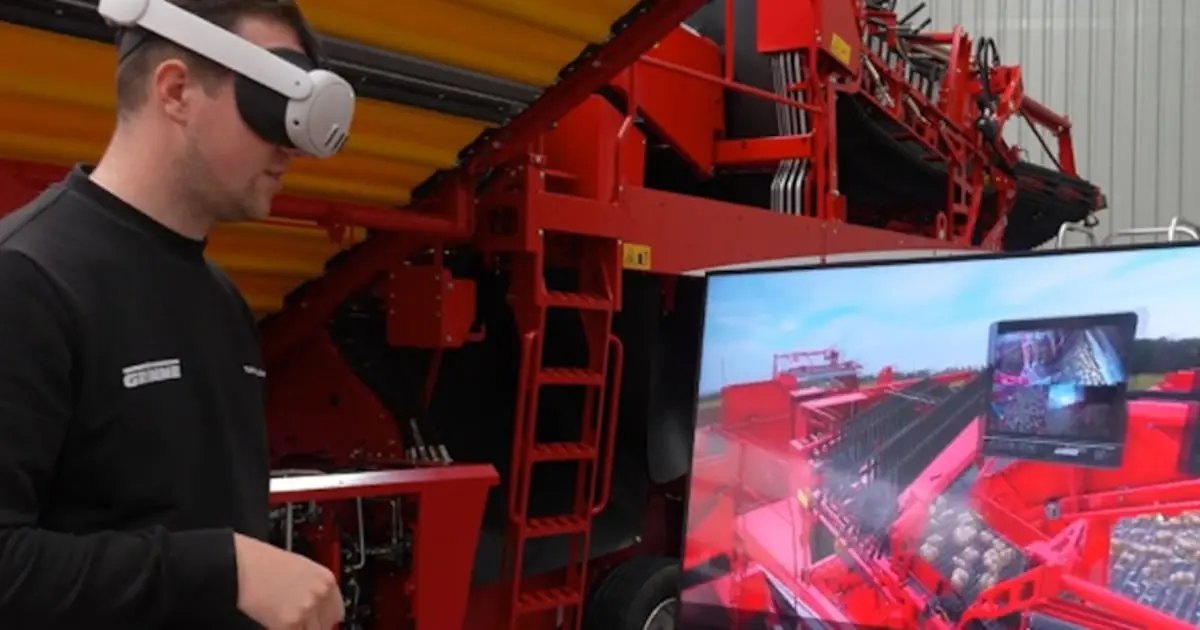
By creating hyper-realistic digital replicas, or "digital twins," of Grimme’s flagship EVO and SE series potato harvesters, the initiative harnesses virtual reality (VR) and cross-platform immersive simulations to train and upskill agricultural workers. This virtual training ecosystem enables operators to inspect complex machinery components, remove internal panels, practice calibration, and simulate harvest conditions in a risk-free, highly controlled digital environment long before they ever set foot in a tractor cab.
Early pilot programs across Brazil, Mexico, Poland, and Romania have yielded staggering results. According to metrics released by PepsiCo, implementing this digital twin training program drove an 87% increase in bruise-free potatoes during pilot tests, alongside a remarkable 1.7x reduction in severe crop bruising. By tackling the structural deficit of agricultural upskilling through immersive technology, PepsiCo and Grimme are demonstrating how the fusion of advanced industrial software and farming can dramatically optimize food quality, cut waste, and redefine modern agricultural productivity.
Detailed Chronology: From Concept to Global Rollout
The genesis of this agricultural technology milestone did not happen overnight; it represents the culmination of cross-sector experimentation, technological maturation, and strategic international pilot deployments.
Phase 1: Internal Experimentation and Cross-Sector Inspiration
The conceptual framework for the potato harvester digital twin originated within PepsiCo’s broader operational network. Faced with labor shortages and the need for standardized training across disparate global manufacturing plants, PepsiCo’s leadership began exploring industrial artificial intelligence and digital twin simulations. Notably, earlier collaborations—such as PepsiCo’s high-profile industrial manufacturing partnership with tech leaders Siemens and Nvidia—demonstrated the profound utility of real-time 3D simulation and predictive AI models in industrial settings.
Rob Meyers, Vice President of Global Agriculture at PepsiCo, recognized that these complex manufacturing solutions held untapped potential for the agricultural sector. Farming operations face a unique set of human capital hurdles: they are heavily reliant on seasonal labor, geographically dispersed across remote rural areas, and culturally and linguistically diverse. Translating industrial-grade digital twin concepts into an accessible farming tool became the primary objective for PepsiCo’s agricultural innovation teams.
Phase 2: Engineering the Digital Twins
To bring the concept to life, PepsiCo partnered with Grimme, a globally recognized leader in potato, beet, and vegetable harvesting technology, and Altoura, a specialist in immersive learning technology. The engineering challenge was formidable: accurately capturing the complex mechanics, fluid dynamics, and physical interactions of the Grimme EVO and SE series potato harvesters within a virtual ecosystem.
Engineers mapped every bolt, belt, sensor, and adjustable web of the harvesters to construct high-fidelity 3D digital twins. Unlike static 3D models, these digital twins function as dynamic simulation environments. Operators can interact with the machinery in real-time, experiencing realistic mechanical physics, diagnosing mock component failures, and observing how adjustments to harvester speed, web pacing, and separation units directly impact the physical integrity of the harvested potatoes.
Phase 3: Global Pilot Testing (Brazil and Mexico)
With the software developed, the partnership launched its first wave of field-testing last year. PepsiCo and Grimme selected Brazil and Mexico as primary pilot regions. These markets presented diverse harvesting conditions, large-scale operations, and varied labor forces, making them ideal proving grounds for stress-testing the adaptability and educational efficacy of the platform.
During these initial trials, local farm operators and harvesting crews were equipped with VR headsets pre-loaded with the Altoura application. The results exceeded initial expectations. By educating operators on optimal machinery operation, precise speed tuning, and proactive maintenance via the virtual platform, the pilot sites recorded a dramatic 87% increase in bruise-free harvests and a 1.7x reduction in severe bruising incidents.
Phase 4: Expansion to Eastern Europe and Global Showcases
Built upon the resounding success of the Latin American pilots, the partnership expanded its geographical footprint. The digital twin training platform was subsequently introduced to agricultural operations in Poland and Romania, regions vital to PepsiCo’s European potato supply chain.
Furthermore, to foster broader industry adoption and demonstrate the viability of immersive learning to agronomists and supply chain leaders, PepsiCo showcased the technology at its Global Agro University in Germany. This showcase served as a vital bridge, transitioning the project from a localized pilot into an internationally recognized blueprint for agricultural workforce development.
Supporting Context & Metrics: Analyzing the Impact of Potato Bruising
To fully appreciate the significance of the PepsiCo-Grimme collaboration, one must examine the staggering economic and environmental costs of potato bruising within the global agricultural supply chain.
The Anatomy of a Potato Bruise
Potatoes are composed of roughly 80% water and are structurally vulnerable to mechanical shock. Bruising generally falls into two distinct categories:
- Blackspot Bruising: Caused by impact or pressure that damages cells beneath the skin without breaking the outer layer. Over several hours, bruised cells oxidize, turning dark gray or black. This damage is often invisible during harvest, only to be discovered at the processing plant or, worse, by the consumer.
- Shatter Bruising: Occurs when the impact is severe enough to crack or split the tuber skin. While easier to detect, shattered potatoes lose moisture rapidly, are highly susceptible to secondary bacterial and fungal rots, and must often be discarded entirely.
Every time a potato moves—from the soil, up the harvester primary and secondary webs, across cleaning rollers, into a bulk cart, onto transport trucks, and into storage bins—it is subjected to mechanical impact forces. If equipment operators run harvesters at excessive speeds, set agitation levels too high, or fail to adjust machinery to changing soil moisture conditions, bruising rates skyrocket.
The Financial and Environmental Toll
Historically, the financial repercussions of these agricultural inefficiencies translated into tens of millions of dollars in lost revenue annually across the global supply chain. For farmers, bruised crops are often rejected by processors or downgraded to lower-value uses (such as animal feed or starch production), severely eroding profit margins. For consumer goods giants like PepsiCo, inconsistent raw material quality disrupts manufacturing efficiency, increases processing waste, and compromises the final texture and shelf-life of products like potato chips.
From an environmental standpoint, food waste in agriculture represents a profound misallocation of resources. Growing potatoes requires massive investments of water, energy, fertilizers, and arable land. When a significant portion of a harvest is lost or discarded due to mechanical bruising, all the carbon emissions and water resources expended to grow those crops are effectively wasted.
Quantifying the VR Solution
The metrics emerging from the PepsiCo-Grimme pilot programs offer a compelling quantitative argument for the integration of immersive technology in agriculture:
- 87% Increase in Bruise-Free Potatoes: Demonstrates that human-centric training can radically alter operational behaviors on the ground, minimizing the primary mechanical catalyst of crop damage.
- 1.7x Reduction in Severe Bruising: Highlights the elimination of catastrophic shatter bruising, which accounts for the highest rates of outright crop rejection and rot.
- Cost-Benefit Ratio: As Rob Meyers noted, while adopting new technology requires capital, the cost of implementing VR training represents only a tiny fraction of the immense financial risk posed by annual crop bruising losses. The return on investment (ROI) is realized almost immediately during the very first harvest cycle following upskilling.
Technical Innovation: Hardware Accessibility and Offline Flexibility
One of the most profound barriers to technology adoption in agriculture is infrastructure. Unlike corporate offices or urban manufacturing plants, remote farms often suffer from unreliable internet connectivity, intermittent mobile coverage, and a lack of dedicated IT support staff.
PepsiCo, Grimme, and Altoura engineered their digital twin platform with these operational realities firmly in mind.
Cross-Platform Versatility
While the simulation software is optimized for high-end virtual reality (VR) headsets—which provide the most immersive spatial awareness, depth perception, and motor-memory training—it is not restricted to VR hardware. The training application is fully functional across a spectrum of everyday consumer and enterprise devices, including:
- Tablets and iPads: Enabling supervisors to walk operators through machinery modules right next to the physical harvester in the field.
- Smartphones: Allowing seasonal workers to review maintenance procedures, component layouts, and operational best practices during downtime.
- Desktop Computers: Serving as a comprehensive classroom training tool for agricultural cooperatives and vocational training centers.
Offline Functionality for Remote Farms
Crucially, the Altoura-powered platform overcomes the rural connectivity barrier. Once the training application is initially downloaded and loaded onto a device, users do not need Wi-Fi or an active mobile service to run the simulations. Field operators can download training modules in town or at a facility with high-speed internet and complete their immersive upskilling sessions directly in remote rural fields, machine sheds, or farmhouses without connectivity interruptions.
Official Statements and Industry Insights
The philosophy driving this technological leap centers on user-centric design, localized adaptability, and the democratization of expert knowledge. In interviews with agricultural tech media outlets like AgNavigator, PepsiCo executives shed light on the strategic thinking behind the initiative.
Rob Meyers, Vice President of Global Agriculture at PepsiCo, emphasized that the decision to introduce VR into farming stemmed from a desire to solve one of agriculture’s oldest human capital challenges: training consistency across a decentralized, seasonal workforce.
"One of agriculture’s biggest challenges is delivering consistent, high-quality training to operators who may be seasonal, geographically dispersed, or working in different languages and markets," Meyers explained to AgNavigator. "The opportunity with digital tools is their ability to make expert training more accessible and scalable."
Meyers also stressed that technology deployment cannot follow a rigid, one-size-fits-all model if it is to succeed at a global scale. Farming practices, soil types, machinery configurations, and linguistic backgrounds vary dramatically from one continent to another.
"Adapting to local realities is often more important to driving adoption at scale," Meyers added. "As we expand into new markets, we’re continuing to refine the experience, including language support and training content. The goal isn’t to introduce complexity. It’s to make proven expertise available to more operators, in more places, before they enter the field."
By prioritizing localized language support, culturally resonant training scenarios, and flexible hardware integration, PepsiCo and Grimme have ensured that the technology empowers everyday farmers rather than intimidating them.
Future Outlook: Can VR and Digital Twins Reshape the Global Agricultural Workforce?
The success of the PepsiCo-Grimme potato harvester digital twin initiative opens the door to profound questions regarding the future of farming, workforce upskilling, and supply chain resilience. As agriculture faces mounting pressures from climate change, strict sustainability mandates, and shrinking labor pools, technological innovation is shifting from a luxury to an existential necessity.
Scaling Beyond Potatoes
While potatoes represent an ideal pilot crop due to their acute vulnerability to mechanical bruising, the underlying principles of the digital twin training model are broadly applicable across multiple agricultural sectors. Consider the potential applications in other delicate crops:
- Fruit Harvesting: Citrus fruits, apples, and stone fruits suffer massive post-harvest losses due to bruising and improper handling during mechanical shaking and sorting. Digital twins of automated fruit harvesters could train operators to calibrate picking arm pressures.
- Grain and Legume Combine Harvesters: Improper concave clearance or rotor speed settings in combine harvesters lead to cracked grain kernels, reducing seed viability and milling quality. Virtual simulators could train operators to optimize settings for specific moisture levels.
- Precision Irrigation and Spraying: Complex chemical application machinery requires precise calibration to prevent environmental runoff and chemical waste. VR training can simulate nozzle pressure adjustments and drift management under variable wind conditions.
Bridging the Agricultural Labor Gap
Agriculture has long suffered from a structural labor deficit. Attracting younger, tech-native generations to farming requires modernizing the operational environment. By integrating immersive technology, gamified learning modules, and spatial computing into agricultural education, the industry can rebrand farming as a high-tech profession. This evolution not only eases the training burden for aging farming families and large-scale agricultural enterprises but also creates a more resilient, highly skilled labor force capable of operating sophisticated machinery with surgical precision.
The Road Ahead
As PepsiCo and Grimme continue to refine their digital twin platform and expand its rollout into new international markets, the initiative serves as a shining example of modern industrial synergy. By bridging the gap between cutting-edge software engineering and age-old agricultural traditions, these companies are proving that the most powerful tool for protecting crop quality and reducing food waste isn’t a heavier machine or a harsher chemical—it is empowered, well-trained human expertise delivered through the immersive power of virtual reality.