
Executive Overview
Agricultural genomics has officially entered a transformative era, propelled by the convergence of advanced machine learning and high-throughput biological data analysis. For decades, conventional plant breeding and genetic exploration were constrained by profound bottlenecks: identifying, isolating, and validating valuable agricultural traits demanded immense commitments of time, financial capital, and physical labor. Today, however, artificial intelligence (AI) is entirely rewriting those equations, slashing operational expenses and compressing decades of painstaking research into mere months.
This technological evolution is arriving precisely when global food security faces its most daunting stress test. Intensifying climate change, characterized by erratic weather patterns, severe droughts, unprecedented flooding, and the creeping salinization of coastal agricultural lands, threatens the stability of staple food supplies worldwide. To counter these existential threats, international research institutions and national governments are leveraging AI-driven genomics not just to accelerate crop improvement, but to fundamentally reimagine how agricultural ecosystems adapt, thrive, and optimize resource utilization.
Nowhere is this shift more evident than in the strategic partnership between the International Rice Research Institute (IRRI) and regional academic institutions. Highlighted by the recent establishment of the state-of-the-art Agricultural Genomics Research Center (AGRC) in the Philippines—backed by a substantial investment from the Republic of Korea—the agricultural science sector is uniting cross-border expertise, historical solidarity, and cutting-edge computational power. As industry leaders prepare to convene at the upcoming Asia-Pacific Agri-Food Innovation Summit in Singapore, the message is clear: the future of agriculture relies on data-driven collaboration, rapid technological adoption, and a shared commitment to global food sovereignty.
Detailed Chronology
To understand the magnitude of the current breakthrough in agricultural genomics, it is helpful to trace the trajectory from manual, decades-long breeding programs to the lightning-fast computational pipelines of the present day.
- The Mid-20th Century Foundation: The journey of modern agricultural resilience took root decades ago, notably in the 1970s. During this period, IRRI developed groundbreaking rice varieties—such as the historic Tongil rice for South Korea—which provided the foundation for national food self-sufficiency and fueled broader economic industrialization. These early successes, however, were achieved through labor-intensive, trial-and-error field breeding that spanned generations of plant crosses.
- The Decades of Manual Screening (1970s–Early 2000s): For over half a century, genetic screening remained a slow, physical endeavor. Researchers meticulously cataloged, planted, and evaluated germplasm collections plot by plot. As an illustrative benchmark, standard operational capacity meant it took IRRI approximately 52 years to thoroughly screen just 20,000 germplasm samples from its vast genetic archives.
- The Genomic Data Explosion (2010s): As sequencing technologies matured, the cost of sequencing individual genomes plummeted, creating massive datasets of genetic information. While this provided unprecedented raw data, the sheer volume of information quickly overwhelmed traditional human analysis frameworks, creating a new bottleneck in bioinformatics and phenotypic correlation.
- The AI and Machine Learning Revolution (Present Day): The integration of advanced machine learning algorithms and AI-powered predictive models has effectively shattered the bioinformatics bottleneck. Algorithms capable of parsing multi-dimensional genomic data can now map traits to genetic markers with astonishing speed. Demonstrating this paradigm shift, IRRI recently deployed machine learning tools to screen 60,000 germplasm samples in a mere 18 months—a feat that represents an exponential leap over historical timelines.
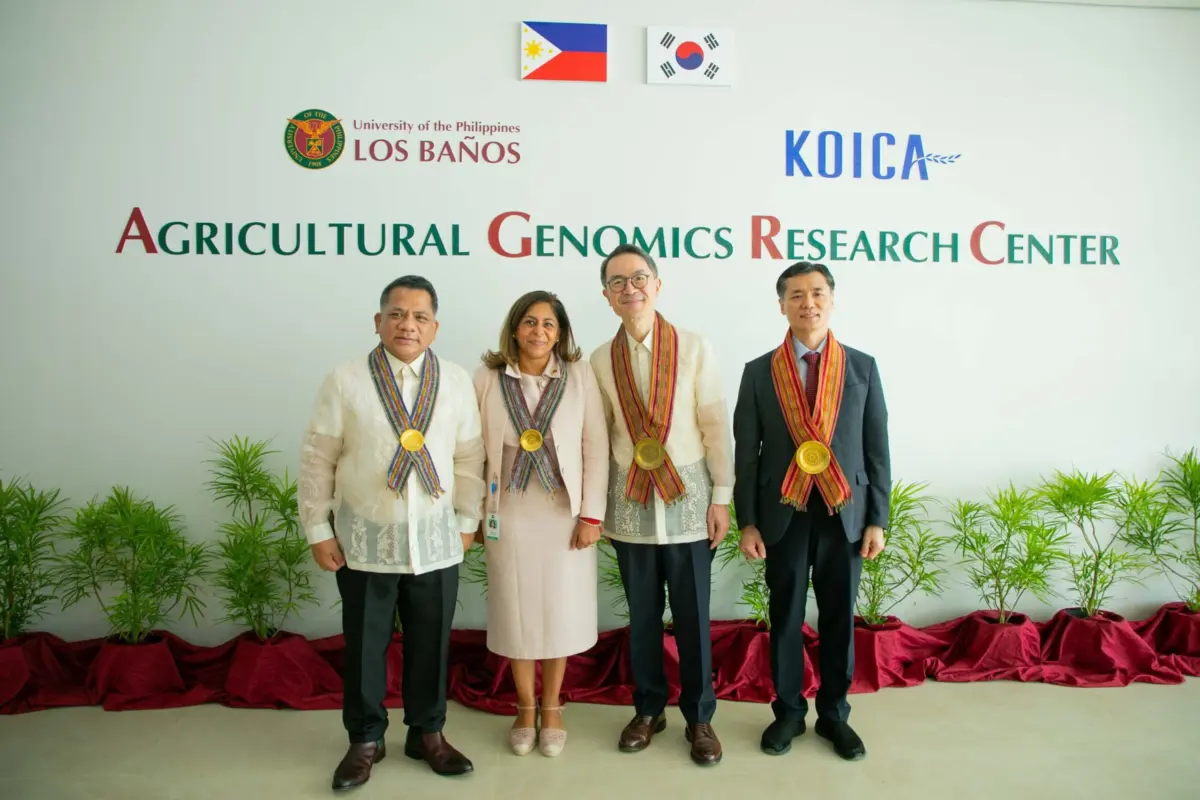
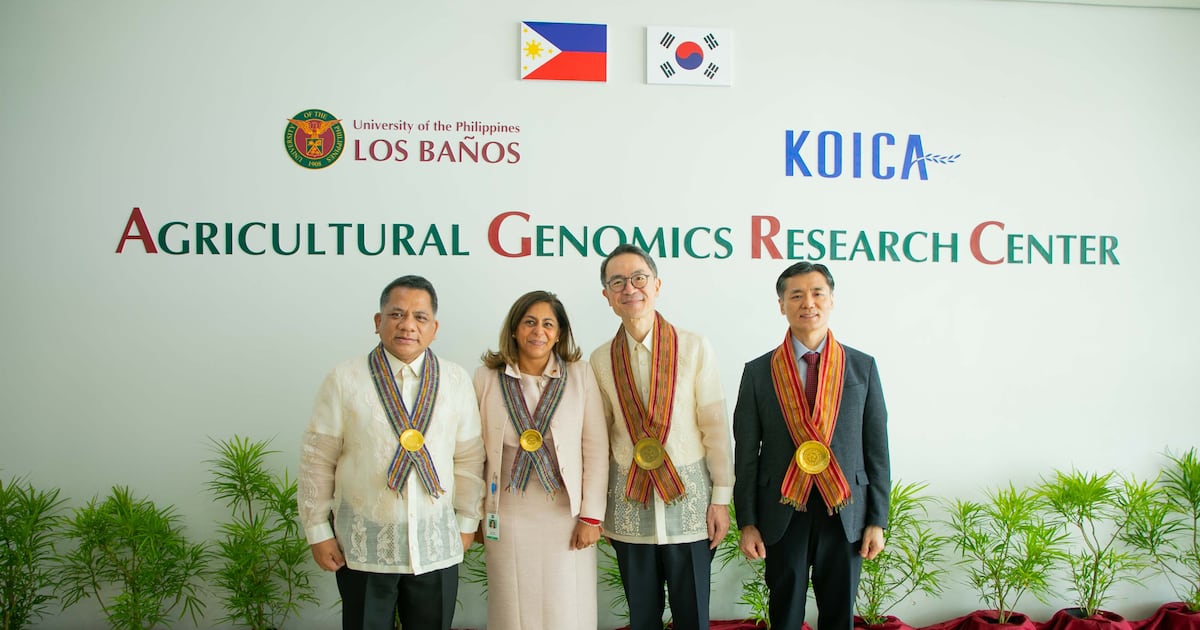
- Infrastructure Realization and Cross-Border Investment: A major milestone in this modern timeline is the realization of the Agricultural Genomics Research Center (AGRC) at the University of the Philippines Los Baños (UPLB). Driven by a US$14.95 million project funded by the Korea International Cooperation Agency (KOICA) and managed alongside IRRI, this facility bridges the gap between historical agricultural cooperation and future-proof genomic engineering.
Supporting Context & Metrics
The transformation of agricultural genomics is best quantified through stark metrics that contrast legacy methodologies with contemporary, AI-driven operations. These figures underscore why industry leaders view this technological leap not merely as an incremental upgrade, but as an absolute operational revolution.
The Power of Ten and Sixteen: Efficiency Multipliers
According to Dr. Yvonne Pinto, Director General of IRRI, the deployment of machine learning and artificial intelligence has fundamentally altered the economics of scientific discovery. "We have been using conventional technologies, and now that we can use things like machine learning and AI, we can do the same things 10 times faster and 16 times more cheaply than we could ever do them before," Dr. Pinto noted.
Throughput Benchmarks
- Legacy Method: 52 years required to screen 20,000 germplasm samples using traditional, conventional research workflows.
- AI-Enhanced Method: 18 months required to screen 60,000 germplasm samples leveraging machine learning algorithms and high-throughput computational pipelines.
- Scale Differential: A threefold increase in sample volume processed in roughly 1/35th of the historical timeframe.
The Architectural and Financial Pillars of AGRC
- Total Investment: US$14.95 million.
- Funding Body: Korea International Cooperation Agency (KOICA).
- Host Institution: University of the Philippines Los Baños (UPLB).
- Project Management Consultant: International Rice Research Institute (IRRI).
- Initial Focus: Rice genomics, leveraging IRRI’s position as the custodian of the world’s largest rice gene bank. More than 3,000 rice genomes, including irreplaceable Philippine heritage varieties, have already been sequenced to form the bedrock of upcoming research initiatives.
Climate Resilience and Resource Optimization Metrics
Beyond raw processing speed, the metrics that matter most to modern farmers involve stress tolerance and input efficiency. AI-enabled genomic selection allows researchers to precisely target multi-stress tolerances within single growing seasons. These include:
- Heat Tolerance: Protecting grain-filling stages against extreme ambient temperatures.
- Saline Tolerance: Combating saltwater intrusion in low-lying coastal deltas caused by rising sea levels.
- Extreme Hydrological Resilience: Developing cultivars capable of surviving prolonged drought followed rapidly by severe seasonal flooding.
- Resource-Use Efficiency: Breeding crops that maintain or exceed baseline yields while demanding significantly reduced inputs of seed, chemical fertilizers, and irrigation water.
Official Statements & Expert Insights
Industry leaders emphasize that navigating this new era requires a departure from isolated research models toward deeply integrated, data-informed partnerships.
Addressing the urgency of climate-driven agricultural hurdles, Dr. Yvonne Pinto stressed the vital role of modern tooling:
"Given the massive changes in our environment and the frequency of these weather events, it gives us the tools we need to address things much more quickly and much more efficiently. Things like heat tolerance, saline tolerance from ocean incursions, flooding and drought in the same growing season—those are the elements this is enabling."
Highlighting the structural philosophy of the newly established Agricultural Genomics Research Center and its proximity to global gene banks, Dr. Pinto added:
"Because this all sits adjacent to IRRI, it’s probably going to be one of the first elements that that institute will start to engage with in order to revolutionise our insights into what are the genetics that we can use to address the constraints we see in the farming system."
Furthermore, Dr. Pinto emphasized that institutional success relies heavily on human capacity building and cross-disciplinary collaboration:
"The secret to all of this is that no one organisation can do this, and so the ability to find ways to work together. I think that’s going to be the secret sauce… It’s a bold new era for bold new players. We need to get in there to work out the problems. We need to work together, and we need to ensure that the solutions we’re able to produce are informed by evidence and data."
Reflecting on the historical ties that bind the international collaborators together—specifically noting South Korea’s industrial rise enabled by IRRI’s historic Tongil rice variety and the historical military support provided by the Philippines during the Korean War—Dr. Pinto characterized the KOICA-funded AGRC project as a profound milestone:
"For Korea to invest in the history of the support provided by the Philippines and the food security provided by IRRI enables a new era of knowledge exchange and capability building. It’s a beautiful story of giving back the benefits from many years ago."
Future Outlook
As the agricultural sector looks toward the horizon, the launch of the Agricultural Genomics Research Center and the integration of artificial intelligence into core scientific workflows mark the beginning of a long-term strategic transformation.
Expanding Beyond Rice
While rice remains the immediate operational focus due to IRRI’s unparalleled gene bank resources and the urgent dietary needs of billions across the globe, the foundational methodologies established at AGRC are inherently scalable. In the near-to-medium term, the bioinformatics pipelines, marker-assisted selection protocols, and AI models validated on rice genomes will be adapted for a diverse array of regional and global food crops. This expansion will empower researchers to tackle systemic vulnerabilities in maize, root vegetables, pulses, and high-value horticulture.
Human Capital and Academic Pathways
A cornerstone of AGRC’s strategic blueprint is the deliberate cultivation of regional scientific talent. By establishing robust educational pipelines—including targeted scholarships and formal academic exchange programs linking local researchers with premier universities in South Korea—the center aims to future-proof the region’s intellectual infrastructure. Early-career scientists will train directly on cutting-edge genomic equipment and machine learning applications, ensuring that the momentum of innovation is sustained by a new generation of home-grown agricultural biotechnologists.
Global Dialogue and Collaborative Scaling
These advancements will take center stage at the upcoming Asia-Pacific Agri-Food Innovation Summit, scheduled to be held in Singapore from October 27 to 29. There, Dr. Yvonne Pinto and other international thought leaders will unpack the real-world implications of merging big data with agricultural science. As food supply chains face mounting pressures from geopolitical instability and climate disruptions, the collaborative models forged between Korea, the Philippines, and international research bodies like IRRI will serve as a global blueprint.
Ultimately, the synergy of artificial intelligence, high-throughput genomics, and cross-border altruism promises to deliver resilient, high-yielding, and resource-efficient crops. By transforming historical archives of genetic diversity into actionable, climate-adapted solutions, the global agricultural community is laying the groundwork for a secure and sustainable food future.