
Date: September 24, 2026
Author: Specialized Editorial Team
Category: Animal Welfare, Public Policy, Community Outreach
Executive Overview
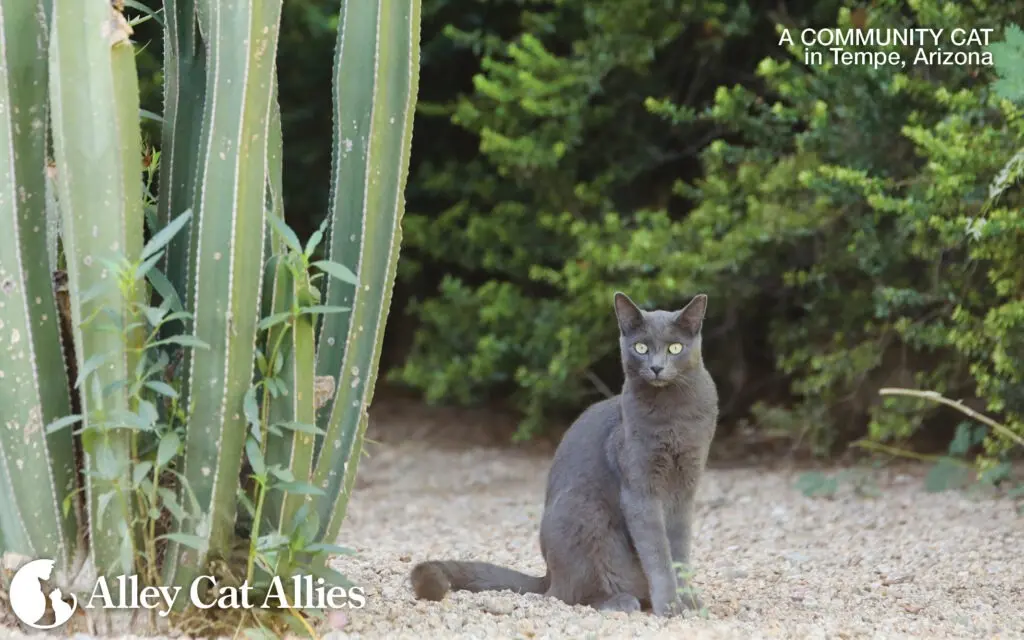
Transforming municipal infrastructure to protect and save the lives of community cats requires far more than isolated acts of kindness—it demands a synchronized coalition of local government agencies, veterinary professionals, regional law enforcement, and dedicated grassroots caregivers. On September 24, 2026, advocacy organization Alley Cat Allies announced the rollout of its flagship initiative, Feline Frenzy®, in Tempe, Arizona. Designed to engineer permanent, systemic change, the campaign champions nonlethal, humane management strategies that foster harmonious coexistence between outdoor felines and their urban or suburban ecosystems.
In its opening salvo in Tempe, the Feline Frenzy initiative delivered immediate, tangible results. Partnering directly with the City of Tempe Office of Animal Welfare and Trusted Paws Veterinary Clinic, the initiative executed a high-volume, high-quality Trap-Neuter-Return (TNR) clinic that processed 82 community cats in a single day. Beyond surgical sterilization, every feline received rabies vaccinations, microchip identification, and standard eartipping before being successfully repatriated to their outdoor homes.
However, the intervention extended far beyond a one-day clinic. By fortifying local food banks, engaging area veterinarians, collaborating with the Arizona Attorney General’s Office to enforce animal cruelty statutes, and laying the groundwork for state-level legislative protections, Alley Cat Allies is establishing Tempe as a blueprint for progressive, compassionate animal welfare across the American Southwest.
Detailed Chronology: The Tempe Operation Unfolds
The execution of the Feline Frenzy campaign in Tempe was the result of months of strategic planning, inter-agency coordination, and localized assessments.

Phase One: The Single-Day TNR Surge
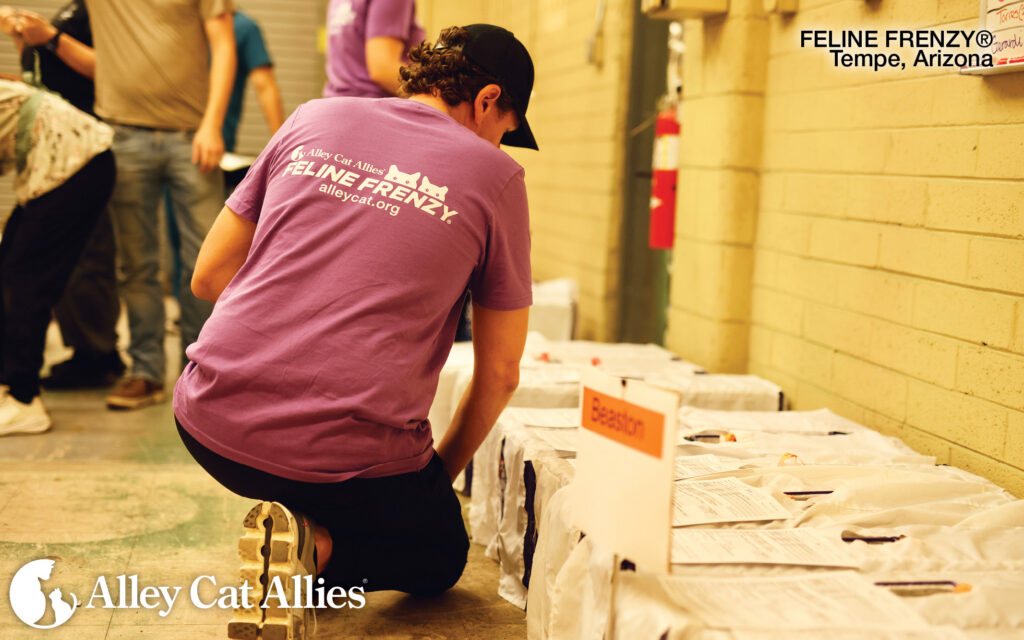
The operational heart of the campaign’s launch kicked off with a concentrated, high-capacity surgical blitz. Operating in tandem with Trusted Paws Veterinary Clinic and city animal welfare officials, Alley Cat Allies streamlined the intake, medical processing, and recovery of 82 community cats.
- Morning Intake & Triage: Felines brought in by local caregivers underwent immediate medical evaluations.
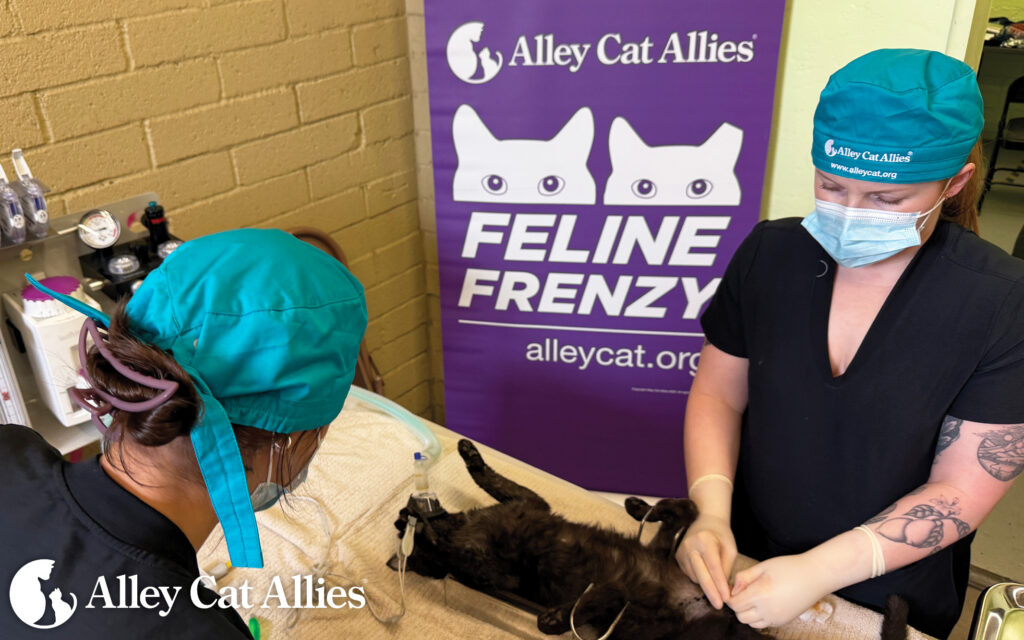
- Surgical Intervention: Experienced veterinarians performed swift, sterile spay and neuter procedures, mitigating population growth vectors before they could compound.
- Preventative Care & Identification: Each cat was vaccinated against rabies—a critical public health safeguard—and fitted with a microchip to ensure permanent identification. Universal eartipping, the internationally recognized sign of a sterilized and vaccinated community cat, was administered while the animals were still under anesthesia.
- Release: Following a brief, monitored recovery period to ensure post-surgical stability, the cats were safely returned to their exact outdoor territories the following day, minimizing displacement stress.
Phase Two: Strengthening the Caregiver Infrastructure
Recognizing that community cat caretakers are the unsung heroes of municipal animal welfare, Alley Cat Allies integrated material support directly into the municipal apparatus. The team visited the City of Tempe Office of Animal Welfare to restock its community food bank with substantial supplies of wet cat food. Field teams then hand-delivered additional provisions directly to individual caregivers across the city.
In addition to physical nourishment, the organization supplied the office with comprehensive educational collateral. This multi-tiered resource provisioning ensures that Tempe residents possess a centralized, reliable hub for nutritional support, colony management techniques, and veterinary guidance.
Phase Three: Veterinary Outreach and Legal Alignment
With the immediate population control measures and supply chains stabilized, Alley Cat Allies expanded its footprint into the broader professional community. The team conducted site visits to various private veterinary clinics throughout Tempe. While the city itself serves as a progressive model for municipal-backed TNR, many private practitioners have historically remained hesitant or unequipped to provide high-volume TNR surgeries. These visits opened vital lines of communication, offering clinical resources and strategic support to help local veterinarians integrate TNR into their regular practices.
Simultaneously, the initiative addressed the legal and protective frameworks governing animal safety in Arizona. Representatives from Alley Cat Allies met with officials from the Arizona Attorney General’s Office. The dialogue centered on integrating Alley Cat Allies’ specialized animal cruelty experts into ongoing and future investigations, ensuring that perpetrators of violence against animals face maximum legal penalties and signaling that cruelty toward cats will not be tolerated.
Supporting Context & Metrics: The Mathematics of Compassion
To understand the profound significance of the Tempe Feline Frenzy, one must analyze the operational capacity of the region and the scalable mechanics of Trap-Neuter-Return programs.
The City of Tempe’s Baseline Capacity
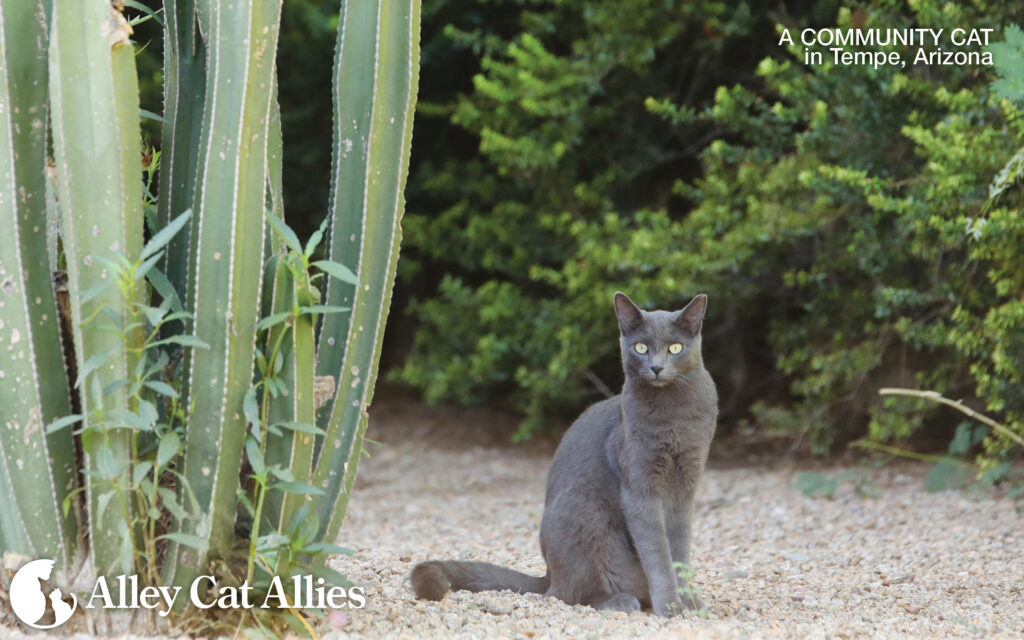
The City of Tempe Office of Animal Welfare has long recognized that TNR is the single most effective, humane methodology for managing community cat populations. The office maintains an annual capacity to service approximately 1,000 community cats through specialized funding and municipal services.
By integrating Alley Cat Allies’ national expertise, diagnostic resources, and boots-on-the-ground volunteer networks, Tempe’s existing infrastructure was supercharged. Processing 82 cats in a single day represents a major scaling of daily throughput, demonstrating how public-private partnerships can dramatically accelerate municipal animal welfare goals.
Why TNR Outperforms Lethal Control
Decades of data in animal science and municipal management have consistently proven that traditional, catch-and-kill policies are ineffective. The "vacuum effect"—wherein removing cats from a specific area simply invites new felines to move in and exploit available food sources—perpetuates endless cycles of overpopulation and shelter overcrowding.
Trap-Neuter-Return disrupts this cycle permanently:
- Population Stabilization: Sterilized cats no longer reproduce, leading to a natural, gradual decline in colony size over time.
- Behavioral Mitigation: Spaying and neutering drastically reduces nuisance behaviors associated with un-sterilized cats, such as yowling, fighting, and territorial spraying.
- Public Health Safety: Mandatory rabies vaccinations administered during TNR clinics create an impenetrable biological firewall protecting both the cat population and human residents.
Official Statements & Stakeholder Perspectives
The success of the Tempe initiative hinges on the coalition forged between national animal advocates and local municipal leaders. While specific localized quotes reflect a unified front, the collective philosophy of the campaign emphasizes systemic cooperation.
"Transforming a community to save cats’ lives takes the right resources and the right network of community members and institutions," notes organizational literature from Alley Cat Allies. Feline Frenzy is explicitly engineered to bridge the gap between fragmented animal welfare efforts and cohesive, nonlethal community governance.
Local animal welfare administrators in Tempe echoed the sentiment, emphasizing that municipal funding alone cannot achieve total community buy-in. The introduction of corporate-level logistical backing, professional veterinary coordination, and specialized cruelty-investigation resources provides the missing links that transform a good local program into an exceptional regional standard.
Furthermore, the alignment with the Arizona Attorney General’s Office introduces a vital deterrence mechanism. Animal welfare experts emphasize that community safety and animal safety are inextricably linked; individuals who commit acts of cruelty against vulnerable felines often pose broader threats to public safety. Strengthening prosecutorial resolve creates a safer environment for both human and animal residents across the state of Arizona.
Future Outlook: Beyond Tempe and Toward Global Cat Day 2026
The intervention executed on September 24 is not viewed by its organizers as a finite event, but rather as the opening chapter of a statewide evolution. Alley Cat Allies has confirmed that its strategic roadmap for Arizona extends far beyond the borders of Tempe.
Scaling State Protections
Moving forward, Alley Cat Allies and its regional stakeholders are actively strategizing to introduce and pass enhanced legislative protections for cats and kittens throughout Arizona. These legislative pushes will aim to codify municipal TNR rights, protect outdoor caregivers from administrative or legal harassment, and tighten statutory definitions and penalties associated with animal neglect and abuse.
Countdown to Global Cat Day 2026
The timing of the Tempe initiative carries profound symbolic and operational weight. Alley Cat Allies has announced that its high-impact work in Tempe, Arizona, will be prominently showcased as a premier case study during the upcoming Global Cat Day 2026, scheduled for October 16, 2026.
Global Cat Day unites advocates across continents to champion the rights and protections of community cats. By spotlighting the Tempe model, Alley Cat Allies intends to provide an actionable, replicable blueprint for municipalities worldwide, proving that high-volume TNR, community education, veterinary engagement, and strict legal enforcement can successfully intersect.
As the Feline Frenzy ripples outward from Tempe, the legacy of those 82 cats sterilized and protected on day one multiplies exponentially. It is a testament to the fact that when communities are equipped with the right tools, compassion becomes policy, ensuring a safer, more humane world for cats and humans alike.