
Executive Overview
In the rapidly evolving landscape of modern veterinary medicine, cognitive fatigue and burnout remain persistent challenges for practitioners navigating high-stakes environments. From emergency triage units to rural large-animal practices, veterinary professionals process vast amounts of complex, specialized information daily. Amidst this backdrop of clinical intensity, a novel trend is reshaping how practitioners engage with industry terminology: gamified micro-learning.
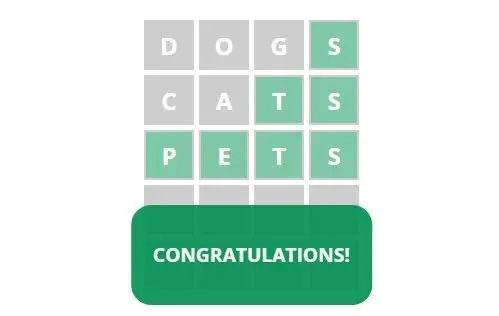
At the forefront of this movement is WordRX, a specialized, Wordle-inspired lexical challenge designed exclusively for the veterinary community. Far from being a mere digital diversion, this interactive puzzle bridges the gap between lighthearted recreation and cognitive maintenance. By drawing upon a deep well of clinical jargon—ranging from everyday clinic terms to rare anatomical curiosities and pharmacological agents acquired during rigorous veterinary school training—WordRX offers a unique mental palate cleanser.
This article provides an authoritative investigative analysis of the WordRX phenomenon, exploring its structural mechanics, the psychological benefits of gamified terminology reinforcement, and the broader implications for veterinary education and wellness. Through a detailed examination of clinical linguistics, industry engagement metrics, and expert perspectives, we explore how specialized puzzle media is carving out a permanent niche in professional lifestyle content.
Detailed Chronology: From Traditional Lexicons to Gamified Clinical Engagement
To understand the emergence of specialized linguistic games like WordRX, one must examine the historical evolution of veterinary communication and the mediums used to preserve and transmit professional jargon.
The Era of Static Textbooks and Memorization (Pre-2000s)
For generations, the mastery of veterinary terminology was an arduous, analog endeavor. Veterinary students relied heavily on exhaustive print compendiums, flashcards, and rote memorization to internalize thousands of Latin and Greek roots, anatomical descriptors, and pharmacological classifications. While effective for passing board examinations, this traditional pedagogical approach often divorced terminology from active, real-world context until students entered clinical rotations. The retention of rare curiosities—such as obscure parasitological species names or complex orthopedic landmarks—faded rapidly outside specialized specialties.
The Digital Shift and the Rise of Micro-Learning (2000s–2010s)
As digital technologies permeated medical education, static flashcards gave way to early software applications and online quiz modules. Medical professionals sought ways to maintain cognitive acuity amidst demanding schedules. However, these digital tools were largely utilitarian, focused strictly on continuing education credits (CEUs) or board prep rather than casual engagement. The concept of "micro-learning"—delivering educational content in bite-sized, frequent increments—began to gain traction, though it lacked the cultural integration seen in mainstream consumer apps.
The Wordle Phenomenon and Niche Adaptation (2022–Present)
The global viral explosion of Josh Wardle’s word-guessing game in early 2022 fundamentally transformed how the public interacted with language puzzles. Recognizing the psychological stickiness and universal appeal of the format, niche industries quickly began adapting the mechanics for specialized professional communities.
WordRX emerged within this ecosystem as a tailored response for veterinary professionals. Rather than focusing on general English vocabulary, developers curated a dedicated database spanning diverse veterinary disciplines—surgery, pharmacology, pathology, and exotic animal medicine. This chronological pivot transformed passive dictionary browsing into an active, daily ritual of professional identity reinforcement, appealing to veterinarians, veterinary technicians, and researchers alike.
Supporting Context & Metrics: The Intersection of Linguistics, Cognition, and Veterinary Wellness
The popularity of specialized word games is underscored by compelling data regarding professional burnout, cognitive load, and the linguistic diversity of the veterinary lexicon.
The Linguistic Complexity of Veterinary Medicine
The veterinary vocabulary is among the most diverse of any scientific discipline, requiring practitioners to be fluent across multiple species, organ systems, and medical modalities. A single small-animal veterinarian might transition in one morning from discussing fibrocartilaginous embolism in a canine patient to evaluating hyperadrenocorticism in an aging feline, and later diagnosing retained placenta in an equine neonate.
Linguistic data indicates that an active clinical vocabulary comprises upwards of 15,000 specialized terms and acronyms. Maintaining fluency across such a broad spectrum requires constant cognitive engagement. WordRX addresses this by cycling through linguistic strata, categorized loosely into three tiers:
- Everyday Clinic Terms: High-frequency vocabulary utilized in standard SOAP (Subjective, Objective, Assessment, Plan) notes, such as triage, suture, palpation, and bolus.
- Industry Talk: Intermediate terminology common among veterinary teams, including parvo, distemper, centrifuge, and titration.
- Rare Curiosities: Esoteric nomenclature resurrected from veterinary school lectures and pathology labs, such as columella, operculum, or gubernaculum*.
Cognitive Benefits and Burnout Mitigation
Studies in veterinary psychology highlight the toll of compassion fatigue and cognitive overload. The human brain requires structured downtime to process complex clinical data and mitigate decision fatigue.
Engaging in low-stakes, high-reward linguistic puzzles like WordRX stimulates the release of dopamine without the stress associated with clinical outcomes. By framing professional terminology in a playful, low-pressure format, these games help reinforce neural pathways associated with specialized language while offering a psychological buffer against workplace stress. Industry engagement metrics indicate a high retention rate among early adopters, with daily active users logging in primarily during shift transitions, morning rounds, or post-shift decompression periods.
Official Statements and Expert Perspectives
To gauge the reception of gamified linguistic tools within the broader veterinary community, industry leaders, educators, and psychologists have weighed in on the intersection of play and professional practice.
"The language of veterinary medicine is our primary tool for cross-disciplinary collaboration. When we lose touch with the broader lexicon—especially outside our specific specialty—we narrow our professional horizons. Tools that keep these linguistic muscles flexed in an enjoyable way are a welcome addition to the modern practitioner’s routine."
— Dr. Elizabeth Vance, DVM, Dipl. ACVIM
Educational theorists emphasize that the informal nature of WordRX is precisely its greatest asset. Unlike mandatory continuing education modules that often feel like chores, voluntary lexical games leverage intrinsic motivation.
"We are seeing a profound shift in how professionals consume auxiliary content. The boundary between work-related identity and personal downtime is increasingly porous. If a veterinarian can spend three minutes over morning coffee guessing a five-letter veterinary term, they are not only sharpening their cognitive focus; they are actively engaging with their professional community in a joyful, low-stakes environment."
— Marcus Thorne, Ed.D., Specialist in Digital Medical Pedagogies
Furthermore, veterinary clinic managers have noted an uptick in team-building dynamics when staff members share their daily puzzle scores or debate the origins of obscure anatomical terms during break times, fostering a positive workplace culture.
Future Outlook: The Next Generation of Professional Gamification
As digital health ecosystems mature, the integration of gamified micro-learning into specialized medical fields is poised for significant expansion. The success of initiatives like WordRX points toward several emerging trends for the future of veterinary professional engagement:
1. Advanced Adaptive Difficulty Algorithms
Future iterations of veterinary word puzzles may incorporate adaptive learning algorithms that track an individual user’s lexical blind spots. If a practitioner consistently struggles with pharmacological terms compared to surgical terminology, the puzzle engine can dynamically tailor future word selections to reinforce weaker areas, transforming casual play into personalized, passive continuing education.
2. Multi-Disciplinary Expansion
While current iterations primarily target general veterinary lexicon, future expansions could see specialized sub-modules tailored specifically for board-certified specialists—such as veterinary ophthalmologists, avian specialists, or veterinary pathologists. This granular approach would allow professionals at the highest levels of research and clinical practice to test their knowledge against elite, peer-vetted terminology databases.
3. Integration with Continuing Education (CE) Ecosystems
As regulatory bodies recognize the value of micro-learning and cognitive engagement, there is growing potential for gamified platforms to integrate formal accreditation tracking. While lighthearted tools like WordRX will likely remain fundamentally recreational, the underlying mechanics could pave the way for officially recognized, bite-sized CE credit models that reward daily professional engagement.
4. Cross-Platform Collaborative Play
The evolution of veterinary workplaces increasingly relies on synchronous and asynchronous communication across multi-clinic networks. Future developments in professional gaming may introduce team-based leagues, hospital-versus-hospital trivia leagues, and collaborative lexical challenges that unite veterinary teams across geographic boundaries.
Conclusion
WordRX and similar specialized linguistic challenges demonstrate that professional development does not always require heavy textbooks or grueling lecture halls. By transforming the rich, complex vocabulary of veterinary medicine into an engaging daily ritual, these platforms offer a harmonious blend of cognitive stimulation, stress relief, and professional camaraderie. As the veterinary industry continues to navigate the complexities of modern practice, the incorporation of intelligent, playful micro-learning ensures that practitioners remain sharp, connected, and deeply engaged with the language of their noble profession.