
Executive Overview
Traveling by air with a domestic pet is an increasingly common endeavor, yet it remains fraught with logistical challenges, strict dimensional limitations, and a patchwork of airline-specific policies. While navigating the skies with a compact dog under ten pounds is relatively straightforward, the calculus changes dramatically for pet owners whose canine companions exceed standard cabin guidelines.
The industry standard for in-cabin soft-sided pet carriers generally assumes a pet weight ceiling of roughly fifteen pounds and a shoulder height not exceeding twelve inches. However, enterprising pet owners continue to push these boundaries through strategic equipment modification, meticulous planning, and a deep understanding of aircraft cabin geometries.
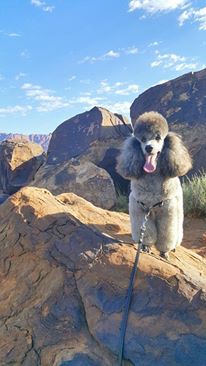
This report details a recent successful cross-country journey undertaken by reader Amy and her seventeen-pound, sixteen-inch-tall Miniature Poodle, Calvin. By leveraging an Extra-Large (XL) SturdiBag—cleverly modified with components from a smaller model as a tactical contingency—Amy successfully completed multi-leg flights on both Delta Air Lines and Southwest Airlines. This case study offers valuable insights into aircraft under-seat clearances, pet relief infrastructure at major hubs, and the pragmatic application of flexible pet carrier systems for larger-than-average cabin dogs.
Detailed Chronology: The Providence-to-Utah Itinerary
The journey began in Providence, Rhode Island, with a final destination of southwest Utah to visit family. To manage the inherent risks of flying with a larger dog, Amy implemented a multi-tiered travel strategy that accounted for both carrier flexibility and contingency routing.

Leg 1: Providence to Atlanta to Las Vegas (Delta Air Lines)
Amy’s initial routing utilized Delta Air Lines, operating first on a Delta MD-88 aircraft from Providence to a layover in Hartsfield-Jackson Atlanta International Airport, followed by a connection to Las Vegas on a Boeing 737-700.
Ahead of the trip, Amy proactively contacted Delta reservation support to clarify policies regarding oversized soft-sided carriers. Her interaction yielded reassuring guidance: reservations staff noted that as long as the soft-sided carrier could successfully compress to fit beneath the forward passenger seat, its absolute dimensions would not disqualify it from in-cabin travel.
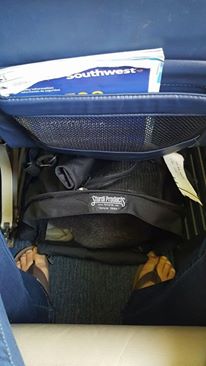
Upon boarding the MD-88, Amy encountered the primary spatial challenge of the itinerary: negotiating a middle seat. Maneuvering the XL SturdiBag into the tight space between the passenger’s seat and the seatback pocket in front required a deliberate squeeze. However, once positioned beneath the seat, the carrier settled securely.
During the layover in Atlanta, Amy utilized the opportunity to exit secure terminal areas to provide Calvin with a bathroom break. While the airport lacked a formal, designated outdoor pet relief area at the time of transit, Amy located exterior decorative plantings to serve the purpose. The subsequent flight from Atlanta to Las Vegas aboard a Boeing 737-700 proceeded without incident, with Calvin remaining calm throughout the leg.
Leg 2: Las Vegas to Chicago to Providence (Southwest Airlines)
The return journey introduced an unexpected operational hurdle when computer system disruptions at Delta threatened severe delays. Opting to avoid compounding travel complications with Calvin in tow, Amy secured a last-minute ticket home via Southwest Airlines.
Boarding presented a brief administrative check when a Southwest gate agent halted the pair to verify that a proper in-cabin pet fee ticket had been issued for the carrier. Southwest’s open-seating policy led to another middle-seat assignment for the first leg of the journey aboard a Boeing 737-700. Despite the middle-seat configuration, the XL SturdiBag slid smoothly into the under-seat space, affording Calvin ample interior room.
The routing included a connection at Chicago Midway International Airport (MDW). Here, Amy again cleared security to access the airport’s outdoor pet relief zone. While the official designated area consisted of a fully concrete, fenced enclosure lacking natural ground cover, surrounding grassy expanses and trees just outside the immediate zone allowed Calvin to relieve himself comfortably.
Following a swift re-screening process, Amy and Calvin boarded the final flight back to Providence. Notably, T.F. Green Airport (PVD) features a modern indoor pet relief facility, smoothing the final transition upon arrival home.
Supporting Context & Metrics: Carrier Modifications and Spatial Mechanics
The success of Amy’s journey hinges upon a clever mechanical modification of the pet carrier system and a nuanced understanding of canine anatomy versus rigid airline specifications.
The Carrier Modification Strategy
The standard Extra-Large SturdiBag measures approximately twenty inches in length, which often exceeds the rigid under-seat dimensional limits enforced by commercial carriers (which typically hover around seventeen to nineteen inches in length). To mitigate the risk of gate rejection while maintaining interior height for her tall dog, Amy deployed a two-part tactical modification:
- The Floor and Pad Swap: Amy replaced the rigid bottom structural insert and the soft interior floor pad of the XL SturdiBag with the corresponding components from a standard Large SturdiBag.
- Dimensional Reduction: This substitution effectively shortened the functional footprint of the XL SturdiBag from twenty inches down to eighteen inches, allowing it to compress effortlessly into standard under-seat storage envelopes without sacrificing the vertical headroom required by Calvin’s sixteen-inch shoulder height.
- The Contingency Backup: As an insurance policy against strict gate agents, Amy packed a completely folded Large SturdiBag inside her primary carry-on luggage. Had airline personnel flagged the XL bag as non-compliant, she possessed the immediate capability to transfer Calvin into the smaller, fully compliant carrier using the identical floor insert she had already brought along.
Canine Biometrics and Spatial Adaptation
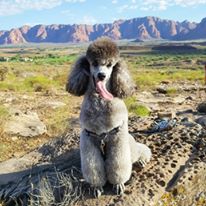
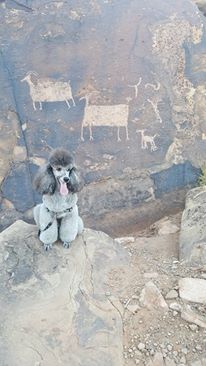
Calvin’s physical profile presents an interesting study in pet travel ergonomics. Standing between sixteen and sixteen-and-a-half inches tall at the shoulder and weighing approximately seventeen pounds, he nominally exceeds the optimal parameters for standard cabin carriers.
However, animal sizing charts frequently fail to account for postural flexibility. Much of Calvin’s height is concentrated in his long legs; when resting inside an enclosed space, he naturally folds and curls his limbs into a compact bundle. By pairing a tall dog with a flexible, soft-sided carrier framework, Amy demonstrated that height statistics alone do not dictate cabin eligibility. Flexible materials allow for vertical give and compression that rigid plastic kennels simply cannot match.
Official Statements and Industry Insights
The complexities of in-cabin pet travel continue to generate robust discussion within the aviation and pet-travel advocacy communities. Industry observers note a distinct variance in how major domestic carriers interpret and enforce soft-sided carrier dimensions.
While formal airline tariffs frequently list strict maximum dimensions for hard-sided and soft-sided pet containers, gate agents and flight crews are often granted discretionary authority. This discretion typically hinges on whether a carrier can easily conform to the physical contours of the space beneath the seat in front of the passenger.
Industry analysts emphasize the following core takeaways from passenger-reported experiences like Amy’s:
- Pre-Flight Communication: Initiating a direct dialogue with airline reservation agents establishes a baseline record of the pet’s presence on the aircraft, minimizing surprises during check-in.
- Carrier Flexibility is Paramount: Soft-sided carriers featuring flexible fiberglass stay-rods—such as the SturdiBag line—absorb downward pressure from seats without collapsing entirely onto the animal inside, protecting the pet’s structural headroom.
- Redundancy and Preparedness: Experienced pet travelers advocate for contingency planning, including carrying alternative approved containers or maintaining flexible routing options when technical delays threaten tight itineraries.
Future Outlook: Infrastructure and Policy Trends
As air travel demand rebounds and pet ownership rates remain elevated, the intersection of commercial aviation and animal transport is poised for ongoing evolution. Several key trends are shaping the future of in-cabin pet logistics:
Expansion of Terminal Relief Facilities
The implementation of federal mandates requiring accessible pet relief areas past security checkpoints in medium and large hub airports has dramatically improved the travel experience. However, as demonstrated at Chicago Midway and Atlanta, the quality, substrate, and accessibility of these zones vary widely. Future terminal expansions will likely focus on integrating more naturalistic, easily accessible relief stations to reduce transit stress for both animals and handlers.
Carrier Standardization and Regulatory Clarity
Advocacy groups continue to push for standardized dimensional guidelines across domestic carriers. Currently, discrepancies between airlines—ranging from strict enforcement of rigid under-seat bars to pragmatic evaluations of soft-sided compression—create an unpredictable environment for consumers. Greater transparency and uniformity in airline pet policies would significantly lower the barrier to entry for owners of medium-sized dogs.
Material Science Innovations
The market for pet travel equipment is increasingly incorporating advanced lightweight, breathable, and highly compressible materials. Future generations of pet carriers are expected to feature modular frames that can dynamically adjust their footprint via zippered expansions or collapsible internal skeletons, bridging the gap between comfort for larger dogs and the strict compliance demands of modern commercial aircraft.
Conclusion
Amy and Calvin’s successful round-trip transit from Rhode Island to Utah illustrates that traveling with an out-of-gauge cabin pet is entirely feasible with thorough preparation, adaptive equipment modifications, and a reliable backup plan. By understanding the mechanical tolerances of aircraft under-seat compartments, communicating proactively with airline personnel, and modifying transport gear to bridge the gap between manufacturer specifications and real-world cabin geometry, pet owners can successfully navigate the skies with their four-legged family members.