
Executive Overview
For decades, wildlife conservationists engaged in the arduous task of restoring apex predator populations have faced an invisible, yet formidable, biological barrier: the homing instinct. Across the animal kingdom, the drive to return to a familiar birthplace, nesting ground, or capture site is a powerful survival mechanism. However, when applied to translocation and reintroduction initiatives, this innate GPS often spells doom for conservation programs. Animals released far from their origins routinely expend critical energy trying to retrace their steps, while those released near captivity sites frequently attempt to breach human enclosures, undermining the entire objective of rewilding.
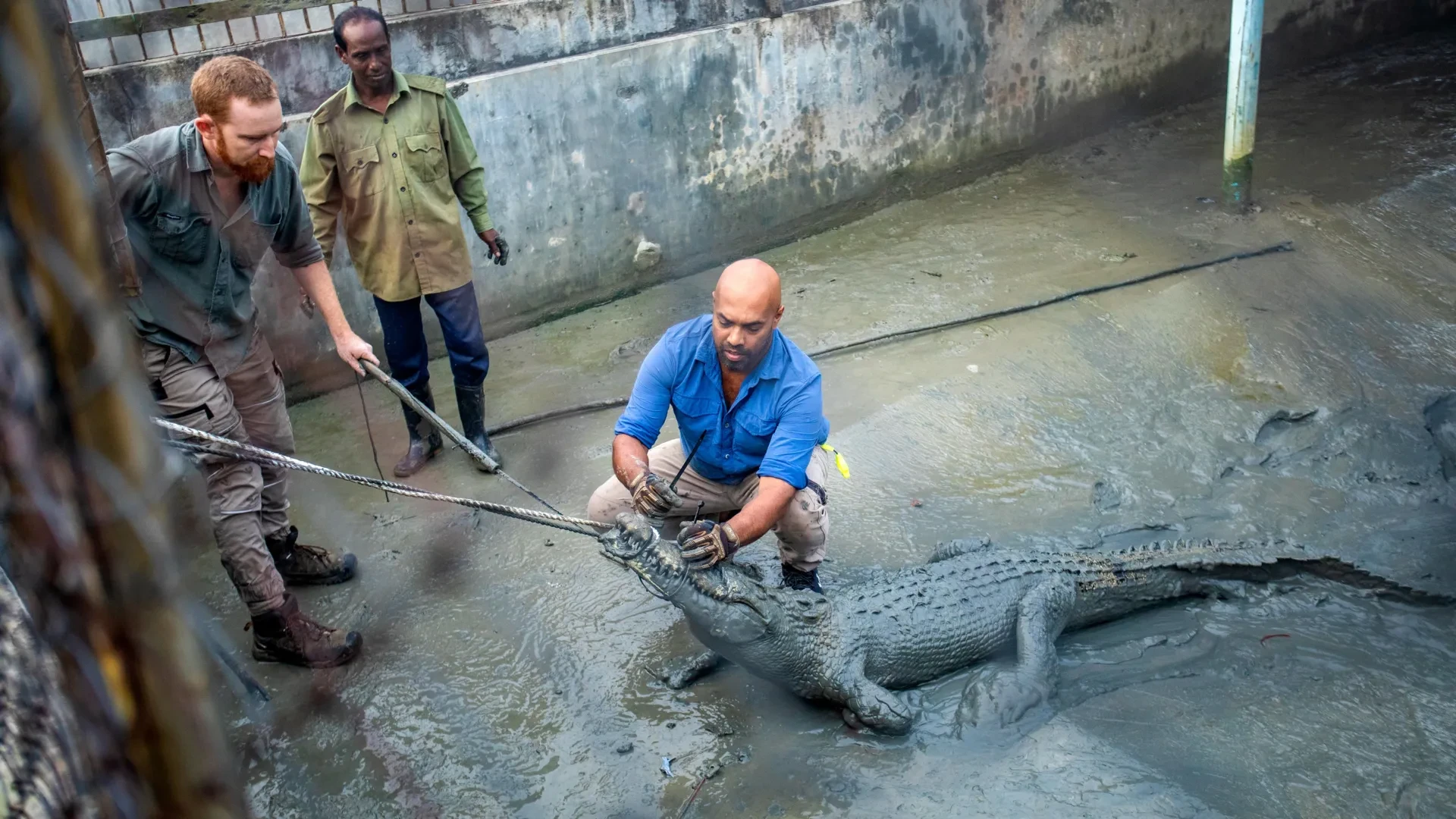
Now, a groundbreaking study published in the peer-reviewed journal Wildlife Research offers a paradigm-shifting discovery that could dramatically alter the future of saltwater crocodile (Crocodylus porosus) conservation. According to the research—titled "What is home? Post-release movements of captive-reared and translocated mature saltwater crocodiles in Bangladesh"—saltwater crocodiles born or raised in captivity do not exhibit the persistent drive to return to their breeding centers once released into the wild. Instead, these mature captive-raised apex predators appear capable of seamlessly adapting to new habitats, establishing localized home ranges much like their wild-born counterparts.
This empirical breakthrough addresses a critical knowledge gap that has plagued conservation biologists for decades. Historically, reintroduction campaigns have relied heavily on releasing fragile hatchlings. While logistically easier to manage, hatchlings suffer from catastrophically low survival rates in the wild and require years to reach sexual maturity, slowing population recovery to a glacial pace. The new findings suggest that utilizing subadult and adult captive-reared crocodiles could bypass these vulnerabilities, providing a viable, fast-tracked mechanism to reinforce critically depleted wild populations.
Conducted within the treacherous, tide-swept labyrinths of the Sundarbans mangrove forest in Bangladesh, the study combined advanced satellite telemetry with rigorous behavioral tracking. By monitoring the post-release movements of both captive-reared and wild-translocated individuals, researchers have charted a new course for how humanity can mend fragmented ecosystems and restore the largest living reptiles on Earth to their rightful ancestral waters.
Detailed Chronology: Tracking the Apex Predators of the Sundarbans
To understand the weight of this conservation breakthrough, one must examine the operational timeline and methodology of the study, which unfolded across one of the most remote and challenging environments on the Asian continent.
The Backdrop: Bangladesh’s Vanishing Giants
The research was executed within the Sundarbans mangrove forest, a UNESCO World Heritage site that straddles Bangladesh and India. Historically, this immense tidal halophytic mangrove ecosystem supported thriving populations of saltwater crocodiles. However, the legacy of heavy commercial hide hunting during the mid-20th century decimated the species across Bangladesh. Despite receiving strict legal protection under national legislation starting in 1973, local saltwater crocodile populations have failed to show any measurable, organic recovery.
Today, the Sundarbans serves as the last major stronghold for the species in Bangladesh. Yet, even within this sprawling sanctuary, the population teeters on the brink of ecological irrelevance. The most recent comprehensive biodiversity surveys estimate that a mere 140 mature saltwater crocodiles survive in the region. With such a fragmented and depleted gene pool, natural recovery is painfully slow, making human-assisted reintroduction not just an option, but an absolute necessity.
The Experimental Cohort
To test whether older, captive-reared crocodiles could successfully transition into independent wild survival without attempting to home-in on their human-managed facilities, an international research coalition—led by IUCN Bangladesh and the Bangladesh Forest Department, with funding from the Deutsche Gesellschaft für Internationale Zusammenarbeit (GIZ)—designed a high-precision satellite tracking initiative.
The research team selected a diverse cohort of five mature saltwater crocodiles to be fitted with advanced satellite-tracking telemetry devices. This cohort was strategically balanced to compare three distinct behavioral categories:
- The Captive-Reared Group: Three mature females that had spent between 8 and 22 years of their lives continuously housed within captive breeding and holding facilities.
- The Local Control Wild Crocodile: A wild-born, wild-raised adult crocodile captured locally within the Sundarbans and subsequently released precisely at its original capture site to establish a baseline of normal wild movement patterns.
- The Translocated Wild Crocodile: A wild-born adult male—subsequently named Jongra—who was captured, moved an immense distance away from his home territory, and released into a foreign sector of the mangrove forest.
Following the deployment of the satellite transmitters, the researchers monitored the minute-by-minute and day-by-day navigational choices of all five apex predators over a span of several months.
The Behavioral Divergence
As the tracking data accumulated, a stark behavioral divergence emerged between the captive-reared individuals and the translocated wild specimen.
The three captive-reared females shattered conventional expectations. Across months of continuous monitoring, none of the three exhibited any navigational signatures of attempting to locate or travel back toward the breeding facilities where they had spent up to two decades of their lives. Instead, they rapidly integrated into their new aquatic ecosystems. They staked out small, well-defined home ranges, began foraging independently, and exhibited movement metrics that closely mirrored those of the local wild control crocodile.
Conversely, Jongra—the translocated wild crocodile—presents a cautionary tale of entrenched homing instincts. Transported approximately 132 kilometers away from his native territory before release, Jongra immediately went into navigation mode. While he did not complete the entire 132-kilometer trek back to his exact point of origin during the study period, his directional trajectory was unequivocal. Jongra logged staggering daily movement totals, traversed an exceptionally expansive geographic area, and recorded single-day surges exceeding 30 kilometers—textbook behavioral markers of a distressed animal locked in a desperate homing mission.
Supporting Context & Metrics: The Science of Homing and Conservation Demographics
The Evolutionary Mechanics of Homing
To fully appreciate why the captive crocodiles’ behavior is so revolutionary, one must examine the evolutionary mechanics of homing within the order Crocodilia.
"Finding the way back home is an important behavior across the animal kingdom," notes behavioral ecologist and Adjunct Associate Professor Ru Somaweera from Murdoch University. For migratory birds, marine mammals, and terrestrial predators, spatial memory and homing instincts are intimately tied to survival, territory retention, and reproductive success. Some species accomplish this via short daily commutes between nesting sites and foraging grounds, while others cross entire ocean basins over extended periods.
Crocodilians occupy a fascinating and formidable niche in this behavioral landscape. As the largest surviving predators in tropical, subtropical freshwater, and brackish ecosystems worldwide, they possess an extraordinarily sophisticated internal compass and spatial map. In natural contexts, wild crocodilians are remarkably adept at navigating back to their original territories.
Historically, this powerful homing instinct has proven to be the bane of human-wildlife conflict management and relocation programs. When problem crocodiles—such as individuals straying too close to human settlements or aquaculture farms—are captured and translocated to new river systems, they frequently defy expectations. Driven by their innate homing mechanisms, these animals often embark on epic overland or aquatic journeys, navigating complex river networks to return to their original capture sites. In doing so, they frequently pass through human-dominated landscapes, elevating the risk of dangerous human-wildlife encounters.
The Demographic Crisis of Traditional Hatchling Releases
For conservationists attempting to rebuild depleted populations, the presence of this strong homing instinct created a strategic dilemma. If a conservation program captured wild-breeding stock, or bred animals in captivity, and those animals subsequently viewed their release sites merely as temporary inconveniences on the road back to their enclosures, rewilding efforts were doomed to fail.
Until recently, the conservation community attempted to circumvent this problem by relying almost exclusively on hatchling release programs. The logic seemed sound: release very young animals that have not yet formed strong spatial attachments to captive facilities, allowing them to imprint on the wild environment from infancy.
However, this traditional approach suffers from crippling ecological drawbacks:
- Catastrophic Mortality Rates: Newly hatched crocodilians are vulnerable to a staggering array of natural predators, including large wading birds, fish, monitor lizards, pythons, and larger conspecifics. In many wild environments, first-year mortality rates exceed 90%.
- Delayed Demographic Impact: Hatchlings take many years—often a decade or more, depending on the species and environmental conditions—to reach sexual maturity. Consequently, a release program utilizing hatchlings offers zero immediate reinforcement to the breeding-age adult demographic, leaving populations vulnerable to stochastic extinction events for over a decade before the cohort can reproduce.
The Murdoch University and IUCN Bangladesh study provides empirical validation that subadult and adult captive-reared crocodiles—animals that have already survived the precarious juvenile phase and are fully capable of defending themselves against most predators—can be introduced directly into wild ecosystems without the paralyzing compulsion to return to captivity.
Official Statements and Expert Analysis
The implications of the Wildlife Research publication extend far beyond the borders of Bangladesh, offering a new toolkit for tropical wildlife managers globally. In interviews detailing the study, lead researchers and institutional partners emphasized both the promise and the operational caveats revealed by the data.
"Crocodilians are a unique case when it comes to homing behavior," explained Dr. Ru Somaweera. Elaborating on the historical frustrations of translocation programs, he noted: "Crocodiles are remarkably good at finding their way home, often returning to their original capture sites and limiting the success of relocation programs. What we still don’t fully understand, though, is how this behavior plays out in individuals that have been bred or kept in captivity for long periods before being released back into the wild."
Addressing the direct threat that homing poses to reintroduction biology, Dr. Somaweera stated: "If crocodiles who are bred and raised in captivity subsequently return to their enclosures or breeding facilities after being released, attempts to reintroduce them into the wild as part of conservation efforts will ultimately fail."
This realization underscores why discovering that captive-reared adults do not home back to their breeding centers is a watershed moment. Without the urge to escape back to human care, these mature animals bypass the high-mortality juvenile bottleneck entirely.
However, the stark contrast provided by Jongra, the translocated wild crocodile, serves as a vital warning for wildlife managers dealing with nuisance or conflict animals. "Unfortunately, the results weren’t as good for the wild crocodile Jongra, who was translocated about 132km from his home before being released," Dr. Somaweera noted. "Although Jongra didn’t make it back to his original capture site during the study, his movements were very clearly going in that direction. He traveled far more each day than any other crocodile we tracked, covered an exceptionally large area, and even recorded single-day movements of more than 30 kilometers: all typical signs of homing behavior."
Synthesizing these dual findings into actionable policy, Dr. Somaweera concluded: "These findings suggest that releasing subadult and adult captive-reared crocodiles can be a viable strategy to strengthen wild populations. For translocated crocodiles, it’s important there is careful release planning to manage their tendencies to return home."
Institutional stakeholders involved in funding and facilitating the research echoed these sentiments. Representatives from IUCN Bangladesh and the Bangladesh Forest Department emphasized that the data will be directly integrated into the ongoing national wildlife management strategy for the Sundarbans. By optimizing the age profile of released crocodiles and refining release site selection, conservation managers can maximize the demographic viability of the surviving saltwater crocodile population while minimizing human-wildlife friction.
Future Outlook: Redefining Global Crocodilian Conservation
The publication of "What is home? Post-release movements of captive-reared and translocated mature saltwater crocodiles in Bangladesh" marks the close of one research chapter and the opening of an aggressive new frontier in practical conservation biology. As biodiversity pressures mount globally, traditional preservation—simply fencing off areas and hoping nature heals itself—is frequently insufficient for long-lived apex predators experiencing severe demographic bottlenecks. Active, science-driven rewilding is required.
Operationalizing Captive-to-Wild Transitions
Armed with the knowledge that captive-reared saltwater crocodiles can readily abandon human facilities in favor of establishing independent wild home ranges, conservation breeding centers across South and Southeast Asia can fundamentally restructure their operations. Rather than retaining breeding stock indefinitely or flooding ecosystems with vulnerable hatchlings, facilities can design structured "head-starting" and maturity programs.
Under this refined paradigm, crocodiles can be raised in captivity past their vulnerable juvenile years—ensuring robust physical size, hardened scutes, and developed hunting instincts—before being systematically introduced into protected mangrove habitats like the Sundarbans. Because these individuals lack spatial imprinting on the breeding facility itself, they are free to assimilate into the local ecological community, occupy vacant ecological niches, and contribute to the genetic pool of aging wild populations.
Managing Translocated Wildlife
Conversely, the data concerning wild-translocated individuals like Jongra provides an urgent operational warning for human-wildlife conflict mitigation. In regions where large saltwater crocodiles must be removed from populated fishing villages or coastal aquaculture zones, simple translocation—dropping a problem crocodile into a distant river basin—is revealed to be biologically inefficient and potentially hazardous.
Because wild adult crocodiles possess deeply ingrained spatial maps and powerful homing drives, translocating them triggers high-energy, long-distance wandering behavior as the animal attempts to navigate back to its native waters. Conservation planners must account for this by either establishing long-distance holding protocols, utilizing physical or natural barriers to disrupt homing trajectories, or recognizing that certain chronic conflict individuals may require permanent sanctuary placement rather than wild release.
A Beacon of Hope for the Sundarbans
Ultimately, the study injects a much-needed dose of optimism into the conservation outlook for Bangladesh’s saltwater crocodiles. With only 140 mature individuals estimated across the vast Sundarbans mangrove labyrinth, every single breeding-age adult represents an irreplaceable asset to the species’ survival.
By demonstrating that captive-reared adults can transition successfully into the wild without attempting an impossible return to human enclosures, science has provided conservationists with a new, highly effective tool. As these captive-raised giants step out of their concrete enclosures and into the tidal creeks of the Sundarbans, they carry with them not only their own survival, but the fragile, hard-fought future of an entire apex predator population.