
Executive Overview
The landscape of pet-friendly travel has undergone an unprecedented seismic shift. For years, the operational rhythm of the pet travel community—affectionately known as "Dog Jaunt Nation"—was defined by rigorous logistical planning, cross-country relocations, and the intricate coordination of in-cabin animal transit. However, as global health protocols ground international and domestic transit networks to a halt, pet travel advocates find themselves in a profoundly ironic paradigm: just as families are finally settled into their new homes, the world has locked down.
This report examines the return of the premier pet travel resource, Dog Jaunt, following a prolonged hiatus driven by massive family relocations. It details the current state of pet aviation policies, the resilience of the traveling pet community during an era of restricted mobility, and the strategic pivot toward digital resource updates and community-building. While commercial aviation remains restricted and road trips are temporarily supplanted by stay-at-home mandates, the infrastructure of pet travel is quietly evolving behind the scenes. Through comprehensive updates to major airline policy charts and a renewed focus on shared travel narratives, the Dog Jaunt platform re-emerges as a vital anchor for pet owners navigating an uncertain future.
Detailed Chronology: From Cross-Country Relocations to Pandemic Pause
To understand the current state of Dog Jaunt, one must first trace the arduous logistical timeline that preceded its temporary hiatus. Over the course of the past several years, the publication’s founder diverted attention away from regular editorial publishing to execute a series of complex, multi-stage family relocations. The primary objective: moving first the in-laws and subsequently her own parents across the North American continent to settle in the Pacific Northwest hub of Seattle, Washington.
These relocations were not minor logistical footnotes; they were massive, cross-country undertakings. Executing these moves required navigating every major east-west vehicular corridor in the United States. While the earlier phases of these transcontinental journeys relied on traditional routes—most notably historic stretches of Route 66—later iterations of the journey embraced more scenic and geologically diverse itineraries.
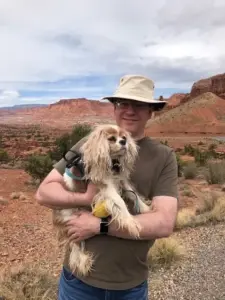
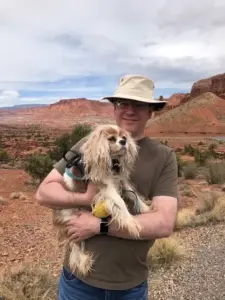
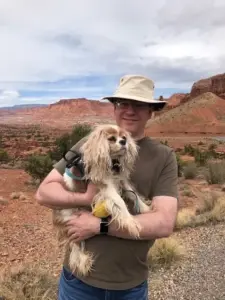
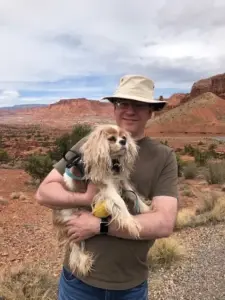
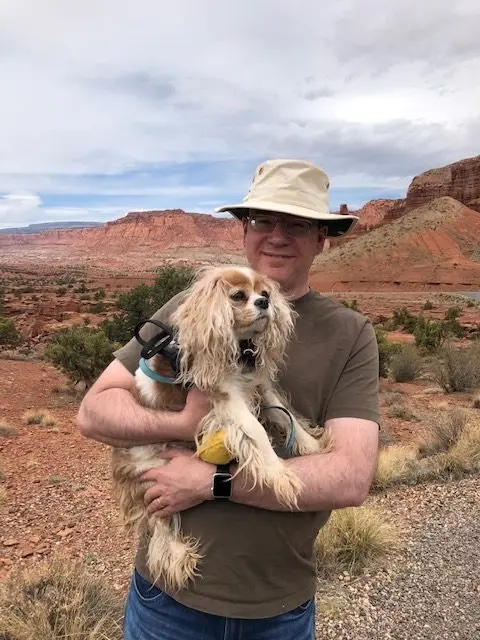
On the final major relocation run, the travel party deviated northward well before reaching Gallup, New Mexico, choosing instead to chart a course through the red-rock majesty of Moab, Utah. This route yielded unforgettable encounters with America’s public lands, including Capitol Reef National Park in Utah. During these extensive road journeys, the publication’s canine mascot, Chloe—a resilient traveler whose fur coat famously weathered the crimson dust of the Utah desert to achieve a shade affectionately dubbed "Capitol Reef Red"—served as the quintessential road companion.
Just as the final moving boxes were unpacked in Seattle and the multi-year familial relocation project reached its successful conclusion, the operational environment shifted dramatically. The emergence of a severe global viral outbreak abruptly halted non-essential travel worldwide. Highways grew quiet, airline fleets were grounded, and the community of pet owners who relied on frequent travel was forced indoors. What was initially intended to be a brief pause in publishing to finalize family logistics transformed into an extended hiatus necessitated by global confinement.
Supporting Context & Metrics: The State of Pet Travel Policies in Lockdown
Despite the current cessation of widespread human and animal mobility, the regulatory architecture governing pet travel continues to shift. Recognizing that a grounded community is a planning community, Dog Jaunt has initiated a comprehensive overhaul of its foundational resources: its exhaustive charts tracking U.S. and international airline pet policies.
The Domestic Landscape: U.S. Carrier Regulations
Navigating the regulatory environment of United States commercial airlines has historically been a high-stakes endeavor for pet owners. Policies vary wildly between carriers regarding:
- In-Cabin vs. Cargo Hold: Permissible weight limits for in-cabin carriers, dimensions for soft-sided versus hard-sided containers, and strict seasonal embargoes on cargo transport for brachycephalic (short-nosed) breeds.
- Documentation Requirements: The fluctuating mandates surrounding health certificates, vaccination records, and training certifications for emotional support versus fully trained service animals.
- Fees and Reservations: The strict caps imposed by major domestic carriers on the total number of pets allowed in the cabin per flight, making early reservation protocols mandatory.
By bringing the U.S. airline pet policy matrix completely up to date, the platform provides travelers with a centralized, reliable baseline of carrier rules. Even as these charts are currently viewed "wistfully from living room couches," maintaining accurate data is crucial for pet owners anticipating the eventual resumption of domestic flight operations.
International Horizons: In-Cabin Global Transit
International pet travel introduces an exponential layer of complexity. Regulations are governed not merely by individual corporate airline policies, but by the strict biosecurity laws of destination countries.
The updated international airline pet policy charts focus heavily on in-cabin transit options, highlighting carriers that permit small dogs and cats to accompany their owners in the passenger seating area. Key metrics tracked within these updates include:
- Dimensional Restrictions: Variations in carrier size allowances between North American, European, and Asian carriers.
- Routing Limitations: Navigating partner airline codeshares where pet policies may abruptly change mid-journey.
- Quarantine Intersections: How airline compliance aligns with destination entry requirements, such as microchipping, rabies titer testing, and specific parasite treatments.
By auditing and publishing these metrics during a period of zero travel, the platform ensures that its readership will possess a tactical advantage the moment international borders fully reopen.
Official Statements & Community Engagement
The relaunch of Dog Jaunt places a heavy emphasis on community engagement, recognizing that psychological resilience during periods of isolation is deeply tied to shared experiences and collective storytelling.
The Founder’s Perspective
Reflecting on the psychological duality of transitioning from intensive physical relocation to sudden indoor confinement, the platform’s leadership noted the unexpected emotional value of the digital community:
"Isn’t it ironic? For the past few years, I’ve been entirely focused on moving my in-laws, and then my own parents, out to Seattle from their respective homes, and you haven’t heard a peep from me or Chloe. Now the parents are settled—and this dreadful virus is upon us, and no one is traveling. But Dog Jaunt Nation is resilient, and hopeful, and we can share tips and stories and look forward to better days."
Addressing the welfare of the community’s canine ambassador, the platform offered direct reassurance to anxious followers:
"First things first: Chloe is absolutely fine. She’s — well, let’s call it blonder — than she was, but she’s full of pep and bounce. Thank you to all of you who worried about her during this downtime, and forgive me for not writing back with reassurance."
The Psychology of Digital Community
For an initiative founded and maintained by an admitted textbook introvert, the enduring success of Dog Jaunt has always been rooted in the organic, supportive network of pet owners it fostered. In an official statement regarding the reactivation of communication channels—including direct email inquiries ([email protected]) and social media integration—the platform emphasized the distinct advantages of blog-based community architecture:
"The thing I valued most about Dog Jaunt — and this is odd, coming from a textbook introvert — was the community we created together. Especially in this anxious time, it’ll be a great source of comfort to be back in touch with Dog Jaunt Nation. I really want to hear what you’ve been up to with your own travel buddies!… As always, recall that comments here on the blog are forever, while on Facebook they just scroll away."
This deliberate choice to prioritize permanent archival commentary over ephemeral social media feeds underscores a commitment to building a lasting, searchable repository of pet travel wisdom. Faithful readers and new community members alike are invited to submit their own isolation-era travel stories, vehicular camping anecdotes, and localized adventure logs for future publication.
Future Outlook: Preparing for the Rebound of Pet Mobility
As public health advisories evolve and transportation sectors map out phased revivals, the future of pet travel will undoubtedly look different than it did prior to the global shutdown. Industry analysts predict several key trends that will shape the coming years:
- The Rise of Domestic Road Tourism: With international air travel facing prolonged regulatory scrutiny and fluctuating quarantine protocols, pet owners are expected to heavily favor domestic road trips. Publications focusing on national park access, pet-friendly roadside lodgings, and vehicular safety will see a surge in demand.
- Stricter Health and Sanitation Standards: Commercial airlines and hospitality providers will likely implement enhanced cleaning protocols, impacting how pet carriers are handled, sanitized, and boarded. Staying informed via regularly audited policy charts will be more critical than ever.
- The Strengthening of Niche Communities: Platforms like Dog Jaunt demonstrate that micro-communities centered around shared lifestyle passions—such as traveling with companion animals—provide vital emotional support and practical guidance during macro-level societal disruptions.
In conclusion, while the immediate horizon may restrict our physical movements to neighborhood walks and living room daydreaming, the foundational work being done today guarantees that when the travel restrictions lift, Dog Jaunt Nation will be ready to hit the road and the skies once more. Chloe is rested, the policy charts are pristine, and the community is reunited. Better days of exploration are undoubtedly ahead.