
By Keith Loria
Executive Overview
For decades, feline infectious peritonitis (FIP) was regarded by veterinarians and cat owners alike with a profound sense of dread. Historically, a diagnosis of FIP was viewed as an almost uniformly fatal outcome, leaving clinicians with little to offer beyond palliative care and compassionate discussions surrounding euthanasia.
Today, the landscape of feline medicine has shifted dramatically. The advent of targeted antiviral medications has transformed FIP from a death sentence into a manageable—and frequently curable—condition. However, this therapeutic revolution has exposed a critical vulnerability in modern veterinary practice: the lack of a single, highly dependable antemortem test capable of definitively confirming or excluding the disease across all clinical presentations.
Because initiating treatment can be life-saving, diagnostic uncertainty carries immense clinical weight. To address this persistent hurdle, a collaborative team of researchers recently evaluated a promising diagnostic tool known as multiplex fluorescent immunocytochemistry (MF-ICC). By focusing directly on macrophages—the core cellular vehicle of systemic FIP—the assay offers a minimally invasive method to detect viral antigens without requiring surgical tissue biopsies.
While the study demonstrates that MF-ICC outperforms several traditional diagnostics in overall accuracy, leading researchers emphasize that no single test serves as a clinical panacea. Instead, diagnosing FIP continues to require a holistic synthesis of clinical signs, biochemical changes, and complementary laboratory assays. As the veterinary community adapts to an era where effective treatments are readily available, refining these diagnostic pathways has become one of the profession’s most urgent priorities.
Detailed Chronology: The Evolution of FIP Diagnostics
To understand the significance of the recent study on MF-ICC, it is essential to trace how the veterinary profession has historically approached the diagnosis of feline coronavirus (FCoV) and its mutated, systemic counterpart, FIP.
The Diagnostic Dilemma of the Past
Feline coronavirus is remarkably common, particularly in multi-cat households, catteries, and shelters. The vast majority of cats exposed to FCoV experience mild or asymptomatic enteric infections and never develop FIP. This high baseline prevalence has long plagued traditional testing methods.
- RT-PCR (Reverse Transcription-Polymerase Chain Reaction): This method looks for viral RNA. While useful, detecting viral RNA does not inherently differentiate between a harmless intestinal coronavirus infection and the systemic, fatal disease known as FIP.
- Serology: Serologic tests measure a cat’s antibody response to the coronavirus. Because exposure is widespread, high antibody titers often indicate previous exposure rather than active, clinical FIP.
- Biochemical Changes: Metrics such as the serum albumin-to-globulin (A:G) ratio provide strong clinical suspicions based on systemic inflammation and protein imbalances, but they remain non-specific.
- Histopathology and Immunohistochemistry (IHC): Historically considered the gold standard for a definitive diagnosis, histopathology paired with IHC requires examining affected tissues. In unstable or critically ill patients, obtaining these tissue samples often necessitates invasive surgical procedures that carry considerable risk.
The Introduction of MF-ICC
Recognizing these limitations, researchers set out to evaluate multiplex fluorescent immunocytochemistry (MF-ICC) as a bridge between minimally invasive collection and gold-standard cellular confirmation.
The assay operates by identifying viral antigens specifically within macrophages—the primary white blood cells that harbor and disseminate the virus throughout the body during systemic FIP. By pairing a feline coronavirus marker with vimentin (a cellular marker that identifies macrophages) using fluorescent antibodies, the assay allows pathologists to visualize whether viral antigens reside inside the precise cell type responsible for the disease pathogenesis.
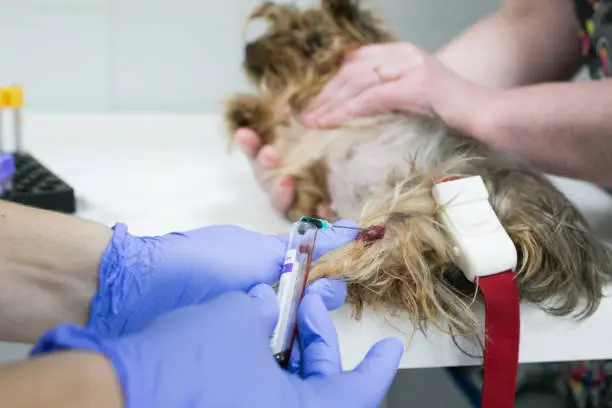
Samples can be gathered via minimally invasive techniques, such as drawing effusion fluid from the abdomen or performing fine-needle aspirates of affected tissues. In many cases, these collections can be performed safely without subjecting an already compromised cat to general anesthesia.
Supporting Context & Metrics: Evaluating the Clinical Trial
To rigorously assess the efficacy of MF-ICC, a research team conducted a comprehensive clinical trial involving 84 feline subjects:
- 58 cats with confirmed FIP.
- 26 control cats suffering from alternative disease processes.
Comparative Performance Metrics
The study directly compared MF-ICC against three established diagnostic benchmarks: RT-PCR, serology, and the serum albumin-to-globulin ratio. Final case determinations were established using necropsy findings with histopathology and immunohistochemistry, documented responses to antiviral treatments, and thorough clinical follow-ups.
Using a diagnostic threshold of at least one cell testing positive for both the viral and cellular markers, the MF-ICC assay yielded the following statistical performance metrics:
- Sensitivity: 77 percent
- Specificity: 81 percent
- Positive Predictive Value (PPV): 92 percent
- Negative Predictive Value (NPV): 53 percent
- Overall Accuracy: 78 percent
For comparison within the same patient cohort, the diagnostic accuracies of alternative methods were recorded as follows:
- Albumin-to-globulin ratio: 76 percent accuracy
- Serology: 75 percent accuracy
- RT-PCR: 69 percent accuracy
Surprising Findings and Complementary Value
One of the most striking revelations of the study was the sheer efficiency of the assay. Dr. Samantha J.M. Evans, associate professor of clinical pathology at Colorado State University (CSU) and lead author of the study, noted that finding a single dual-positive cell was sufficient to discriminate between FIP and non-FIP diseases.
Furthermore, researchers discovered that different diagnostic assays frequently captured distinct subsets of patients. MF-ICC successfully identified FIP cases that RT-PCR missed, while RT-PCR occasionally detected cases that eluded MF-ICC. This complementary dynamic indicates that ordering multiple assays using the same sample type significantly enhances overall diagnostic yield.
Official Statements and Expert Perspectives
The transition from a fatal prognosis to a treatable condition has fundamentally altered the stakes of rapid and accurate veterinary diagnostics. Leading veterinary clinicians and pathologists have shared vital perspectives on how these diagnostic advancements impact daily practice.
The Challenge of the Noneffusive Form
Dr. Samantha J.M. Evans emphasizes that FIP remains an exceptionally difficult disease to diagnose, particularly in its noneffusive (dry) form.
"FIP is extremely diagnostically challenging, primarily in the noneffusive form," says Dr. Evans. "It’s much more important now to get a diagnosis, because we actually have treatment available. However, [MF-ICC] is not a panacea. We don’t have a silver bullet. It’s really an amalgamation of clinical signs and diagnostic tests that all come together to build a case for FIP, rather than a single test that we’re relying on."
Balancing Speed and Invasiveness
Dr. Benjamin Curtis, a clinical assistant professor at the University of Michigan and co-author of the study, highlights the pragmatic advantages of combining minimally invasive sample collection with cellular confirmation.
"It’s minimally invasive," explains Dr. Curtis. "Pulling fluid out of the belly or doing a needle aspirate is much less invasive than needing to do a tissue biopsy. But then it brings in the gold-standard concept of immunohistochemistry, in that we can confirm there is viral antigen inside the cells that matches the presentation of FIP."
Dr. Curtis also underscores the time-sensitive nature of severe FIP cases, where patients may have only days for veterinary teams to intervene:
"Having something with a rapid turnaround is going to be life and death for a lot of cats. Being able to get a rapid answer lets owners and veterinarians know whether we need to start moving on treatment or make other decisions."
The Risks of Empirical Treatment
Dr. Petra Černá, an assistant professor of small animal internal medicine at the University of Georgia and a study co-author, points out an alarming trend observed in modern clinical settings: the widespread practice of administering long-term antiviral therapies without a verified diagnosis.
"It is very important to have access to fast and accurate diagnostic tests so we can confidently treat these cats," notes Dr. Černá. "Very often, I see cases that have been treated for several weeks with antiviral therapy, and they do not have FIP. That is not good antiviral stewardship, but we are also missing the actual diagnosis and are not able to help these patients."
For general practitioners handling complex cases, Dr. Černá views MF-ICC as an invaluable addition to the clinical toolkit—especially when cytology samples have already been gathered, when no material was retained for RT-PCR, or when PCR results return negative despite persistent clinical suspicion.
Future Outlook: Transforming Laboratory Tests into Comprehensive Systems
As the veterinary medical community moves forward, the integration of assays like MF-ICC is expected to evolve from isolated diagnostic submissions into comprehensive, multi-layered diagnostic packages.
Expanding Diagnostic Panels
At Colorado State University, plans are underway to make MF-ICC available through the Veterinary Diagnostic Laboratory. Rather than relying on a standalone test, CSU intends to bundle MF-ICC alongside RT-PCR, biochemical profiles (such as the A:G ratio), and other patient biomarkers into a cohesive diagnostic panel.
Additionally, researchers are developing auxiliary machine-learning tools designed to analyze routine complete blood count (CBC) and serum biochemistry data to flag potential FIP cases earlier in the disease course. Because the published methodology for MF-ICC is non-proprietary, other veterinary diagnostic laboratories equipped with the necessary fluorescent microscopy tools can adopt and establish the assay, potentially reducing shipping times and accelerating result turnarounds nationwide.
Managing Comorbidities and Long-Term Outcomes
Looking beyond initial diagnosis and treatment, veterinary researchers emphasize the need to address emerging clinical realities in post-treatment populations. Dr. Černá notes that future research must focus heavily on complex patients who fail to respond as expected to standard antiviral protocols. This includes managing severe systemic inflammation, suspected viral sepsis, immune-mediated hemolytic anemia, myocarditis, and concurrent infections.
Furthermore, as thousands of FIP survivors live longer lives, clinicians are beginning to document new post-treatment health phenomena, including chronic gastrointestinal diseases and isolated reports of large-cell lymphoma. These emerging questions represent the next frontier in feline internal medicine—challenges that could never be studied in an era when FIP was universally fatal.
Ultimately, while no single diagnostic test can eliminate every variable in a complex clinical puzzle, the evolution of techniques like MF-ICC moves the veterinary profession closer to the ultimate goal: rapid, accurate, and minimally invasive answers that save feline lives.