
Executive Overview
For any pet owner, there is a uniquely stressful moment that comes with realizing your companion is simply not acting like themselves. Perhaps they are eating a little less, sleeping significantly more, drinking unusual amounts of water, or exhibiting a subtle shift in demeanor that resists simple explanation. When a veterinarian ultimately recommends running diagnostic blood work, a wave of uncertainty often follows. Suddenly, pet owners find themselves trying to decipher medical jargon, weighing financial costs, and wondering whether these tests are genuinely necessary at that exact moment—especially if they are already grappling with high-stress scenarios like coordinating specialized overnight care.
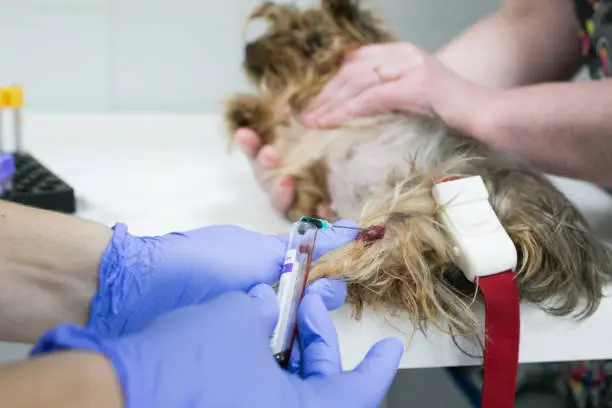
This uncertainty is entirely understandable. Diagnostic laboratory tests can feel like an unwelcome financial burden when stress is already running high. However, blood work frequently provides definitive answers that a physical examination alone simply cannot uncover. Within a clinical veterinary setting, diagnostic blood panels serve as critical tools for unmasking hidden illnesses early, tailoring precise treatment regimens, and verifying whether a patient is physiologically stable enough to undergo anesthesia or process specific medications. Put simply, blood work allows a veterinary care team to see beneath the surface, identifying pathophysiological shifts long before external symptoms become obvious.
This investigative report explores the profound value of veterinary diagnostics, examining the mechanisms of standard lab panels, contrasting proactive testing against passive observation, and detailing how informed communication between veterinarians and pet owners can transform difficult medical decisions into pathways of clarity and effective care.
Detailed Chronology: The Evolution of Veterinary Diagnostics
To fully appreciate the role of modern blood work, it is helpful to look back at how veterinary medicine has evolved. Decades ago, animal healthcare relied heavily on physical observation, auscultation (listening with a stethoscope), and basic exploratory procedures. While these foundational skills remain vital, veterinary medicine has made immense strides in diagnostic technology over the past half-century, shifting the paradigm from reactive crisis management to proactive healthcare.
The Shift from Guesswork to Precision Medicine
- Early Decades (Mid-20th Century): Veterinary care was largely constrained by a lack of accessible laboratory infrastructure. Veterinarians treated symptoms based on physical signs, making conditions like early-stage renal failure or subclinical endocrine disorders nearly impossible to diagnose until they reached advanced, often irreversible stages.
- The Rise of In-House Diagnostics (1980s–1990s): The introduction of automated hematology and chemistry analyzers revolutionized veterinary hospitals. For the first time, clinicians could obtain blood test results within minutes rather than waiting days for external reference laboratories. This technological leap dramatically improved surgical safety and acute care management.
- Modern Genomic and Biomarker Era (Present Day): Today, veterinary diagnostics incorporate advanced biomarker profiling, specialized endocrine assays, and comprehensive clinical pathology panels. These tools allow veterinarians to establish individual baseline values for young pets and monitor subtle physiological trends as animals age, catching micro-changes in organ function years before outward clinical signs appear.
This historical trajectory underscores a vital reality: pets are biologically wired to mask vulnerability—an evolutionary survival mechanism designed to hide weakness from predators. By the time an owner notices overt signs of illness, the underlying pathology has often been developing for weeks or months. Modern diagnostic testing acts as a scientific bridge, overcoming the limitations of animal masking behaviors through objective, quantifiable data.
Supporting Context & Metrics: Unpacking the Lab Panels
When a veterinarian recommends "blood work," they are rarely ordering a single, monolithic test. Instead, they are deploying a sophisticated suite of diagnostic tools tailored to the specific clinical presentation of the patient. Understanding the composition of these panels demystifies the process and highlights why different tests are chosen for different scenarios.
1. Complete Blood Count (CBC)
A Complete Blood Count evaluates the cellular components of the blood, providing deep insights into three major categories:
- Red Blood Cells (RBCs): Responsible for carrying oxygen throughout the body. An evaluation of RBCs helps diagnose various forms of anemia, dehydration, or polycythemia.
- White Blood Cells (WBCs): The immune system’s primary defenders. Elevated or depleted WBC counts can point toward acute infections, chronic inflammation, bone marrow disorders, or severe stress responses.
- Platelets: Essential for normal blood clotting. Abnormal platelet counts can indicate clotting disorders or risks of spontaneous hemorrhage.
2. Serum Chemistry Panel
The chemistry panel measures various chemical constituents and enzymes dissolved in the liquid portion of the blood (serum or plasma), offering a window into systemic metabolic health:
- Kidney Function Indicators (BUN and Creatinine): Elevated levels often suggest renal dysfunction, dehydration, or urinary tract obstructions.
- Liver Enzymes (ALT, AST, ALP, Gobilin): Specific enzymes leak into the bloodstream when liver cells are damaged or stressed, helping flag hepatitis, toxin exposure, or metabolic diseases.
- Blood Glucose: Essential for screening for diabetes mellitus or identifying dangerously low sugar levels.
- Electrolytes (Sodium, Potassium, Chloride): Vital for maintaining fluid balance, acid-base status, and normal cardiac and muscular function.
Comparative Analytical Approaches
To evaluate the practical implications of choosing diagnostic testing versus alternative approaches, consider the following clinical comparison:
| Diagnostic Approach | Primary Clinical Benefits | Potential Risks & Limitations |
|---|---|---|
| Comprehensive Blood Work (Immediate) | • Early detection of subclinical disease • Enhanced anesthetic and surgical safety • Accurate, evidence-based medication dosing • Establishment of longitudinal baseline values |
• Upfront financial cost • Minor, transient stress associated with venipuncture |
| Passive Monitoring ("Wait and Watch") | • Avoids immediate diagnostic expenditures if clinical signs prove transient and self-limiting | • Risk of disease progression during delay • Narrowed therapeutic windows • Potentially higher cumulative costs for advanced care later |
| Symptom-Based Empiric Treatment | • May provide rapid palliative relief in select, highly specific clinical scenarios | • Risk of misdiagnosis and inappropriate treatment • Masking of underlying progressive disease • Potential toxicity if organ dysfunction goes undetected |
As demonstrated, while passive approaches may defer upfront expenses, they carry substantial medical risks. Conversely, proactive testing shifts the veterinary strategy from reactive crisis control to targeted, evidence-based intervention.
Official Statements & Industry Guidelines
Leading veterinary institutions and academic diagnostic centers emphasize that laboratory testing should be integrated seamlessly into both preventative wellness protocols and urgent care scenarios.
Veterinary pathology guidelines published by major academic veterinary centers—such as those highlighted by clinical pathology resources at institutions like Tufts University and Cornell University—stress that reference ranges and panel selection must be interpreted within the unique context of each patient’s signalment (age, breed, sex) and clinical history. A value that falls outside standard reference parameters is not always an immediate indicator of a life-threatening crisis; rather, it is a localized data point that demands expert clinical correlation.
Furthermore, veterinary professional organizations advocate for transparency in diagnostics. Clinicians are encouraged to clearly articulate why a specific panel is recommended, what differential diagnoses the test aims to confirm or rule out, and how the resulting data will alter the immediate therapeutic plan. This collaborative dialogue empowers pet owners, bridging the emotional gap between anxiety and informed decision-making.
Future Outlook: The Next Frontier in Veterinary Diagnostics
As veterinary medicine continues to advance at a rapid pace, the landscape of diagnostic testing is undergoing a profound transformation. Looking toward the future, several emerging trends promise to make blood work even more powerful, accessible, and integrated into everyday pet care:
1. Point-of-Care and Microfluidic Testing
Traditional diagnostics often require sending samples to external reference laboratories, resulting in turnaround times ranging from several hours to multiple days. The future lies in advanced point-of-care microfluidic devices that can run comprehensive chemistry and hematology panels chairside within minutes. This capability is especially transformative for emergency and critical care settings, where every minute counts.
2. Liquid Biopsies and Early Cancer Detection
Human oncology has made tremendous strides using circulating tumor DNA (ctDNA) liquid biopsies to detect cancer early through simple blood draws. This technology is actively making its way into veterinary medicine. Future diagnostic panels will increasingly incorporate multi-cancer early detection assays, allowing veterinarians to screen for malignancies long before tumors become visible on radiographs or ultrasounds.
3. Artificial Intelligence and Longitudinal Trend Analysis
With the widespread adoption of electronic medical records and cloud-based laboratory databases, artificial intelligence (AI) is poised to play a major role in data interpretation. AI algorithms can analyze a patient’s historical lab values over years, identifying subtle downward or upward trends in organ function markers long before those values breach standard reference limits. This predictive capability represents the ultimate realization of preventative veterinary medicine.
Conclusion: Bridging Love and Logic in Pet Healthcare
Ultimately, navigating the recommendation for veterinary blood work brings pet owners face-to-face with a familiar balancing act: managing love, worry, and practical financial choices all at once. When our animal companions lack the vocabulary to articulate their pain, diagnostic blood work steps in to speak on their behalf.
Far from being an unnecessary add-on, comprehensive laboratory testing provides the foundational clarity required to catch hidden diseases early, ensure maximum safety during surgical procedures, and construct treatment plans based on hard medical evidence rather than intuition and guesswork. When faced with a recommendation for diagnostic testing, pet owners should feel fully empowered to pause, ask precise questions—such as "What specific question is this test designed to answer?" and "How will these results change today’s treatment plan?"—and partner with their veterinary care team. By combining compassionate care with advanced diagnostic science, we can ensure our pets live healthier, longer, and more comfortable lives.