
Executive Overview
For decades, the daily routine of cat ownership has included an inescapable, universally disliked chore: scooping the litter box. For multi-cat households, individuals with mobility challenges, or anyone simply looking to reclaim a few minutes of their day, the rise of automatic cat litter boxes has offered a tantalizing promise. Self-cleaning robots claim to take over the burden of waste management, promising a perpetually clean bed of sand and a massive reduction in household odor.
However, transitioning from a static plastic pan to an internet-connected, motorized appliance is no small step. Over the past two years, pet experts, veteran cat owners, and testing teams have put dozens of models through rigorous evaluations. They have assessed everything from odor control and mechanical reliability to critical safety thresholds and data-privacy policies.
While the technology has advanced significantly—introducing high-definition interior cameras, multi-cat AI recognition, and anti-pinch mechanisms—automatic litter boxes remain far from foolproof. They require rigorous maintenance, present a steeper learning curve for nervous pets, and demand a significant financial investment, often coupled with ongoing subscription fees.
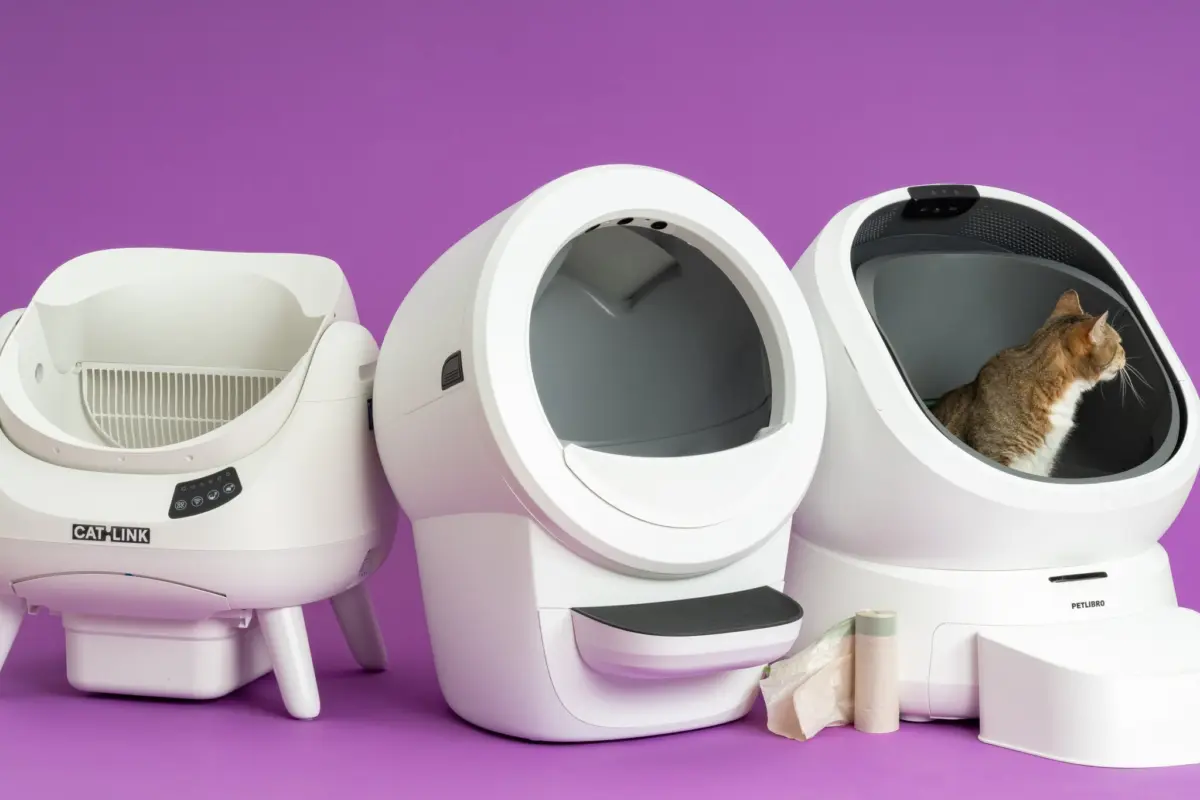
Following hundreds of hours of hands-on evaluation across multiple testing phases with dozens of feline testers, this guide breaks down the market’s leading options. We examine why the field-tested Litter-Robot 4 remains our gold standard top pick, how the Petkit Purobot Max Pro 2 and Petlibro Luma cater to data-driven cat parents, and why the budget-friendly Catlink Scooper Open-X delivers essential performance without breaking the bank.
Detailed Chronology of the Testing Process
Evaluating a motorized device meant to handle feline waste requires a methodical, multi-phase approach. Since 2025, testing protocols have scrutinized 21 distinct automatic models, pushing 12 of them through a rigorous, month-long validation process designed to test every mechanical and software feature.
Phase One: Stress-Testing and Mechanical Evaluation
Before a single cat set paw near a test unit, appliances underwent a grueling week-long stress test. Reviewers evaluated baseline cleaning capabilities without animal involvement, checking for mechanical stutter, structural weak points, and ease of deep-cleaning.
Durability was pushed to the extremes. Testers used a specialized synthetic cat urine recipe delivered via plastic squeeze bottles to simulate cats urinating directly down the front lips of the units, checking for structural leaks or potential damage to electronic housings. To test interior lining durability, reviewers repeatedly clawed surfaces using heavy-duty meat-shredding claws.
Phase Two: Real-World Multi-Cat Trials
Following initial lab evaluations, the field was narrowed to seven standout finalists. These units were distributed across various multi-cat households and foster homes. Over a three-week period, a cohort of 16 discerning cats—ranging in size from nimble 6-pound mousers to robust 18-pound heavyweights—put the machines through daily use.
Testers tracked several core criteria:
- Cleaning Efficiency: Observing how cleanly waste was separated from clean litter and whether interior walls showed buildup over time.
- Safety Protocols: Physically triggering weight, motion, and infrared sensors, and testing anti-pinch mechanisms by inserting objects and human fingers into moving drop zones.
- Acoustics and Usability: Measuring operating noise levels via decibel meters, assessing ease of waste bin access, and examining entryway accessibility.
- App Ecosystems: Evaluating notification accuracy, multi-cat weight tracking, camera feeds, and software stability.
Supporting Context & Metrics: What You Need to Know Before Buying
Before investing in a robotic litter box, veterinarians and behaviorists emphasize several biological and logistical realities that manufacturers often gloss over.
The Size Disconnect
According to veterinary standards, an ideal litter box should measure at least 1.5 times the length of your cat from the tip of their nose to the base of their tail. Across the entire market of self-cleaning boxes, not a single model meets this dimension requirement. Because the mechanics require a rotating globe or a sifting rake mechanism, interior spaces are invariably compact. While smaller cats adapt seamlessly, large breeds or "big-boned" felines may experience claustrophobia or improper posture, leading to accidents outside the box.
The Maintenance Paradox
Self-cleaning boxes do not eliminate cleaning chores; they shift them. While daily scooping disappears, deep-cleaning a motorized sphere caked in dried urine and clay dust is an intensive undertaking. Philip Bloom, creator of the One Man Five Cats YouTube channel who has tested over two dozen units since 2020, notes the fundamental engineering challenge: "A litter box has urine in it and sand… the two worst possible things you could have inside anything with moving parts."
Safety First: The Regulatory Vacuum
Unlike home appliances or infant toys, automatic litter boxes operate in a regulatory vacuum with no formal safety certifications. Tragically, low-quality or poorly engineered off-brand models have suffered catastrophic mechanical failures in the past, leading to animal injury or fatal entrapment. Reviewers strictly evaluated units with multi-tiered sensor arrays and mechanical failsafes—such as gear designs with missing teeth that make complete, crushing over-rotation physically impossible.
Our Top Recommendations for 2026
Top Pick: Litter-Robot 4
Despite a crowded market of newcomers, the Litter-Robot 4 remains the undisputed king of automatic litter boxes. Whisker, its parent company, has spent a quarter-century refining this technology, and the model released in 2022 outperforms even newer brand iterations.
- Why It Wins: It provides one of the widest entryways (just under 16 inches in diameter) and a surprisingly spacious interior globe. It manages odors exceptionally well, operates quietly, and features the most straightforward, foolproof deep-cleaning process on the market.
- Repairability & Support: Whisker stands virtually alone in offering comprehensive replacement parts for DIY home repairs. Furthermore, their optional extended WhiskerCare warranty protects against the inevitable wear-and-tear of motorized sanitation units.
- Ecosystem Add-ons: Users can customize their setup with heavy-duty shields, a camera-mount kit, or the ingenious Litter Hopper, which automatically replenishes fresh litter as levels drop.
Flaws to Consider: The internal sensors can be overly sensitive to fine clay dust, occasionally triggering false cleaning pauses or maintenance warnings. Brand-name accessories and waste bags are also notably expensive.
Best for Data & Insights: Petkit Purobot Max Pro 2
For cat parents who treat pet care like mission control, the Petkit Purobot Max Pro 2 offers unmatched telemetry, combining a widened entry door with a high-definition interior camera.
- Unmatched Analytics: The Petkit companion app provides precise data on every visit—recording which cat entered, their exact body weight, arrival time, and session duration. It will even ping your phone if your cat misses their regular schedule, serving as an early warning system for urinary tract infections or blockages.
- Safety Design: The globe utilizes an incomplete gear-tooth design, ensuring it can never mechanically pinch or trap an animal. It also includes swappable sifters for traditional clay or alternative tofu litters.
Flaws to Consider: Deep-cleaning requires maneuvering around the internal camera housing, and video cloud storage subscriptions range from $22 to $110 annually. Additionally, Petkit’s data privacy policy remains vaguely worded regarding cloud data collection.
Best for Uncovered Preferences: Petlibro Luma Smart Litter Box
Many cats flatly refuse to enter enclosed "domes" or caves. For open-air lovers, the Petlibro Luma provides an automated, unenclosed sanitation station equipped with a downward-facing AI camera.
- Open-Air Comfort: By eliminating the top dome, the Luma accommodates cats who suffer from box anxiety or enclosed spaces, all while providing clear live video feeds and multi-cat weight tracking.
- Smart Capabilities: Its camera captures cleaning cycles and monitors floor space directly in front of the unit, helping owners track bathroom habits down to the individual animal.
Flaws to Consider: Petlibro’s video cloud storage plans are among the most expensive on the market ($95 to $160 annually), and the company’s terms of service reserve broad rights to access recorded footage. Customer service response times have also drawn user complaints during peak support periods.
Budget Pick: Catlink Scooper Open-X
For buyers who want automated waste removal without paying top-tier prices, the Catlink Scooper Open-X delivers reliable performance at a fraction of the cost.
- Affordable Reliability: While it lacks high-end aesthetic polish or built-in video streaming, the Open-X handles basic sifting, odor suppression, and multi-cat weight differentiation with impressive consistency.
- Robust Safety: Like its pricier peers, it incorporates mechanical cutoffs and infrared sensors to ensure zero risk of accidental enclosure during a cleaning cycle.
Flaws to Consider: The companion app setup is notoriously glitchy and features poorly translated interface text. Furthermore, Catlink offers only a standard one-year warranty with no extension options.
Official Statements & Industry Outlook
The automated pet product market is entering a pivotal phase of software integration and safety accountability. Industry leaders emphasize that hardware design must evolve alongside consumer demand for transparency.
Jacob Zuppke, President and CEO of Whisker, addressed the ongoing challenge of dust management in automated sensors:
"Just like any sensor anywhere, the more dust you’re exposing it to, the more that it’s going to essentially get dirty."
Meanwhile, cat behaviorist Mikel Delgado stresses that automation should never translate to neglect:
"I don’t think people should be, for example, leaving their cat alone for extended periods of time and just thinking that the robot is going to take care of your cat’s needs."
Future Outlook
As manufacturers push further into artificial intelligence, computer vision, and health-tracking wearables, future automatic litter boxes will likely evolve into comprehensive feline health diagnostic tools. Upcoming models promise real-time analysis of stool consistency, urine pH testing strips integrated into sifting paths, and localized AI processing that respects user privacy without requiring expensive cloud subscriptions.
Until those technologies mature, however, prospective buyers should weigh the convenience of a self-cleaning machine against the reality of ongoing maintenance, software updates, and subscription costs. For most households, investing in a robust, field-tested unit like the Litter-Robot 4 or Petkit Purobot Max Pro 2 remains a game-changing upgrade—provided you don’t mind trading your daily plastic scoop for a digital dashboard.