
Executive Overview
Long before a puppy takes its first deliberate step, learns how to walk on a leash, or answers a command to sit, an extraordinary transformation is occurring behind the scenes. In the quiet, highly controlled environment of a neonatal whelping box, a puppy’s brain and nervous system are hard at work. Though their eyes remain tightly shut and their tiny ears are still sealed to the sounds of the outside world, these neonatal canines are laying the complex neurological foundations that will govern how they learn, process stress, and interact with the environment for the rest of their lives.
At Dogs Inc, a premier organization dedicated to breeding and training elite guide dogs and service dogs, preparing future canine partners begins long before formal obedience training ever starts. It begins on day one. One of the primary science-based methodologies employed during this critical chapter is Early Neurological Stimulation (ENS). While ENS is just one small piece of a much larger, highly sophisticated developmental puzzle, it reflects an overarching philosophy: optimal health, emotional resilience, and lifelong learning are engineered through intentional, thoughtful care from the very beginning.
This comprehensive report examines the science of the neonatal stage, the mechanics and benefits of Early Neurological Stimulation, how ENS differs from later socialization periods, and how these foundational steps empower dogs to change—and save—human lives.
Detailed Chronology: From Neonatal Beginnings to Lifelong Learning
Understanding the journey of a future service dog requires examining the precise, chronological milestones that define canine development. Every stage presents unique biological benchmarks and developmental windows that organizations like Dogs Inc carefully navigate.

1. The Neonatal Stage (Birth to 2 Weeks)
During the first fortnight of life, newborn puppies exist in a state of absolute dependency. Completely reliant on their mother and littermates, neonates spend the vast majority of their time alternating between nursing and deep sleep.
- Physical State: Puppies cannot yet see or hear, and their bodies are incapable of self-regulating internal temperature. They rely entirely on the dam’s body heat and the warmth of the whelping environment.
- Neurological State: Despite their apparent vulnerability, rapid changes are occurring beneath the surface. The brain and central nervous system are developing at an explosive rate. This is the exclusive window during which Early Neurological Stimulation (ENS) is introduced. Because puppies are so delicate during this period, handling is restricted to brief, highly regulated protocols performed exclusively by trained professionals.
2. The Transitional Stage (2 to 4 Weeks)
As puppies cross the two-week threshold, a profound sensory awakening takes place.
- Sensory Development: Eyes and ears begin to open, allowing puppies to experience light, shadow, and ambient sounds for the very first time.
- Mobility and Diet: By approximately four weeks of age, puppies begin unsteady attempts at walking and vocalizing with small barks. Simultaneously, deciduous baby teeth begin to erupt, signaling the biological transition away from exclusive nursing toward soft, and eventually solid, food.
3. The Socialization Window (3 to 12 Weeks)
Often considered the most critical psychological window in a dog’s life, the socialization period overlaps with the late transitional and early juvenile stages.
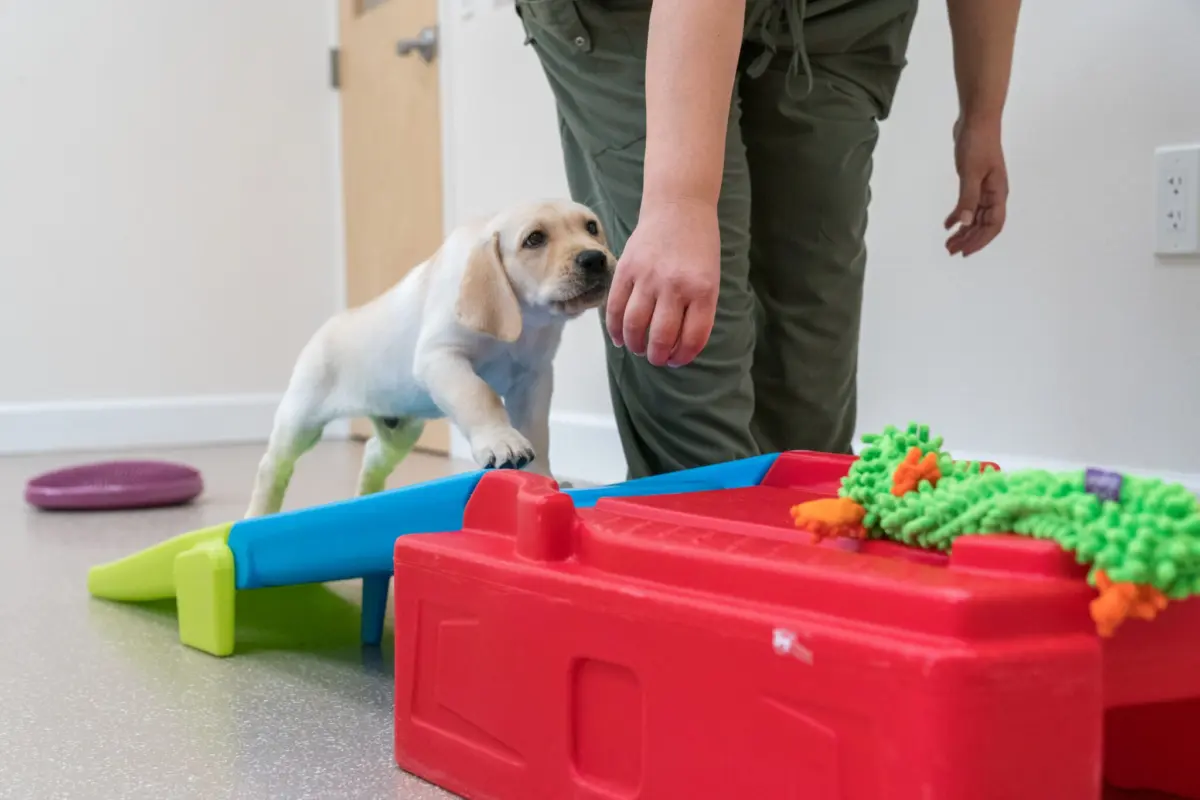
- Active Exploration: Puppies begin interacting actively with people, novel sounds, diverse floor surfaces, and other dogs. By week eight, these experiences establish the building blocks for a friendly, adaptable adult temperament.
- Environmental Exposure: By the time a puppy reaches 12 weeks of age, structured exposure to various stimuli is vital. Meeting diverse people, navigating unfamiliar physical environments, and processing everyday noises help cultivate confidence and mitigate the development of fear-based anxieties or aggressive tendencies later in life.
- Fear Periods: Veterinary behaviorists note that puppies navigate an average of four distinct fear periods during their growing months. During these transient windows, negative experiences can leave a lasting psychological imprint, underscoring the necessity of positive, low-stress exposure techniques.
4. The Juvenile and Adolescent Stages (3 Months to 12+ Months)
As the puppy matures into a young adolescent (a phase that can begin as early as six months of age), behavioral testing often mirrors human teenage development.

- Boundaries and Training: Puppies begin testing boundaries and establishing independence. Around three months of age, short, positive-reinforcement training sessions introduce basic cues and build cognitive stamina.
- Physiological Maturation: Most dogs reach reproductive maturity between 6 and 12 months. For female dogs, this includes navigating the broader heat cycle; for males, it involves managing hormone-driven adolescent behaviors.
- Advanced Integration: Crate training reinforces daily routines and independent coping mechanisms. Controlled introductions to other animals and species solidify broad-spectrum social comfort. Formal puppy classes around 16 weeks old further bridge the gap toward advanced service training.
Supporting Context & Metrics: The Science of Early Neurological Stimulation
To appreciate the value of Early Neurological Stimulation, one must understand what it is—and what it is not. ENS is not an accelerated training program or an attempt to teach obedience commands to a two-day-old puppy. Rather, it is a series of gentle, tactile stimulations administered during the neonatal window designed to stimulate the neurological system.
How ENS Works
Rooted in canine research originally popularized for military working dog programs, ENS involves a series of five distinct, gentle exercises performed once daily between days three and sixteen of a puppy’s life. Each exercise lasts only three to five seconds:
- Tactile Stimulation: Holding the puppy in hand and gently stimulating the paw using a Q-tip between the toes.
- Head Up: Holding the puppy perpendicular to the ground, with the head pointing up.
- Head Down: Holding the puppy gently upside down with the head pointing toward the ground.
- Supine Position: Holding the puppy flat on its back with the muzzle pointing upward.
- Thermal Stimulation: Placing the puppy on a damp, cool towel for a brief, controlled duration.
Theoretical Benefits and Biological Impacts
Because these exercises introduce mild, controlled stress to a neonatal nervous system that is primed for adaptation, studies and decades of working-dog breeding experience suggest several key physiological benefits:
- Improved Cardiovascular Performance: Enhanced heart rate efficiency and cardiovascular health.
- Stronger Stress Tolerance: Greater resilience to environmental stressors and novel stimuli later in life.
- Enhanced Adrenal Function: Improved hormonal and adrenal gland responses.
- Greater Disease Resistance: Anecdotal and observational data suggest improved overall hardiness and immune system resilience.
However, experts emphasize that ENS is merely one foundational block. A puppy’s ultimate temperament is a complex mosaic shaped by genetics, overall health, environmental enrichment, proper socialization, and lifelong training.

Official Statements and Organizational Philosophy
Organizations dedicated to producing high-caliber service animals must balance cutting-edge scientific research with compassionate, ethical animal husbandry.
Industry leaders and breeding program managers maintain that early development protocols are designed to foster emotional stability rather than mechanical perfection. A representative statement from organizations championing these practices highlights the core philosophy:
"Early neurological stimulation and structured socialization are not about creating a mechanical, flawless dog from birth. They are about granting an animal the emotional scaffolding, curiosity, and resilience it needs to navigate an unpredictable human world. When a dog is asked to guide a visually impaired individual through a bustling transit hub or alert a handler to a medical emergency, that dog’s nervous system must remain calm under pressure. That calm doesn’t happen by accident—it is cultivated from day one."
By acknowledging that genetics, maternal care, and early handling form an inseparable triad, breeding programs ensure that every puppy is given the highest possible probability of success, minimizing wash-out rates and maximizing human-canine partnership longevity.

Future Outlook: Preparing Elite Partners for Tomorrow
The journey from a two-ounce neonate to an unflappable guide or service dog requires sustained investment, community collaboration, and unyielding dedication. As veterinary science and canine behavioral research continue to evolve, programs like those at Dogs Inc remain at the forefront of innovation.
The Role of Puppy Raisers and Advanced Training
Following the neonatal and transitional phases, future service dogs transition into the hands of dedicated volunteer puppy raisers. These individuals expose the growing dogs to public transit, restaurants, crowded sidewalks, and diverse socio-economic environments. This continuous layering of experiences builds directly upon the neural pathways established during the neonatal ENS phase and the subsequent socialization windows.
A Lifetime of Purpose
Ultimately, the meticulous care given during a puppy’s first weeks pays dividends when the dog is fully mature. Whether serving as the eyes for a blind individual, providing mobility assistance, or offering psychological grounding to a veteran, these elite canines demonstrate that greatness truly has humble beginnings.
As organizations continue to refine their protocols, the integration of early neurological stimulation, progressive socialization, and positive reinforcement training ensures that the next generation of service dogs will be more than ready to meet the challenges of tomorrow—transforming human lives one paw at a time.