Long before a puppy ever learns to sit, heel on a loose leash, or navigate a crowded intersection to guide a handler through the world, a profound and complex transformation is already taking place behind the scenes. In the quiet, highly controlled environment of a specialized breeding and training facility, a puppy’s life begins not with formal commands, but with microscopic neurological adaptations.
At Dogs Inc, preparing future guide and service dogs starts long before traditional training ever commences. Modern canine science confirms that the earliest weeks of a puppy’s life—specifically the neonatal stage—lay the biological and neurological groundwork for emotional resilience, stress recovery, and problem-solving capacity. Among the primary science-based methodologies utilized during this critical window is Early Neurological Stimulation (ENS).
While ENS is only one small piece of a much larger, multi-layered developmental puzzle, it exemplifies the rigorous, thoughtful, and evidence-based approach required to produce elite working dogs. This report explores the science of early puppy development, the precise mechanisms of Early Neurological Stimulation, the subsequent transition into vital socialization windows, and why these foundational practices are indispensable for cultivating life-changing canine partners.
Detailed Chronology: From the Neonatal Stage to Adolescence
A puppy’s journey from a vulnerable newborn to a confident, highly skilled service dog is mapped across distinct, scientifically defined developmental stages. Each phase presents unique biological milestones, vulnerabilities, and learning opportunities that shape the adult dog.
Phase 1: The Neonatal Stage (Birth to 2 Weeks)
During the first fortnight of life, newborn puppies are entirely dependent on their mother and littermates. At this stage, their eyes and ears remain tightly sealed, and they are incapable of regulating their own body temperature. They spend the vast majority of their time alternating between nursing and deep sleep.
Despite their apparent vulnerability and fragility, rapid and critical changes are occurring internally. Their brains and nervous systems are hard at work, making this an ideal window for introducing carefully regulated, non-invasive sensory inputs. It is precisely during this neonatal stage that practitioners introduce Early Neurological Stimulation. ENS is not a form of training or obedience conditioning; rather, it is a series of brief, highly structured, gentle handling protocols designed to stimulate the neurological system safely.
Phase 2: The Transitional Stage (2 to 4 Weeks)
As puppies cross the threshold into the transitional stage, their physical world dramatically expands. Their eyes and ears open, granting them their first sensory experiences of light, shadow, and sound. Around four weeks of age, puppies begin to take their first wobbly steps, emit their initial barks, and experience the emergence of their baby teeth.
This is a pivotal period of dietary transition as well, shifting away from exclusive nursing toward soft gruels and, eventually, solid foods. Their interactions with littermates become more dynamic, laying the groundwork for basic social communication, physical coordination, and early bite inhibition.
Phase 3: The Socialization Period (3 to 12 Weeks)
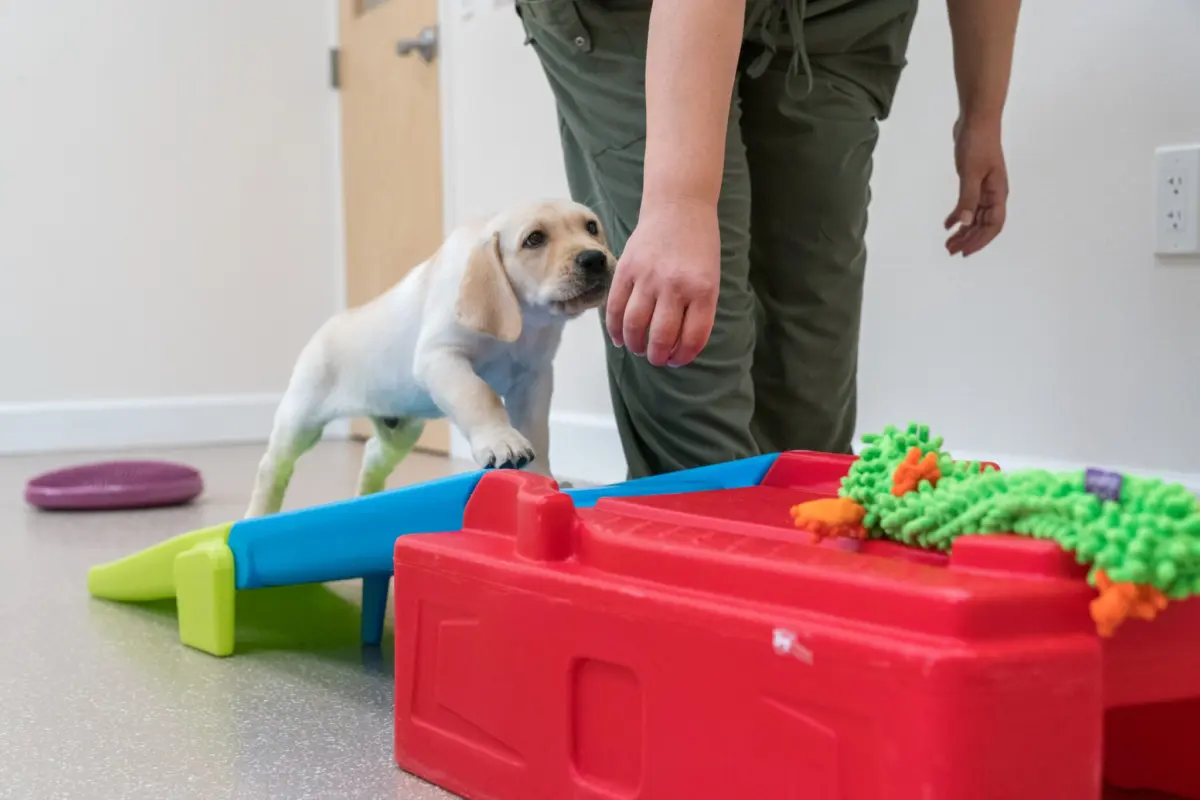
Often considered the most critical psychological window in a dog’s life, the socialization period bridges early development with active learning. Starting around three weeks and extending through twelve weeks (and beyond), young puppies begin actively interacting with people, novel sounds, varied tactile surfaces, and other dogs.
By the time a puppy reaches eight weeks of age, these experiences help establish the cognitive foundation for a friendly, well-adjusted disposition. Extending out to twelve weeks, structured exposures to diverse human faces, unfamiliar environments, and novel stimuli help inoculate the puppy against future anxiety, reactivity, and fear-based aggression.
Concurrently, around three months of age, puppies become neurologically equipped to engage in short, highly positive learning sessions involving basic cues. The introduction of crate training during this era fosters early independence and structural routine, while structured puppy classes—often recommended around sixteen weeks of age—cement these gains in a controlled social setting.
Phase 4: Adolescence and Maturity (6 Months to 12 Months and Beyond)
As puppies enter adolescence, typically beginning around six months of age, they frequently begin testing boundaries much like human teenagers. This developmental phase coincides with hormonal shifts and physical maturation. Most dogs reach reproductive maturity between six and 12 months. For female dogs, this encompasses their first heat cycle and the broader physiological shifts associated with estrus, while male dogs often display newly awakened hormone-driven behaviors.
Throughout this adolescent marathon, puppies navigate an average of four distinct "fear periods" as they grow. Navigating these temporary spikes in warfulness requires skilled handling, endless patience, and positive reinforcement methodologies to ensure temporary anxieties do not harden into lifelong phobias.
Supporting Context & Metrics: The Science of ENS and Environmental Enrichment
To understand why organizations like Dogs Inc invest heavily in neonatal protocols, one must examine the physiological rationale behind Early Neurological Stimulation. Originally developed for military canine programs and later popularized through decades of working-dog research, ENS is designed to introduce mild, controlled physical stresses to the neonatal nervous system.
The Core Protocol Exercises
During the neonatal stage (days 3 through 16), handlers take each puppy through a sequence of five gentle exercises once per day. Each exercise lasts approximately 3 to 5 seconds:
Tactile Stimulation: Holding the puppy in one hand, the handler gently tickles the pad of one foot using a Q-tip or finger, rotating through the paws.
Head Up: Holding the puppy upright perpendicular to the ground, supporting its body with both hands, to stimulate vestibular responses.
Head Down: Inverting the puppy gently so its head points downward toward the floor.
Supine Position: Holding the puppy flat on its back with its muzzle pointing toward the ceiling.
Thermal Stimulation: Placing the puppy on a damp towel that has been chilled in a refrigerator for a brief period, encouraging a mild thermal shift without causing distress.
Documented Physiological Benefits
Decades of anecdotal observation and scientific inquiry suggest that these brief, daily exposures trigger beneficial physiological responses. Potential benefits documented across working-dog breeding programs include:
Enhanced Cardiovascular Performance: Improved heart rate tone and cardiovascular efficiency.
Stronger Stress Tolerance: Greater adaptability and resilience when confronted with novel, startling, or stressful environmental stimuli later in life.
Greater Disease Resistance: Early indicators point toward enhanced immune system functioning in dogs that undergo structured neonatal protocols.
However, developmental experts emphasize that ENS is merely one chapter in a much larger, highly intricate book. A puppy’s ultimate temperament, emotional stability, and professional suitability are co-determined by a complex matrix of genetics, maternal care, general health, ongoing socialization, environmental exposure, and lifelong training. ENS is not a substitute for comprehensive socialization; rather, it primes the nervous system so that subsequent socialization and training can take root more effectively.
Official Statements & Institutional Philosophy
Organizations dedicated to breeding elite working dogs operate under the mandate that excellence cannot be improvised; it must be engineered from the ground up through deliberate, compassionate care.
Industry leaders and canine development specialists at institutions like Dogs Inc emphasize that preparing future guide and service dogs requires a lifelong philosophy of holistic support. Representatives note:
"A puppy’s first weeks may pass in the blink of an eye, but they mark the genesis of a journey that resonates long after those tiny paws first touch the earth. Early Neurological Stimulation provides a gentle, scientifically grounded bridge during the neonatal stage, but it is fundamentally just the opening act.
Guide dogs and service dogs carry an immense responsibility. They are tasked with navigating chaotic, unpredictable environments, rapidly adjusting to shifting human needs, and maintaining absolute calm alongside handlers who depend on them entirely. Those extraordinary qualities do not materialize overnight. They are the cumulative product of rigorous genetic selection, meticulous neonatal care, intentional socialization, and lifelong positive reinforcement training."
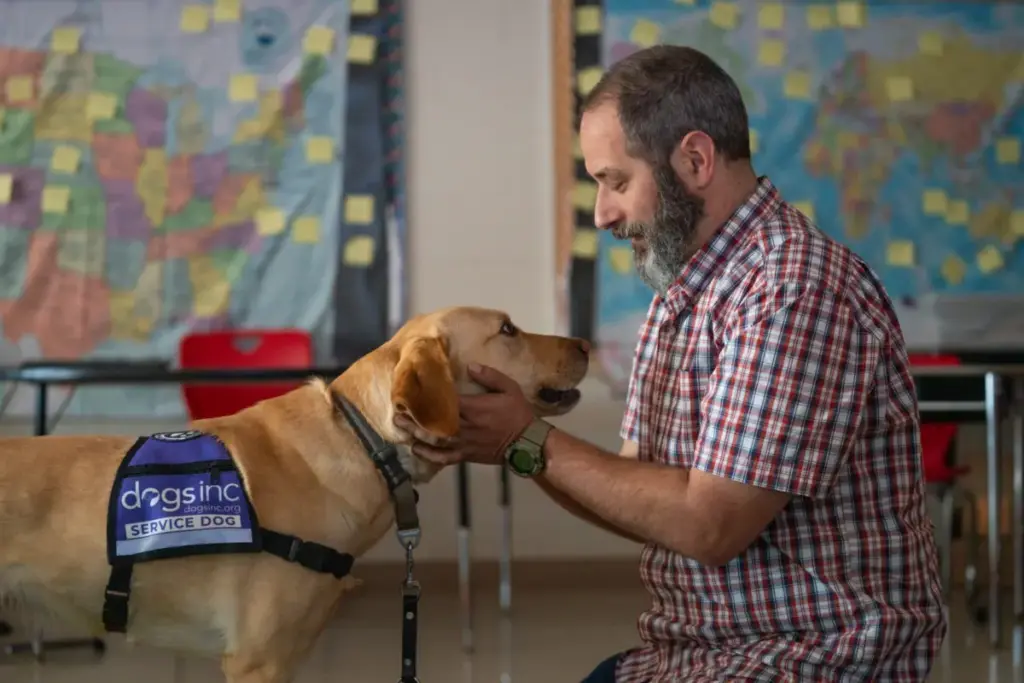
This philosophy underscores a critical distinction in modern animal husbandry: early puppy development is not about manufacturing a "perfect" or robotic animal. Instead, it is about providing thoughtful, age-appropriate experiences that foster emotional maturity, cognitive flexibility, and robust stress recovery. By respecting the natural developmental windows dictated by canine biology, organizations can help dogs reach their maximum potential—whether that role is guiding a visually impaired individual, assisting a veteran with PTSD, or serving as an independent mobility partner.
Future Outlook: The Evolution of Canine Development and Service Work
As the science of animal behavior and neurobiology continues to advance, the protocols utilized by elite training organizations are constantly refined. The future of service dog breeding and development points toward increasingly individualized approaches, marrying genetic mapping with tailored environmental enrichment programs.
Emerging Trends in Working Dog Preparation
Data-Driven Temperament Tracking: Modern facilities are leveraging quantitative behavioral assessments across various developmental stages to predict career paths with higher accuracy, matching specific puppy personalities with the distinct demands of guide work, facility placement, or mobility assistance.
Advanced Environmental Desensitization: Moving beyond basic socialization, future-focused programs are introducing controlled simulations of modern urban hazards—such as autonomous vehicles, complex public transit acoustics, and crowded digital workspaces—earlier in the juvenile lifecycle.
Lifelong Continuing Education: Recognizing that learning is a continuous continuum rather than a finite school term, advanced training methodologies emphasize ongoing mental stimulation and environmental enrichment well into the working dog’s active career and retirement years.
Ultimately, the intricate framework of early canine development—stretching from the quiet, dark whelping box of the neonatal stage to the bustling, complex environments of adult service work—proves that small, deliberate actions yield monumental results. Through science-backed interventions like Early Neurological Stimulation, followed by rich socialization and positive reinforcement, institutions like Dogs Inc ensure that every future guide and service dog is equipped to change lives from day one.