
EXECUTIVE OVERVIEW
In the quiet, predawn hours of a Friday near a bustling Tennessee highway, a delicate and desperate sound cut through the drone of passing traffic. Beneath a pile of heavy stones trapped deep within a dark, winding drainpipe, a tiny orange kitten—barely a month old—fought for his life. What followed was a midnight rescue operation defined by unwavering human determination, meticulous problem-solving, and an astonishing stroke of good fortune.
The kitten, later christened "Rocky" in honor of the unforgiving environment that briefly imprisoned him, was saved thanks to the swift actions of Holly, a dedicated volunteer with the Chattanooga-based feline rescue organization SCRATCH, Inc., and her husband. Despite pitch-black conditions, geographic obstacles, and a harrowing realization that the kitten was pinned beneath shifting stones, the rescuers managed to pull the fragile feline to safety.
Today, Rocky’s journey stands as a testament to the resilience of abandoned animals and the profound impact of grassroots rescue efforts. Having transitioned from a damp, perilous drainage system to a warm foster home, the orange tabby has doubled in weight, mastered high-fives on command, and won the hearts of animal advocates nationwide. This in-depth report chronicles the dramatic rescue, examines the broader implications of urban stray animal abandonment, and highlights the ongoing rehabilitation of a cat who defied the odds.
1. Detailed Chronology: The Midnight Operation Near the Hixson YMCA
The sequence of events that saved Rocky’s life began late on a Friday evening, far past standard operating hours for most animal welfare organizations. Local community members near the Hixson YMCA in Chattanooga heard faint, distressed meows echoing near a roadway embankment. Recognizing the urgency of the situation, they contacted SCRATCH, Inc., mobilizing volunteers into action.
Holly and her husband answered the call, arriving at the scene well after dark. The initial challenge was simply locating the source of the cries. Highway environments present severe safety hazards for both humans and animals, and the acoustic distortions caused by concrete culverts and retaining walls made pinpointing the sound exceptionally difficult.
Mapping the Drainage System
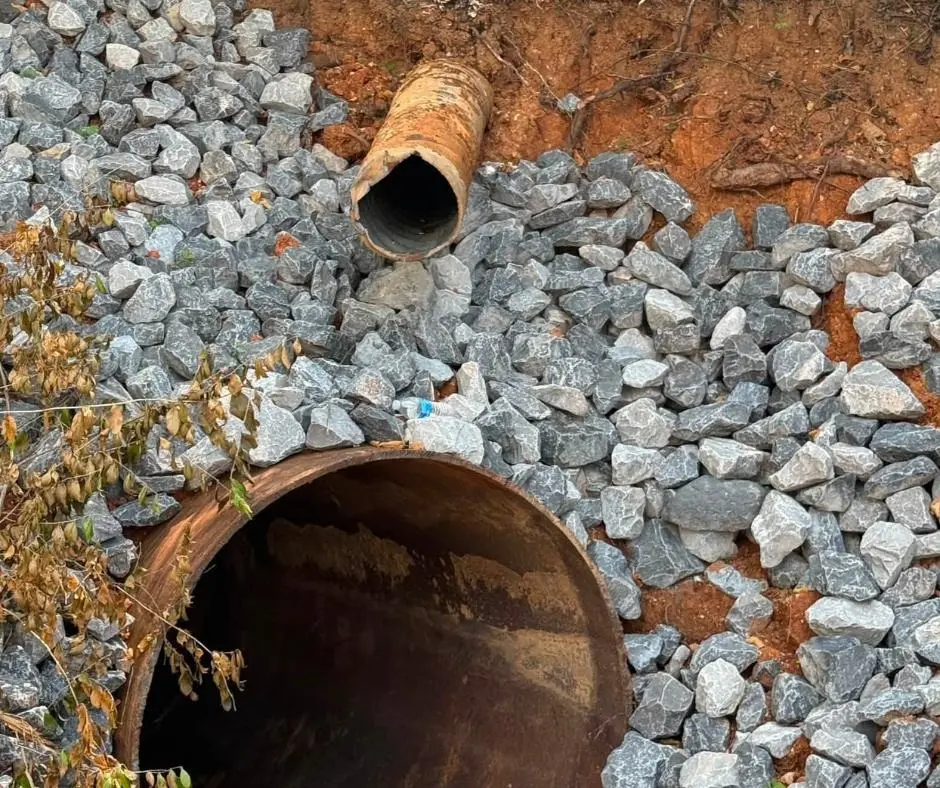
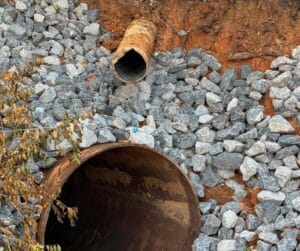
Rescuers deduced that Rocky had likely been abandoned at the top of a grassy hill near the freeway, where a massive concrete drainage infrastructure began. Seeking shelter from the elements—or perhaps dropped by a predator or human—the one-month-old kitten had crawled through an opening beneath a concrete wall, descending deep into the subterranean piping network.
Recognizing the immediate danger of the kitten wandering further into the pipe or toward active traffic lanes, Holly and her husband executed a strategic containment plan:
- Securing the Upper Perimeter: They first blocked the upper drainage opening near the freeway to prevent the terrified animal from accessing the road.
- Unyielding Surveillance: Moving downhill to the opposite end of the drainpipe, they confronted total darkness.
- Acoustic Enticement: Utilizing modern technology, the couple played high-definition recordings of kitten distress calls and mother cat meows via a smartphone speaker, hoping the echo would prompt Rocky to reply and reveal his exact coordinates.
The Frightening Discovery
The acoustic strategy worked, guiding the rescuers to a grim realization. Rocky was not merely hiding inside the pipe; he was trapped beneath a collapsed pile of heavy rocks located at the terminus of the drainage system. Rescuers later surmised that the stones had shifted and fallen over the kitten while they were conducting their initial search near the upper highway opening.
Armed with a high-powered flashlight, Holly’s husband scanned the dark cavity beneath the rubble. There, amid the jagged stones, he spotted a fleeting glimpse of hope: the minute, trembling tip of a tiny orange tail.
2. The Rescue: Uncovering Rocky from Beneath the Rubble
With the kitten’s location confirmed, the operation shifted from a search to a delicate extraction. Every movement required absolute precision; a hasty maneuver could cause the remaining stones to shift further, crushing the fragile, one-pound animal hidden below.
Working in the freezing glare of a flashlight beam, Holly’s husband began the painstaking process of removing the heavy stones one by one. Each rock cleared brought him closer to the source of the cries that had pierced the night.
An Immediate Purr
When the final stone was lifted away, revealing the tiny orange tabby in its entirety, the rescuers braced themselves for a traumatized, clawing reaction. Instead, they witnessed a moment of pure grace.
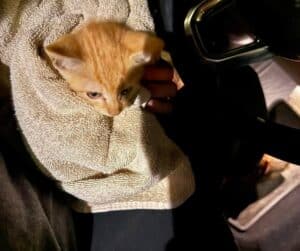
Despite being pinned in the dark under crushing weight, Rocky appeared physically unharmed. More remarkably, the moment Holly scooped the trembling kitten into her hands, his survival instinct manifested not in fear, but in profound gratitude.
"The minute I pulled him to me, he immediately began to purr," Holly recounted in an interview with animal welfare publication Love Meow.
It was an instant vocalization of relief, signaling that the kitten understood his ordeal was over. Appropriately named "Rocky," the kitten embodied both the literal stones he was pulled from and the metaphorical mountain he had climbed to survive his first month of life.
3. Supporting Context, Metrics, and Rehabilitation
The rescue, while dramatic, was only the first chapter in Rocky’s recovery. Transitioning an orphaned neonate from the wild to a domestic setting requires specialized veterinary care, nutritional management, and psychological reassurance.
Immediate Aftermath and Medical Baseline
Upon returning to a controlled, safe environment, Rocky underwent a comprehensive intake assessment:
- Parasite Eradication: He received a gentle, specialized flea bath to clear external parasites that plague young outdoor kittens.
- Nutritional Stabilization: Offered warm, species-appropriate kitten formula and wet food, Rocky displayed an immediate, healthy appetite—a crucial indicator that his digestive tract had not suffered internal trauma from his entrapment.
- Weight Trajectory: At the time of rescue, Rocky weighed a meager 1.0 pound. Within just two weeks of structured foster care, his weight doubled to 2.0 pounds, reflecting optimal development and metabolic recovery.
Behavioral Milestones
As his physical health stabilized, Rocky’s vibrant personality emerged. Far from showing lingering trauma from his drainpipe confinement, the kitten demonstrated exceptional cognitive and social development:
- Toy Preferences: He quickly developed a passionate affinity for feather wand toys, displaying classic kitten hunting behaviors.
- Advanced Training: To the utter astonishment of his foster mother, Rocky proved to be an exceptionally fast learner. Despite being barely six weeks old, he successfully mastered the ability to give a "high five" on verbal and visual command.
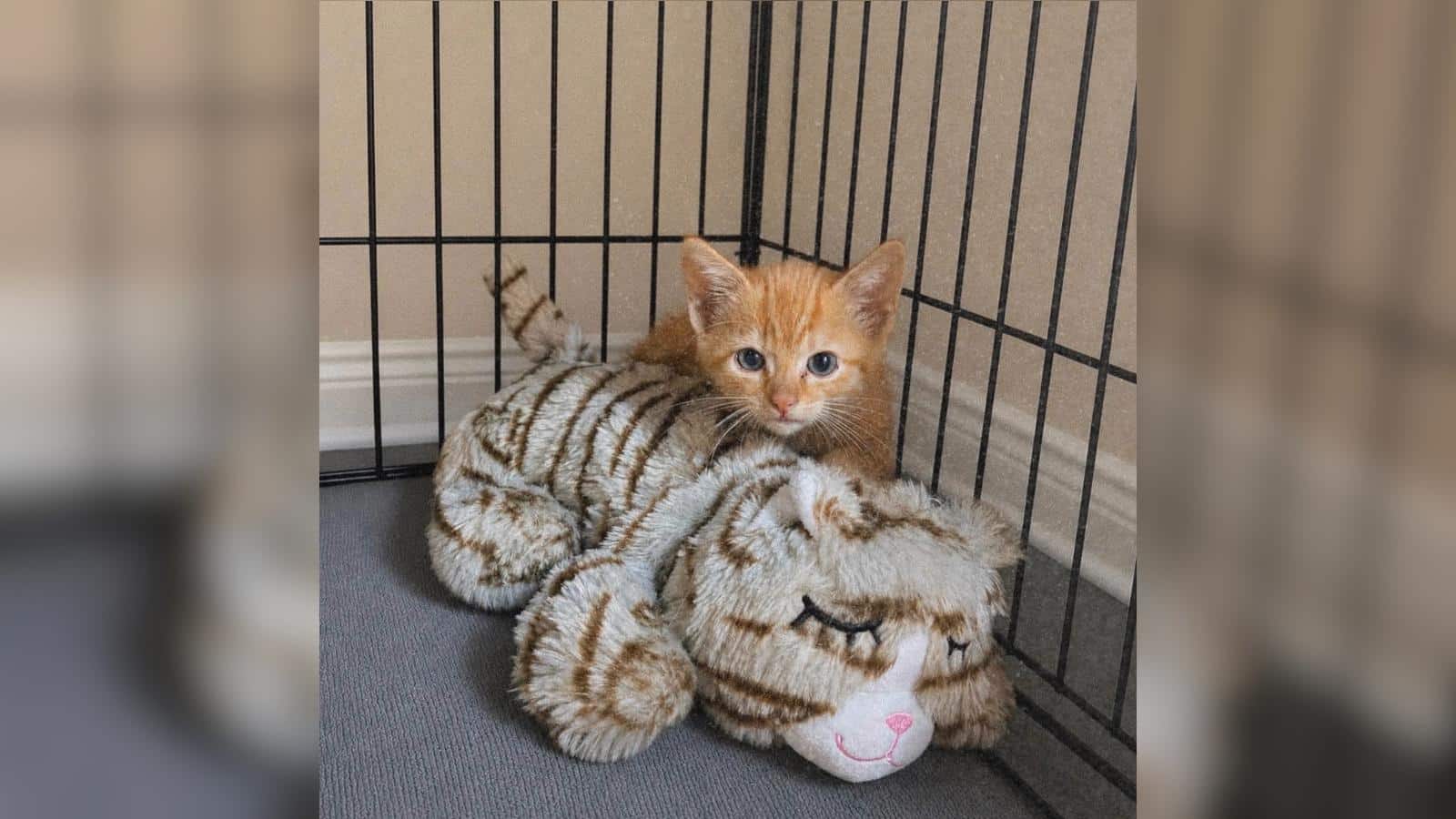
- The Heartbeat Comfort Toy: To combat the lingering sensory shock of being separated from his mother and littermates, Rocky was provided with a specialized heartbeat-stuffed cat. The device houses a subtle, pulsing mechanism that mimics a feline maternal heartbeat. Rocky quickly made the plush toy his primary sleeping companion, curling up against its rhythmic vibration each night.
4. Official Statements and Welfare Perspectives
Animal rescue organizations across Tennessee have utilized Rocky’s story to shed light on the broader, systemic issues surrounding kitten abandonment and urban wildlife interface hazards.
Representatives from SCRATCH, Inc. emphasized that Rocky’s case is unfortunately not isolated. During peak breeding seasons, rescue volunteers frequently respond to calls regarding animals trapped in municipal infrastructure, storm drains, and highway culverts.
The Danger of Open Infrastructure
Urban planners and civil engineers rarely account for small fauna entering drainage systems, leaving massive networks of concrete pipes exposed to vulnerable wildlife and abandoned domestic pets. Animal welfare advocates argue that municipalities should mandate protective grates or mesh on accessible drainage outlets to prevent animals from wandering into subterranean death traps.
Furthermore, SCRATCH, Inc. reiterated the critical importance of spaying and neutering community cats to prevent unwanted litters, which frequently end up abandoned in high-risk environments like highways and industrial parks.
5. Future Outlook: From Foster Care to Forever Home
Today, Rocky’s life is defined by safety, play, and unconditional affection. The damp chill of the Hixson drainpipe has been replaced by sunlit windowsills, soft bedding, and the comforting pulse of his favorite heartbeat toy.
However, his journey through the rescue system is ongoing. According to foster protocols:
- Immediate Steps: Rocky remains in Holly’s care, receiving socialization, nutritional monitoring, and routine vaccinations.
- Upcoming Procedures: Once he reaches the appropriate age and weight threshold, Rocky is scheduled to undergo a routine neuter procedure.
- Adoption Readiness: Immediately following his post-operative recovery, Rocky will be officially cleared for adoption, opening the door for him to transition from a temporary foster home to a permanent, loving family.
For the tiny orange kitten who cried out from beneath the rocks, the future is bright. Whether he is swatting at a feather wand, practicing his signature high-five, or dozing beside his plush companion, Rocky serves as a living reminder of what can be achieved when compassionate individuals refuse to ignore a cry for help in the dark.