
Executive Overview
To ask a seasoned ornithologist or a casual backyard birdwatcher to name their favorite birdsong is to invite an eclectic array of responses. Some will wax poetic about the cheery, rich, fluting notes of the Baltimore Oriole or the American Robin; others will champion the ethereal, bell-like timbre of a Wood Thrush or the bubbling chatter of a Bobolink. Yet, beneath this vast tapestry of personal preferences and regional variations lies a fascinating, largely unmapped psychological consensus. As it turns out, human beings across demographics possess a remarkably uniform internal rubric for what constitutes an appealing acoustic masterpiece in the avian world—and, conversely, what sounds distinctly grating.
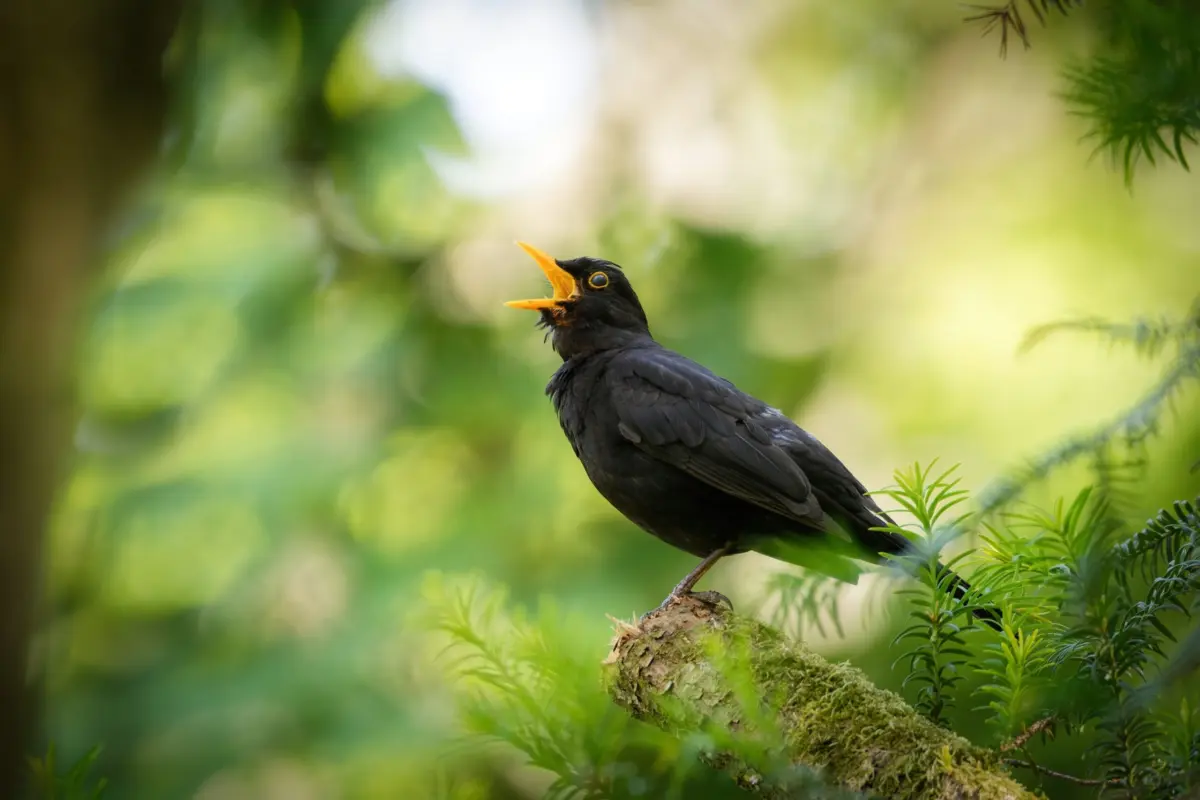
A landmark study published in the journal Frontiers in Bird Science sheds fresh light on this phenomenon, revealing that the acoustic characteristics of birdsong driving human pleasure scores are surprisingly consistent. At the very apex of this global auditory preference sits the Eurasian Blackbird, a melodious thrush whose unforgettable serenade inspired Paul McCartney to pen the timeless Beatles anthem "Blackbird."
Conducted by researchers at the University of Tübingen in Germany, the study evaluated human psychological responses to 123 distinct European bird species. By systematically mapping subjective pleasantness ratings against objective acoustic metrics—such as frequency, amplitude, bandwidth, and structural complexity—scientists have begun to decode the mathematical blueprint of nature’s most soothing melodies.
The implications of this research extend far beyond mere aesthetics. In an era marked by rapid biodiversity loss and shrinking natural soundscapes, understanding the deeply rooted neurological and evolutionary bonds between human beings and birdsong offers a powerful new framework for conservation. By recognizing which components of the natural world humans instinctively value and find restorative, conservationists can better harness the emotional power of soundscapes to galvanize public support for global wildlife protection.
Detailed Chronology: Unpacking the Study
The journey toward understanding the human perception of avian vocalizations began in a controlled laboratory setting in Germany, designed to isolate how human ears and brains process natural audio stimuli.
Phase 1: Establishing the Baseline (The Participant Pool and Stimuli)
The research team, spearheaded by biologist Christoph Randler of the University of Tübingen, recruited 84 human participants in Germany. These subjects were tasked with listening to and rating a comprehensive library of 123 distinct audio recordings representing a wide spectrum of European bird species. To ensure unbiased data collection, participants ranked each recording on a standardized five-point Likert scale, ranging from 1 (least pleasant) to 5 (most pleasant).
Importantly, the participant pool was not restricted to professional ornithologists or avid birders. This was a deliberate methodological choice designed to test whether specialized ecological knowledge altered aesthetic appreciation.
Phase 2: Acoustic Profiling and Cross-Referencing
Once the human pleasantness scores were compiled, the researchers subjected the audio recordings to rigorous bioacoustic analysis. Using advanced audio software, the team measured specific physical properties of each song, including:
- Amplitude: The volume or perceived loudness of the sound wave.
- Frequency: The pitch of the vocalization, measured in Hertz.
- Bandwidth: The spread or range of frequencies utilized within a single call.
- Complexity: The structural variation within the song, encompassing the presence of distinct notes, rapid trills, frequency jumps, and acoustic transitions.
By cross-referencing these precise physical metrics with the subjective human ratings, the researchers isolated the exact architectural formulas that separate a celebrated aria from an abrasive squawk.
Phase 3: Revealing the Winners and Losers
When the data was fully synthesized, clear front-runners and bottom-dwellers emerged from the 123 evaluated species.
Topping the charts was the Eurasian Blackbird (Turdus merula). Though sharing a name with North American blackbirds, this bird is actually a true thrush, belonging to a family globally renowned for complex, flute-like vocalizations.
Rounding out the top five most-pleasant avian artists were:
- Eurasian Blackbird
- Willow Warbler
- Blackcap
- Mistle Thrush
- Garden Warbler
At the opposite end of the spectrum, listeners demonstrated an equally robust consensus regarding the least appealing vocalizations. The bottom five spots were occupied by species known for harsh, monotone, or startling calls:
- Barn Owl (noted for its jarring, hissing, and screaming nocturnal screeches)
- Egyptian Goose
- Gray Heron
- Peregrine Falcon
- Eurasian Jay
Supporting Context & Metrics: The Acoustic Architecture of Appeal
What makes a Willow Warbler sound like a delicate lullaby while a Barn Owl sounds like a scene from a horror film? The study’s quantitative breakdown of acoustic variables provides clear, empirical answers.
Frequency and Pitch
Contrary to the assumption that deep, resonant bass tones are universally soothing, the study revealed that higher-rated songs tended to feature higher frequencies (higher pitches). Human evolutionary biology plays a significant role here. Human hearing is acutely sensitive to specific frequency ranges, and sounds that fall squarely within our hyper-sensitive mid-range can often register as piercing or grating. The most pleasing birdsongs often hover just on the outer fringes of this sensitivity threshold, providing a bright, clear auditory stimulus without triggering discomfort.
Bandwidth and Range
The research also highlighted the importance of a narrow bandwidth. Songs that confined their pitch movements to a controlled, disciplined range were consistently rated as more pleasant than those spanning erratic, hyper-wide frequency jumps—unless those jumps were executed with exceptional melodic control.
Amplitude (Volume)
Predictably, volume played a critical role in human perception. Lower-amplitude songs—those that sounded quieter, softer, and more delicate—received significantly higher pleasantness ratings. Loud, piercing calls were almost universally relegated to the lower tiers of the ranking system.
The Paradox of Complexity
Perhaps the most surprising finding for the researchers was the positive correlation between structural complexity and high pleasantness scores. Intuition might suggest that simple, highly repetitive, uniform sounds would create an effortless listening experience requiring minimal cognitive processing.
However, the data demonstrated the exact opposite: higher-rated songs were markedly more complex, incorporating a rich variety of micro-elements such as rapid frequency jumps, intricate trills, and distinct note transitions.
"There appears to be a measurable acoustic structure underlying at least part of our response to birdsong," notes Dr. Christoph Randler. "It reminds us that bird vocalizations have an important dimension beyond communication between birds: They also form a major part of the soundscape experienced by humans."
Furthermore, the study uncovered a fascinating equalizer: specialization level had zero statistical impact on perceived pleasantness. Whether a participant was a trained ecologist who could identify hundreds of species by ear or a layperson who rarely noticed birds, their aesthetic scoring patterns remained strikingly similar. This confirms that human appreciation for these sounds is rooted in fundamental psychoacoustic responses rather than acquired cultural or intellectual knowledge.
Official Statements and Expert Perspectives
The broader scientific community has embraced the study as a crucial step forward in environmental psychology and bioacoustics, pointing to deep evolutionary underpinnings that explain why nature sounds have such a profound impact on human mental health.
Dr. Clinton Francis, an ecologist at California Polytechnic State University who was not involved in the research, emphasizes the evolutionary context of our auditory preferences:
"Throughout our evolutionary history, hearing birdsong has been a signal that there isn’t any danger," Dr. Francis explains. "The data show that specialization—such as being a birder or knowing more about birds—was unrelated to perceived song pleasantness. It’s pretty neat, suggesting that this really is about the acoustic features."
Extensive psychological and environmental research underscores the tangible health benefits of immersion in natural soundscapes. Clinical studies consistently demonstrate that exposure to natural acoustic environments rich in birdsong can:
- Rapidly reduce physiological stress markers, including cortisol levels and blood pressure.
- Alleviate symptoms of general anxiety, chronic stress, and environmental paranoia.
- Restore depleted cognitive attention spans through Attention Restoration Theory (ART).
According to the study authors, highly rated birdsongs act as an instinctive, primal audio cue. They function as a biological signifier of a safe, healthy, resource-rich, and restorative ecosystem—an environment where human ancestors could safely let down their guard, rest, and forage without immediate predatory threats.
Dr. Francis points out that documenting these direct, measurable benefits to human well-being is not merely an academic exercise; it is an essential conservation strategy:
"The more that we can document these benefits, the more we can galvanize support for wild spaces, and for people taking time to interact with nature."
Future Outlook: Conservation and the Soundscapes of Tomorrow
As global biodiversity faces unprecedented threats from habitat fragmentation, climate change, chemical pollution, and industrialization, the physical spaces we inhabit are growing noticeably quieter. Species extinction is not merely a visual tragedy of vanishing feathers and fur; it is an acoustic crisis resulting in the systematic erosion of the natural soundscape.
The findings from this study open innovative avenues for environmental advocacy. By understanding precisely which acoustic properties and specific bird species evoke positive psychological responses in humans, conservation organizations can strategically tailor their public outreach campaigns.
Leveraging Charismatic Vocalists for Conservation
For decades, conservation biology has relied on "charismatic megafauna"—such as pandas, tigers, and whales—as umbrella species to secure funding and public interest for broad habitat protection. This new research suggests that the avian world possesses its own acoustic ambassadors.
By utilizing the universally beloved songs of species like the Eurasian Blackbird, Willow Warbler, and Garden Warbler as audio flagships, conservationists can design campaigns that resonate deeply with the human psyche. When the public connects emotionally and aurally with the health of local ecosystems, grassroots support for wetland restoration, forest preservation, and urban green-space planning naturally follows.
Next Steps in Bioacoustic Research
Building upon the successes of this laboratory-based study, Dr. Randler’s research team is already looking toward the horizon. Future phases of the research project aim to:
- Conduct Field Studies: Move beyond controlled laboratory conditions to evaluate human responses to birdsong embedded within complex, multi-layered natural soundscapes accompanied by background anthropogenic noises (such as traffic and urban hum).
- Explore Cultural Diversity: Investigate how human preferences for birdsong vary across different global cultures, geographical regions, and diverse socio-economic backgrounds.
- Quantify Ecosystem Services: Further map the economic and psychological value of natural soundscapes to integrate bioacoustic metrics into urban planning, architecture, and public health policies.
Ultimately, bridging the gap between human perception and ecological reality allows us to better understand our place within the natural world. As Dr. Randler concludes: "If we understand which components of biodiversity people actually perceive and value, we can better understand the human side of biodiversity conservation."
In protecting the complex, high-frequency, soothing melodies of the avian world, we are not only preserving the earth’s delicate ecosystems—we are safeguarding the timeless acoustic sanctuary that defines the human experience.