
Executive Overview
Long before a puppy takes its first step on a leash, learns to sit on command, or answers the call to guide a person through a complex world, a profoundly intricate process is unfolding behind the scenes. At organizations like Dogs Inc, the journey of cultivating future guide and service dogs begins during the earliest, most delicate days of an animal’s life. Far removed from traditional obedience classes, this foundational phase relies on biological science, careful observation, and targeted developmental protocols designed to optimize an animal’s potential from birth.
Among the most vital science-based practices utilized during this stage is Early Neurological Stimulation (ENS). Though ENS represents just one small chapter in a comprehensive, multi-year developmental narrative, it exemplifies the meticulous approach required to foster resilience, emotional stability, and cognitive adaptability in working dogs.
In a profession where dogs must remain calm amidst chaos, navigate unpredictable urban environments, and make independent yet safe decisions, the margin for error is razor-thin. Consequently, elite training organizations cannot afford to wait until a dog reaches adolescence to begin shaping its temperament. Instead, preparation starts in the neonatal box. This report explores the biological mechanisms of ENS, the critical milestones of canine development, and how intentional early experiences forge the life-changing partners relied upon by individuals worldwide.
Detailed Chronology: From Neonatal Beginnings to Adolescent Maturity
A puppy’s path from a helpless newborn to a confident, fully trained service dog is a masterclass in developmental biology. Understanding this trajectory requires examining the distinct chronological milestones that define a dog’s formative months.

The Neonatal Stage (Birth to 2 Weeks)
During the first fortnight of life, a puppy’s world is entirely sensory-limited. Newborns are blind, deaf, and incapable of regulating their own body temperature, remaining completely dependent on their mother and littermates for survival and warmth. Most of their time is divided between nursing and deep sleep.
Despite their apparent vulnerability, the neonatal brain and nervous system are extraordinarily active. Neural pathways are forming at a staggering rate, and the internal systems responsible for stress response, cardiovascular regulation, and neurological balance are beginning to wire. It is precisely during this window—specifically between days three and sixteen—that Early Neurological Stimulation is introduced.
Because puppies at this stage cannot yet process complex information, ENS does not resemble training. Rather, it introduces brief, mild physical stressors designed to stimulate the neurological system without inducing panic or overwhelming the animal. These measured inputs encourage accelerated neurological development, improving cardiovascular performance, strengthening the heart, and enhancing stress tolerance.
[Neonatal Stage: Birth–2 Wks]
       │ (ENS & Maternal Care)
       ▼
[Transitional Stage: 2–4 Wks]
       │ (Eyes/Ears Open, Walking, Weaning)
       ▼
[Socialization Period: 3–12 Wks]
       │ (Environmental Exposure, Peer Play)
       ▼
[Adolescent Stage: 6+ Mos]
       │ (Boundary Testing, Fear Periods)
       ▼
[Adult Service Dog Readiness]
The Transitional Stage (2 to 4 Weeks)
As puppies cross the threshold into the transitional stage, their physical capabilities expand rapidly. Around two weeks of age, their eyes and ears finally open, granting them their first glimpses and sounds of the world. By week four, puppies begin to walk, bark, and interact playfully with their littermates.

This period also marks the beginning of weaning. Baby teeth erupt, and puppies transition from exclusive nursing to soft and eventually solid foods. Social learning begins in earnest as they start recognizing canine communication signals from their mother and littermates, acquiring vital lessons in bite inhibition and pack dynamics.
The Socialization Period (3 to 12 Weeks)
Widely recognized by animal behaviorists as the most critical psychological window in a dog’s life, the socialization period runs parallel to late puppyhood. Between 3 and 12 weeks of age, a puppy’s brain is uniquely wired to absorb novel experiences and categorize them as safe rather than threatening.
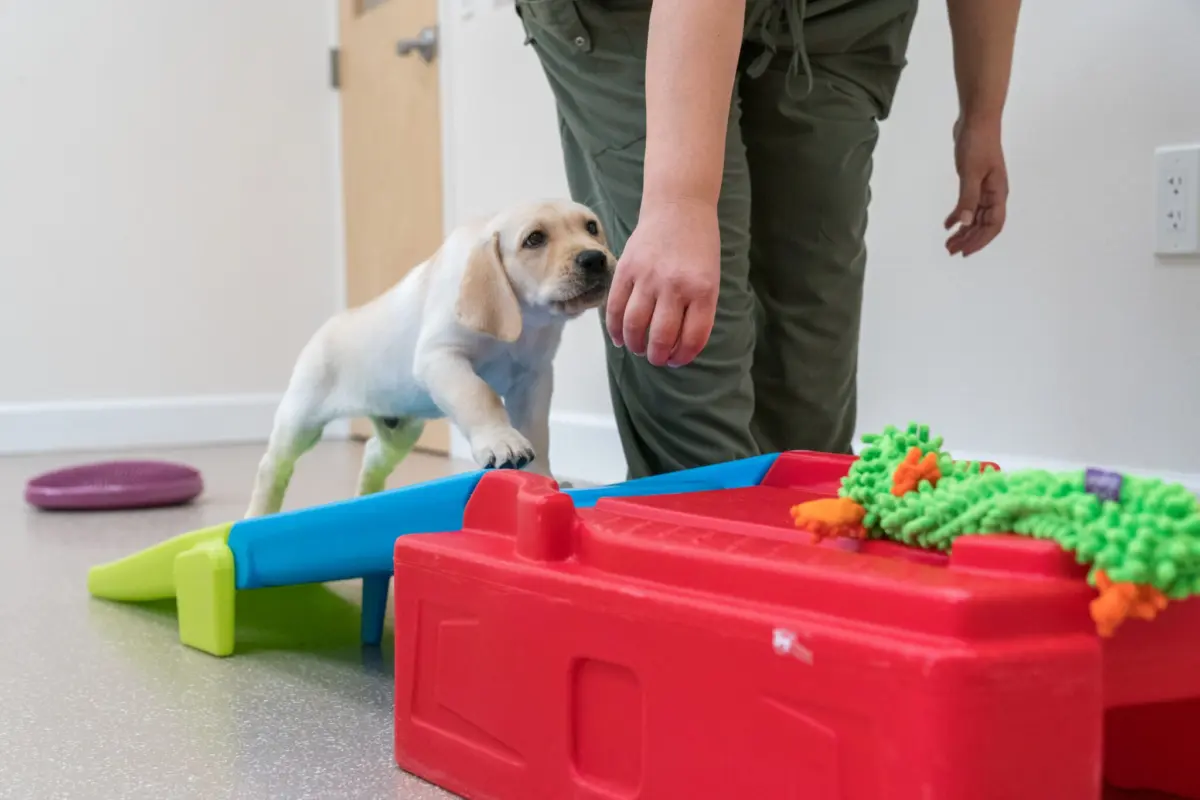
During this window, future service dogs are systematically exposed to a wide array of stimuli: different human voices, varied floor textures, unexpected sounds, moving objects, and novel environments. By the time a puppy reaches 8 to 12 weeks of age, these positive associations lay the groundwork for a stable, friendly, and adaptable adult temperament. Concurrently, short learning sessions and basic cue training begin around week three to ten, utilizing positive reinforcement to establish cooperative communication.
The Adolescent Stage and Fear Periods (6 Months and Beyond)
As dogs mature into adolescence—often beginning around six months of age—they undergo hormonal shifts and physical growth spurts. Similar to human teenagers, adolescent dogs may test boundaries, show independence, or display transient regression in their training.

Furthermore, canine behavioral development features an average of four distinct "fear periods" during puppyhood and adolescence. During these phases, even familiar stimuli may provoke a startled or wary response. Handlers and puppy raisers must navigate these milestones with immense patience, ensuring that new experiences are introduced gently and paired with positive reinforcement to prevent lifelong anxieties or fear-based aggression.
Supporting Context & Metrics: The Science of ENS
To appreciate the value of Early Neurological Stimulation, one must examine its origins and physiological objectives. Originally developed as part of the military’s "Biosensor" program—and later popularized by Dr. Carmen Battaglia—ENS was designed to improve the performance and resilience of working dogs.
The Five Core ENS Exercises
The protocol consists of five gentle, sequential handling exercises performed once daily per puppy. Each exercise lasts approximately three to five seconds:
- Tactile Stimulation: Holding the puppy in one hand, a trained handler uses a tickling Q-tip or soft finger to gently stimulate the skin between the toes on any one foot for 3–5 seconds.
- Head Erect: Holding the puppy upright perpendicular to the ground, the handler supports the head and body, gently positioning the head upward.
- Head Down: The handler turns the puppy upside down or downward, pointing the head toward the floor while maintaining a secure, gentle hold.
- Supine Position: The puppy is placed flat on its back, resting in the palm of the handler’s hand, allowing it to relax for a few seconds.
- Thermal Stimulation: A damp towel that has been cooled in a refrigerator is placed inside a box, and the puppy is placed on top of it for 3–5 seconds, prompting mild thermal adaptation.
Documented Physiological Benefits
While ENS does not make a dog "smarter" or replace the need for comprehensive training, studies and decades of operational data indicate that these brief stressors yield tangible biological advantages:

- Improved Cardiovascular Performance: Enhanced heart rate efficiency and stronger heart contractions.
- Stronger Adrenal Glands: Improved output of hormones necessary for managing stress.
- Greater Tolerance to Stress: Increased resilience when facing unexpected environmental pressures.
- Enhanced Immune System: Better baseline resilience against common illnesses during critical developmental windows.
However, industry experts emphasize that ENS is merely the first puzzle piece. A puppy’s ultimate temperament is a complex mosaic shaped by a combination of genetics, maternal care, general health, targeted socialization, environmental enrichment, and ongoing positive reinforcement training.
Official Statements and Organizational Philosophy
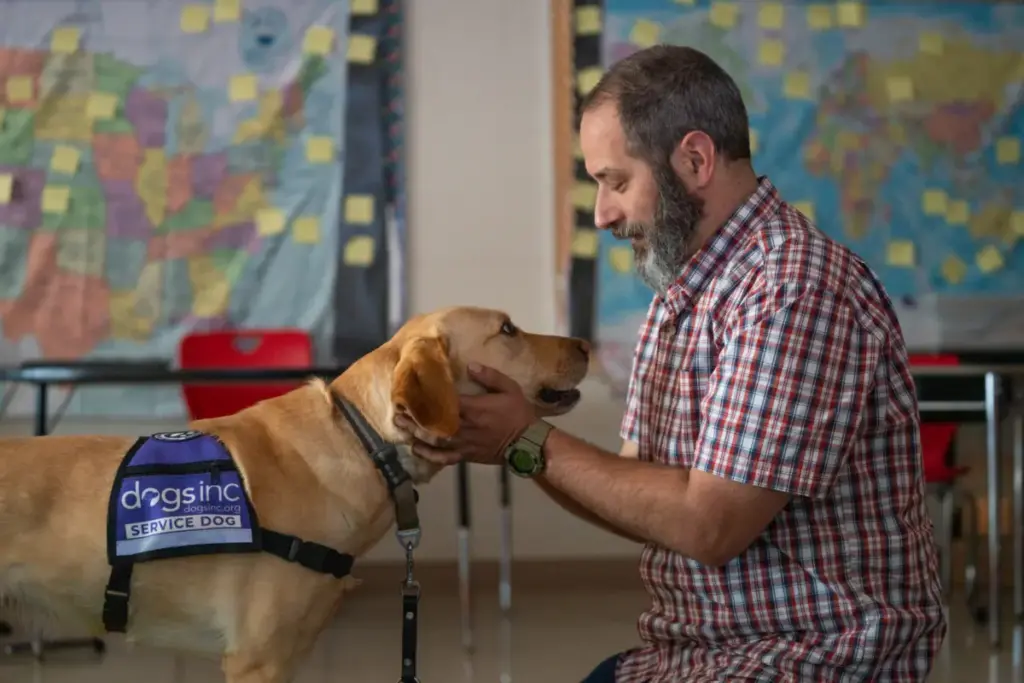
Organizations dedicated to breeding and training elite working dogs view early development through a holistic lens. Representatives from Dogs Inc stress that preparing an animal for life-saving service work is an unbroken continuum spanning from the whelps in the nursery to the graduate partnered with a visually impaired individual or veteran.
"Long before a puppy learns to sit or walk calmly on a leash, an invisible architecture of resilience and trust is being built," notes a senior canine development specialist at Dogs Inc. "Early Neurological Stimulation gives us a scientifically grounded way to support a puppy’s biological development during its most vulnerable days. But ENS is not a magic wand; it is the first step in a lifelong journey of careful socialization, enrichment, and positive reinforcement."
According to organizational guidelines, early handling practices must be executed strictly within established protocols. Because neonatal puppies lack thermal regulation and are physically fragile, unauthorized handling can cause distress or physical harm. Therefore, programs like those at Dogs Inc rely on specially trained staff and dedicated breeding caretakers who understand the fine line between beneficial sensory input and overstimulation.
Furthermore, leadership emphasizes that the transition from a neonatal puppy to a sophisticated working partner requires community-wide investment. Volunteer puppy raisers, veterinary teams, and professional instructors all share responsibility for shepherding the dog through its various developmental stages, ensuring that every milestone—from weaning and socialization to crate training and public access work—is met with patience and expertise.
Future Outlook: Raising the Standard for Working Dogs
As our understanding of canine cognition and developmental biology continues to evolve, the methodologies employed by elite service dog organizations are also advancing. The future of breeding and raising guide dogs lies in an increasingly integrated approach—one that combines genetic tracking, individualized behavioral assessments, and evidence-based early interventions like ENS.
The demands placed on modern service dogs are greater than ever. Whether guiding a handler through bustling transit hubs, alerting to medical episodes, or providing psychological stability to a veteran with post-traumatic stress, these animals must possess extraordinary emotional fortitude. By investing heavily in the earliest days of life, organizations like Dogs Inc are setting a high standard for animal welfare and operational efficacy.
Ultimately, the goal of early development is not to manufacture rigid perfection, but to foster adaptability, curiosity, and confidence. By ensuring that every puppy receives the right balance of biological stimulation, socialization, and compassionate guidance from day one, institutions are laying the groundwork for a safer, more accessible world for those who depend on these remarkable canine partners.