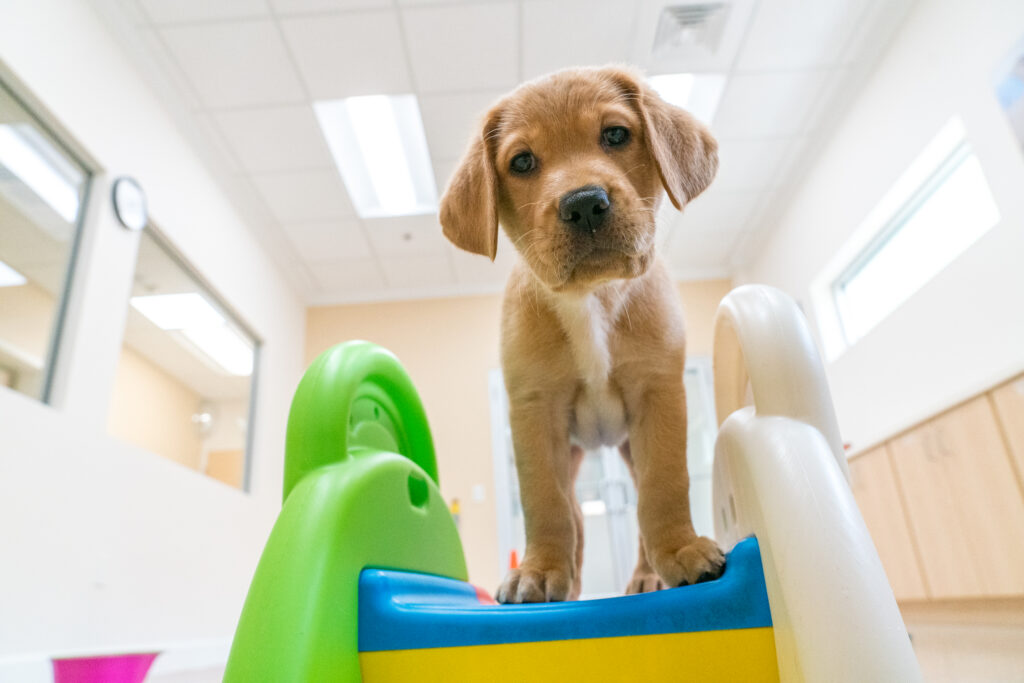
Long before a service dog ever dons a harness, guides a visually impaired individual through a bustling metropolitan crosswalk, or assists a veteran navigating post-traumatic stress, an intensive, highly calculated psychological and physiological journey has already begun. In the specialized world of canine assistance, the foundational blueprint for a working dog’s entire career is established during a remarkably narrow window: the first 90 days of life.
At organizations like Dogs Inc, this foundational period is treated with the precision of a master science. While the casual observer might see only an adorable ball of fur bounding across a lawn, animal behaviorists, professional trainers, and dedicated volunteer networks recognize this epoch as a critical neurodevelopmental window. During these initial three months, a puppy’s brain functions like an organic sponge, absorbing sensory data, processing environmental stimuli, and encoding emotional responses that will dictate its resilience, confidence, and adaptability for the rest of its life.
For future guide and service dogs, the stakes are exponentially higher than they are for the average household pet. A family pet needs to navigate domestic life with good manners; a professional service dog must remain calm, focused, and emotionally regulated in chaotic, unpredictable environments—ranging from crowded airports and roaring subway stations to medical facilities and busy corporate boardrooms. Achieving this level of emotional fortitude requires an extraordinary commitment to early socialization, structured routines, and targeted exposure. This comprehensive report explores the science, strategy, and human dedication behind the first 90 days of service dog development, highlighting the irreplaceable role of volunteer puppy raisers and the long-term impact of early childhood intervention in working canines.
Detailed Chronology: The First 90 Days of Canine Development
To understand how a newborn puppy evolves into a steadfast, reliable partner, one must examine the chronological milestones of early canine maturation. Development during the first three months is categorized into distinct phases, each presenting unique psychological benchmarks and developmental opportunities.
Days 1 to 21: The Neonatal and Transitional Periods
In the absolute earliest stages of life, a puppy’s world is defined almost entirely by warmth, nutrition, and maternal care. Born blind and deaf, neonates rely on touch and smell to locate their mother and littermates. During this period, the brain undergoes rapid neurological wiring, though conscious learning is minimal.
As puppies cross into the transitional phase—typically around weeks two and three—their eyes and ears open. Suddenly, the world floods in with new sights and sounds. While puppies are still tethered to the safety of the litter box and the nursing den, they begin tentative interactions with littermates. Simple vocalizations, clumsy wrestling matches, and exploratory crawling mark the first steps toward social awareness.
Days 22 to 49: The Peak Socialization Window
Behavioral scientists widely agree that the primary socialization period begins around week three or four and extends through week twelve or fourteen. This is the apex of puppy development. During this narrow window, a puppy’s curiosity vastly outweighs its fear response. Novel experiences are processed with fascination rather than apprehension, making this the optimal time to introduce foundational environmental stimuli.
For future service dogs at Dogs Inc, this period is managed with deliberate care. Professional handlers and volunteer caregivers introduce soft novel sounds, varied floor textures (such as tile, carpet, metal grates, and gravel), and gentle human handling. Paws are touched, ears are examined, and coats are brushed. These innocuous-seeming actions desensitize the puppy to routine veterinary care and grooming, preventing future defensiveness or anxiety.
Furthermore, interactions with littermates during this stage teach vital emotional regulation. When a puppy bites a sibling too hard during play and receives an immediate, communicative yelp or a temporary freeze from the littermate, it learns canine communication boundaries and bite inhibition. Skipping or stunting this phase often results in adult dogs that struggle with social cues and emotional calibration.
Days 50 to 90: Building Resilience and Transitioning to Caregivers
As puppies approach the two-to-three-month mark, their cognitive capacity matures, and the first flickers of wariness toward unfamiliar phenomena begin to emerge. This is a critical pivot point. If socialization was robust and positive up to this point, the puppy meets newness with adaptable curiosity. If socialization was neglected, fear-based behaviors can begin to take root.
During these weeks, puppies begin transitioning away from their birth environment and into the homes of volunteer puppy raisers. This is where the rubber meets the road for professional programs. The puppy is introduced to household appliances—vacuum cleaners, blenders, televisions—as well as unpredictable outdoor elements like bicycles, passing joggers, umbrellas, and fluttering plastic bags.
It is also during this 60-to-90-day window that foundational structure is formally integrated. Crate training begins in earnest, teaching the puppy that confinement is safe and restful. Feeding schedules, elimination routines, and basic obedience markers (such as eye contact, name recognition, and leash awareness) are woven seamlessly into daily life. By the 90-day mark, the puppy has transformed from a dependent neonate into a structurally grounded, emotionally responsive candidate ready for advanced community-based training.
Supporting Context & Metrics: The Science of Neuroplasticity
Why is the 90-day milestone treated with such reverence by canine behavioral experts? The answer lies in neuroplasticity—the brain’s ability to reorganize itself by forming new neural connections throughout life, which is at its absolute peak during infancy.
The Neurology of Exposure
Research in canine behavioral science indicates that the canine brain undergoes rapid synaptic proliferation during the first few months of life. Every touch, sound, smell, and visual input triggers electrical impulses that carve neural pathways.
Positive Associations: When an unfamiliar sound (such as a siren or a dropping pan) is paired with a positive outcome (praise, treats, or calm reassurance), the brain wires that stimulus into the "safe" category.
The Cost of Deprivation: Conversely, if a puppy is isolated or insulated from novel stimuli during this window, the neural pathways dedicated to threat assessment develop without proper calibration. When these dogs encounter the real world later in life, their brains perceive ordinary environmental changes as existential threats, triggering chronic cortisol releases, panic, or defensive aggression.
The Service Dog Standard vs. Pet Standards
While a pet dog may enjoy a leisurely adjustment period over its first year of life, a service dog candidate operates on an accelerated, highly optimized schedule. Metrics maintained by elite assistance dog organizations indicate that early socialization heavily correlates with graduation rates.
Dogs that successfully navigate structured socialization protocols within their first 90 days demonstrate:
Lower Cortisol Baselines: Exhibiting reduced physiological stress responses when exposed to sudden environmental disruptions.
Faster Recovery Times: The ability to return to a calm, focused state within seconds after encountering a startling noise or visual anomaly.
Enhanced Problem-Solving Capabilities: Greater cognitive flexibility when faced with novel physical barriers or complex spatial navigation tasks.
Official Statements and Perspectives from the Frontlines
The operational success of early-stage puppy development relies heavily on a synchronized partnership between institutional oversight and grassroots volunteerism. Industry leaders and community advocates emphasize that shaping a service dog is a communal effort that cannot be replicated in a traditional kennel environment.
"By the time most people meet a puppy, important learning has already begun. The first 90 days are a major part of puppy development, shaping how a young puppy responds to the world, builds confidence, and develops lifelong behaviors," notes the canine development team at Dogs Inc. "Our goal is not to create a robot that executes commands without thought, but rather to cultivate an emotionally resilient, autonomous thinker who can assess situations and make calm decisions alongside a handler."
Volunteer puppy raisers are the vital connective tissue in this developmental chain. Stepping into the role requires immense emotional maturity, patience, and unwavering consistency.
"Puppy raising is both hard work and a deeply rewarding experience," shares a veteran volunteer puppy raiser. "You are consciously pouring your heart into a creature knowing that your ultimate job is to prepare them to leave your home for a higher calling. Every time you take a tiny puppy into a crowded hardware store, expose them to an elevator, or help them calmly watch a passing skateboard, you are laying the bricks for someone else’s future independence."
Experts frequently stress that the philosophy governing these early days must center on positive reinforcement and emotional safety rather than heavy-handed discipline.
"Service dog puppy development focuses heavily on confidence, adaptability, and calm behavior around distractions," explains a senior training coordinator. "Rather than expecting perfection from a ten-week-old pup, our focus is entirely on building trust. When a puppy trusts its human handler and feels secure in its environment, learning becomes a natural byproduct of living."
Future Outlook: The Ripple Effect of Early Foundation
As the landscape of assistance dog training continues to evolve, organizations are placing an even greater emphasis on early childhood education and community-integrated raising models. The demand for qualified guide and service dogs continues to outpace supply, making the efficiency and efficacy of the first 90 days more critical than ever.
Looking forward, several key trends are shaping the future of early puppy development:
Data-Driven Behavioral Tracking: Programs are increasingly utilizing standardized developmental checklists and behavioral metrics during the first 90 days to identify individual strengths and potential anxiety triggers early, allowing trainers to tailor subsequent socialization plans.
Expanded Volunteer Education: Recognizing that the quality of a puppy’s home environment dictates its success, organizations like Dogs Inc are investing heavily in comprehensive training resources for puppy raisers, puppy sitters, and area coordinators, ensuring uniform application of positive reinforcement methodologies.
Public Access Advocacy and Integration: As societal awareness grows, cultivating partnerships with public venues—such as retail establishments, transportation hubs, and corporate offices—allows puppy raisers to safely integrate young dogs into complex human environments earlier in their developmental timeline.
Ultimately, the journey of a service dog is a testament to the profound impact of intentionality. The quiet moments of the first 90 days—a puppy resting comfortably in a crate, a gentle brush across sensitive paws, a calm pause amidst a cacophony of city noises—accumulate into a lifelong reservoir of courage. Through the dedication of volunteer communities and the structured science of early intervention, these remarkable animals are given the greatest gift possible: the foundation to change, and quite literally save, human lives.