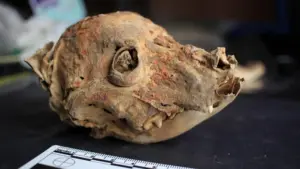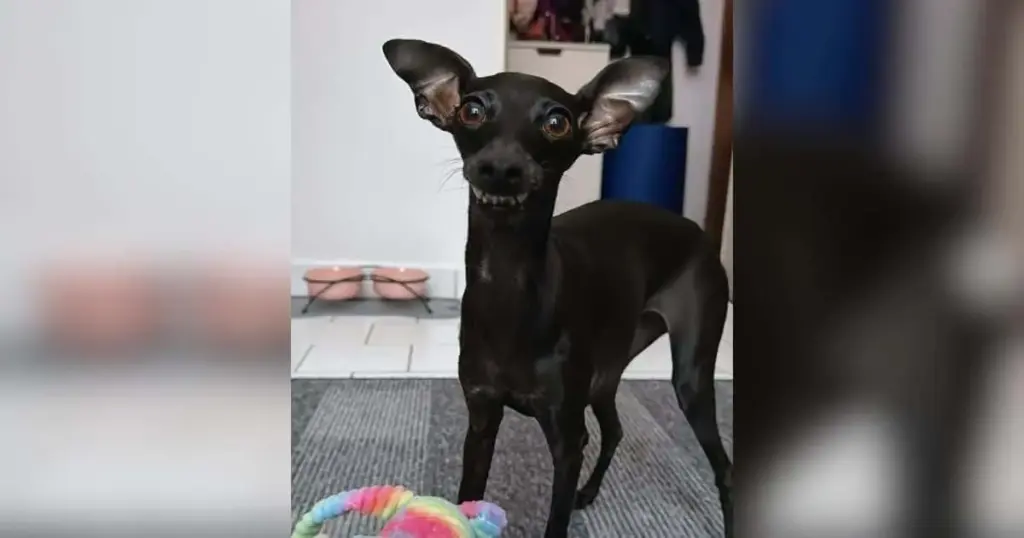

Archaeological excavations at the ancient Andean ceremonial and administrative complex of Castillo de Huarmey in Peru have yielded extraordinary physical evidence of Peruvian hairless dogs dating back more than 1,200 years. Long predating the rise of the Inca Empire, this discovery provides unprecedented insight into the complex, multifaceted relationships between humans and animals in pre-Columbian South America. Published in the Journal of Anthropological Archaeology, the multi-institutional study offers a rare window into the biological, cultural, and domestic landscape of the Wari Empire, which governed Peru’s northern coast between 600 and 1050 CE.
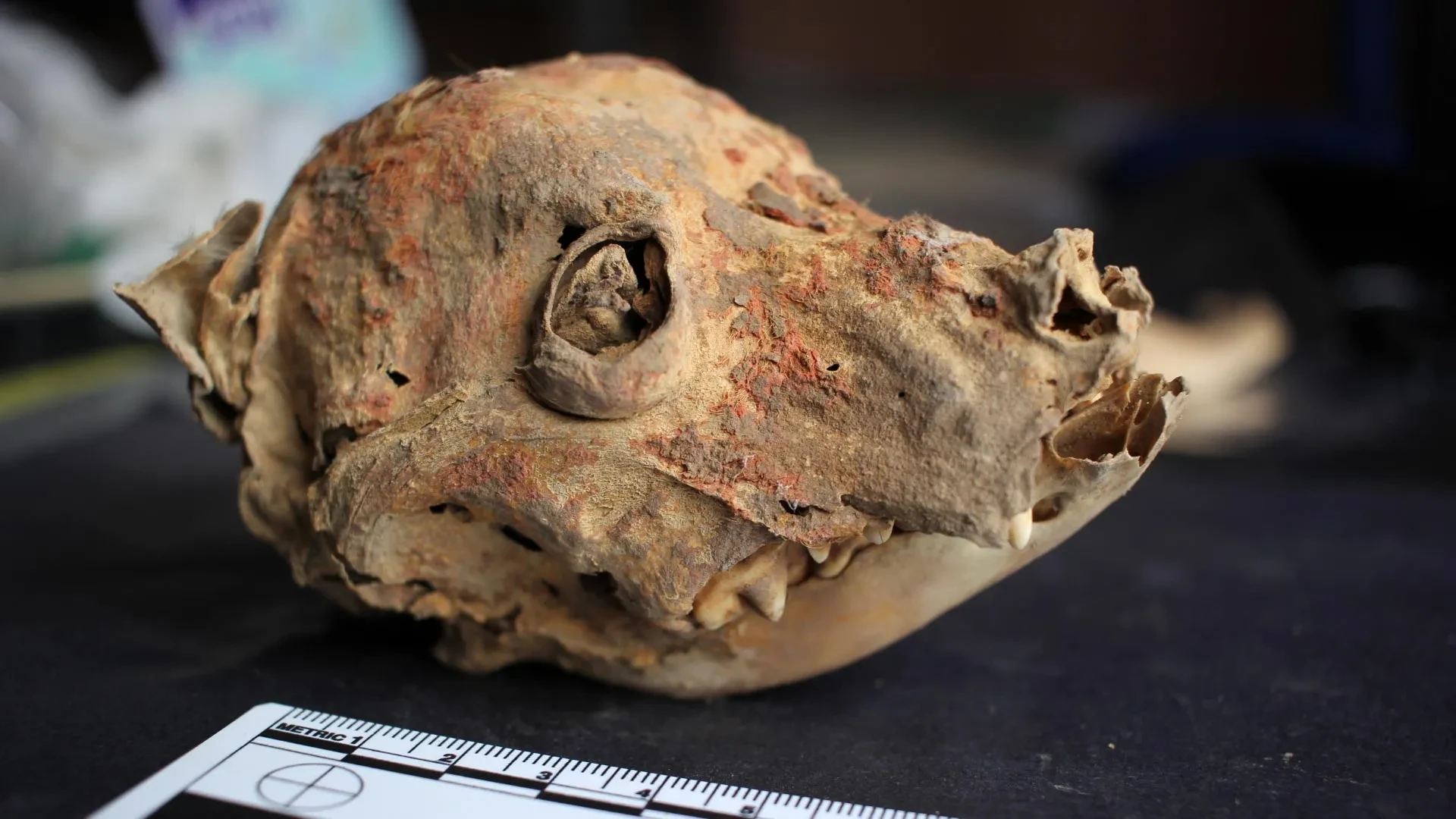
The findings include naturally mummified remains, rare skeletal anomalies, and advanced isotopic data tracking the animals’ diets and life histories. Central to the discovery is a complete, naturally preserved male dog mummy colored with cinnabar, alongside skeletal remains exhibiting missing teeth—a crucial genetic marker that confirmed the identity of the animals as authentic Peruvian hairless dogs.
Far from being treated as a monolithic group, these ancient canines occupied varied societal niches. While some were interred alongside elite members of Wari society, others were discovered among domestic refuse, illustrating a dichotomy of human-animal relationships that mirrors modern complexities. This comprehensive investigation not only establishes Castillo de Huarmey as the earliest known archaeological site to house physical evidence of the breed, but also redefines our understanding of ancient Andean zooarchaeology.
Detailed Chronology
The discovery of the Wari Empire dog remains is the culmination of decades of careful excavation, conservation, and scientific analysis at Castillo de Huarmey, situated approximately 190 miles north of Lima, Peru. The timeline of discovery and subsequent scientific breakthroughs highlights the meticulous nature of modern archaeological research.
The Wari Empire Occupation (600–1050 CE)
Occupying a sprawling 110-acre desert complex, Castillo de Huarmey served as a primary administrative, religious, and burial center for the Wari Empire. During this four-century window, the site witnessed intense human activity, craft production, and elite mortuary rituals. The hyper-arid conditions of the Peruvian Pacific coast naturally preserved organic materials that would typically decay, setting the stage for exceptional preservation.
Modern Interruption: The 1970 Earthquake and Looting
The site’s archaeological integrity faced severe challenges in the modern era. A powerful earthquake in 1970 triggered structural collapses across Castillo de Huarmey, exposing subterranean burial chambers filled with precious artifacts. In the wake of this natural disaster, illicit looters heavily disturbed upper archaeological strata, scattering valuable historical context. Fortunately, deeper stratigraphic layers remained sealed and untouched, preserving the primary Wari context for future academic excavation.
The 2012 Elite Tomb Discovery
A major turning point for the site occurred in 2012, when an international team of archaeologists uncovered the first undisturbed elite Wari tomb. This monumental find contained the remains of 58 high-status noblewomen, six sacrificial human victims, and approximately 1,300 luxury artifacts crafted from precious metals, textiles, and ceramics. This discovery established the elite status and regional dominance of Castillo de Huarmey within the Wari administrative network.
The 2022 Craftspeople Burials
Decade-long excavations continued to yield surprises. In 2022, researchers uncovered adjacent burial zones dedicated to elite craftspeople. These chambers were accompanied by specialized toolkits composed of gold, silver, and bronze, shedding light on the sophisticated metallurgical and artisanal economy that sustained the Wari Empire.
The 2010–2025 Canine Excavations and Laboratory Analysis
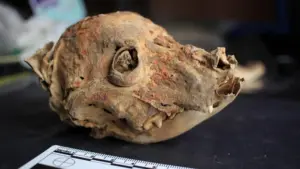
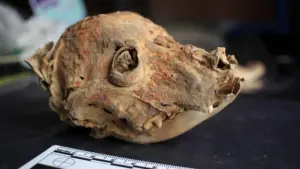
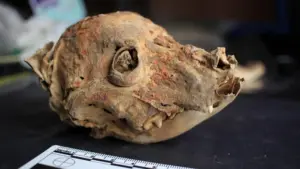
Between 2010 and 2025, systematic excavations in the northern section of the main ceremonial area brought to light hundreds of animal bone specimens, including South American camelids and domestic canines. Among these, three distinct sets of dog remains—including a naturally mummified skull with intact hairless skin and ears, and a complete male dog mummy—stood out.
Subsequent zooarchaeological examination revealed a crucial diagnostic clue: the animals lacked their first premolars. Researchers recognized that this dental anomaly was inextricably linked to the genetic mutation responsible for canine hairlessness. Advanced radiocarbon dating confirmed that the complete male mummy was at least 1,200 years old, while isotopic testing of bones and teeth mapped out the dietary and geographic life histories of these ancient animals.
Supporting Context & Metrics
To fully appreciate the significance of the Castillo de Huarmey dog remains, researchers relied on a combination of quantitative metrics, comparative zoology, and chemical analyses.
Quantitative Archaeological Metrics
- Geographic Location: Approximately 190 miles north of Lima, Peru, within an arid coastal desert ecosystem.
- Site Area: 110 acres of administrative, residential, and mortuary infrastructure.
- Chronological Span: 600 to 1050 CE (Wari Empire period, predating the Inca Empire by roughly 400 years).
- Canine Specimen Count: 341 individual dog bone specimens recovered, representing a minimum number of 19 individual canines alongside complete mummified remains.
- Radiocarbon Age: The complete male dog mummy yielded a radiocarbon age of at least 1,200 years, establishing it as the oldest radiocarbon-dated specimen recovered from the complex to date.
Biological Identification and Genetics
Peruvian hairless dogs—recognized today by the American Kennel Club as the Peruvian Inca Orchid and designated as part of Peru’s national cultural heritage in 2000—are characterized by slender physiques, erect ears, and congenital hairlessness.
The breakthrough in identifying the Wari-era remains stemmed from a well-documented genetic correlation. The genetic mutation responsible for mammalian ectodermal dysplasia, which causes hairlessness, simultaneously impacts dental development. Specifically, it prevents the eruption of certain teeth, most notably the first premolars and occasionally the last molars. By observing that the excavated skulls exhibited un-erupted premolars rather than tooth loss due to trauma, disease, or senescence, researchers definitively linked the specimens to the historic hairless breed.
Isotopic Analysis and Dietary Reconstruction
To reconstruct the life histories of the dogs, the research team utilized stable isotope analysis on bone and tooth collagen. This technique measures different forms (isotopes) of carbon, nitrogen, oxygen, and strontium to infer diet, geographic origin, and developmental stages.
- Tooth vs. Bone Signatures: Because canine teeth erupt rapidly during puppyhood, their isotopic composition reflects early-life dietary intake. Conversely, bone remodeling provides an isotopic record spanning approximately the final year of life.
- Maize Consumption: Isotopic signatures revealed that the majority of the dogs consumed diets heavily reliant on maize (corn), the staple agricultural crop of the pre-Hispanic Andes. This indicates that the dogs shared a dietary niche closely aligned with human populations.
- Puppy vs. Adult Divergence: Hairless puppies exhibited unique isotopic signatures early in life that closely mirrored the diets of human children. As the animals matured into adulthood, their food sources diversified, pointing toward potential controlled breeding practices or targeted nutritional care during their early developmental weeks.
Official Statements
The findings have generated significant academic commentary regarding the social dimensions of human-animal interaction in pre-Columbian societies.
Weronika Tomczyk, a research associate in Dartmouth’s Department of Anthropology, a postdoctoral fellow in its Ecology, Evolution, Environment and Society Program, and lead author of the study, emphasized the nuanced relationship between ancient humans and their domestic animals:
"Our findings indicate that humans and dogs coexisted at this Wari site, but reconstructing their bond is challenging, as past emotions are difficult to capture through archaeological methods. The goal of our study was to not only present data on Castillo de Huarmey’s dog burials, but also emphasize that people in the past had often contradictory relationships with the animals, just as they do today: a pet for one group of people could at the same time be considered a pest by their closest neighbors."
Discussing the biological identification of the breed through dental anomalies, Tomczyk noted:
"What I noticed is that some of the dog skeletons were missing teeth, and not that they lost them during their lifespan; some teeth, especially first premolars and sometimes last molars, had just never erupted. And then I found in the literature that the same gene which is responsible for hairlessness in dogs is responsible for a reduced number of teeth, indicating that these were Peruvian hairless dogs."
Addressing the dietary patterns observed in the isotopic data, Tomczyk added:
"We do not know if the dogs were intentionally fed maize or if perhaps, they were just eating leftovers or trash. Yet, the distinct dietary patterns of hairless puppies provide insights into what may have been organized breeding… While we will never know if any of the three dogs were pets or how people treated them, it is evident they received different treatment than other dogs."
The collaborative international research team included co-authors Miłosz Giersz, Wiesław Więckowski, and Roberto Pimentel Nita from the University of Warsaw, alongside Claire Ebert from the University of Pittsburgh. Their joint efforts underline the interdisciplinary nature of modern Andean archaeology, uniting zooarchaeology, genetics, and stable isotope chemistry.
Future Outlook
The discovery of 1,200-year-old Peruvian hairless dog remains at Castillo de Huarmey opens new avenues for archaeological inquiry across South America. As researchers continue to process the extensive biological and material data recovered from the site, several key areas of future study have emerged.
Broadening Genomic and Ancient DNA Research
While morphological and isotopic analyses have successfully confirmed the lineage of the hairless dogs, future research will likely incorporate ancient DNA (aDNA) sequencing. Extracting mitochondrial and nuclear DNA from the mummified tissues will allow scientists to trace the genetic lineage of the Peruvian hairless dog breed across millennia, tracking population bottlenecks, domestic breeding selection, and genetic divergence from other New World and Old World canine populations.
Reassessing Pre-Inca Urban Ecology
The presence of specialized canine burials—such as a 6-to-8-week-old puppy interred alongside an elite artisan known as the "Master Basketmaker," and other specimens discovered within palace quarters—demonstrates that animals played active, symbolic roles in Wari social hierarchy. Future excavations across contemporary Wari administrative centers will seek to determine whether hairless dogs were utilized exclusively within elite spheres or if their distribution extended across all tiers of Andean society.
Conservation and Cultural Heritage Preservation
With extreme environmental pressures and climate variability threatening archaeological sites along the Peruvian coast, the preservation of organic mummies like the Castillo de Huarmey male dog is of paramount importance. International collaborations between institutions in the United States, Poland, and Peru are establishing advanced protocols for the curation and stabilization of fragile organic remains.
Ultimately, the revelation that ancient Andean peoples maintained complex, individualized relationships with hairless dogs—ranging from revered funerary companions to scavengers on the periphery of human settlements—deepens our appreciation for the shared history of humans and domestic animals. As analytical techniques continue to evolve, Castillo de Huarmey remains a cornerstone for unlocking the deep history of South America’s domestic fauna.