
Executive Overview
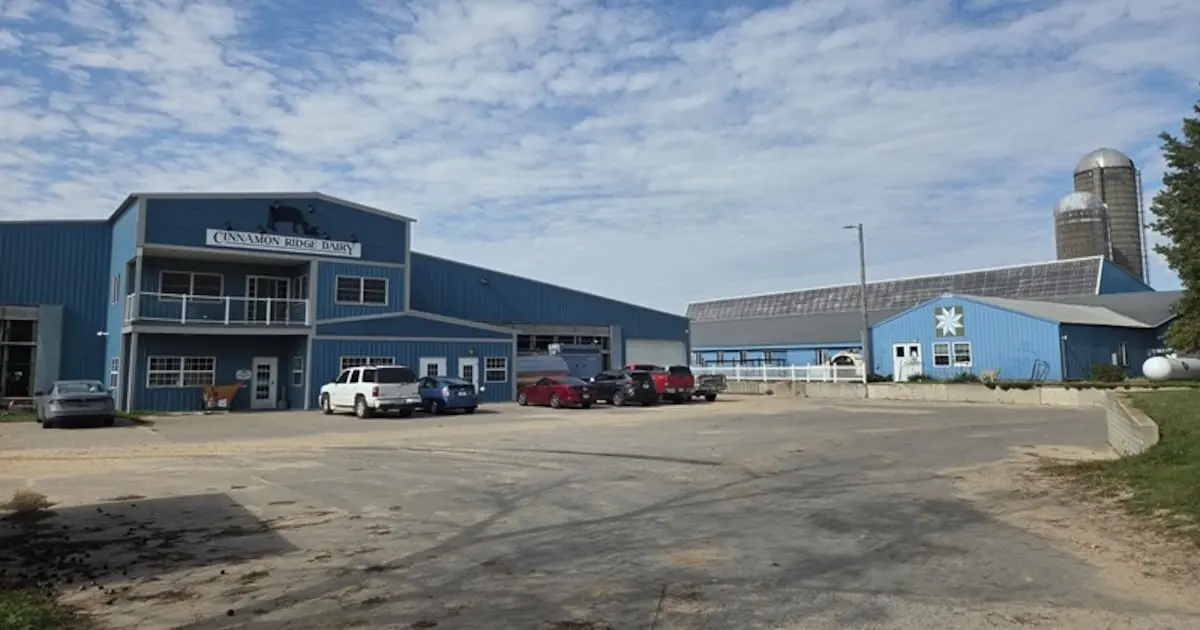
In the rolling landscapes of Scott County, Iowa, roughly 14 miles northwest of Davenport, sits a masterclass in modern agribusiness: Cinnamon Ridge Farms. Run by the husband-and-wife team of John and Joan Maxwell, this diversified dairy and crop operation has garnered national and state acclaim—including the prestigious U.S. Dairy Sustainability Award, the Wergin Good Farm Neighbor Award, and the Iowa Farm Environmental Leader Award. Yet, the farm’s most compelling asset is not its automated milking parlors or its prized herd, but rather the unorthodox background of its co-owner.
Joan Maxwell did not grow up in the milking barn. Her professional genesis lay in the high-stakes, analytical world of commercial underwriting and corporate accounting. Rather than leaving her spreadsheets behind when she transitioned to agriculture, she brought them directly into the furrow. Armed with Six Sigma expertise and process-reengineering methodologies, Joan transformed Cinnamon Ridge Farms into an enterprise that treats every gallon of milk, every acre of corn, and every piece of heavy machinery as a data point in a broader equation of efficiency and environmental stewardship.
In an era where American agriculture faces compressing margins, volatile commodity prices, and mounting pressure to decarbonize, the Maxwells offer a blueprint for survival. By fusing granular financial analysis with cutting-edge agricultural technology—ranging from robotic milking systems and genetic testing to virtual fencing and advanced conservation practices—they have proven that modern farming is as much about data science as it is about soil and seed.
However, Joan Maxwell’s analytical lens extends far beyond the farm gate. In candid assessments shared with industry observers, she has raised critical questions regarding the systemic economic hurdles facing modern growers, particularly the complex interplay between land ownership, environmental mandates, and profitability. As policymakers increasingly look to agriculture as a primary tool for climate mitigation, the Maxwells’ experiences shed light on a vital, often-overlooked reality: sustainable farming cannot succeed on the backs of tenant farmers alone.
Detailed Chronology: The Evolution of Cinnamon Ridge Farms
The success of Cinnamon Ridge Farms is the product of decades of strategic pivots, generational adaptation, and a relentless commitment to operational excellence. While the timeline of the farm spans generations of agricultural tradition, its modern identity was forged through deliberate modernization.
The Foundation and Early Diversification
Long before automated technologies entered the picture, the Maxwell family established Cinnamon Ridge as a working dairy farm. However, dairy farming has historically been a high-risk enterprise vulnerable to the whims of fluid milk pricing and feed costs. Recognizing the dangers of relying on a single revenue stream, the family steadily diversified.
Over the years, the farm expanded beyond traditional milk production into crop farming—cultivating corn, soybeans, and hay to feed their livestock while maximizing land utility. They also ventured into direct-to-consumer value-added products, establishing an on-farm presence that includes artisanal cheeses and direct retail operations. This diversification insulated the farm against single-commodity downturns, laying the groundwork for a more resilient business model.
The Integration of Corporate Metrics
The true turning point in the farm’s operational sophistication arrived when Joan Maxwell integrated her corporate background into daily farm management. Having spent years in commercial underwriting—a discipline defined by risk assessment, process reengineering, and data analytics—Joan recognized a glaring deficiency in how many traditional farms operated.
Historically, agriculture had operated on intuition and generational habits. When commodity prices were high and input costs were low, farmers could afford operational inefficiencies. But as profit margins tightened across the American heartland, Joan applied Six Sigma principles to agricultural workflows.
Equipment management became a prime example of this philosophy. Rather than instinctively repairing broken machinery or prematurely purchasing new capital assets, Cinnamon Ridge instituted rigorous enterprise analyses. Every tractor, combine, and feed mixer was subjected to cost-benefit modeling. The farm calculated depreciation schedules, maintenance frequencies, and fuel efficiencies to determine the precise financial threshold where repairing an old asset ceased to be profitable and purchasing a new one became economically imperative.
Embracing the Digital and Automated Revolution
As financial metrics guided managerial decisions, technological adoption reshaped physical operations on the farm. Cinnamon Ridge steadily replaced manual labor bottlenecks with state-of-the-art automation.
The farm integrated automatic milking machines supplied by Lely, a pioneer in agricultural robotics. These systems revolutionized cow management, allowing livestock to choose when they wished to be milked, thereby reducing stress on the animals, optimizing milk yields, and freeing up labor hours for other high-value farm tasks.
Concurrently, the farm adopted advanced biological technologies. By implementing genetic testing protocols on calves, the Maxwells gained the ability to predict future milk production capabilities long before an animal entered the milking string. This data-driven herd culling and breeding strategy ensured that feed and spatial resources were dedicated exclusively to high-yield genetics.
Pioneering Sustainable Stewardship
In parallel with technological and financial optimization, the Maxwell family aggressively pursued environmental sustainability. Recognizing that long-term agricultural viability depends entirely on soil health, John and Joan implemented aggressive conservation techniques across their acreage.
The farm transitioned to no-till farming and comprehensive cover cropping, practices designed to prevent soil erosion, retain moisture, and significantly reduce nitrate runoff into local waterways. Furthermore, adopting a closed-loop nutrient management philosophy, the farm harnessed livestock manure to naturally fertilize its corn, soybean, and hay crops, drastically cutting down on synthetic fertilizer expenditures.
Supporting Context & Metrics: The Mathematics of Modern Agribusiness
To understand why Cinnamon Ridge Farms stands out in America’s agricultural landscape, one must examine the macroeconomic metrics governing modern farming. The pressures facing independent growers are immense, and the margins for error grow narrower each year.
The Financial Realities of Agribusiness
As Joan Maxwell succinctly notes, "It’s not how much money you make; it’s how much money you can try to keep." In the current agricultural economy, gross revenue can be deceivingly high, swallowed up entirely by soaring input costs—including seeds, fertilizers, diesel, and equipment financing.
According to USDA Economic Research Service data, farm production expenses have trended upward persistently, squeezing net farm incomes during down cycles. In this environment, traditional farming instincts—such as expanding acreage blindly or relying on brute-force labor—are financial liabilities.
Joan’s background in commercial underwriting instilled a philosophy of process reengineering. In corporate finance, reengineering involves the radical redesign of core business processes to achieve dramatic improvements in productivity, cycle times, and quality. Applied to agriculture, this means examining every touchpoint of production:
- Feed Conversion Ratios: Tracking exact nutritional inputs against milk output.
- Asset Utilization: Ensuring machinery sits idle as infrequently as possible.
- Risk Mitigation: Hedging commodity prices and utilizing insurance products intelligently.
The Technology Spectrum: High-Tech to Low-Tech
A common misconception is that modernizing a farm requires millions of dollars in ultra-complex machinery. Cinnamon Ridge demonstrates that efficiency is achieved through a spectrum of solutions tailored to specific problems.
At the high-tech end of the spectrum, the Lely robotic milking systems represent substantial capital outlays that pay dividends through labor savings and increased milking frequency. Similarly, genetic testing transforms biological guesswork into predictable financial forecasting.
Conversely, the Maxwells also embrace low-tech, high-efficiency solutions. For their direct-to-consumer cheese operations, simple tools like industrial label makers streamline packaging workflows, ensuring regulatory compliance and professional presentation without unnecessary overhead.
The Frontier of Virtual Fencing
Looking toward the immediate future, Cinnamon Ridge is exploring the integration of virtual fencing technology to manage its livestock herds. Traditional physical fencing represents one of the highest capital and maintenance expenditures for livestock producers, requiring thousands of dollars in posts, wire, labor, and ongoing repair.
Virtual fencing systems use GPS-enabled collars on cattle, linked to software mapping systems that establish invisible, mobile boundaries. Farmers can digitally cordon off pastures, directing cattle movements via audio tones or mild electrical stimuli from the collars.
Joan Maxwell highlights the massive economic and environmental potential of this technology:
"What we’re seeing is that you can do rotational grazing by using the fencing and moving cows if you have a big area. Another thing that other farmers are using it on is waterways and filter strips that they can graze the cows on and then move them on because it would be cost prohibitive to put fence on filter strips."
This application allows farmers to monetize ecologically sensitive buffer zones through controlled rotational grazing without investing in expensive permanent fences that could disrupt wildlife corridors or impede maintenance.
Official Statements and Industry Insights
The insights generated at Cinnamon Ridge Farms offer a profound critique of broader agricultural policies and economic structures. Through interviews and public commentary, Joan and John Maxwell have articulated vital perspectives on the intersection of sustainability, land tenure, and economic policy.
The Economic Burden of Sustainability
While sustainable practices like no-till farming and cover cropping are universally lauded for their environmental benefits, they are not economically neutral for the operator.
"It costs money to buy a no-till drill. It costs money for someone to seed your crop for you to do a cover crop," Joan Maxwell explains. "The farmer needs to see some form of benefit from it. The challenge that we have today is that fewer farmers own their land, and so why should a farmer do a practice that improves the land that the farmer doesn’t own?"
This statement touches on a foundational vulnerability in American agriculture: the separation of land ownership from land operation. According to the USDA’s Tenure, Ownership, and Transition of Agricultural Land (TOTAL) survey, hundreds of millions of acres of U.S. agricultural land are rented, and a staggering percentage of non-operating landlords have never farmed a day in their lives.
The Land Tenure Dilemma and Landlord-Tenant Dynamics
Traditional agricultural leases are historically conservative documents focused primarily on immediate yield and baseline asset preservation. Joan points out the systemic blind spots in standard leasing agreements:
"A lot of our leases say do not mine the land. If you take out X amount of nutrients, you put back X amount of nutrients. I’ve never seen a lease that has you make the farm better."
When agricultural policies or societal expectations demand that farmers adopt long-term soil-improving practices—such as establishing intricate cover crop regimens or building complex soil organic matter—a severe economic misalignment occurs.
Joan offers a stark warning regarding government mandates or top-down regulatory pushes:
"If the government mandates that farmers have to put in a cover crop, who’s going to benefit from that? The landowner. And so, what we’re doing is supporting business and not agriculture."
This critique cuts to the core of contemporary agricultural politics. If a tenant farmer invests capital, time, and labor into improving soil health on a rented parcel, the long-term appreciation of that land asset directly benefits the non-operating landlord. Furthermore, if the lease is terminated or not renewed, the tenant loses the return on their capital investment. Without policy structures that incentivize landlords to share in conservation costs—or lease terms that guarantee multi-year operational security—mandates risk penalizing the actual producers while enriching passive landowners.
Future Outlook: The Next Horizon for Agribusiness
As Cinnamon Ridge Farms looks toward the horizon, its trajectory serves as a case study for the evolution of the family farm in the 21st century. The challenges confronting the agricultural sector—climate volatility, generational land transfers, labor shortages, and shifting consumer preferences—require a new breed of farmer.
Bridging the Generation Gap
One of the most pressing hurdles for modern agribusiness is farm succession and the integration of beginning farmers. With land prices at historic highs and capital entry barriers formidable, young growers struggle to secure land ownership. The insights from Cinnamon Ridge suggest that future agricultural success will depend heavily on innovative lease agreements, cooperative land-sharing models, and institutional recognition of the costs associated with land stewardship.
Policymakers and agricultural economists would do well to heed Joan Maxwell’s warnings. Incentive programs designed to promote regenerative agriculture must be carefully calibrated to ensure that financial assistance flows directly to the operators bearing the operational risk, rather than simply inflating land values for passive investors.
The Data-Driven Farm of Tomorrow
Technology will undoubtedly continue to redefine the physical landscape of farming. As artificial intelligence, machine learning, and Internet of Things (IoT) sensors become more accessible, farms like Cinnamon Ridge will generate unprecedented volumes of agronomic and financial data.
The successful farms of the future will not necessarily be the largest, nor those with the most expensive equipment. Instead, they will be enterprises guided by leaders who possess the analytical capacity to translate raw data into actionable business intelligence—much like a commercial underwriter balancing risk and return on Wall Street.
Conclusion: A Lasting Legacy
Cinnamon Ridge Farms stands as proof that traditional agricultural dedication and modern corporate analytics are not mutually exclusive; rather, they are mutually reinforcing. By marrying John Maxwell’s lifelong stewardship of the land with Joan Maxwell’s uncompromising focus on process engineering, financial metrics, and technological adoption, the family has carved out a resilient, award-winning niche in American agriculture.
Their story is more than a local success tale from Scott County, Iowa. It is a clarion call for the agricultural industry at large—a reminder that navigating the future requires looking beyond the immediate horizon, questioning outdated economic structures, and recognizing that sustainable farming ultimately depends on keeping the farmer solvent, data-informed, and empowered.