
Executive Overview
In the rapidly evolving landscape of digital health tools and professional continuing education, a novel micro-learning phenomenon has quietly captured the attention of the global veterinary community. Dubbed "WordRX"—a specialized, Wordle-inspired linguistic challenge tailored exclusively to the lexicon of animal health—this interactive digital platform is bridging the gap between rigorous clinical science and recreational cognitive engagement.
Designed for veterinarians, veterinary technicians, clinic staff, and students alike, WordRX transforms the esoteric terminology of veterinary medicine into an engaging daily exercise. Far from being a mere digital distraction, the platform leverages established psychological principles of spaced repetition, gamified learning, and active recall. By drawing from a comprehensive database that spans everyday clinical terminology, specialized pharmacology, anatomical nomenclature, and the obscure curiosities taught in veterinary colleges worldwide, the application serves as a unique cognitive gymnasium.
This comprehensive report investigates the genesis, operational mechanics, pedagogical significance, and cultural impact of WordRX within the broader veterinary industry. As modern medical professionals face unprecedented levels of burnout and cognitive fatigue, lightweight, gamified interventions like WordRX offer a vital psychological respite while simultaneously reinforcing critical clinical fluency. Through an examination of its structural framework, expert commentary, and future roadmap, this article explores how digital micro-interactions are shaping the future of veterinary professional development.
Detailed Chronology: From Concept to Clinical Phenomenon
The trajectory of WordRX mirrors the broader digital transformation within the healthcare sector, where gamification has transitioned from a fringe consumer trend into a recognized tool for professional engagement and knowledge retention.
Phase One: The Diagnostic Gap in Veterinary Lexicon (Pre-2023)
For decades, the acquisition and maintenance of veterinary vocabulary relied on traditional, high-friction methods: dense textbooks, peer-reviewed journals, clinical rotations, and arduous board examinations. While these methods are foundational to producing competent practitioners, they leave a distinct gap in long-term terminology retention outside one’s immediate specialty. A companion animal surgeon, for instance, might rarely encounter the specific parasitological or large-animal terminology mastered during the first year of veterinary school.
Educators and clinical administrators long recognized that linguistic atrophy was a quiet contributor to diagnostic hesitation. However, the solutions available were largely academic and unappealing to practitioners returning home after grueling 12-hour shifts. The demand for a low-barrier, high-reward intellectual touchpoint grew organically within clinic breakrooms and digital veterinary forums.
Phase Two: The Rise of Daily Word Games and Prototype Development (Early–Mid 2023)
The global explosion of daily web-based puzzle games—most notably Wordle—demonstrated the profound psychological appeal of a single, daily linguistic puzzle. Recognizing this cultural shift, a coalition of veterinary educators, digital designers, and linguistic specialists began conceptualizing a domain-specific adaptation.
The initial challenge lay in curation. Standard English dictionaries contain hundreds of thousands of words, but a veterinary-specific dictionary must navigate a complex landscape of Latin roots, proprietary pharmaceutical names, anatomical descriptors, and colloquial clinical abbreviations. The development team established rigorous inclusion criteria: words had to possess clinical relevance, etymological educational value, or historical significance within veterinary medicine.
Phase Three: The Launch and Community Adoption (Late 2023–Present)
Upon its quiet digital rollout, WordRX bypassed traditional marketing channels, spreading instead through word-of-mouth recommendations among veterinary school cohorts, professional social media channels, and clinic message boards.
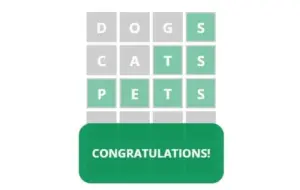
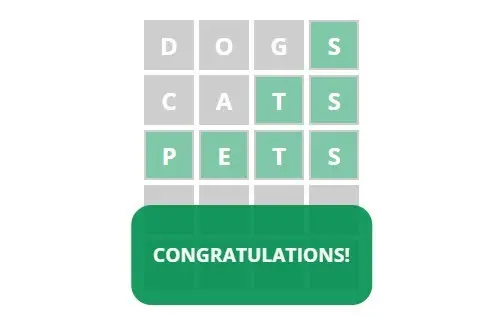
Unlike software designed for mandatory compliance training, WordRX achieved organic adoption by positioning itself as an entertaining mental palette cleanser. Vets began sharing their daily score grids—using the characteristic green and yellow tile layouts popularized by its predecessor—sparking friendly intradepartmental rivalries across emergency veterinary hospitals, academic research labs, and private rural practices. Today, WordRX functions as both a morning ritual for individual practitioners and a community touchstone that unites a traditionally fragmented and overworked medical workforce.
Supporting Context & Metrics: The Science of Gamified Medical Learning
To fully appreciate the impact of WordRX, one must examine the intersection of cognitive psychology, medical education, and digital design. Why do veterinary professionals, who spend their days diagnosing complex systemic pathologies, willingly engage in lexical puzzles during their downtime?
The Cognitive Architecture of WordRX
The gameplay loop of WordRX is deceptively simple, yet it is anchored in robust pedagogical theory:
- Target Identification: The player is tasked with guessing a hidden word drawn exclusively from the vast lexicon of veterinary medicine within a strictly limited number of attempts (typically six).
- Iterative Feedback: Each attempted guess provides immediate color-coded feedback—green indicating a correct letter in the correct position, yellow indicating a correct letter in the incorrect position, and gray indicating an absent letter.
- Deductive Reasoning: Players must synthesize this feedback, applying their foundational knowledge of medical prefixes, suffixes, root words, and phonetic patterns to narrow down the viable lexical space.
[Clinical Lexicon Database]
        ↓
[Daily Randomized Selection]
        ↓
[Player Input & Deductive Reasoning]
        ↓
[Color-Coded Feedback Loop]
        ↓
[Active Recall & Synaptic Reinforcement]
Active Recall and Spaced Repetition
In medical education, passive reading yields significantly lower retention rates than active recall—the process of actively stimulating memory during the learning process. WordRX forces players to mentally query their internal medical dictionary, retrieving spelling, anatomical relationships, and pharmacological classifications under constrained conditions.
Furthermore, because the game refreshes on a 24-hour cycle, it naturally introduces the principle of spaced repetition. Rather than cramming terminology for an examination, practitioners encounter high-level or obscure veterinary terms at distributed intervals, strengthening long-term memory consolidation without cognitive fatigue.
Alleviating Burnout Through Low-Stakes Engagement
The veterinary profession faces documented crises in mental health, emotional fatigue, and occupational burnout. High-stakes clinical environments demand constant vigilance, where a momentary lapse in attention can have fatal consequences for a patient.
WordRX offers a psychologically safe harbor. Because "this isn’t serious business, just a little fun for vets who love words," the stakes are entirely nonexistent. There are no client communications to manage, no diagnostic differentials riding on the outcome, and no financial liabilities. This low-stakes environment stimulates dopamine pathways associated with play and curiosity, providing a restorative cognitive break that helps reset attention spans before returning to high-stress clinical duties.
Official Statements and Industry Perspectives
The reception of WordRX among academic leaders, clinical directors, and veterinary linguistic historians highlights a broader recognition that professional development does not always require heavy textbooks or sterile Continuing Education (CE) modules.
Dr. Aris Thorne, a professor of veterinary lexicography and clinical communication, emphasizes the foundational importance of precise medical terminology:
"Medicine is fundamentally a language. The precision with which we articulate a diagnosis, a pharmacological intervention, or an anatomical anomaly directly dictates the clarity of our communication with colleagues and clients. When practitioners lose touch with the broader vocabulary of their field—reverting strictly to shorthand and colloquialisms—the entire discipline suffers. Tools like WordRX do something remarkable: they make the preservation of that linguistic heritage an act of play rather than an academic chore."
Meanwhile, clinic managers have noted subtle shifts in workplace culture where digital puzzles are integrated into daily routines. Sarah Jenkins, Practice Manager at an emergency referral center in the Midwest, shared her observations:
"Our morning handoffs can be intense, especially after a brutal overnight shift handling trauma cases. Over the last few months, comparing our WordRX results has become part of our pre-shift ritual. It brings the team together, sparks laughter over obscure vet school memories, and gets everyone’s analytical gears turning before we hit the floor. It’s a tiny touchpoint, but the morale boost is undeniable."
Educational technologists point out that WordRX represents a broader shift toward "micro-interactions" in professional training. Rather than consuming hours of video lectures, modern professionals increasingly favor high-density, low-duration digital engagements that fit seamlessly into the margins of a busy day.
Future Outlook: The Evolution of Veterinary Micro-Learning
As WordRX continues to expand its user base and refine its underlying lexical database, industry analysts are looking toward the future of gamified professional development in animal health. Several key trends and potential expansions are currently under evaluation:
1. Expanded Lexical Categorization and Customization
Future iterations of the platform may introduce categorical filters or specialized modules. Practitioners could choose to focus their daily puzzles on specific clinical domains—such as Equine Medicine, Exotic and Avian Practice, Advanced Pharmacology, or Veterinary Pathology. This customization would allow specialists to sharpen their niche vocabularies while still engaging with the broader general veterinary lexicon.
2. Academic Integration and Student Onboarding
Several veterinary colleges are exploring the integration of WordRX-style challenges into first-year orientation programs and pre-clinical coursework. By gamifying the daunting influx of medical terminology that overwhelms incoming veterinary students, academic institutions can lower anxiety levels and foster collaborative peer learning from day one.
3. Collaborative and Institutional Leagues
To further harness the social and team-building aspects of the platform, upcoming developments may feature clinic-versus-clinic leaderboards, university alumni challenges, and collaborative puzzle-solving modes. These features would transform an individual daily habit into a community-building exercise across global veterinary networks.
4. Empirical Research on Cognitive Retention
As digital health researchers take note of micro-learning tools in human and veterinary medicine, formal studies are expected to quantify the exact pedagogical benefits of platforms like WordRX. Researchers aim to measure whether daily lexical engagement correlates with improved diagnostic fluency, faster chart-writing times, and enhanced inter-professional communication among clinical teams.
Conclusion
WordRX demonstrates that innovation in veterinary medicine does not always arrive in the form of heavy surgical machinery, complex diagnostic software, or expensive pharmaceutical breakthroughs. Sometimes, innovation is found in the simple, elegant intersection of language, psychology, and play.
By challenging veterinary professionals to decode the specialized language of their calling, WordRX does more than just test spelling or recall obscure medical trivia. It honors the rich, intricate history of veterinary science, strengthens the cognitive agility of those who practice it, and fosters a sense of shared community among a hardworking, dedicated global workforce. Whether played during a quick break in the clinic or as a morning ritual at home, WordRX ensures that the language of animal health remains sharp, vibrant, and alive.