
Executive Overview
In many Western cultures, the owl is a symbol of academic achievement, quiet observation, and ancient wisdom—a benign, nocturnal creature often depicted wearing graduation caps or perched atop stacks of weathered books. However, across various Indigenous communities in North America, the relationship with the raptor is profoundly more complex, steeped in deep-rooted spiritual reverence, fear, and cultural taboo.
This dichotomy came to light during an investigative reporting journey undertaken by a young editorial fellow exploring the Stikini, a terrifying owl-transforming shapeshifter from Seminole mythology. Known in the Mvskoke (Muscogee Creek) language as Estek’enê (Great Horned Owl), the Stikini is a creature of legend said to embody vengeance, capable of shedding its internal organs in secluded woodlands to assume the form of an owl and hunt for human hearts.
Attempting to research and document a subject so heavily laden with supernatural dread proved exceptionally difficult. Tribal members consistently declined to speak on the record, and community elders issued stern warnings regarding the potency of the narrative. This journalistic roadblock highlights a broader cultural reality: while pop culture—ranging from Reservation Dogs to Killers of the Flower Moon—increasingly engages with Indigenous folklore, the boundaries of sacred tribal knowledge remain fiercely guarded. Ultimately, this exploration serves as a bridge between ancestral memory and modern storytelling, examining how Indigenous communities navigate the duality of an animal that is simultaneously feared as a harbinger of doom and respected as a guardian against malevolent forces.
Detailed Chronology: Unearthing a Family Myth
The investigation into the Stikini began not in an archive or a library, but in an Oklahoma living room, anchored by oral history passed down through generations.
The Late 1990s: An Ominous Encounter
The genesis of the author’s inquiry stems from a chilling memory shared by her grandmother, set against the backdrop of rural Oklahoma in the late 1990s. Her father, then a high school basketball star, was out celebrating a major athletic victory with friends, leaving her grandmother to navigate the dark, winding back roads alone.
During the drive, a vehicle belonging to a rival player pulled up alongside her, its driver glaring menacingly through the window in an apparent attempt to intimidate the family. Recognizing the lone female driver, the vehicle abruptly sped away into the night, leaving her profoundly shaken.
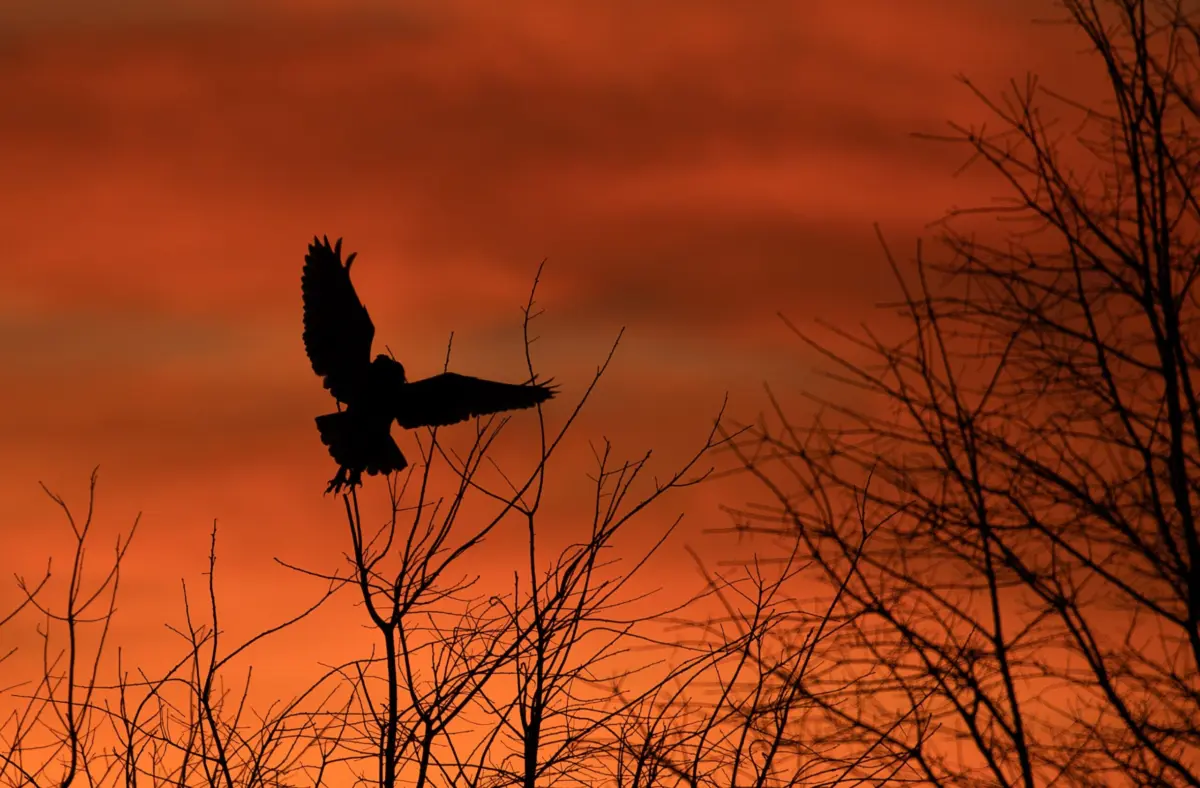
Upon arriving home, the tension escalated into the supernatural. Four glowing orbs—pulsing yellow with reddish tinges in the vehicle’s high beams—hovered in the air before her. As they drifted closer, the lights materialized into two massive owls, looming like living shadows and staring directly at her.
In Seminole tradition, the appearance of owls under such duress is rarely viewed as a coincidence. Shaken to her core, the grandmother interpreted the encounter as a direct warning, realizing the potential dangers that could have befallen her son had he been the one behind the wheel. Decades later, despite stepping away from certain traditional practices, that profound respect and wariness for the nocturnal birds remained intact.
The Editorial Fellowship and the Wall of Silence
Fast-forwarding to the winter preceding the author’s editorial fellowship with Audubon, the childhood memory resurfaced when her grandmother introduced the concept of the Stikini. Driven by a desire to document this cultural lore for the magazine, the fellow initiated a reporting process that quickly met institutional and community resistance.
Over several weeks, the author reached out to three community members for interviews. Two failed to respond entirely, while a third agreed to speak before ghosting the project. A conversation with her great-aunt, Sheila Little-Harjo, assistant chief of the tribe, provided vital context: people simply do not speak casually about the Stikini. The narrative carries a spiritual weight that demands silence, particularly among traditionalists who view the entity as an active, ongoing spiritual force.
Supporting Context & Metrics: The Anatomy of the Stikini and Cross-Cultural Owl Perspectives
To understand the avoidance surrounding the Stikini, one must examine the gruesome mechanics of the legend and how other Indigenous groups conceptualize the owl.
The Legend of the Stikini
In Seminole lore, transformation into a Stikini is not a casual magical feat; it is restricted to witches and medicine people wielding intense, dark spiritual abilities. To enact the shift, the practitioner must journey to an isolated area in the woods and physically expel their internal organs, rendering their human form malleable enough to cross the threshold into an animal.
This visceral transformation has inspired Indigenous artists, most notably the late Seminole and Muscogee Creek artist Kelly Haney, whose painting The Transformation depicts a man with an owl’s head kneeling near a forest stump. Once transformed, these entities seek vengeance, preying on individuals to steal and consume their hearts. Consequently, within certain pockets of tribal communities, sudden illnesses, unexplained deaths, and community strife are historically attributed to the presence or interference of a Stikini.
Duality Within the Seminole Tradition
Despite its association with witchcraft, the owl is not universally reviled within Seminole culture. Research into historical texts, such as Oklahoma Seminoles: Medicines, Magic, and Religion co-written by elder Willie Lena and researcher James H. Howard, reveals a protective counter-narrative.
Because owls are nocturnal—operating during the exact hours when malevolent forces and bad magic are believed to be most active—their feathers have historically been hung outside homes as a form of spiritual shielding. This duality reflects a broader pattern in Indigenous epistemologies: animals are rarely flattened into simple archetypes of "good" or "evil." Instead, they occupy nuanced spaces defined by respect, caution, and spiritual utility.
Intertribal Perspectives: Diné, Ojibwe, and Inuit Views
The fraught relationship with owls extends far beyond the Seminole Nation:
- Diné (Navajo Nation): Owls are widely understood as harbingers of death. An encounter with an owl serves as a stark warning to prepare for a looming loss within the family, community, or one’s own life.
- Ojibwe and Inuit: Conversely, these cultures often associate owls with the deceased, but through a more neutral or positive lens, viewing them as returning ancestral spirits or intermediaries for respected medicine practitioners.
These varied relationships have created complex operational challenges for modern conservation and educational centers attempting to engage Native visitors.
Official Statements & Institutional Insights
Public institutions working at the intersection of wildlife conservation and Indigenous culture have had to adapt thoughtfully to these deeply held beliefs.
The Tracy Aviary Center in Salt Lake City, Utah—situated near a large urban population of Diné and other Indigenous groups—pioneered Indigenous cultural programming to address the emotional and spiritual reactions of Native visitors to captive raptors. Daniel Hernandez, who served as the Aviary’s inaugural director of culture from 2022 to 2024 (writing under the pen name Arcia Tecun), documented these dynamics.
As a Winak (diasporic Mayan) individual who also spent time working within New Zealand’s Māori community, Hernandez observed firsthand how visitors reacted during guided tours that incorporated Indigenous perspectives on wildlife. Warned in advance about the owl enclosures, Native visitors exhibited starkly polarized reactions:
"I got different perspectives," Hernandez noted regarding guest reactions. "I think for some people, they’d be like, ‘Who’s gonna die in the family?’ And then for others, they were like, ‘Oh, thank you for the warning.’ So it was really interesting to see that, because I felt like it represented their different relationships with death."
Hernandez has also critiqued mainstream media representations of Indigenous spiritual practices. In popular series such as AMC’s Dark Winds, which depicts tribal police on a Navajo reservation, owl feathers are occasionally framed exclusively as tools for dark magic used by rogue medicine men. Hernandez emphasizes that this is an incomplete and often harmful flattening of complex cultural practices, noting that traditional medicine people and sacred items like owl feathers are frequently sources of profound healing and protection.
Future Outlook: Cultural Preservation in Modern Media
The tension between sacred secrecy and public representation is evolving rapidly, largely driven by Indigenous creatives entering mainstream media and reclaiming narrative sovereignty.
Notable examples of this cultural reclamation include:
- Reservation Dogs (FX): Co-created by Seminole and Muscogee Creek filmmaker Sterlin Harjo and Māori director Taika Waititi, the critically acclaimed series navigates Indigenous reservation life with sharp authenticity. In multiple episodes, owls appear with digitally blurred eyes—a deliberate stylistic choice designed to shield Indigenous viewers from having to make direct eye contact with a creature carrying such heavy spiritual implications. Furthermore, recurring characters use owl statues as perimeter guards to deter unwanted visitors, blending cultural motifs with dark, modern humor.
- Killers of the Flower Moon (Apple Original Films/Paramount): Martin Scorsese’s cinematic adaptation relies on an owl to signal an impending death within the Osage community, demonstrating how historical and spiritual elements are increasingly integrated into major motion pictures with tribal consultation.
Bridging the Generation Gap
For young Indigenous writers and researchers, navigating these intersecting worlds—balancing Western academic frameworks with traditional tribal knowledge—remains an ongoing exercise in identity formation. While the silence surrounding entities like the Stikini can complicate journalistic endeavors, it ultimately reinforces the enduring resilience of oral histories.
As the author discovered through her grandmother’s stories and subsequent research, the owl evolved from an eerie urban legend into a profound symbol of cultural perseverance. By engaging respectfully with these narratives, contemporary storytellers ensure that ancestral wisdom not only survives the modern era, but continues to serve as a vital link between generations.