
Executive Overview
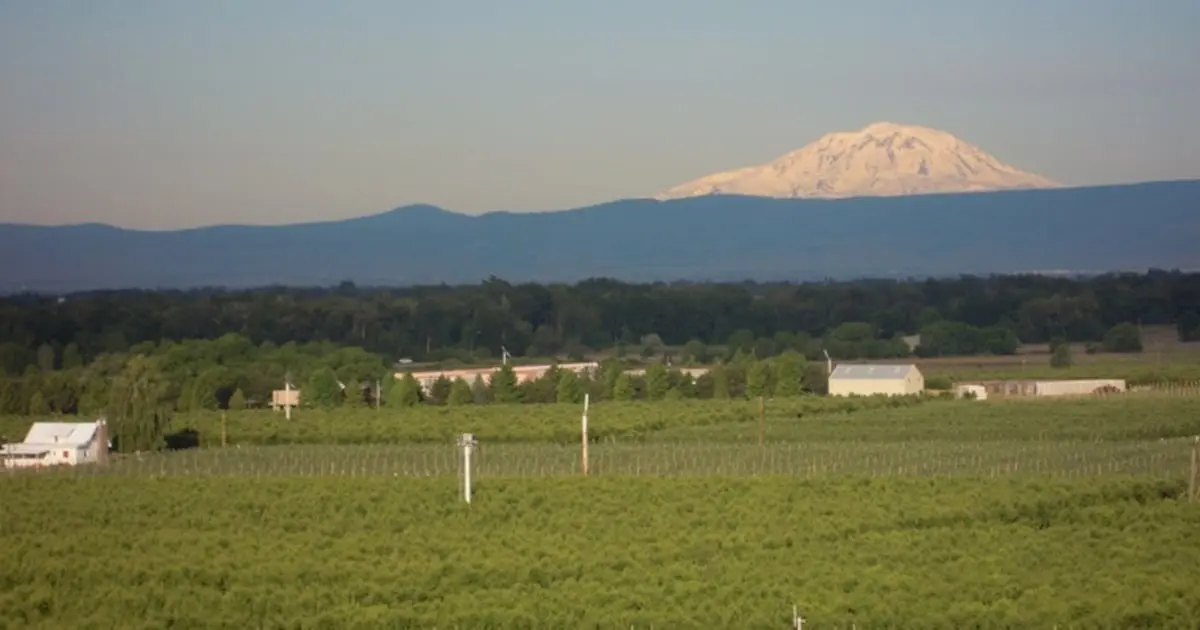
In a significant stride for the future of agricultural technology, agtech incubator Reservoir Farms has announced its official expansion into the Pacific Northwest. Revealed by founder and CEO Danny Bernstein at the prominent FIRA (Farming Intelligent Robotics and Automation) event, the upcoming facility in Yakima, Washington—slated to open in the spring of 2027—marks the organization’s second major expansion outside of California.
This strategic move brings Reservoir’s proven physical AI and agricultural automation testing model directly to the heart of some of the most complex, labor-intensive cropping systems in the world. Specializing in tree fruits, berries, wine grapes, and hops, Washington state represents a unique frontier for agtech innovation. By placing technology developers shoulder-to-shoulder with commercial growers, Reservoir aims to accelerate the transition of rugged robotics and artificial intelligence from speculative prototypes into reliable, production-ready farm tools.
Supported by strategic partnerships with regional heavyweights like the Washington Tree Fruit Research Commission, the Tri-City Development Council (TRIDEC), and the North American Blueberry Council, alongside crucial financial backing from industry leaders such as John Deere and Western Growers, the Yakima incubator is poised to redefine regional productivity. Furthermore, nascent discussions regarding collaborations with Washington State University (WSU) signal a robust academic integration that promises rigorous multi-season validation for emerging technologies.
Detailed Chronology: The Evolution and Expansion of Reservoir Farms
Building the Foundation in California and Arizona
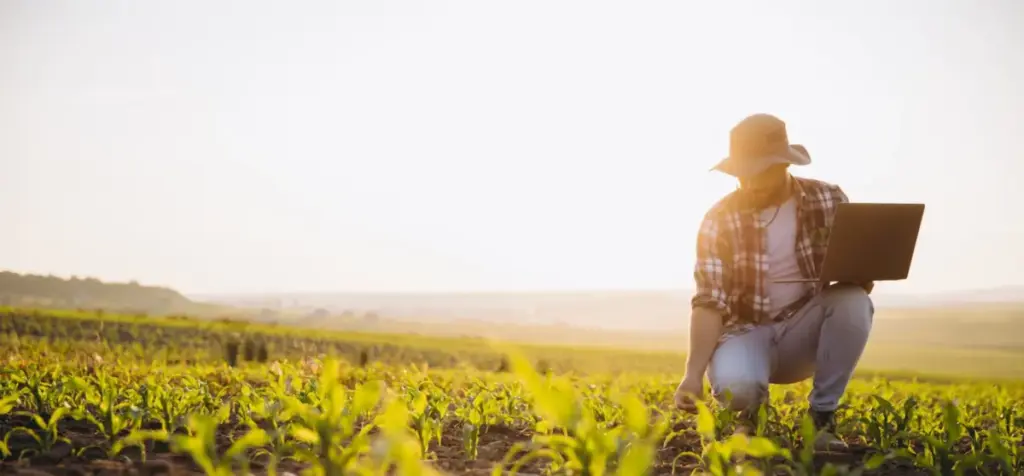
Reservoir Farms was established to bridge a critical chasm in the agtech ecosystem: the gap between software and hardware developers sitting in urban offices and the gritty reality of commercial farming. Traditionally, tech startups struggle to find suitable, scalable real estate where they can safely test autonomous machinery, computer vision systems, and automated harvesters on live crops without risking catastrophic crop loss or alienating commercial growers.
To solve this, Reservoir pioneered a multi-tier subscription service—including an accessible freemium model often likened to a "Spotify for farming innovation"—that grants over 30 startups operational access to dedicated farmland. By embedding these innovators within working agricultural ecosystems across its existing hubs in Salinas and Sonoma, California, as well as an expanding footprint in Arizona, Reservoir created a crucible where real-world feedback loops drastically shorten development cycles.
Momentum and Strategic Capital Infusions
The path to the Pacific Northwest has been paved with milestone achievements over recent years. Crucially, the organization received a massive vote of confidence when agricultural titan John Deere invested $10 million into Reservoir Farms, solidifying the incubator’s market validity and providing the capital runway necessary for large-scale geographic expansion. This capital injection, paired with foundational support from Western Growers, enabled Reservoir to refine its subscription offerings and scale its infrastructure to support increasingly complex hardware startups.
The FIRA Revelation and the Road to Spring 2027
The momentum culminated on October 20 at the FIRA event, where CEO Danny Bernstein took the stage to officially announce Yakima, Washington, as the home of Reservoir’s next major hub. The selection of Yakima is far from accidental; it places the incubator at the epicenter of the Pacific Northwest’s multi-billion-dollar specialty crop industry.
Between now and the grand opening in the spring of 2027, Reservoir is orchestrating a complex coalition of agricultural boards, economic development agencies, and academic institutions. Organizations such as the Washington Tree Fruit Research Commission and TRIDEC are actively laying the groundwork to ensure the facility integrates seamlessly into the regional economy. Early alumni of Reservoir’s incubator ecosystem—such as Bonsai Robotics and Sky Sense—alongside new members Cordon and Rootline, have already been slated to deploy technologies at the forthcoming Washington location.
Supporting Context & Metrics: Why Washington State?
The Specialty Crop Labor Crisis
To understand the profound impact of Reservoir’s expansion, one must examine the socioeconomic and operational realities of Washington agriculture. According to United States Department of Agriculture (USDA) data, Washington state is an agricultural powerhouse, producing roughly two-thirds of all commercial apples consumed in the United States. Furthermore, the state is a leading national producer of pears, sweet cherries, blueberries, and a premier cultivator of wine grapes and hops.
However, these specialty crops share a common operational Achilles’ heel: extreme labor dependency. Unlike broadacre commodity crops like corn and soybeans, which have experienced high rates of mechanization for decades, specialty crops require delicate handling, selective harvesting, and intricate canopy management.
Labor is currently the single largest and most volatile cost facing Washington growers. Amid shrinking domestic labor pools, rising minimum wages, and regulatory complexities, growers are caught in an economic squeeze. Automation is no longer merely a tool for efficiency; it is an existential necessity for farm survival in the Pacific Northwest.
The Engineering Challenges of Perennial Crops
Developing robotics and physical AI for tree fruit orchards, vineyards, and berry bushes presents engineering challenges orders of magnitude more difficult than flat-land row cropping. Consider the variables:
- Topography: Orchards and vineyards are frequently planted on sloped or rolling terrain, requiring advanced stability control for autonomous navigation.
- Canopy Density: Unlike an open field, multi-tiered tree canopies create complex lighting shadows, occlusions, and physical barriers that confound standard computer vision and robotic arms.
- Perennial Growth Cycles: Crops change drastically across seasons—from barren winter branches to dense summer foliage and delicate spring blossoms—demanding adaptive AI models that can generalize across changing environments.
By targeting these exact hurdles, Reservoir Farms is tackling the hardest automation problems in global agriculture. As Bernstein noted, placing ambitious builders directly on real farms where growers offer unfiltered, honest feedback is the only way to fast-track rugged physical AI from a fragile prototype to a production-ready machine.
Official Statements and Institutional Perspectives
The announcement of the Yakima incubator has generated widespread enthusiasm across agricultural research, economic development, and grower communities.
Naidu Rayapati, director of the WSU Prosser Irrigated Agriculture Research and Extension Center (IAREC), highlighted the immense value of bridging academia with private enterprise. In an official press release, Rayapati stated:
"Opportunities to bring ag-tech startups together with our faculty to evaluate emerging technologies across diverse cropping systems, including orchards and vineyards, could give growers valuable insights within a single growing season and rigorous validation over multiple seasons, helping them make informed decisions, reduce risks, and improve productivity and profitability."
This sentiment underscores the collaborative ethos driving the project. By potentially partnering with Washington State University, Reservoir will leverage decades of institutional agronomic knowledge, ensuring that incoming tech startups do not just build cool gadgets, but scientifically sound solutions tailored to regional soil, pest, and climate profiles.
Reflecting on the broader implications of the expansion, Danny Bernstein emphasized the validation of the Reservoir model:
"Tree fruit, blueberries, wine grapes and hops are some of the hardest crops in the world to automate, and labor is now the biggest cost Washington growers face. Expanding into the Pacific Northwest shows the Reservoir model is working. When you put builders on real farms with growers who will tell them the truth, rugged physical AI goes from prototype to production much faster."
Regional economic partners are equally galvanized. The Tri-City Development Council (TRIDEC) has committed substantial resources to the project, recognizing that nurturing the agtech sector will foster high-wage technology jobs, attract venture capital to the region, and secure the long-term economic viability of local farming communities.
Future Outlook: The Next Horizon in Agricultural Innovation
As the spring 2027 launch date approaches, the implications of Reservoir Farms’ expansion extend far beyond the borders of Washington state.
Accelerating the Physical AI Feedback Loop
The integration of startups like Bonsai Robotics, Sky Sense, Cordon, and Rootline into the Yakima ecosystem will test the limits of what autonomous vision systems and robotic manipulators can achieve in dense canopies. Because Reservoir’s subscription model removes the massive capital barrier of acquiring agricultural real estate, startups can iterate their software and hardware at unprecedented speeds. A bug discovered in an orchard prune-simulation on Tuesday can be patched via an AI model update and tested on living trees by Wednesday.
A Blueprint for Global Agtech Incubation
Reservoir’s multi-regional scaling—moving seamlessly from California’s central coast and desert valleys to Arizona and now into the cool, specialized orchards of the Pacific Northwest—proves that localized, farm-embedded incubation is a viable, scalable business model. If successful, the Yakima facility could serve as a global blueprint for how modern agriculture adopts disruptive technologies.
Empowering the Next Generation of Growers
Ultimately, the convergence of WSU’s academic rigor, John Deere’s industrial engineering scale, TRIDEC’s economic backing, and Reservoir’s incubator platform points toward a resilient future for specialty crop farming. Growers burdened by labor scarcity and unpredictable climate pressures will soon have access to a vetted arsenal of tools designed specifically for the nuanced demands of orchards and vineyards.
As physical AI transitions from science fiction to orchard reality, Reservoir Farms’ Yakima incubator stands at the vanguard—ensuring that the future of farming is built, tested, and proven in the dirt.