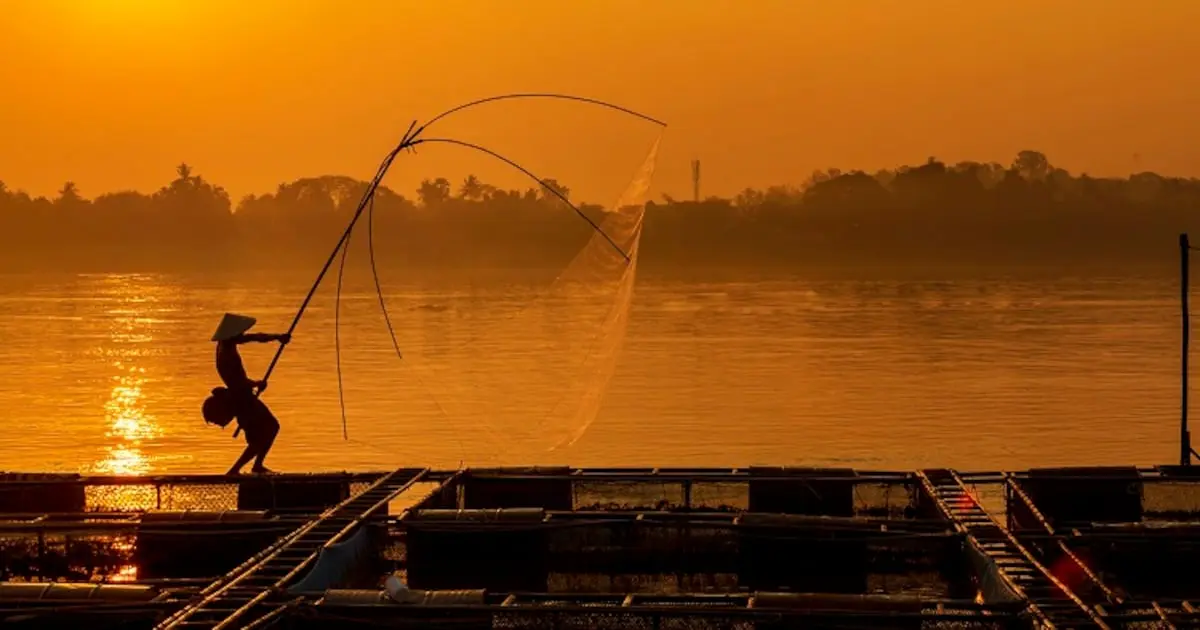

BANGKOK/CANBERRA — In a major international effort to safeguard one of the world’s most economically vital and ecologically diverse river basins, a coalition of Australian and Southeast Asian partners has officially launched FishTech Plus. This ambitious four-year, multi-million-dollar initiative is designed to tackle the mounting ecological crisis in the Mekong River Basin, where millions of people depend on freshwater fisheries for their daily nutrition, livelihoods, and cultural survival.
Jointly funded by the Australian Centre for International Agricultural Research (ACIAR) and the Australian Department of Foreign Affairs and Trade’s (DFAT) Mekong–Australia Partnership, FishTech Plus represents a critical evolution in bilateral and regional cooperation. Spanning from late 2024 through 2030, the programme will operate across four Lower Mekong nations: Laos, Cambodia, Thailand, and Vietnam.
Led by Australia’s Charles Sturt University in close collaboration with regional governments, academic institutions, and local communities, FishTech Plus builds directly upon the foundational successes of the original FishTech programme. That initial undertaking achieved remarkable milestones, successfully reconnecting more than 3,900 kilometers of vital river networks and restoring access to 14,000 hectares of critical aquatic habitats. However, with cumulative pressures from climate change, hydropower development, and aging infrastructure continuing to mount, the new initiative aims to scale up these interventions, introduce groundbreaking policy frameworks, and pilot a regional-first demonstration programme centered on the removal of obsolete barriers.
Executive Overview: The High Stakes of the Mekong Basin
The Mekong River Basin is often described as the beating heart of mainland Southeast Asia. Flowing over 4,900 kilometers from the Tibetan Plateau to the South China Sea, it supports a staggering biodiversity of freshwater fish species—second only to the Amazon River Basin. For the approximately 65 million people living within the Lower Mekong Basin, these waters are much more than a geographical feature; they are a fundamental pillar of human survival and regional stability.
Inland fisheries within the basin yield an annual catch estimated in the millions of tonnes, supplying up to 80% of the animal protein consumed by rural households in countries like Cambodia and Laos. Beyond macronutrients, these fisheries are a vital source of essential micronutrients—including iron, zinc, and omega-3 fatty acids—that combat hidden hunger and malnutrition in developing communities. Economically, the basin generates tens of billions of dollars annually, supporting commercial fisheries, aquaculture supply chains, and ecotourism.
Despite this immense value, the Mekong’s socio-ecological system is under severe strain. Over the past several decades, rapid economic development has transformed the river basin. Hundreds of mainstream and tributary dams, irrigation weirs, sluice gates, and water abstraction projects have been constructed to meet growing energy demands and expand agricultural irrigation. While these infrastructure assets have contributed to national electrification and food production goals, they have come at a devastating cost to the river’s ecological integrity.
Dams and weirs fragment river systems, interrupting the natural hydrological flows and blocking critical migration routes that hundreds of freshwater species rely on to complete their life cycles. Many economically and culturally significant fish species—such as giant catfishes, carps, and migratory cyprinids—must travel hundreds of kilometers upstream to spawn and downstream to feed in seasonal floodplains. When these pathways are blocked, populations plummet, collapsing the fisheries that vulnerable rural communities rely upon.
It is against this precarious backdrop that FishTech Plus was conceived. By combining advanced Australian engineering and fisheries science with deep local knowledge, the initiative seeks to strike a delicate balance between human development needs and ecosystem restoration, ensuring that the Mekong remains a living, productive river for generations to come.
Detailed Chronology: From Concept to Regional Rollout
The genesis of FishTech Plus is rooted in years of collaborative scientific research, field trials, and diplomatic engagement between Australia and its Mekong partners. Understanding the timeline and trajectory of this initiative illuminates the strategic depth of Australia’s long-term commitment to the region.
The Foundation: The Original FishTech Programme
Long before the inception of FishTech Plus, Australian agricultural and fisheries researchers—spearheaded by institutions like Charles Sturt University and supported by ACIAR—recognized that river fragmentation was the single greatest threat to inland fisheries in Southeast Asia. The original FishTech programme was launched to trial and adapt fish passage technologies—such as specialized fish ladders, vertical-slot fishways, and nature-like bypass channels—tailored to the unique hydrological conditions and species diversity of the Mekong.
Over its operational lifecycle, the initial FishTech project achieved transformative results:
- 3,900+ Kilometers Reconnected: By retrofitting existing irrigation weirs and barriers with engineered fish passages, the project restored ecological continuity across nearly 4,000 kilometers of river networks.
- 14,000 Hectares of Habitat Restored: Migratory fish regained access to critical upstream spawning grounds and seasonal wetland habitats covering 14,000 hectares.
- Capacity Building: Hundreds of local engineers, fisheries officers, and university students were trained in fish passage design, monitoring, and river management.
The Evolution: Designing FishTech Plus (2023–2024)
As the original FishTech programme concluded, participating governments and research teams evaluated its strengths and identified critical gaps that needed to be addressed. While building fish passages around barriers is effective in many contexts, researchers realized that a significant number of older irrigation structures had deteriorated to the point where they were no longer serving their original economic purpose. These abandoned or underperforming structures continued to block fish migration and degrade water quality while draining public funds for maintenance.
This realization catalyzed the conceptualization of FishTech Plus. Planning sessions throughout 2023 brought together ACIAR, DFAT, Charles Sturt University, and line ministries from Laos, Cambodia, Thailand, and Vietnam to draft a comprehensive four-year strategy. The new programme was designed not only to continue deploying fish passage technologies but also to introduce a pioneering focus on strategic infrastructure decommissioning and regional capacity building.
Official Launch and Current Phase (Late 2024)
The formal inauguration of FishTech Plus took place in late 2024, marked by a high-profile visit from Australia’s Minister for International Development, Anne Aly, to a flagship project site within the Mekong region. During her visit, Minister Aly underscored Australia’s steadfast dedication to partnering with Southeast Asian nations to address shared environmental challenges and promote sustainable, climate-resilient economic growth.
With funding secured and administrative frameworks established across all four participating countries, the programme has now entered its active implementation phase. Field teams are conducting baseline ecological assessments, engaging with local fishing communities, and identifying candidate structures for the upcoming weir removal demonstration trials.
Supporting Context & Metrics: The Science of River Connectivity
To fully appreciate the scope of FishTech Plus, it is necessary to examine the technical mechanics of river fragmentation and the empirical metrics driving the programme’s strategic interventions.
The Mechanics of River Fragmentation
River connectivity refers to the unhindered movement of water, sediments, nutrients, organic matter, and aquatic organisms throughout a river system. This connectivity operates in four primary dimensions:
- Longitudinal: Upstream and downstream movement along the main river channel and its tributaries (crucial for fish migration).
- Lateral: Exchange between the main channel and adjacent floodplains, wetlands, and riparian zones.
- Vertical: Interaction between surface water and groundwater aquifers.
- Temporal: Natural seasonal variations in flow rates and water levels that trigger biological responses like spawning.
When concrete dams and weirs are constructed across a river, they sever longitudinal connectivity. Even low-head weirs—often perceived as benign agricultural infrastructure—can create insurmountable velocity barriers or vertical drops that weak-swimming or small-bodied fish species cannot navigate. Furthermore, reservoirs behind these structures alter water temperatures, reduce dissolved oxygen levels, and trap nutrient-rich sediments that would otherwise fertilize downstream floodplains and deltas.
Economic and Ecological Metrics
The consequences of this fragmentation are starkly illustrated by regional data:
- Protein Dependency: In the Lower Mekong Basin, inland capture fisheries yield approximately 2 to 3 million tonnes of fish annually, representing an estimated first-sale value of $11 billion USD and serving as the primary source of animal protein for tens of millions of rural dwellers.
- The Decline: According to regional fisheries monitoring bodies, fish stocks in the Mekong have experienced significant declines over the past decade, driven by a combination of overfishing, sand mining, climate-induced droughts, and structural barrier proliferation.
- Cost-Benefit Imbalance of Aging Assets: ACIAR assessments indicate that many colonial-era and mid-20th-century irrigation weirs across Thailand, Vietnam, Laos, and Cambodia have deteriorated structurally. The ongoing cost of maintaining these dysfunctional assets frequently exceeds the agricultural value they provide to local farming communities, creating a compelling economic argument for their removal or substantial modification.
The Regional-First Weir Removal Demonstration Programme
A defining feature of FishTech Plus is its pioneering focus on barrier removal. While river restoration in Europe and North America has increasingly embraced the decommissioning of obsolete dams, this practice remains virtually unprecedented in the Lower Mekong Basin.
Under FishTech Plus, researchers will execute a regional-first demonstration programme to rigorously evaluate the environmental, hydrological, and socioeconomic impacts of removing selected obsolete weirs. The process will involve:
- Rigorous Screening: Identifying candidate structures where irrigation utility has ceased or shifted to alternative water sources.
- Baseline Monitoring: Conducting comprehensive pre-removal assessments of fish biodiversity, macroinvertebrate populations, water quality, and sediment transport.
- Controlled Removal and Post-Monitoring: Safely dismantling the structures and tracking ecological recovery rates over a multi-year period.
- Cost-Benefit Analysis: Quantifying the economic gains to local fisheries against the foregone localized irrigation benefits, providing empirical data to guide future government policy across the Mekong countries.
Official Statements and Stakeholder Perspectives
The launch of FishTech Plus has garnered strong endorsement from political leaders, international development agencies, academic researchers, and environmental scientists alike.
Jennifer Blair, ACIAR Fisheries Research Program Manager
Emphasizing the intrinsic link between ecological health and human well-being, Jennifer Blair noted that restoring river connectivity is not merely an environmental conservation exercise, but a fundamental prerequisite for regional food security and economic resilience.
"FishTech Plus will help communities and governments restore river connectivity while building the skills, partnerships, and evidence needed to manage these important waterways for the future," Blair stated during the programme’s rollout.
She added: "For millions of people in the Lower Mekong, inland fisheries provide an essential source of protein, nutrition, micronutrients, and income. As fish populations decline, households and communities become increasingly vulnerable, while river ecosystems lose resilience. This initiative provides practical, science-backed pathways to reverse those trends."
Dr. Lee Baumgartner, Charles Sturt University
As the academic institution leading the technical execution of the project, Charles Sturt University brings world-class expertise in freshwater ecology and fish passage engineering. Dr. Lee Baumgartner, a prominent researcher on the project, highlighted the collaborative ethos underpinning the initiative.
"The challenges facing river systems are increasingly shared across countries and regions," Baumgartner observed. "Through FishTech Plus, Australian research and practical experience will work alongside local knowledge to deliver solutions that support both healthy ecosystems and thriving communities throughout the Mekong."
Baumgartner emphasized that Australian waterways have faced similar challenges with agricultural and industrial river modification, providing Australian scientists with decades of hard-earned expertise in fishway design and weir management that can be thoughtfully adapted to tropical monsoon river systems in Southeast Asia.
Ministerial Endorsement: Australia’s Commitment to Regional Stability
Representing the Australian Government, Minister for International Development Anne Aly framed the initiative as a cornerstone of Australia’s enduring partnership with ASEAN and Mekong nations. By investing in sustainable natural resource management, Australia aims to support long-term stability, climate adaptation, and inclusive economic development across mainland Southeast Asia.
Future Outlook: A 2030 Vision for the Mekong Basin
As FishTech Plus embarks on its four-year operational window leading up to 2030, its stakeholders harbor a clear and ambitious vision for the future of the Mekong River Basin. Success will not be measured solely by the number of concrete barriers modified or removed, but by the systemic, long-term transformation of how governments and communities value and manage their freshwater resources.
Key Strategic Pillars for 2024–2030
- Infrastructure Optimization: Delivering targeted modifications, state-of-the-art fish passages, and strategic removals of obsolete weirs to maximize ecological connectivity.
- Evidence-Based Policy Support: Generating robust scientific data from the weir removal demonstration trials to inform national water resource policies, infrastructure planning guidelines, and environmental impact assessment (EIA) frameworks in Laos, Cambodia, Thailand, and Vietnam.
- Regional Capacity Building: Investing heavily in human capital through specialized professional training courses, university curriculum development, and graduate placement programmes that empower the next generation of Southeast Asian environmental scientists, hydrologists, and resource managers.
- Community Empowerment: Fostering grassroots stewardship by actively involving local fishing communities, indigenous groups, and agricultural cooperatives in the planning, monitoring, and management of restored river zones.
Navigating Complex Challenges Ahead
Despite the immense promise of FishTech Plus, project implementers acknowledge that significant challenges lie ahead. The Mekong Basin is subject to geopolitical complexities, rapid upstream dam construction outside the Lower Mekong region, and accelerating climate change impacts—including severe droughts and unpredictable monsoon flooding.
However, by fostering deep cross-border collaboration, grounding policy decisions in rigorous science, and championing innovative solutions like barrier decommissioning, FishTech Plus offers a beacon of hope. It demonstrates that with visionary leadership, international solidarity, and unwavering commitment to ecological stewardship, it is possible to heal fragmented river systems and secure a prosperous, food-secure future for the millions of people who call the Mekong basin home.