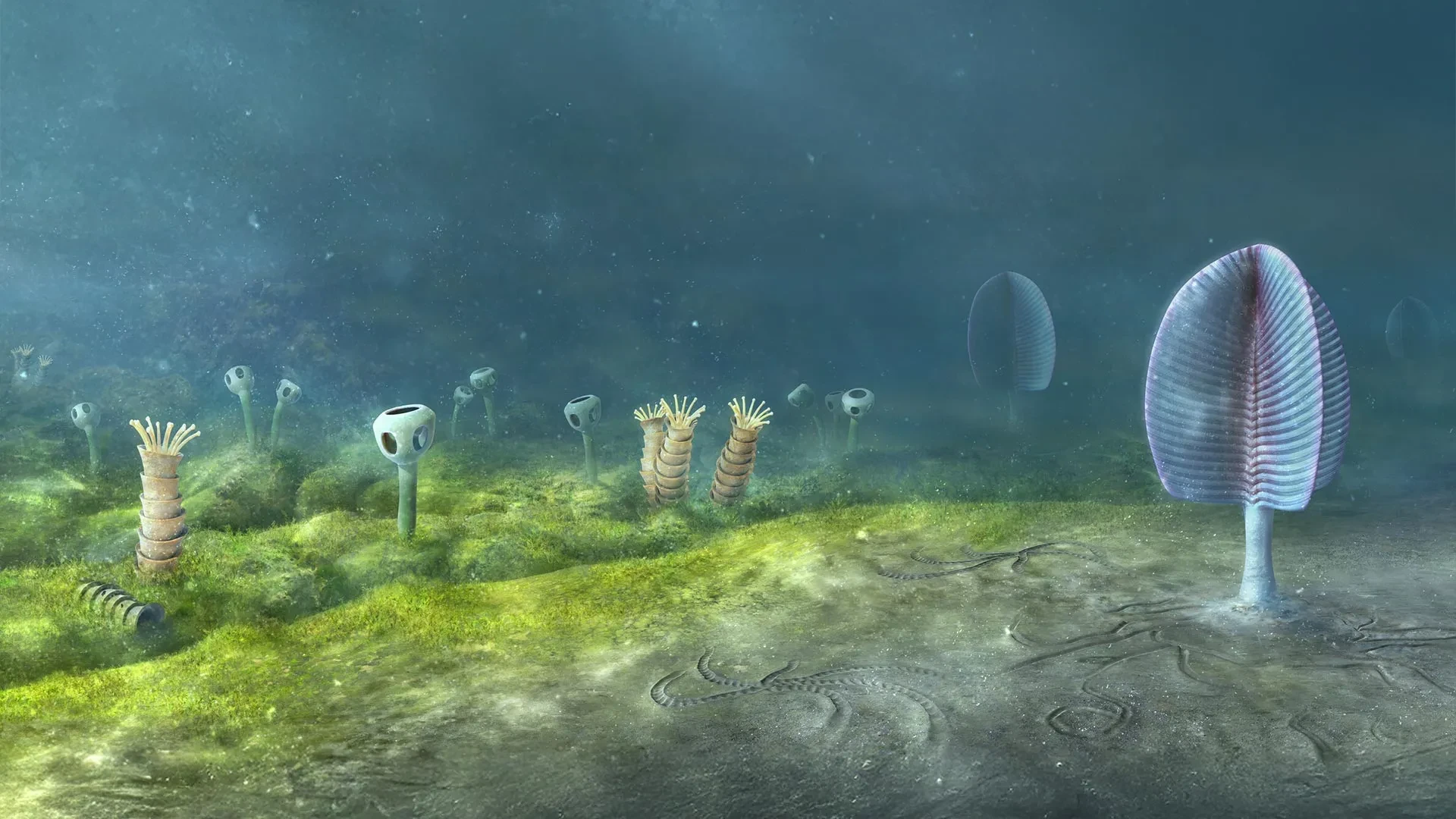

Executive Overview
For generations, evolutionary biologists and paleontologists have wrestled with one of the most stubborn paradoxes in the history of science: the sudden, dramatic appearance of complex animal life during the Cambrian Period, roughly 539 to 487 million years ago. While Darwin himself was deeply troubled by this seemingly abrupt flourishing of species—now known as the Cambrian Explosion—subsequent generations of scientists turned to the fossil record to anchor the timeline of early animal evolution. They reasoned that if a fossil deposit was exceptionally well-preserved and yet completely devoid of animal remains, it served as a hard geological ceiling, proving that animals simply had not yet evolved.
A groundbreaking study published on October 2 in Science Advances threatens to shatter this foundational assumption. Led by an international team of researchers from the University of Oxford, alongside colleagues from the University of California, Berkeley, ETH Zürich, and Yale University, the new research reveals that animals may have evolved up to 200 million years earlier than previously indicated by the physical fossil record.
At the heart of this paradigm shift is an analysis of the Kheseen Biota in Mongolia—a remarkably preserved assemblage of microfossils that proves exceptional preservation is not a guarantee of animal fossil inclusion. By breaking the long-held assumption that the absence of animal remains equals the absence of animals, the research team has unlocked a new molecular-clock timeline. This recalibration pushes the potential origin of the animal kingdom deep into the Neoproterozoic Era, placing the dawn of animal life between 800 and 700 million years ago. This radical adjustment suggests that the earliest multicellular fauna may have preceded, or perhaps even weathered, some of the most catastrophic global climate crises in Earth’s history: the extreme ice ages of the "Snowball Earth" era.
Detailed Chronology: Unraveling the Evolutionary Timeline
To understand the magnitude of the recent discovery, one must trace the timeline that paleontologists have meticulously constructed over the past century. Traditionally, the evolutionary history of life on Earth has been mapped using two primary methodologies: the physical fossil record (body fossils, trace fossils, and microfossils) and molecular clocks (which calculate divergence times based on genetic mutations in living descendants). For decades, these two methods have frequently danced around a frustrating temporal mismatch.
The Ediacaran Anomaly and the Weng’an Biota
The Ediacaran Period (spanning from 635 to 539 million years ago) immediately precedes the Cambrian. It is populated by enigmatic, soft-bodied organisms known as the Ediacaran biota. Within this period lies a crucial benchmark: the Weng’an Biota in South China, a fossil deposit roughly 590 million years old.
The Weng’an Biota is famous among paleontologists for its exceptional preservation. It contains microscopic organisms, algae, and protozoans preserved in astonishing, cellular-level detail through rapid fossilization in phosphate. Because the deposit is so pristine, scientists have long argued that if animals—even microscopic or simple larval forms—had existed at that time, the Weng’an Biota would have captured them. The absolute absence of definitive animal fossils in Weng’an thus became a cornerstone assumption: it was used as a maximum age constraint, effectively capping the birth of the animal kingdom to a window shortly after 590 million years ago.
The Kheseen Biota Breakthrough
The new study targeted this foundational assumption by examining an entirely different, exceptionally preserved fossil assemblage: the Kheseen Biota in Mongolia.
The Kheseen Biota is roughly 40 million years younger than the Weng’an Biota, dating to a time when undisputed animal fossils—such as early sponges and bilaterians—were already thriving in other marine environments around the globe, including sites in Namibia and South China. Furthermore, the Kheseen and Weng’an deposits share several common species of microfossils, making them ideal for comparative analysis.
An international team of researchers collected more than 140 samples from the Kheseen Biota, including materials from previously undocumented geological locations. Utilizing advanced scanning electron microscopy (SEM), the team uncovered a wealth of exquisitely preserved microfossils. These included acritarchs—tiny, spherical organisms adorned with intricate spines and branching projections—alongside complex, embryo-like fossils containing distinct internal cells.
Despite the breathtaking preservation quality of the Kheseen microfossils, not a single specimen could be definitively identified as an animal.
This discovery delivered a vital empirical blow to historical assumptions. As Senior Author Associate Professor Ross Anderson of the Oxford University Museum of Natural History explained, "The Kheseen Biota breaks the argument that the exceptional microfossils of Weng’an mean we would have seen animal fossils in the assemblage had they existed at the time. The Kheseen microfossils are just as well-preserved, yet animals continue to be absent—despite the fact we know at that point they existed."
Recalibrating the Molecular Clock
Because animals were definitively alive and swimming in Earth’s oceans when the Kheseen Biota formed, yet still failed to appear in its fossil record, the logical foundation supporting Weng’an crumbled. The absence of animal fossils in a given deposit can no longer be used as ironclad proof that animals had not yet evolved.
With this constraint removed, the research team turned their attention to much older geological formations dating between 850 and 730 million years ago. These included:
- The Svanbergfjellet Formation in Norway,
- The Bitter Springs Group in Australia, and
- The Chuar Group in Arizona, USA.
These ancient, fossil-rich deposits possess the environmental and chemical characteristics capable of preserving microscopic life, yet they have yielded no confirmed animal fossils. Historically, scientists used these older sites as ultimate maximum age boundaries for animal origins.
Feeding these older geological constraints into sophisticated molecular-clock models—which combine genetic difference metrics from living species with fossil dates and estimated mutation rates—yielded a stunning result. When researchers anchored their models to these older formations rather than the younger Ediacaran Weng’an site, the estimated origin of the animal kingdom was shoved backward by roughly 200 million years. The new mathematical consensus places the emergence of animals firmly between 800 and 700 million years ago.
Supporting Context & Metrics
To appreciate the scale of this scientific revision, it is necessary to examine the physical, chemical, and geological metrics that frame the early evolution of life on Earth.
The Fragility of Early Life
Why did early animals leave such a sparse trace in the deep geological record? The answer lies in their biology and ecology. The earliest ancestral animals were overwhelmingly small, fragile, and soft-bodied. Lacking mineralized shells, rigid exoskeletons, or calcified bones, these organisms possessed a vanishingly low fossilization potential.
For an organism to become a fossil, a rare alignment of biological, environmental, and chemical conditions must occur almost immediately after death:
- Rapid Burial: The organism must be buried rapidly out of reach of scavengers and oxygen-breathing decomposers.
- Favorable Sedimentation: Fine-grained sediments or rapid mineral precipitation (such as phosphatization or silicification) must permeate the tissues before decay sets in.
- Geological Stability: The host rock must survive hundreds of millions of years of tectonic heat, pressure, and erosion without destroying the delicate micro-structures within.
Even if early animals populated the globe 800 million years ago, their ecological niches may have been restricted to environments unsuited for fossilization, or their populations may have been too sparse to leave a measurable physical record.
Chemical Fossils and Biomarkers
While body fossils have proven elusive, indirect evidence for an older animal kingdom has been mounting for years through organic geochemistry. Scientists analyze ancient sedimentary rocks for biomarkers—complex organic molecules derived from biological compounds, such as specific lipids or sterols produced exclusively by certain groups of organisms.
Biomarker studies of ancient rocks have repeatedly identified chemical signatures consistent with the presence of demosponges living at least 650 million years ago. This chemical evidence pushes the timeline tens of millions of years deeper into the past than the oldest definitive macroscopic animal body fossils, serving as an independent bridge supporting the newly expanded molecular-clock timeline.
The "Snowball Earth" Connection
Pushing the origin of animals back to the 800–700 million-year window introduces a profound environmental paradox. Around 720 million years ago, Earth plunged into the Cryogenian Period, triggering global ice ages often referred to as "Snowball Earth." During these extreme intervals, massive glaciers marched down to the equator, and the planet’s oceans may have been largely encased in thick sheets of ice.
Historically, scientists debated whether such catastrophic, globally hostile conditions would have entirely prevented the origin of complex multicellular life or triggered mass extinctions of early fauna. However, the new timeline suggests that animal life either managed to originate before Snowball Earth and somehow survived the deep freeze in glacial refugia (such as equatorial open-water patches, volcanic hot springs, or ice-shelf cavities), or that the environmental stress of the Cryogenian actually catalyzed the evolutionary innovations that birthed the animal kingdom.
Official Statements and Academic Insights
The implications of the Oxford-led study have reverberated across the global paleontological community, prompting reflections on how science reconstructs deep-time history.
Orin Lole Durbin, a PhD student at the University of Oxford who served as an undergraduate researcher on the project and is now at Virginia Tech, emphasized the nuanced nature of the findings:
"Pre-Ediacaran animal body fossils still elude us, and this analysis does not prove that animals existed 800 million years ago. However, our new fossil evidence from Mongolia undermines one of the main arguments for restricting animal origins to the Ediacaran interval. Meanwhile, our molecular-clock analyses show how much further back their evolutionary history could extend."
Associate Professor Ross Anderson underscored the shift in methodological philosophy required by the work:
"The Kheseen Biota breaks the argument that the exceptional microfossils of Weng’an mean we would have seen animal fossils in the assemblage had they existed at the time. The Kheseen microfossils are just as well-preserved, yet animals continue to be absent—despite the fact we know at that point they existed."
Looking toward the future of the discipline, Professor Anderson noted the limitations of current datasets while issuing a call to action for field researchers:
"Until that evidence becomes available, the precise birth date of the animal kingdom remains uncertain."
Future Outlook: The Quest for the First Animals
As the scientific community digests the implications of the Kheseen Biota research, the hunt for the earliest animals enters an exciting new phase. Paleontologists and geobiologists recognize that unlocking the true genesis of the animal kingdom will require a multidisciplinary approach that moves beyond traditional fossil hunting.
1. Expanding the Search Matrix
Future expeditions must scour sedimentary basins across a vastly wider array of geographic locations, paleolatitudes, and depositional environments. By examining strata formed in deep-water basins, shallow coastal shelves, and restricted ancient lagoons, researchers can better understand how localized environmental conditions biased the fossil record.
2. Multiproxy Integration
The next generation of paleontology will rely heavily on cross-referencing multiple independent lines of evidence. This means simultaneously analyzing:
- Body Fossils: Continuing the meticulous microscopic and macro-scale examination of Ediacaran and pre-Ediacaran rocks.
- Trace Fossils: Searching for subtle burrows, tracks, or behavioral markings left by soft-bodied worm-like organisms long before they evolved hard shells.
- Chemostratigraphy and Biomarkers: Refining organic geochemical techniques to trace metabolic byproducts and cellular lipids through older Precambrian strata.
3. Advanced Imaging Technologies
The deployment of non-destructive, high-resolution imaging tools—such as synchrotron radiation X-ray tomographic microscopy (SRXTM) and advanced scanning electron microscopy—will allow scientists to peer inside opaque rock matrices without destroying rare fossil samples. These technologies may yet reveal microscopic larval stages or hidden cellular architectures in rocks that previously appeared barren.
Conclusion
The research published in Science Advances marks a humbling and exhilarating turning point for evolutionary science. By dismantling the long-standing assumption that pristine preservation equals a complete census of past life, the study frees scientists from the constraints of an incomplete fossil record. Whether animals first stirred in the warm, shallow seas of a pre-Cryogenian Earth 800 million years ago remains a mystery waiting to be solved. Yet, one thing is certain: the story of our collective ancestry is far deeper, more resilient, and more ancient than science ever dared to imagine.