
August 17, 2026 — For decades, standard operating procedure in the animal training world was governed by a relentless, high-repetition workout model. Traditional behaviorism assumed that learners needed a high volume of trials, with each correct action rewarded by a tiny, incremental morsel of food—much like a human hitting the gym for endless, low-weight reps.
However, a groundbreaking study published in Science in May 2026 has completely upended this conventional wisdom. Researchers Gong, Martell, Dudman, and Coddington demonstrated that deploying "very large" rewards—magnitudes larger than standard treats—substantially accelerates learning, improves task efficiency, sustains engagement, and yields continuous cross-session improvements.
This revelation bridges the gap between hard neuroscience and centuries-old dog training lore, specifically validating the controversial practice of the "Jackpot."

Executive Overview
The May 2026 Science study challenges the foundational assumptions of incremental reinforcement schedules. By examining how animal brains react to drastically increased reward magnitudes, researchers discovered that learning efficiency is not merely a byproduct of trial frequency. Instead, it is governed by three critical neural components:
- The learning rate itself.
- The capacity to carry over and consolidate learned improvements from prior sessions.
- The extent of sustained engagement in a given task.
When researchers introduced rewards one to two orders of magnitude larger than standard baseline treats, all three components saw exponential improvements. The biological driver behind this transformation is the sustained activation of dopamine (DA) neurons during reward consumption.
For animal trainers, this study provides long-sought empirical backing for the use of "Jackpots"—giving an animal an unusually large or prolonged reinforcement for a stellar response. While critics have historically dismissed Jackpots as human sentimentalism lacking scientific proof, this new neurological data suggests that massive rewards trigger a dopamine surge that fundamentally reorganizes how animals process and retain information.

Detailed Chronology: From Lab Bench to Dog Park
To understand the weight of the 2026 study, it is helpful to trace the evolution of reward-based training and how neuroscience has gradually caught up with empirical observations in the field.
Phase 1: The High-Repetition Paradigm
For the latter half of the 20th century, animal training relied heavily on operant conditioning models popularized by B.F. Skinner and later adapted for domestic pets. The prevailing dogma suggested that shaping complex behaviors required breaking tasks down into microscopic steps. Trainers doled out hundreds of tiny, pea-sized treats to maintain an animal’s attention over long periods.
Phase 2: The Birth of the "Jackpot" Debate
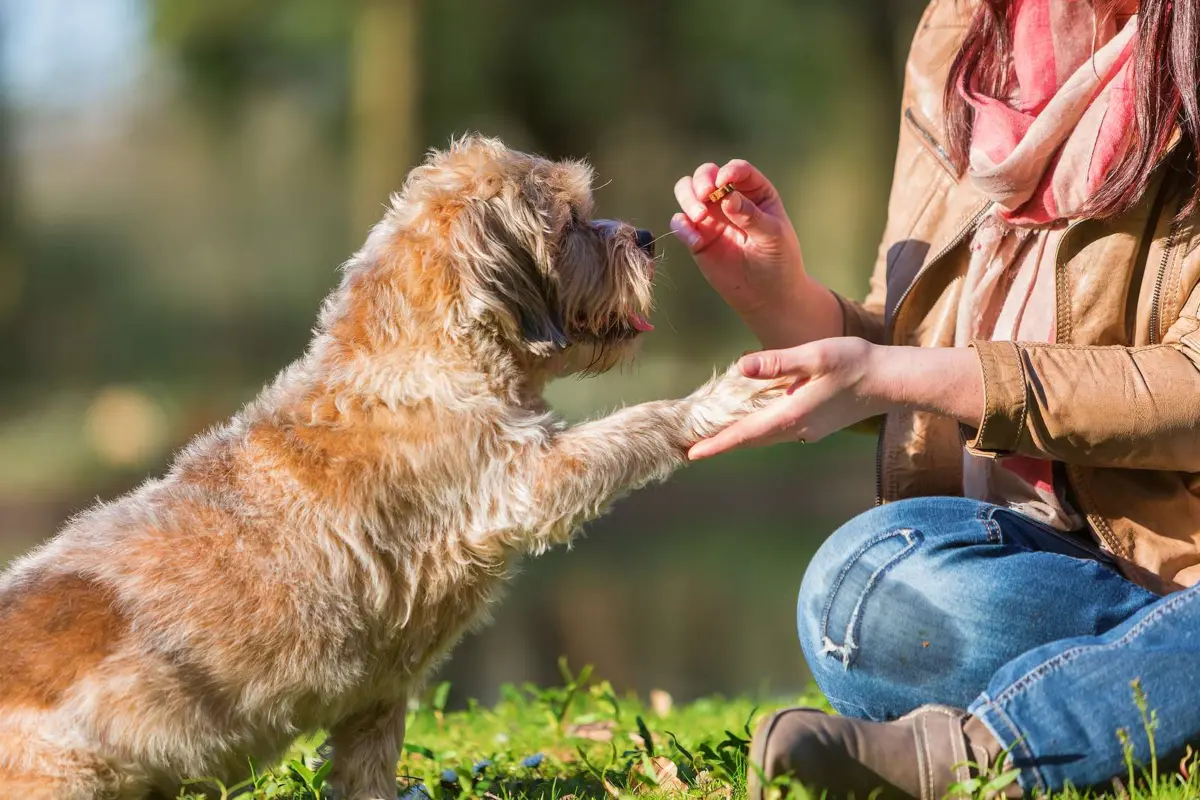
As positive reinforcement grew in popularity among pet owners and professional trainers alike, informal techniques began to circulate. Among them was the "Jackpot"—delivering an unexpected deluge of treats or high-value food items for an exceptional breakthrough.

However, a divide emerged in the "dogosphere." Skeptics argued that Jackpots were nothing more than psychological crutches for humans, providing a "feel-good" moment without measurable utility. Others debated the mechanics: Is it better to give a handful of treats all at once, or feed them in rapid succession? Lacking concrete neurobiological data, trainers operated purely on intuition and anecdotal success.
Phase 3: The May 2026 Science Breakthrough
Published in May 2026, the study by Gong et al. injected hard science into the debate. While conducted primarily on murine models, the research revealed that scaling up reward magnitude by one to two orders of magnitude fundamentally altered neural processing.
Rather than a brief flash of chemical release, massive rewards produced longer, more sustained activity in dopamine neurons while the animal consumed the reward. This neurological "spike and stretch" laid the groundwork for faster acquisition, better retention, and heightened enthusiasm.

Supporting Context & Metrics: Decoding the Dopamine Response
To fully appreciate why massive rewards work, one must look beyond the food bowl and into the brain chemistry of motivation.
The Real Role of Dopamine
Dopamine is frequently mischaracterized in popular media as the "pleasure hormone." In reality, pioneering neuroscientists like the late Jaak Panksepp identified dopamine as the primary driver of motivational salience—often referred to as the "seeking" system.
Dopamine does not simply register that an animal likes something; it drives the animal to want it, to search for it, and to invest cognitive and physical energy into repeating the behavior that secured it.

Metrics of Learning Efficiency
According to Gong, Martell, Dudman, and Coddington (2026), the efficiency of learning under varying reward structures can be mathematically and functionally broken down into distinct metrics:
- Neural Firing Duration: Large rewards induced prolonged DA neuron activation during the consumption phase. This extended neurochemical bath gives the brain more time to stamp down the synaptic connections associated with the preceding behavior.
- Cross-Session Retention: Animals exposed to large-magnitude rewards did not just perform better in the moment; they started subsequent training sessions at a higher baseline of competence. They captured and retained improvements from past days far more effectively than their small-reward counterparts.
- Task Fatigue Mitigation: Animals receiving large rewards remained engaged significantly longer, resisting the cognitive burnout typically associated with repetitive training loops.
The Border Collie Analogy: Extending Beyond Food
The implications of this research extend far beyond food-based clicker training. Consider the traditional wisdom of elite Border collie handlers working on complex livestock maneuvers.
During grueling training sessions, handlers often alternate between difficult, high-concentration tasks and simple exercises. However, they traditionally conclude the session with the ultimate reward: a long, uninhibited outrun and fetch. The handler steps back, stops issuing corrections, and lets the dog work independently for an extended period.

Is this long, autonomous run essentially a behavioral jackpot? Neurologically speaking, the prolonged engagement and intrinsic satisfaction of executing a deeply ingrained, high-drive instinct mimics the exact sustained dopamine activity observed in the 2026 study.
Official Statements and Academic Perspectives
While the academic community has embraced the findings of Gong et al. as a masterclass in behavioral neuroscience, applied animal behaviorists are grappling with how to translate laboratory findings into everyday pet training.
Dr. Patricia McConnell, a noted applied animal behaviorist and author, reflects on the shift in perspective:

"I have used Jackpots for decades, but have advised, admittedly with no data behind it, that it is more effective to give dogs multiple treats one after the other, rather than a handful of treats after one behavior. I honestly was playing this by gut and experience… In my experience, dogs appear to be astounded by them. They’ll gobble one treat after another given in rapid succession, then look at me with huge eyes, as if astounded."
McConnell highlights the observable physical shift in animals receiving massive rewards—changes in facial expression, posture, and intense eye contact—that mirror the outward manifestations of a localized dopamine surge.
However, researchers and practitioners alike issue one important caveat: the current research was conducted on mice. While the underlying mammalian neurobiology of dopamine is remarkably conserved across species, translating these exact scaling metrics directly to domestic dogs requires targeted replication.

Future Outlook: The Next Frontier in Canine Science
As the dust settles on the May 2026 Science publication, the animal training and neuroscientific communities are eyeing the horizon for necessary next steps.
1. Replicating the Study in Canines
The single most pressing request from applied behaviorists is for academic institutions to replicate the Gong et al. study using domestic dogs (Canis lupus familiaris). Dogs present a unique evolutionary model due to their close co-evolution with humans and exceptional social-cognitive abilities. Testing how varying reward magnitudes impact canine learning curves, memory consolidation, and engagement could yield the first empirical framework for optimal dog-training reward structures.
2. A Call for PhD Dissertations
For graduate students and researchers currently hunting for dissertation topics, the intersection of reward magnitude, dopamine dynamics, and domestic animal learning offers a fertile, highly publishable frontier. Understanding whether a single massive reward outperforms rapid-fire smaller rewards in dogs—and defining the exact threshold where diminishing returns begin—remains an open question.

3. Modernizing Practical Training Curricula
Until canine-specific neuroimaging data catches up with rodent models, professional trainers can safely integrate the principles of the 2026 study into their methodologies. Strategic deployment of high-value Jackpots—whether through exceptionally rich food rewards or long-duration autonomous play—may significantly shorten training timelines, prevent burnout, and foster more resilient, enthusiastic learners.
The gym-workout model of endless, monotonous repetitions may finally be taking a backseat. By understanding the profound neurological power of the dopamine surge, trainers and pet owners alike can work smarter, not harder, unlocking their animals’ full potential one well-timed jackpot at a time.