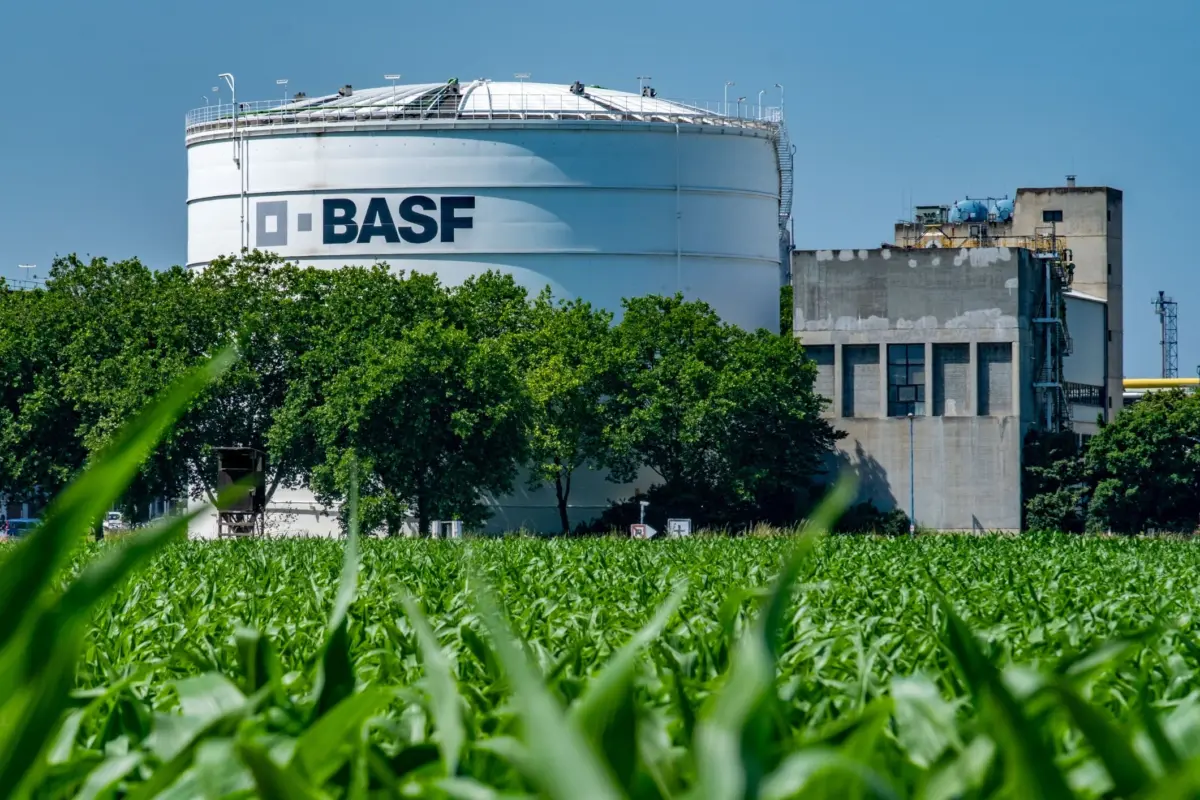

FRANKFURT — Chemical giant BASF is aggressively advancing one of the most significant corporate restructuring efforts in the global agricultural sector. Despite a challenging macroeconomic landscape and a steep year-on-year drop in third-quarter revenues for its flagship seed and crop protection arm, company executives have reaffirmed their absolute commitment to carving out the Agricultural Solutions division.
During a recent earnings briefing detailing the company’s financial performance, Chief Executive Officer Markus Kamieth and Chief Financial Officer Dirk Elvermann projected an authoritative stance: the colossal structural separation is approximately 80% complete, placing the standalone entity firmly on schedule to achieve full Initial Public Offering (IPO) readiness by the middle of 2027.
The high-stakes corporate maneuver aims to decouple one of the world’s preeminent agricultural suppliers from its parent chemical conglomerate. By establishing an independent legal and operational framework, BASF intends to unlock hidden value, allowing the agricultural business to compete more dynamically against heavyweights in the global seed and crop protection markets.
Executive Overview: The Anatomy of a High-Stakes Spin-Off
The decision by BASF to untether its Agricultural Solutions unit is not merely a routine portfolio adjustment; it is a fundamental reimagining of how capital, resources, and strategic focus are deployed within the agriculture and specialty chemical sectors. For decades, the division has operated under the vast umbrella of BASF’s integrated Verbund production system—a manufacturing model that maximizes efficiency by sharing raw materials and energy across interconnected facilities.
However, the dynamics of the modern agricultural inputs market—characterized by rapid technological shifts, complex biological innovations, intense generic competition, and shifting geopolitical trade routes—demand a distinct agility. Standalone agribusinesses, such as Corteva Agriscience or FMC Corporation, operate with distinct capital structures and investment priorities that differ fundamentally from traditional commodity and specialty chemical manufacturers.
By driving toward a public listing, BASF leadership is betting that institutional investors will ascribe a higher valuation multiple to a pure-play global agribusiness than to a division buried inside a diversified chemical conglomerate. As Chief Financial Officer Dirk Elvermann noted during discussions with financial analysts, the company views Agricultural Solutions as a "very good and strong business." The upcoming Capital Markets Day in November is anticipated to provide institutional stakeholders with an exhaustive look at the division’s standalone financials, asset quality, and long-term growth vectors.
Detailed Chronology: Charting the Path to Independence
The journey toward an independent Agricultural Solutions entity has been methodical, complex, and executed against a backdrop of shifting agricultural cycles. To understand the gravity of the 2027 IPO target, one must examine the operational milestones that have defined the carve-out process thus far.
Phase One: Strategic Conception and Legal Unbundling
The foundational groundwork for the separation began long before it was aggressively publicized. Transforming a globally integrated division into a standalone legal entity requires dismantling and rebuilding supply chains, regulatory registrations, intellectual property portfolios, and human resource structures across dozens of jurisdictions.
BASF management initiated the complex legal restructuring required to silo the agricultural assets away from the core chemical businesses. This phase involved untangling shared patent pools, re-allocating global research and development facilities, and establishing distinct governance structures capable of operating independently upon public flotation.
Phase Two: Enterprise Resource Planning (ERP) Migration
One of the most delicate and mission-critical milestones in any large-scale corporate carve-out is the decoupling of legacy IT infrastructure. For BASF’s agricultural business, this culminated in a major Enterprise Resource Planning (ERP) software migration that went live on July 1.
The complexity of shifting millions of data points, customer accounts, procurement logs, and logistical workflows across global hubs inevitably caused operational ripples. Management explicitly noted that the migration created a temporary distortion in sales timing, as certain distributors and regional clients pulled orders forward into the second quarter to circumvent potential operational friction associated with the July cutover. Consequently, this engineered a predictable, albeit temporary, drag on third-quarter reported revenues.
Phase Three: Reaching the 80% Milestone
With the major technical hurdles—including the July 1 ERP migration—now firmly in the rearview mirror, executive leadership confirmed that the carve-out is roughly 80% complete. The remaining 20% of the work focuses primarily on finalizing standalone corporate governance frameworks, optimizing capital structures, completing residual asset transfers, and preparing the exhaustive documentation required by regulatory authorities and securities exchanges ahead of the mid-2027 IPO window.
Supporting Context & Metrics: Navigating a Difficult Market Cycle
While the structural decoupling of Agricultural Solutions presses ahead with mechanical precision, the operational environment in which the business currently operates has proven remarkably unforgiving. BASF’s third-quarter financial results underscore the severe cyclical pressures facing the global agricultural inputs sector.
A Steep Third-Quarter Slump
During the third quarter, Agricultural Solutions reported revenues tumbling by nearly 20% year-on-year down to €1.4 billion. This contraction was not driven by structural market share losses, but rather by an acute confluence of macroeconomic headwinds, volume contractions, and adverse weather events—particularly within the vital South American agricultural corridor.
+--------------------------------------------------------------------------+
|                 BASF Agricultural Solutions Q3 Metrics                   |
+--------------------------------------------------------------------------+
| Metric                     | Performance / Status                        |
+----------------------------+---------------------------------------------+
| Q3 Sales                   | €1.4 billion (~20% YoY decline)             |
| Primary Drag Factors       | South American market pressure, weather     |
| ERP Migration Status       | Successfully completed July 1               |
| Carve-Out Progress         | ~80% complete                               |
| Target IPO Readiness       | Mid-2027                                    |
+--------------------------------------------------------------------------+
The South American Crucible
South America remains a primary battleground for the world’s leading seed and crop protection companies. However, the region has been battered by a toxic mix of lower farm incomes, erratic weather patterns driven by shifting climatic cycles, and intense commercial pricing pressure.
"In South America, the business as a whole is difficult for the whole industry," CFO Dirk Elvermann remarked during the earnings call, pointing to how local grain price fluctuations and high input inventories have forced growers to adopt an exceptionally cautious purchasing posture. Farmers across Brazil, Argentina, and neighboring nations have pulled back on discretionary spending, delaying applications and trimming input volumes to preserve liquidity.
Furthermore, the aforementioned inventory adjustments and the front-loading of sales ahead of the July ERP transition exacerbated the headline revenue drop in the third quarter. However, with the software migration successfully executed and technical friction eliminated, management anticipates a robust rebound.
Official Statements and Strategic Commentary
The strategic rationale articulated by BASF’s executive team reveals a resolute leadership style unfazed by short-term sectoral turbulence.
CEO Markus Kamieth on Long-Term Vision
Addressing financial journalists and analysts, CEO Markus Kamieth projected absolute confidence in the timeline, emphasizing that cyclical market dips do not alter the strategic necessity of the spin-off.
"The preparations for the planned IPO of Agricultural Solutions are on track, giving us confidence that the business will be IPO-ready by mid-2027," Kamieth stated during the earnings conference.
Kamieth’s commentary underscores a core corporate philosophy: structural transformations designed to unlock multi-year shareholder value must be insulated from the inevitable short-term volatility of agricultural commodity cycles and regional weather anomalies.
CFO Dirk Elvermann on Operational Resilience
Chief Financial Officer Dirk Elvermann provided granular insight into the mechanics of the separation and the near-term operational outlook. Addressing the challenges posed by the ERP migration and regional market weakness, Elvermann sought to reassure the investment community.
"The technical problems are behind us," Elvermann asserted, pointing directly to the successful completion of the July 1 IT cutover. He further emphasized the intrinsic quality of the assets being packaged for public markets: "It is a very good and strong business."
When pressed by analysts regarding industry-wide valuations—specifically concerning market speculation surrounding peers like Syngenta and how BASF’s agricultural arm will be benchmarked—Elvermann urged caution. He noted that direct, apples-to-apples comparisons are inherently problematic due to structural divergences in regional footprints, distinct product portfolios, and varying weightings between proprietary seed genetics and chemical crop protection lines. Nonetheless, he confirmed that BASF is closely monitoring peer multiples to optimize the eventual pricing and structural execution of the public offering.
Future Outlook: Positioning for the 2027 Public Debut
As BASF looks past the immediate challenges of the third quarter, attention is rapidly shifting toward the catalysts that will define the trajectory of Agricultural Solutions over the next thirty-six months.
Anticipating Seasonal Recovery in Q4
Management’s immediate focus rests on the fourth quarter, which historically benefits from seasonal purchasing patterns in the Northern Hemisphere as distributors prepare for the upcoming spring planting season. With the operational disruptions of the ERP migration resolved, executives expect the division to resume its normal operational cadence and deliver the customary sequential improvement in profitability and cash generation.
The Upcoming Capital Markets Day
A pivotal milestone in the journey toward the mid-2027 IPO will arrive in November at BASF’s scheduled Capital Markets Day. For institutional investors, equity analysts, and portfolio managers, this event will serve as the definitive deep-dive into the standalone financial architecture of Agricultural Solutions. Leadership is expected to outline:
- Detailed pro-forma financial statements demonstrating historical earnings power independent of the parent company.
- The strategic roadmap for research and development, focusing on next-generation biotech traits, digital farming initiatives, and sustainable crop protection molecules.
- The intended capital structure, dividend policy, and governance framework for the newly independent entity.
Unlocking Shareholder Value in a Changing Landscape
The decision to spin off Agricultural Solutions reflects a broader structural evolution within the global life sciences and agricultural inputs sectors. As regulatory hurdles mount, generic competition intensifies, and farmers demand increasingly sophisticated integrated solutions spanning seeds, traits, chemistry, and digital agronomy, scale and focus are paramount.
By freeing Agricultural Solutions from the capital allocation constraints of a diversified chemical major, BASF is positioning the business to pursue targeted mergers, acquisitions, and strategic partnerships independently. Whether the mid-2027 target date culminates in a full public offering or an alternative transactional structure will depend heavily on broader macroeconomic and equity market conditions over the next three years. However, with 80% of the heavy lifting already complete, BASF has crossed the Rubicon: the creation of an independent, publicly traded agricultural powerhouse is no longer a theoretical ambition, but an operational inevitability.