
Executive Overview
The intersection of agriculture and advanced technology is undergoing a seismic shift, moving far beyond traditional physical infrastructure into the realm of invisible, software-driven boundaries. Virtual fencing has rapidly emerged as a cornerstone innovation in the modern livestock industry, enabling producers to manage sprawling herds with unprecedented precision, reduce labor costs, and implement regenerative grazing practices without touching a single roll of barbed wire.
While market pioneers have demonstrated the massive financial potential of this sector—highlighted by high-profile funding rounds and unicorn valuations across the globe—emerging contenders are pushing the boundaries of what these systems can achieve. Enter Monil, an ambitious Norwegian livestock technology company founded in 2022. Rather than viewing the virtual fence as the final destination, Monil has positioned it as the mere starting point for a comprehensive ecosystem of smart agriculture solutions.
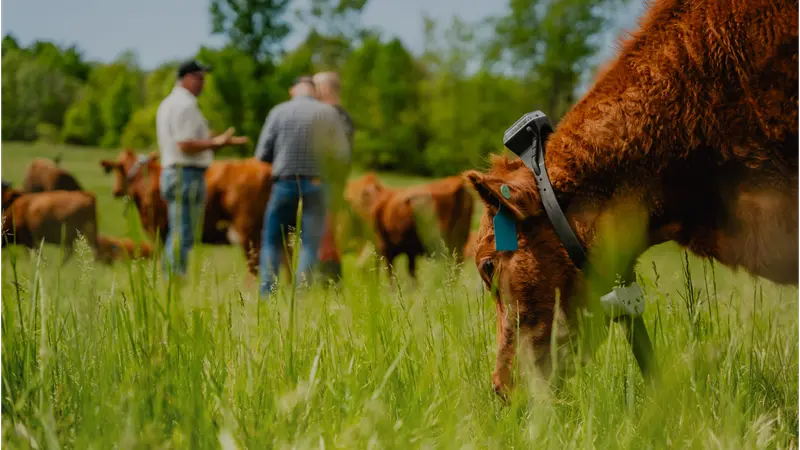
At the heart of Monil’s strategy is a suite of solar-powered livestock wearables known as Cattle Collars. These devices do more than just enforce invisible lines; they track herd whereabouts, monitor vital health metrics, analyze behavioral patterns, and stream critical data directly to farmers’ smartphones. Having already deployed over 80,000 devices across the European Union, the United Kingdom, and the United States, Monil is scaling up for aggressive global expansion.
To stand out in an increasingly crowded and well-funded agtech landscape—which includes heavyweights like New Zealand’s Halter, valued at $2 billion—Monil is banking on radical accessibility, user-centric hardware design, low minimum order requirements, and an unprecedented 10-year device warranty. By shifting operational risk away from the producer and onto the manufacturer, Monil aims to become the definitive, long-term investment for modern ranchers and livestock farmers striving for maximum efficiency, reduced overhead, and optimized herd health.
Detailed Chronology of a Disruption
2022: The Genesis of Monil
The journey of Monil began in 2022 against the backdrop of an evolving Norwegian agricultural sector. Facing rising labor shortages, strict environmental regulations, and the timeless challenge of maximizing pasture yields while minimizing land degradation, the founders of Monil sought to bridge the gap between heavy-duty farm management and sleek, software-driven efficiency.
Unlike tech startups that attempt to overhaul entire farming systems overnight, Monil targeted a foundational pain point: the physical fence. Building and maintaining miles of fencing is one of the most capital-intensive and labor-heavy responsibilities for livestock producers. By developing solar-powered wearables capable of enforcing digital boundaries via GPS and cellular or satellite networks, Monil eliminated the need for physical posts and wire. However, company leadership recognized early on that a virtual fence, by itself, was a commodity feature. To truly capture market share and deliver sustainable value, the hardware had to evolve into a holistic data-collection platform.
2023–2024: Scaling Hardware and Entering Key International Markets
Following its initial domestic rollout, Monil accelerated its go-to-market strategy, scaling manufacturing to meet international demand. The company successfully distributed more than 80,000 Cattle Collars across diverse topographical and climatic regions in the EU, the UK, and the United States.
Recognizing that American agriculture presents unique logistical and structural challenges—particularly across the vast expanses of the U.S. Midwest—Monil initiated a strategic boots-on-the-ground expansion. Rather than relying solely on digital sales, the company began assembling dedicated regional support teams to work directly with producers, ensuring that technical onboarding was seamless and localized. During this period, Monil also refined its hardware durability, recognizing that livestock wearables must endure extreme weather, mud, and the abrasive wear-and-tear of herd life.
2025 and Beyond: The Feature Expansion Roadmap
As Monil moves deeper into its operational timeline, the company is rolling out software updates and hardware enhancements designed to transform the Cattle Collar from a tracking device into an autonomous herd manager.
- October Launch (Calving Alerts): Monil is introducing an advanced movement-analysis algorithm designed to detect the physiological and behavioral precursors of calving. By alerting farmers the moment a cow begins the birthing process, the system drastically reduces calf mortality rates and minimizes the need for round-the-clock physical monitoring.
- Grazing Management Upgrades: The accompanying Monil mobile application is expanding to incorporate real-time and historical pasture data, dynamic heat maps illustrating grazing intensity, and modular tools that allow farmers to slice large pastures into micro-sections on the fly.
- Next-Year Innovations: Looking ahead, Monil has slated collar-to-collar Bluetooth communication and advanced satellite integration for rollout, ensuring continuous connectivity even in the most remote, off-grid grazing lands where cellular signals fail.
Supporting Context & Market Metrics
The Global Virtual Fencing Landscape
Monil does not operate in a vacuum. The livestock wearable and virtual fencing market has attracted intense venture capital interest, validating the sector’s long-term viability. The most prominent example of this market’s explosive growth is New Zealand-based unicorn Halter, which recently achieved a staggering $2 billion valuation after securing NZD $377 million in a Series E funding round led by Peter Thiel’s Founder Fund.
While companies like Halter operate at massive scale—often targeting large-scale dairy and beef operations with comprehensive pasture-automation systems—smaller and mid-sized producers frequently find themselves priced out or overwhelmed by rigid enterprise setups. This market dynamic has created a golden opportunity for agile competitors like Monil to capture the underserved segments of the livestock industry.
Monil’s Core Metrics & Footprint
- Total Devices Deployed: 80,000+ Cattle Collars globally.
- Primary Geographic Markets: European Union, United Kingdom, and the United States.
- Minimum Order Requirement: Just 6 collars, allowing for low-barrier trial runs.
- Warranty Coverage: Extended from an industry standard of 5 years to an exceptional 10-year warranty.
The Economics of Managed Grazing
Traditional rotational grazing requires intensive labor to manually move temporary electric fences every few days. According to agricultural economists, optimized rotational grazing can significantly improve soil health, increase forage yields, and enhance carbon sequestration. However, the labor barrier often prevents adoption.
Virtual fencing systems address this bottleneck by allowing farmers to redraw pasture boundaries from a smartphone app while sitting at a kitchen table or driving a tractor. By adding analytics that track where animals have grazed and how intensely they have fed, platforms like Monil provide data-driven insights that translate directly to improved bottom lines and healthier land.
Official Statements and Industry Insights
Janna Hovstad, Chief Commercial Officer (CCO) at Monil, has been vocal about the strategic vision guiding the company’s product development and market positioning. In interviews with agricultural technology analysts, Hovstad emphasized that the true power of agtech lies in simplicity and risk mitigation.
"The virtual fence is the starting point," Hovstad explained. "We’re also working a lot with app functionality to make managed grazing easier, and to make just planning how to do pasture management and grazing management in the app even simpler."
Addressing how Monil sets itself apart from heavily capitalized competitors, Hovstad highlighted the company’s focus on accessibility and low-friction adoption:
"Simplicity and flexibility is really important to us when we’re building products. So, you can trial with as few as six collars, and then it’s really simple to get started. And then after having tested with six adult animals grazing together, one can then scale from there."
In an industry where hardware failure can lead to catastrophic livestock loss or expensive replacements, Monil is making a bold statement regarding product durability. By upgrading its warranty from five years to a full decade, the company is actively realigning the financial risk structure of agtech investment:
"Our overall goal is to have the product that is the best investment over time, and that can be done both by making the very best product, which we’re working on every single day, but it can also be on moving the risk from the producer over to our side."
Looking toward the horizon, Hovstad noted that the company’s R&D efforts are increasingly focused on predictive analytics and prescriptive pasture management:
"Another thing that we’ve been increasingly focusing on is this: How to make it efficient for the farmer to plan pasture moves and move animals and also get insights of where the animals have been grazing, so that they can do this analysis and see when they should move animals and where they should move animals."
Future Outlook: The Next Frontier in Smart Livestock
As the livestock technology sector matures, the differentiation between hardware manufacturers will no longer hinge merely on GPS accuracy or battery life. Instead, the battleground will shift toward actionable intelligence—the ability of an app not just to show where an animal is, but to predict what the animal needs and prescribe how the land should be managed.
Monil’s aggressive push into behavioral analytics—exemplified by its upcoming calving-alert algorithms and granular heat-mapping tools—signals where the entire industry is heading. By combining robust, long-lasting hardware (backed by a 10-year warranty) with intuitive, cloud-connected software, the company is successfully lowering the barrier to entry for independent producers who might otherwise view agtech as too complex or financially risky.
Furthermore, as satellite connectivity becomes more prevalent and collar-to-collar mesh networking evolves, even the most isolated ranches in the American West and the rugged highlands of Europe will be fully integrated into the Internet of Things (IoT). For farmers navigating volatile feed costs, labor shortages, and shifting climate patterns, tools like Monil’s Cattle Collars are transforming from high-tech novelties into indispensable instruments of agricultural survival and profitability.
Ultimately, the future of ranching is invisible. By replacing physical timber and wire with software-defined boundaries and predictive health monitoring, companies like Monil are ensuring that the stewards of the land are better equipped than ever to feed the world while preserving the earth beneath their feet.