
Executive Overview
The narrative of life on Earth has long been anchored in the paradigm of cellular evolution, viewing cells as the fundamental building blocks of biological autonomy. However, an increasingly compelling body of scientific inquiry suggests that the story of life is incomplete without accounting for one of nature’s most enigmatic entities: viruses. Unlike independent cellular lifeforms, these microscopic genetic packages cannot manufacture their own proteins or generate metabolic energy. They are obligate entities, entirely dependent on host machinery to replicate. For decades, this parasitic definition relegated viruses to the margins of evolutionary biology—viewed merely as molecular scavengers or biochemical anomalies.
That perception is rapidly shifting. A growing vanguard of virologists and evolutionary biologists posits that viruses may not just be byproducts of cellular life, but active architects of it. At the center of this paradigm shift is the "viral eukaryogenesis" hypothesis, which posits that the nucleus of complex eukaryotic cells—the defining feature of animals, plants, fungi, and protists—originated from a large DNA virus that established a permanent, symbiotic residency within an ancient archaeal host.
Providing substantial new momentum to this revolutionary theory, an international team of researchers has announced the discovery of a novel giant DNA virus: ushikuvirus. Isolated from the waters of Lake Ushiku in Ibaraki Prefecture, Japan, and detailed in the Journal of Virology, this newly characterized pathogen infects single-celled amoebae and exhibits a bizarre array of structural and reproductive traits. Spearheaded by Professor Masaharu Takemura of the Tokyo University of Science (TUS) and collaborators at the National Institute of Natural Sciences (NINS), the discovery of ushikuvirus bridges crucial evolutionary gaps within the Mamonoviridae family.
By illuminating the diverse ways giant viruses interact with their hosts—ranging from nuclear integration to total nuclear membrane disruption—this research offers unprecedented clues into how ancient viral infections may have sculpted the architecture of complex life. Beyond its profound theoretical implications for evolutionary biology, the research also opens new frontiers in translational science, offering potential novel strategies for combating pathogenic amoebae responsible for severe human illnesses.
Detailed Chronology: From Viral Enigma to the Discovery of Ushikuvirus
To understand the weight of the ushikuvirus discovery, one must retrace a decades-long scientific journey to reposition viruses within the universal tree of life. For the latter half of the twentieth century, conventional virology focused predominantly on small, streamlined viruses—pathogens like influenza or bacteriophages that carry minimal genetic cargo designed solely for rapid replication and evasion of host immune systems.
The Birth of Viral Eukaryogenesis
The foundational shift began at the turn of the millennium. In 2001, Professor Masaharu Takemura of TUS and Dr. Philip Bell of Macquarie University independently advanced a radical proposition: the cell nuclear virus origin theory, later termed "viral eukaryogenesis" by Dr. Bell. The hypothesis challenged the orthodox view that the eukaryotic nucleus evolved via gradual, internal membrane folding within a prokaryotic ancestor. Instead, Takemura and Bell proposed that the nucleus is the direct evolutionary descendant of a large, ancient DNA virus—such as a poxvirus—that infected an archaeal or bacterial host.
According to this model, rather than killing its host, the ancient viral invader established a stable, long-term domicile within the host cytoplasm. Over evolutionary epochs, the virus incorporated essential host genes, refined its containment mechanisms to protect its genetic blueprints, and ultimately transformed into the membrane-bound nucleus that characterizes modern eukaryotic cells. If validated, this theory implies that complex, multicellular life could not exist without a foundational viral contribution.
The Rise of the Giants
Skepticism surrounding the viral eukaryogenesis hypothesis began to dissolve in 2003 with a monumental empirical breakthrough: the discovery of giant DNA viruses. Dwarfing conventional viruses and rivaling bacteria in physical size and genomic complexity, these entities—typified by Mimivirus—shattered previous assumptions about viral limitations.
When giant viruses infect their single-celled hosts, they construct massive intracellular compartments known as "virus factories." In several species, these factories are enclosed by lipid membranes and serve as the exclusive sites for viral DNA replication and transcription, bearing an uncanny structural and functional resemblance to a primitive cell nucleus. This discovery provided the first tangible physical analogs for the theoretical mechanisms proposed by Takemura and Bell.
Over the ensuing two decades, the catalog of giant viruses expanded dramatically. Researchers identified members of the Mamonoviridae family, which target Acanthamoeba, as well as closely related entities like clandestinovirus, which infects Vermamoeba. Each new isolate added intricate pieces to the evolutionary puzzle, yet the vast majority of giant viral diversity remained uncharted.
Isolating Ushikuvirus
Entering this dynamic field of study, the collaborative research team comprising TUS Master’s students Mr. Jiwan Bae and Mrs. Narumi Hantori, alongside Dr. Raymond Burton-Smith and Professor Kazuyoshi Murata from NINS, focused their efforts on isolating novel giant viruses from Japanese aquatic environments.
Their target was Lake Ushiku in Ibaraki Prefecture. Water samples collected from the lake were screened using specific amoebal hosts, leading to the isolation of a distinct, previously unknown giant virus. Christened ushikuvirus in honor of its geographic origin, the virus was subjected to rigorous morphological, genetic, and functional analyses. The resulting data, published in the Journal of Virology, not only expanded the taxonomic boundaries of the Mamonoviridae family but also revealed unexpected variations in infection mechanics that challenge existing models of giant virus evolution.
Supporting Context & Metrics: Structural and Functional Anatomy of Ushikuvirus
Ushikuvirus occupies a fascinating ecological and evolutionary niche. While giant viruses are ubiquitous in aquatic and soil ecosystems, successfully isolating and culturing them remains an arduous task requiring specialized virological techniques. Furthermore, their extraordinary genomic and structural diversity ensures that every newly characterized isolate yields unique insights.
Comparative Morphology
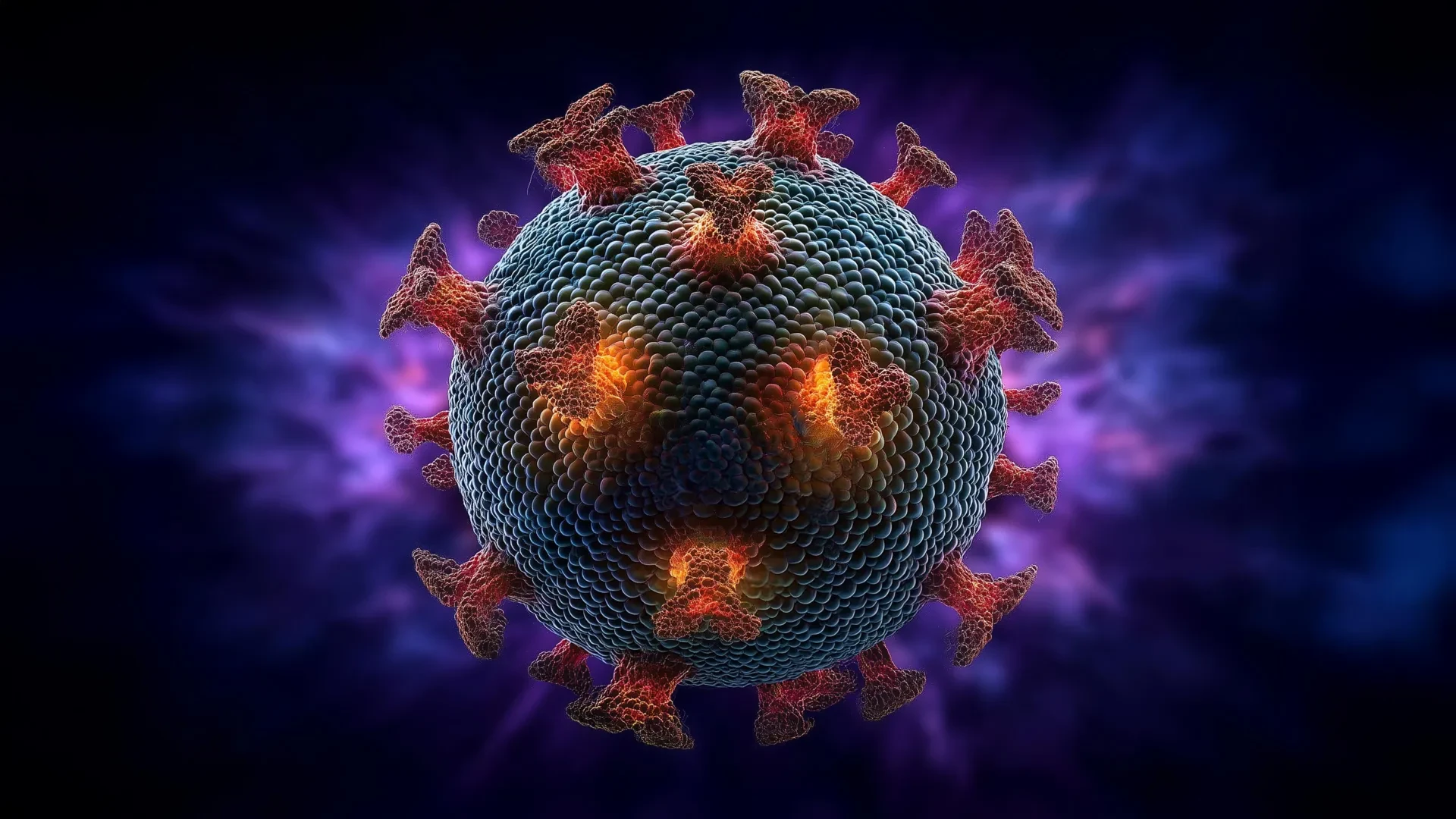
Ushikuvirus targets Vermamoeba, placing it in a similar host category to clandestinovirus. Structurally, it shares clear affinities with the Mamonoviridae family, particularly Medusavirus, an amoeba-infecting giant virus celebrated for its distinct icosahedral morphology and dense outer coating of short spikes.
However, a closer examination under advanced electron microscopy reveals striking divergences. When ushikuvirus infects a Vermamoeba cell, it induces a dramatic and unusual cytopathic effect: the infected host cell swells to abnormally large proportions, indicating a profound disruption of normal cellular homeostasis.
Furthermore, the capsid surface of ushikuvirus is adorned with complex multiple-spike structures. These spikes are topped with unique cap-like formations, and some feature delicate, filament-like extensions that have never been documented on medusaviruses. These structural elaborations suggest specialized adaptations for host recognition, binding, or immune evasion.
Divergent Replication Strategies
Perhaps the most significant finding regarding ushikuvirus concerns its replication cycle. Most members of the Mamonoviridae family, including Medusavirus and clandestinovirus, carry out their replication inside the intact nuclear envelope of the host cell, hijacking the host’s nuclear infrastructure for their own propagation.
Ushikuvirus breaks this behavioral mold. During its reproductive phase, ushikuvirus actively dismantles the host’s nuclear membrane to manufacture its progeny viral particles. This aggressive replication strategy bridges a crucial behavioral gap in virology:
- Intranuclear Replicators: Viruses like Medusavirus that maintain and utilize an intact host nucleus.
- Membrane-Disrupting Giants: Viruses like Pandoravirus that entirely dissolve or bypass the host nuclear architecture.
By exhibiting a phenotype that sits intermediate between these two strategies, ushikuvirus provides a living laboratory for understanding how giant viruses adapt their replication machinery to exploit different host cellular environments over evolutionary time.
Official Statements and Expert Perspectives
The publication of the ushikuvirus discovery has generated considerable excitement within the global microbiological community, underscoring the dynamic nature of viral research and the far-reaching implications of tracing ancestral lineages.
Reflecting on the discovery and the broader trajectory of his academic career, Professor Masaharu Takemura emphasized the vast, unexplored potential inherent in giant virus research:
"Giant viruses can be said to be a treasure trove whose world has yet to be fully understood. One of the future possibilities of this research is to provide humanity with a new view that connects the world of living organisms with the world of viruses," stated Prof. Takemura.
Addressing the specific significance of the new isolate within phylogenetic frameworks, Prof. Takemura elaborated on how ushikuvirus refines our understanding of eukaryotic evolution:
"The discovery of a new Mamonoviridae-related virus, ‘ushikuvirus,’ which has a different host, is expected to increase knowledge and stimulate discussion regarding the evolution and phylogeny of the Mamonoviridae family. As a result, it is believed that we will be able to get closer to the mysteries of the evolution of eukaryotic organisms and the mysteries of giant viruses."
These perspectives highlight a fundamental shift in how modern virology views these entities. No longer perceived merely as disease-causing agents, giant viruses are increasingly recognized as primary drivers of horizontal gene transfer, genomic innovation, and cellular compartmentalization.
Future Outlook: Evolutionary Horizons and Healthcare Implications
As research into ushikuvirus and its relatives progresses, the scientific community is setting its sights on both foundational evolutionary questions and practical, translational applications.
Unraveling the Tree of Life
The primary academic objective remains clear: to test, refine, and ultimately substantiate the viral eukaryogenesis hypothesis. By sequencing the complete genome of ushikuvirus and conducting deep comparative genomic analyses with both its hosts and other giant viruses, researchers aim to trace the evolutionary trajectories of specific functional genes. Identifying viral genes that share deep homology with eukaryotic nuclear proteins will provide the empirical bedrock necessary to confirm whether ancient giant viruses truly birthed the nucleus of complex life.
Translational and Medical Applications
Beyond theoretical biology, the study of amoeba-infecting giant viruses holds tangible promise for human health. Certain species of Acanthamoeba and related amoebae are not merely benign environmental organisms; they are opportunistic pathogens capable of causing severe, often fatal human diseases, including amoebic encephalitis, severe keratitis (frequently associated with contact lens use), and disseminated infections in immunocompromised individuals.
Because giant viruses act as natural predators to these amoebae in aquatic ecosystems, understanding the precise mechanisms by which ushikuvirus and its relatives infect, dismantle, and destroy their single-celled hosts could pave the way for novel biotherapeutic interventions. Researchers envision a future where engineered giant viruses or their derived lytic enzymes could be deployed as precision antimicrobials to target pathogenic amoebic infections that resist conventional pharmacological treatments.
Educational Outreach and Viral Literacy
An equally important component of Professor Takemura’s long-term vision is education. With over 120 peer-reviewed scientific papers and more than 2,500 citations to his name, Takemura is dedicated to bridging the gap between advanced academic virology and public understanding. His ongoing work aims to reshape educational curricula, improving global "virus literacy" by teaching students that viruses are not exclusively agents of disease, but integral, foundational participants in the planetary biosphere.
As interdisciplinary collaborations between institutions like the Tokyo University of Science and the National Institute of Natural Sciences continue to yield discoveries like ushikuvirus, humanity moves steadily closer to answering humanity’s oldest biological question: Where did we come from? In the microscopic architecture of a giant virus isolated from a tranquil Japanese lake, scientists may well have found a living reflection of our deepest evolutionary origins.