
Executive Overview
Europe’s agricultural landscape is facing a profound test of resilience. According to a comprehensive new market report released by the international organization Donau Soja, the continent’s soybean harvest is projected to plummet by roughly 20% in 2026. Widespread, persistent heatwaves and severe drought conditions across major growing regions have drastically stunted crop development, reducing overall European Union (EU) output to an estimated 2.4 million tonnes.
This steep contraction comes at a precarious time for the European agrifood sector. With domestic yields sliding and the average EU soybean productivity dropping to 2.24 tonnes per hectare—roughly 15% below the five-year rolling average—the bloc’s structural protein deficit is widening. Consequently, the EU’s already fragile soya self-sufficiency ratio is forecast to deteriorate further, tumbling from an estimated 8% in the 2025/26 season down to a meager 6% in 2026/27.
The crisis is not confined to the borders of the European Union. Key non-EU suppliers, most notably Ukraine, are simultaneously grappling with weather-induced production shortfalls and logistical bottlenecks. As global climate volatility increasingly disrupts traditional agricultural rhythms, the European market finds itself heavily exposed to international supply chain shocks, reigniting urgent policy debates surrounding regional protein security, sustainable agricultural adaptation, and the imperative to scale up domestic cultivation.
Detailed Chronology of the 2026 Production Crisis
To understand the magnitude of the 2026 soybean crisis, it is vital to trace the compounding environmental and market pressures that have culminated in this severe production downturn.
Early-Season Optimism and Weather Anomalies (Spring 2026)
As the 2026 planting season commenced across central and southern Europe, agronomists and farmers initially held guarded optimism. Soil moisture reserves in certain pockets of the Danube region appeared adequate following intermittent winter precipitation. However, abnormal meteorological patterns quickly took hold as early spring transitioned into summer. Unprecedented atmospheric blocking systems established themselves over the Mediterranean and Central Europe, trapping stagnant hot air masses and blocking rain-bearing Atlantic fronts.
The Peak Summer Heatwaves and Drought Onset (June – July 2026)
By mid-summer, the meteorological situation escalated into a full-scale agricultural drought. Consecutive heatwaves broke historical temperature records in key growing zones across Italy, Austria, and the Balkans. During the critical flowering and pod-filling stages—periods when the soybean plant is exceptionally sensitive to water stress—soil moisture indices plummeted to critical lows. Irrigation water allocations in major agricultural basins, such as Italy’s Po Valley, were restricted as municipal and ecological needs vied for dwindling freshwater supplies.
Crop Stress and Yield Deterioration (August 2026)
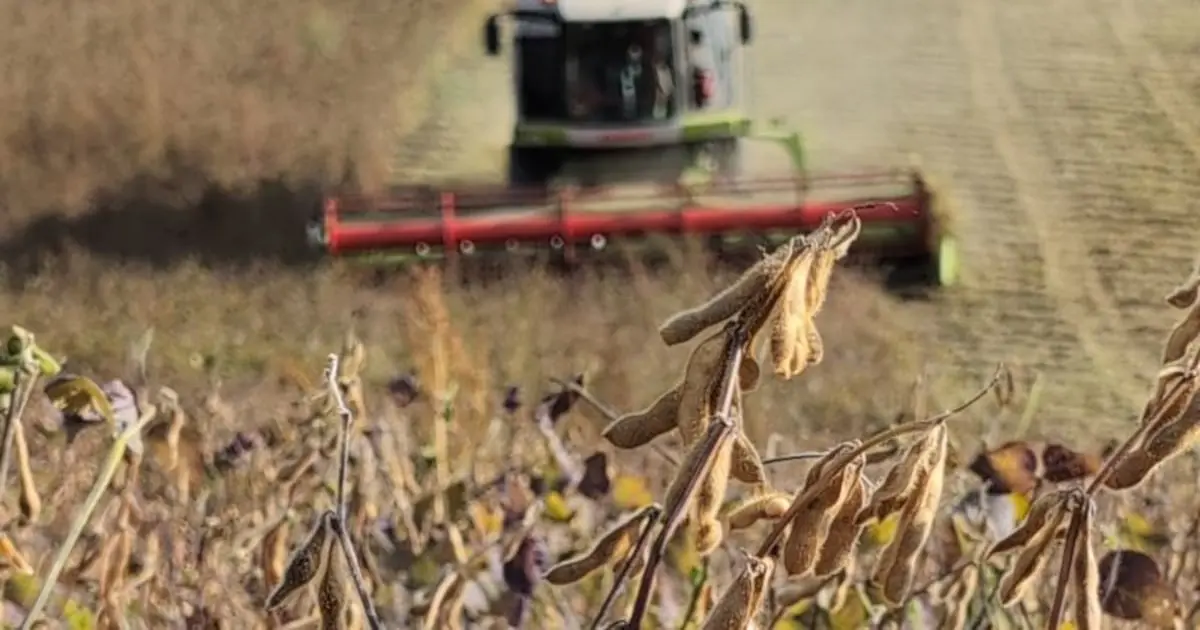
By late August, field assessments revealed irreversible damage. Plants exhibited severe signs of thermal stress, including premature leaf senescence, flower abortion, and significantly reduced pod counts per plant. The compounding effects of blistering temperatures and rainless weeks choked the natural growth cycle of the crop. When harvesting operations began prematurely in late summer, combine monitors verified what remote-sensing satellite data had already signaled: crop failures and severely diminished grain sizing.
Export Constriction and Market Realignment (September 2026)
The harvest crisis immediately reverberated through regional supply chains. In Ukraine, where farmers also faced severe drought and ongoing infrastructural challenges, export volumes ground down to a trickle. Ukrainian traders shipped a mere 27,000 tonnes of soybeans in September 2026—representing roughly one-third of the volume exported during the corresponding month in the previous year. This dramatic contraction in immediate export availability forced European crushers and feed manufacturers to scramble for alternative, pricier global origins, setting the stage for a tight and volatile market dynamic heading into the winter of 2026/27.
Supporting Context & Metrics: Regional Breakdown and Market Vulnerability
The 2026 soybean crisis does not impact all European territories uniformly. While the continental aggregate paints a grim picture of decline, a granular examination of individual countries reveals stark disparities between suffering southern producers and resilient northern frontiers.
Italy and Austria Bear the Brunt
- Italy: As the undisputed heavyweight of EU soybean production, Italy’s agricultural output sets the tone for the entire bloc. In 2026, severe heat stress across the Po Valley and surrounding northern agricultural heartlands has limited national production to approximately 900,000 tonnes. The reduction in both harvested area and yield per hectare has sent shockwaves through the Italian livestock and dairy sectors, which rely heavily on locally crushed non-GM meal.
- Austria: Austria, a pioneer in transparent, non-GM, regional protein production, has experienced one of the most severe percentage drops on the continent. Austrian soybean production is forecast to plunge by 36%, dropping to just 180,000 tonnes. This sharp contraction underscores the extreme vulnerability of central European rainfed farming systems to sudden meteorological extremes.
The Ukrainian Factor
Beyond the EU, Ukraine remains a cornerstone of Europe’s non-GM soybean supply matrix. However, the 2026 harvest tells a story of climate-induced contraction here as well. Ukrainian production is projected to reach 4.4 million tonnes, marking a 10% decline compared to the previous year. Coupled with the sharp September export drop to 27,000 tonnes, European feed mills that depend on Ukrainian origins to meet strict non-GM specifications are facing acute sourcing dilemmas and escalating procurement costs.
Poland and Germany: Bucking the Trend
Amidst widespread contraction, a few member states demonstrate that strategic adaptation, shifting cropping patterns, and favorable localized weather can yield positive results:
- Poland: Emerging as an increasingly dominant force in European grain and oilseed cultivation, Poland is forecast to become the EU’s third-largest soybean producer in 2026. Polish farmers are expected to increase output by more than 15%, pushing national production to 264,000 tonnes. This growth is driven by expanding acreage, improved agronomic management, and a warming northern climate that is becoming increasingly hospitable to soybean maturity.
- Germany: Similarly, Germany is bucking the broader continental downturn, with production projected to rise by 2.4% to reach 134,000 tonnes. While modest in volume relative to Italy or France, these steady gains illustrate that targeted investment in domestic protein crop cultivation can yield tangible results even under challenging macro-climatic conditions.
The Self-Sufficiency Deficit
The overarching metric defining the 2026 crisis is the structural decline in European protein self-sufficiency. Donau Soja’s data reveals that the EU’s self-sufficiency ratio will drop from roughly 8% in 2025/26 down to 6% in 2026/27.
+-------------------------------------------------------------------+
|               EU SOYBEAN SELF-SUFFICIENCY RATIO                   |
|                                                                   |
|   2025/26 Season:  [ 8% ] Self-Sufficient / 92% Imported          |
|   2026/27 Forecast:[ 6% ] Self-Sufficient / 94% Imported          |
|                                                                   |
|   *Note: Remaining demand met primarily via imports from South    |
|    America and North America, exposing the bloc to global shocks. |
+-------------------------------------------------------------------+
With 94% of the bloc’s soybean and soybean meal consumption dependent on imports—predominantly from South and North America—Europe remains profoundly exposed to currency fluctuations, global freight costs, geopolitical trade tensions, and the environmental impacts of overseas production, including deforestation concerns linked to traditional import corridors.
Official Statements and Industry Perspectives
The release of the Donau Soja 2026 market report has triggered urgent commentary from agricultural leaders, policymakers, and industry analysts, all emphasizing the strategic necessity of insulating Europe’s food and feed supply chains.
Addressing the structural vulnerabilities laid bare by the 2026 harvest, Aurélie Tournan, General Manager of Donau Soja, issued a stark warning coupled with a call to action:
"With only 8% self-sufficiency in soya historically, and now facing a drop to 6%, Europe has a clear vulnerability and significant potential to increase production. Relying so heavily on external markets leaves our livestock and food sectors entirely exposed to global climate shocks and trade volatility."
Tournan emphasized that the crisis must serve as a catalyst rather than a permanent setback. She argued passionately for structural policy shifts:
"Expanding European-grown protein crops and strengthening regional, transparent supply chains is no longer just an environmental ideal—it is an absolute prerequisite for long-term European food security and economic resilience. The success we are seeing in countries like Poland and Germany proves that European farmers can successfully cultivate high-quality protein when given the right agronomic support and market incentives."
Agronomic experts contributing to the report echoed Tournan’s sentiments, noting that European agriculture must transition toward more climate-resilient farming systems. Recommendations from agricultural economists include scaling up investments in drought-resistant seed varieties, expanding precision irrigation infrastructure, optimizing soil organic matter to improve water retention, and leveraging Common Agricultural Policy (CAP) eco-schemes to reward farmers who integrate leguminous nitrogen-fixing crops into their standard crop rotations.
Future Outlook: Navigating the Protein Security Horizon
As Europe looks beyond the immediate hurdles of the 2026 harvest, the agricultural sector faces a complex and demanding strategic horizon. The convergence of climate change, tightening global commodity supplies, and stringent regulatory frameworks—such as the EU Deforestation Regulation (EUDR)—means that business-as-usual approaches to feed procurement are no longer viable.
1. Adaptation and Agronomic Innovation
To safeguard future harvests against recurring heatwaves and droughts, European farming must accelerate its adoption of climate-smart agronomy. Breeding programs focusing on early-maturing, drought-tolerant soybean cultivars tailored to European latitudes will be paramount. Furthermore, the expansion of sustainable irrigation technologies, alongside regenerative farming practices that enhance soil structure and moisture-holding capacity, will help stabilize yields during increasingly erratic weather seasons.
2. Policy Support and Regional Supply Chain Integration
Policymakers at both the national and EU levels are under mounting pressure to re-evaluate the strategic importance of domestic protein crops. Strengthening regional supply chains—such as those certified by Donau Soja, which guarantee sustainable, deforestation-free, and non-GM European origins—will be vital for building market trust and insulating regional value chains from international price volatility. Incentivizing farmers to diversify crop rotations to include protein-rich legumes will not only boost regional self-sufficiency but also reduce synthetic fertilizer dependency, aligning with the European Green Deal’s broader sustainability targets.
3. Managing Short-Term Market Pressures
In the immediate term, European feed mills, livestock producers, and food manufacturers must navigate a tight market characterized by higher import dependency and elevated procurement costs. Balancing sustainable sourcing commitments with commercial viability will test the adaptability of the entire European agrifood value chain through 2027.
Ultimately, the 2026 soybean crisis serves as an undeniable wake-up call. While climate adversity has dealt a severe blow to European fields this season, it has simultaneously illuminated the undeniable roadmap for the future: a resolute pivot toward increased domestic protein autonomy, agricultural resilience, and sustainable regional integration.