
Executive Overview
In the realm of canine ownership few topics generate as much debate, misunderstanding, and emotional polarization as the comparison between the American Bulldog and the American Pit Bull Terrier. Because of their shared ancestral roots in historical working and bull-baiting dogs, these two breeds are frequently conflated by the general public, landlords, and even municipal legislators. However, to treat them as interchangeable is to fundamentally misunderstand their distinct biological architectures, behavioral nuances, and historical development.
The American Bulldog is a towering monument to raw power and steadfast defense—a heavy, stocky laborer engineered to handle large livestock and guard homesteads. Conversely, the American Pit Bull Terrier represents an exercise in streamlined athleticism; a smaller, highly agile competitor bred to combine the tenacious grip of a bulldog with the swift reflexes of a terrier.
As urban centers continue to grapple with breed-specific legislation (BSL) and animal shelters face an overpopulation of muscular terrier types, separating fact from fiction has never been more critical. This comprehensive investigative report analyzes the historical records, physiological specifications, behavioral science, and regulatory landscapes surrounding these two magnificent yet frequently misunderstood canines.
Detailed Chronology: The Evolutionary Divergence of Two Working Breeds
To understand the modern American Bulldog and the American Pit Bull Terrier, one must look backward through centuries of selective breeding, shifting societal demands, and near-extinction events.
The Common Ancestor: The Old English Bulldog
The story of both breeds begins with the now-extinct Old English Bulldog. During the 17th and 18th centuries in the British Isles, these dogs were heavily built, courageous, and bred specifically for blood sports such as bull and bear baiting. These events required a dog with a powerful bite, a low center of gravity, and an immense pain tolerance.
When the British Parliament passed the Cruelty to Animals Act of 1835, officially banning blood sports, the utility of the Old English Bulldog plummeted overnight. Enthusiasts faced a choice: let the breed vanish entirely or repurpose its physical and mental traits for new roles.
The Resurrection of the American Bulldog
As immigrants traveled from the British Isles to the American South, they brought their working bulldogs with them. In the rural American landscape, these dogs found a new lease on life. They were no longer fighting bulls in rings; instead, they were working as catch-dogs on farms—managing wild cattle, hunting feral hogs, and guarding homesteads against predators.
By the mid-20th century, however, the American working bulldog population had dwindled significantly, nearing the brink of extinction. The survival of the breed is largely credited to the tireless conservation efforts of Dr. John D. Johnson and Alan Scott. Through selective breeding programs, they preserved the working lines, resulting in the modern American Bulldog we recognize today: a formidable, athletic guardian of imposing stature.

The Genesis of the American Pit Bull Terrier
Meanwhile, a different evolutionary path was being forged in the industrial hubs of England, Ireland, and later, the United States. Breeders desired a canine that retained the relentless drive and muscular jaw of the bulldog but possessed the speed, agility, and heightened gameness of various terrier breeds.
By crossbreeding Old English Bulldogs with Old English Terriers (and later introducing components of other terrier types), creators engineered the American Pit Bull Terrier. Smaller and lighter than their bulldog cousins, these dogs were designed for maximum agility. Unfortunately, a dark chapter in their history involved their use in underground dog-fighting rings—a legacy that continues to cast an unfair shadow over the breed’s reputation today. Despite this, the breed quickly transitioned in America into a beloved farm hand, family companion, and even a World War I propaganda icon ("Sgt. Stubby").
Supporting Context & Metrics: Anatomy, Physiology, and Performance
Physical comparisons reveal stark differences in scale, power distribution, and physiological capabilities. While both breeds wear coats of short, single-layer fur and feature broad skulls, their skeletal frameworks tell entirely different stories.
Comparative Metrics Matrix
| Metric | American Bulldog | American Pit Bull Terrier |
|---|---|---|
| Height (Adult) | 20–27 inches (51–69 cm) | 17–21 inches (43–53 cm) |
| Weight (Adult) | 75–125 lbs (34–57 kg) | 35–65 lbs (14–29 kg) |
| Primary Build | Heavy, stocky, and immensely muscular | Lean, athletic, and streamlined |
| Coat Variations | Solid white, brindle, or patched patterns | Vast spectrum: blue, red, fawn, black, brindle |
| Energy Output | Moderate to high; stamina-focused | Extremely high; intensity-focused |
| Average Lifespan | 10–12 years | 12–15 years |
Skeletal and Functional Differences
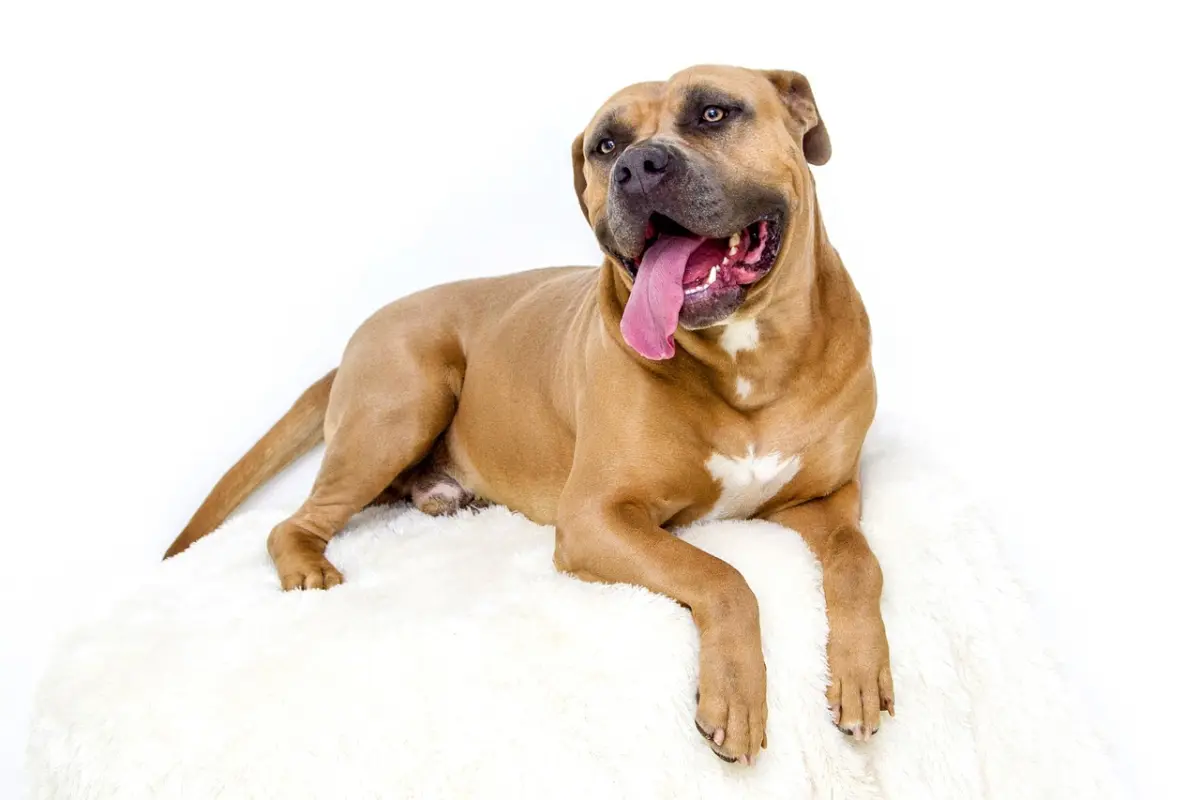
The American Bulldog is built like a heavyweight linebacker. Standing up to 27 inches tall and tipping the scales at up to 125 pounds, its bone density and muscle mass are designed for anchoring large animals and standing ground against serious threats. Their broader chests and heavier frames mean they are prone to higher heat exhaustion risks, particularly in warm climates, due to shortened nasal passages and immense body mass.
The American Pit Bull Terrier, by contrast, is the middleweight boxer of the canine world. Ranging from 35 to 65 pounds, their lighter frames, deep chests, and well-defined musculature allow for explosive acceleration and exceptional jumping ability. Pound-for-pound, Pit Bulls exhibit an astonishing degree of agility, making them formidable participants in canine sports like weight pulling, agility courses, and wall-climbing.
Official Statements: Debunking Myths and Examining Temperament
The public perception of both breeds is plagued by myth-making and sensationalized media reporting. To establish an authoritative baseline, canine behaviorists, veterinarians, and breed registries point to several key realities.
The "Locking Jaw" Fallacy
One of the most persistent urban legends in modern canine lore is that the American Pit Bull Terrier (and by extension, the American Bulldog) possesses a specialized anatomical mechanism that "locks" its jaws during a bite.
According to veterinary anatomists and comparative biomechanics studies, this is entirely false. The jaw structure of a Pit Bull or American Bulldog is identical in bone formation, muscle attachment, and joint mechanics to that of any other dog breed of comparable size. There is no physiological locking mechanism. The myth persists solely due to the breeds’ high "gameness"—a historic trait bred into them that encourages tenacity and refusal to let go easily once an objective is engaged.

Temperament and Behavioral Realities
- American Bulldogs: Naturally confident, fiercely loyal, and protective. Because they were bred as independent guard dogs and farm protectors, they can exhibit a stubborn streak and possess a strong territorial instinct. They require an experienced handler who can provide firm, consistent, positive-reinforcement training from puppyhood. While generally tolerant of children within their "pack," their sheer physical size means they can inadvertently knock over small humans during play.
- American Pit Bull Terriers: Renowned for an intense, bubbling enthusiasm for life and an overwhelming desire to please their human companions. When socialized correctly, they are exceptionally affectionate, earning them the historical moniker of "nanny dogs" in the early 20th century. However, due to their historical fighting lineage, some individuals may exhibit dog-directed aggression. Canine experts emphasize that this trait requires proactive socialization and lifelong management, though it does not translate to human aggression.
Future Outlook: Legislation, Ownership, and Welfare
As we look toward the future of canine husbandry and urban planning, the management of American Bulldogs and Pit Bulls stands at a complex crossroads.
The Battle Over Breed-Specific Legislation (BSL)
For decades, municipal governments have turned to BSL—banning or heavily restricting ownership of Pit Bulls, American Bulldogs, and related bully breeds based on the assumption that certain shapes of dogs are inherently dangerous.
However, modern animal behavior organizations, including the American Veterinary Medical Association (AVMA) and the ASPCA, strongly oppose BSL. Empirical data suggests that BSL is ineffective at reducing dog bite incidents; instead, public safety experts advocate for "owner-focused" legislation. This includes stricter leash laws, penalties for negligent owners, mandatory spay/neuter programs, and community education on responsible pet stewardship.
The Shelter Crisis
Animal shelters across the globe are currently experiencing an unprecedented crisis, with bully breeds—primarily American Pit Bull Terriers and American Bulldog mixes—disproportionately occupying kennel space. Misinformation, insurance restrictions, and unfair rental housing policies frequently prevent capable owners from adopting these dogs, leading to high euthanasia rates in un-resourced municipal facilities.
Conclusion: Matching Dog to Owner
Ultimately, neither the American Bulldog nor the American Pit Bull Terrier is an inherently "dangerous" animal, nor are they suitable for passive, first-time dog owners. They are high-capacity, high-drive working dogs adapted to modern domestic life.
The American Bulldog offers heavy-duty protection and steadfast, calm loyalty for those with the space and physical presence to manage them. The American Pit Bull Terrier offers an athletic, deeply affectionate shadow for active families committed to rigorous daily exercise and lifelong socialization. By replacing fear-based stereotypes with education, science, and responsible ownership, society can finally begin to appreciate these two remarkable breeds for what they truly are: athletes, companions, and survivors of a complex history.