
As the global agricultural sector faces an unprecedented convergence of climate volatility, escalating labor shortages, and stringent environmental mandates, the solutions of yesterday are no longer sufficient to feed a growing population. Enter the innovators, engineers, and biotechnologists rewriting the playbook for modern food production.
TIME magazine has officially unveiled the agriculture category of its highly anticipated Best Inventions list, spotlighting six groundbreaking technologies that are fundamentally reshaping farming, crop cultivation, and animal husbandry. Selected from hundreds of global submissions evaluated on criteria including originality, efficacy, ambition, and global impact, these innovations form part of TIME’s broader 300-product ranking designed to highlight ideas making the world "better, smarter, and more fun."
Spanning advanced crop genetics, autonomous multi-purpose field robotics, AI-driven pollinator management, circular economy waste valorization, non-chemical disease control, and nutrient recycling, this year’s cohort offers a fascinating glimpse into the farm of the future.
Executive Overview: A Paradigm Shift in Global Food Production
The recognition of these six specific technologies underscores a decisive pivot within the agtech sector. For decades, agricultural modernization was largely defined by synthetic inputs, heavy machinery, and sprawling monocultures. Today, the narrative has shifted toward precision, sustainability, and biological efficiency.
TIME’s 2026 agricultural laureates demonstrate that the industry is rapidly embracing autonomous systems and artificial intelligence to do more with less. From robots that mitigate grueling field labor to UV-C light arrays replacing chemical fungicides, and from AI platforms extracting commercial value from agricultural waste to human urine transformed into high-grade fertilizer, the boundaries of agricultural science are expanding outward.
These technologies are not merely conceptual experiments; they are commercially active solutions scaling across thousands of acres, proving their mettle in vineyards, berry patches, apiaries, and biotechnology labs worldwide.
Detailed Chronology of Innovation: The 2026 Agtech Vanguard
The road to TIME’s Best Inventions list is paved with years of rigorous research, field trials, regulatory navigation, and commercial scaling. The six winning technologies represent distinct pillars of modern agricultural transformation.
1. BioLumic: Light-Activated Seed Traits
- The Innovation: Utilizing advanced photobiology, BioLumic’s proprietary xTraits platform alters the developmental trajectory of seeds through targeted light treatments before planting.
- The Impact: By triggering specific genetic pathways using light rather than genetic modification, the technology gives crops a stronger, more resilient start. TIME highlighted the platform for its ability to boost early vigor, root development, and overall productivity, addressing critical vulnerabilities as growers face erratic weather patterns and prolonged droughts.
2. Burro Grande 44: The All-Purpose Farm Robot
- The Innovation: Developed to solve the acute labor shortages plaguing specialty crop producers globally, the Burro Grande 44 is an autonomous utility robot engineered to navigate complex terrain, haul harvested produce, and coordinate seamlessly with human workforces.
- The Impact: By eliminating the logistical bottleneck of transporting harvested crops from the field to central collection points, the robot dramatically amplifies human productivity. As robotics developers race to solve structural labor deficits, systems like the Burro Grande are proving that human-robot collaboration is the most viable immediate path forward.
3. Beewise Robi: Autonomous AI Beekeeping
- The Innovation: Bringing artificial intelligence and precision automation to the ancient art of beekeeping, Beewise Robi monitors, protects, and maintains commercial bee colonies in real-time.
- The Impact: With global food production heavily reliant on pollination services—particularly for high-value specialty crops like almonds and apples—colony collapse and pest pressures pose existential threats to agriculture. Robi automates temperature regulation, pest control, and food supplementation, safeguarding vital pollinator populations.
4. 2nd Nature AgWaste Portal: Unlocking Value from Scraps
- The Innovation: A cutting-edge artificial intelligence platform designed to identify, analyze, and extract commercial value from agricultural side streams and food industry waste.
- The Impact: Representing a major leap forward for circular agriculture, the AgWaste Portal helps producers and food processors divert millions of tons of organic waste from landfills, transforming discarded biomass into valuable biochemicals, animal feed additives, and structural materials.
5. Saga Robotics: Thorvald and Non-Chemical Disease Control
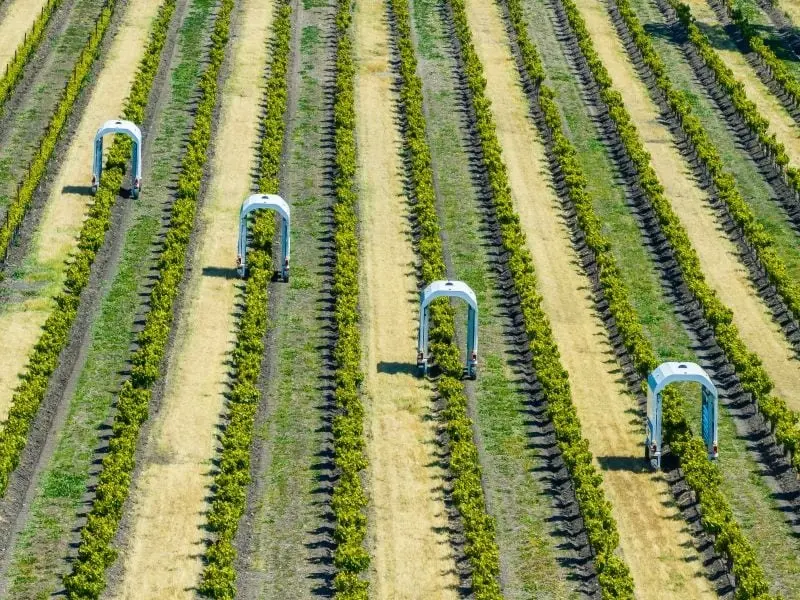
- The Innovation: An autonomous robotic platform that patrols vineyards and specialty crop fields, utilizing ultraviolet-C (UV-C) light treatments to suppress powdery mildew without relying on conventional chemical fungicides.
- The Impact: Thorvald has evolved from a novel concept into a commercial juggernaut. By 2026, the autonomous fleet is treating an estimated 30% of the United Kingdom’s tabletop strawberry production and managing disease control across roughly 2,500 acres of California vineyards, offering chemical-free protection that mitigates resistance risks.
6. VunaNexus Aurin: Nutrient Recovery from Urine
- The Innovation: A sophisticated circular nutrient-recovery system that processes human urine into a safe, high-grade liquid fertilizer suitable for commercial and domestic horticulture.
- The Impact: As the agricultural sector grapples with the environmental footprint and volatile pricing of synthetic nitrogen and phosphorus fertilizers, Aurin captures essential nutrients directly from source streams, closing the nutrient loop and advancing true regenerative agriculture.
Supporting Context & Metrics: The Scale of Modern Agtech
To understand the weight of TIME’s recognition, one must examine the metrics driving these innovations into mainstream adoption. The 2026 agricultural landscape is defined by efficiency, sustainability, and economic necessity.
- Labor Multiplication: The economic viability of specialty crop farming is increasingly threatened by shrinking labor pools and rising wages. According to Charlie Andersen, CEO of Burro, deploying autonomous transport systems yields immediate, measurable gains: "When you have a robot running around carrying the fruit people pick back to central points, each person is 30% more productive." This marginal gain can determine the difference between a profitable harvest and unpicked fruit rotting on the vine.
- Chemical Reduction and Acreage Coverage: Saga Robotics’ Thorvald system illustrates the rapid commercial scaling of physical crop protection. Operating across 30% of the UK’s tabletop strawberry market and 2,500 acres of premier California vineyards in 2026, the robot is displacing millions of gallons of chemical fungicides, addressing consumer demand for residue-free produce while protecting soil and water ecosystems from chemical runoff.
- Circular Bioeconomy Growth: Platforms like the 2nd Nature AgWaste Portal reflect a broader economic shift. The global agricultural waste management market, valued in the tens of billions of dollars, is shifting from a disposal mindset to a valorization model. AI-driven platforms are accelerating this transition by matching waste generators with industrial buyers in real-time.
Official Statements and Industry Perspectives
The announcement of the 2026 Best Inventions list has drawn praise from agricultural leaders, technologists, and environmental scientists alike, all of whom view the recognition as validation of agtech’s critical role in global stability.
"The technologies recognized by TIME this year do not represent distant futuristic theories; they are deployed in fields, orchards, and processing facilities right now, solving existential crises in labor, climate resilience, and resource scarcity."
— Agtech Industry Analyst Assessment
Commenting on the integration of autonomous systems into daily farm operations, robotics developers emphasize that the ultimate goal of automation is not to replace the farmer, but to empower them.
"When designing systems for agriculture, you are dealing with the most complex, unstructured environment on Earth," notes a leading robotics engineer. "Success requires building machines that can reason, adapt, and work alongside human crews to elevate overall output."
Similarly, representatives from the biotechnology and circular economy sectors stress that public recognition from mainstream media outlets like TIME helps demystify emerging solutions—such as light-treated seeds and urine-derived fertilizers—paving the way for broader consumer acceptance and regulatory streamlining.
Future Outlook: What Lies Ahead for Agricultural Innovation?
As we look beyond 2026, the trajectory established by TIME’s Best Inventions list points toward a hyper-connected, biologically optimized future for farming.
Several key trends are poised to dominate the remainder of the decade:
- Autonomous Swarms: Moving beyond single-unit operations, farms will increasingly rely on cooperative fleets of specialized robots (such as weeding, harvesting, and UV-treatment drones) communicating via centralized edge-computing hubs.
- Mainstreaming Circularity: Nutrient recycling and waste valorization will transition from niche sustainability practices to mandatory operational standards, driven by tightening environmental regulations and the rising cost of virgin inputs.
- Epigenetic and Non-GMO Enhancements: Technologies like BioLumic’s light-activated traits will likely expand to a broader array of staple crops, offering a rapid, non-GMO pathway to climate resilience that bypasses lengthy regulatory hurdles.
- Data-Driven Ecosystems: AI will no longer operate in silos on the farm. Instead, integrated platforms will synthesize data from soil sensors, robotic crop scouts, pollinator monitors, and weather forecasting models to automate real-time agronomic decision-making.
Ultimately, the 2026 TIME Best Inventions list in agriculture serves as a powerful reminder that human ingenuity remains our most potent tool. By fusing biology, artificial intelligence, and mechanical engineering, the agricultural sector is not just surviving the pressures of the 21st century—it is actively engineering a more abundant, sustainable, and resilient tomorrow.