
Executive Overview
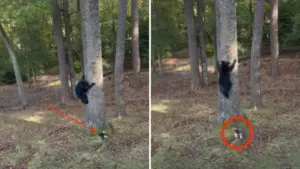
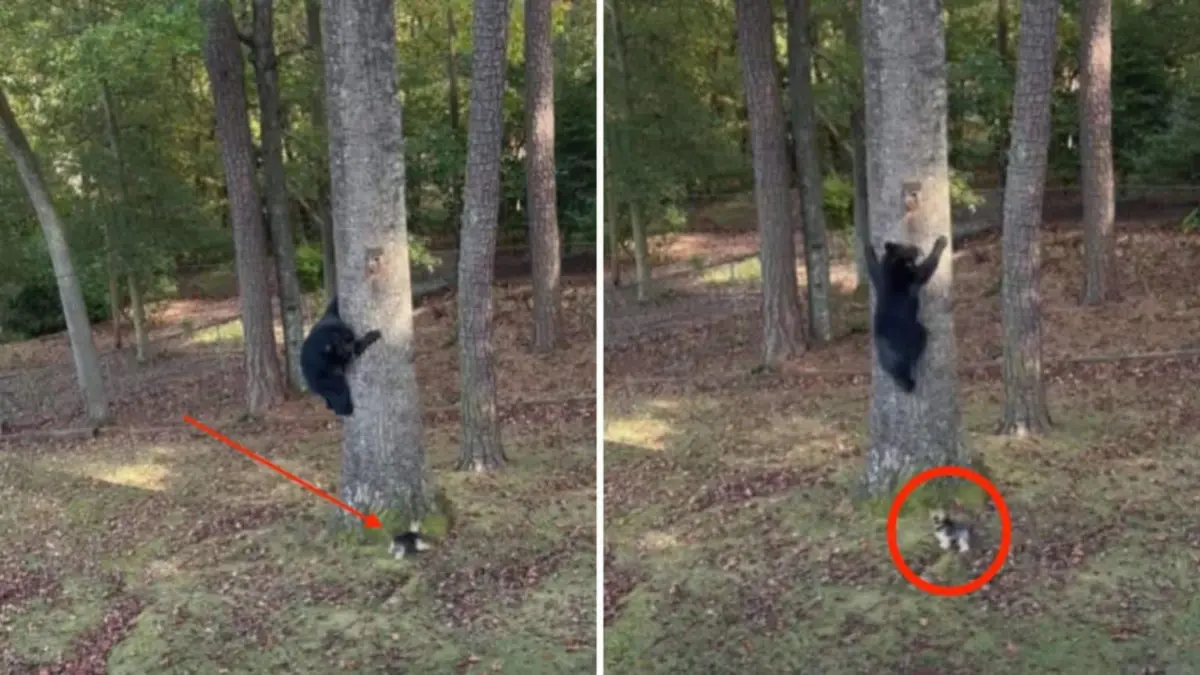
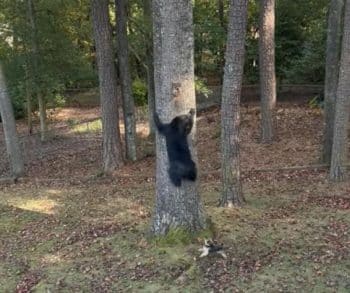
In an extraordinary display of territorial aggression and canine bravery, a tiny Yorkshire Terrier named Benny recently confronted a full-grown American black bear in a North Carolina suburban backyard. Captured on video and widely shared across digital platforms, the dramatic encounter saw the five-pound terrier fearlessly pursue a wild animal that outweighed him by hundreds of pounds. Despite desperate and vocal attempts by his owner to call him back, Benny held his ground, barking persistently and advancing until the black bear eventually yielded the territory and retreated over the property boundary.
While the incident ended without injury to either animal, it serves as a stark case study in the growing frequency of human-wildlife interactions across the Southeastern United States. As suburban residential developments continue to expand into historically dense forest habitats—particularly in regions like western and central North Carolina—encounters between domestic pets and wild apex mammals have escalated from rare anomalies to recurring suburban occurrences.
This report provides a comprehensive breakdown of the North Carolina incident, analyzing the behavioral psychology of both species, the regional ecological conditions driving these interactions, and the safety protocols recommended by wildlife management officials for pet owners residing in black bear territory.
Detailed Chronology: Anatomy of a High-Stakes Backyard Confrontation
The encounter unfolded during a routine period of backyard access at a residential residence in North Carolina. The event, recorded on home video, illustrates a rapidly escalating scenario that could have easily turned fatal.
+-----------------------------------------------------------------------------------+
|                            CHRONOLOGY OF THE INCIDENT                             |
+-----------------------------------------------------------------------------------+
| 1. INTRUSION  | Full-grown black bear enters the enclosed residential yard.        |
| 2. DETECTION  | Benny (Yorkie) spots the bear; immediately breaks protocol.        |
| 3. ENGAGEMENT | Benny approaches barking aggressively, ignoring owner's commands.  |
| 4. RETREAT    | Bear assesses the noisy nuisance and begins scaling back/retreating|
| 5. RESOLUTION | Bear exits perimeter; Benny secures the yard without physical harm.|
+-----------------------------------------------------------------------------------+
1. Initial Intrusion and Detection
The incident began when a mature black bear (Ursus americanus) wandered into the landscaped backyard of the property. North Carolina’s suburban corridors, often lined with mature trees, greenbelts, and uncollected refuse or bird feeders, regularly attract foraging wildlife. Upon crossing the perimeter, the bear appeared calm, moving slowly across the turf in search of food sources or exploring the clear space.
2. The Canine Response and Owner Intervention
Benny, a Yorkshire Terrier weighing a fraction of the bear’s mass, noticed the intruder almost immediately. Rather than seeking shelter, retreating to the door, or displaying submissive posturing, Benny charged toward the bear.
Realizing the extreme danger, the dog’s owner began shouting panicked commands from the edge of the patio, repeatedly calling:
"Benny, Benny, NO!"
Despite these urgent verbal commands, Benny’s predatory and territorial drive eclipsed his training. The small dog paid no mind to the vocal warnings behind him, maintaining absolute focus on the large mammal in front of him.
3. The Standoff and Pursuit
What followed was a striking display of mismatched physical dynamics:
- The Terrier’s Tactic: Benny maintained a low-center stance, advancing swiftly while delivering a barrage of high-pitched, rapid-fire barks. He continuously adjusted his position to match the bear’s direction of movement, effectively herding the larger animal toward the yard’s periphery.
- The Bear’s Reaction: Rather than responding with defensive swipes, lunges, or jaw-popping—behaviors typical of a threatened bear—the black bear appeared startled and visibly annoyed by the small, fast-moving object.
4. The Bear’s Retreat and Resolution
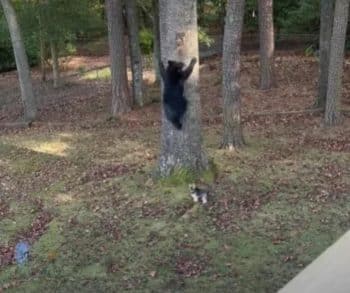
Unwilling to engage with the relentless nuisance, the bear altered its trajectory. Slowly backing away from the dog, the bear climbed upward toward an elevated structure or fence line to put distance between itself and the persistent terrier. Benny followed the bear’s movement step-for-step, maintaining his vocal assault until the wild animal climbed out of the yard and retreated into the neighboring woods.
The standoff lasted several minutes, concluding with the bear’s departure and Benny standing victorious on his home turf, completely uninjured.
Supporting Context & Metrics: Ecological and Behavioral Analysis
To fully understand why this encounter occurred—and why it ended harmlessly—it is necessary to examine the broader context of North Carolina’s black bear population dynamics, as well as the instinctual traits of both Yorkshire Terriers and black bears.
1. Regional Bear Dynamics in North Carolina
North Carolina hosts one of the most successful black bear recovery programs in North America. According to data from the North Carolina Wildlife Resources Commission (NCWRC):
| Metric | Statistic / Detail |
|---|---|
| Estimated Statewide Bear Population | ~20,000+ individuals |
| Primary Regional Density | Coastal Plain & Mountain Regions (Expanding into Piedmont) |
| Average Adult Male Weight | 300 – 500+ lbs |
| Average Adult Female Weight | 150 – 300 lbs |
| Primary Suburban Attractants | Birdseed, unrestrained garbage, outdoor pet food, grill grease |
As housing developments encroach further into wild land, black bears have shown high adaptability to human-dominated landscapes. They routinely navigate suburban backyards during the spring, summer, and early fall months to exploit easy caloric sources.
Suburban Expansion  ──>  Habitat Loss  ──>  Bears Foraging in Yards
                                                     │
Pet / Bear Conflict  <──  Unchecked Attractants  <───┘
2. Canine Psychology: The "Big Dog" Instinct in Small Terriers
The Yorkshire Terrier was originally bred in 19th-century England (primarily in Yorkshire and Lancashire) to hunt vermin, such as rats and badgers, in coal mines and textile mills. Key behavioral characteristics engineered into the breed include:
- High Prey Drive and Persistence: Terriers were selected for an innate refusal to back down from quarry, even when cornered in underground burrows.
- Territorial Vigilance: They possess an intense awareness of their immediate surroundings and a strong propensity to bark loudly to signal intruders.
- Lack of Size Perception: Small terriers rarely modify their confrontational tactics based on the physical size of an opponent. In animal behavior, this is often linked to high confidence and low behavioral inhibition when triggered by territorial intrusion.
Benny’s unwillingness to retreat, despite his owner’s desperate calls, illustrates how deeply ingrained these working instincts remain, even in modern toy-breed companions.
3. Ursine Behavior: The Black Bear Risk-Reward Matrix
Contrary to popular belief, American black bears are typically shy, cautious, and risk-averse animals compared to brown (grizzly) bears.
                          [ UNKNOWN ANIMAL/NOISE ]
                                     │
                    ┌────────────────┴────────────────┐
                    ▼                                 ▼
         [ Risk: Low / Worth Fight ]      [ Risk: High / Nuisance ]
                    │                                 │
                    ▼                                 ▼
           (Defend / Attack)                  (Flee / Retreat)
                                                      ▲
                                                      │
*Benny's Scenario*- Calculated Energy Conservation: In a non-defensive situation (where no cubs or primary food sources are present), a wild bear will consistently avoid physical conflict that could result in injury.
- Aversive Response to High-Frequency Noise: The high-pitched, energetic bark of a small terrier can confuse and unnerve a black bear. To the bear, the dog represents an unpredictable, noisy threat that is not worth the energetic cost or risk of an altercation.
Official Statements, Expert Commentary, and Public Reception
Public Reaction and Digital Footprint
Footage of Benny’s confrontation rapidly spread across social media channels, attracting millions of views and thousands of comments. The stark visual contrast between a tiny pet dog and an apex forest mammal sparked widespread engagement:
- Social Media Observers: Commenters widely praised Benny’s bravery, with one user noting, "I think both of them don’t know their real strength… the bear and the dog are confused about who they are."
- Humorous Comparisons: Others labeled the Yorkie as having "the heart of a lion" or jokingly referred to him as "a 100-pound Rottweiler trapped in a five-pound Yorkie body."
Expert Cautions and Wildlife Official Perspective
Despite the amusing nature of the footage, wildlife biologists and animal behaviorists caution against celebrating such encounters as standard outcomes.
Representatives from state wildlife agencies, including guidelines framed under the national BearWise® program, stress that dog-bear interactions are among the leading causes of bear attacks on humans:
"A barking, aggressive dog often agitates a bear. While this bear chose to retreat, an agitated bear may swat at a small dog, resulting in fatal injury within seconds. Worse, a chased dog often turns and runs back to its owner for safety, bringing an angry bear straight to the human."
— Wildlife Conservation Specialist
Wildlife officials emphasize that Benny’s outcome was the result of a favorable behavioral reaction from a docile bear, rather than a reliable defense strategy.
Future Outlook & Prevention Strategies for Suburban Homeowners
As human developments continue to push into bear habitats across North Carolina and the wider United States, pet owners must adopt proactive strategies to prevent hazardous encounters.
                               SAFEGUARDING PETS
                                       │
     ┌─────────────────────────────────┼─────────────────────────────────┐
     ▼                                 ▼                                 ▼
[ Yard Audits ]               [ Supervised Outings ]            [ Hazing & Recall ]
 - Secure trash cans           - Keep dogs on leash              - Train strong recall
 - Remove bird feeders         - Inspect yards first             - Use air horns/hazing
 - Clean outdoor grills        - Install outdoor lights          - Carry bear spray
1. Attractant Management (BearWise Protocols)
- Secure Trash: Keep garbage cans indoors or in bear-resistant enclosures until the morning of collection.
- Remove Bird Feeders: Birdseed is extremely calorically dense and a primary driver of black bear intrusions in suburban neighborhoods.
- Pet Food Storage: Never feed pets outdoors or leave uneaten bowls outside.
2. Safeguarding Domestic Pets
- Supervised Yard Access: In known bear areas, inspect the yard before releasing pets, particularly at dawn and dusk when bears are most active.
- Physical Restraint: Keep dogs on a fixed-length leash when hiking or in unfenced property areas to prevent them from chasing wildlife.
- Reliable Recall Training: Invest time in high-distraction recall training so that dogs will disengage from wildlife immediately upon command.
3. Defensive Actions During an Encounter
If a bear is spotted in a yard while a pet is present:
- Do not let the dog chase the bear: Call the dog indoors immediately.
- Make Noise from a Safe Distance: Use air horns, yell loudly, or bang pots together from a secure position (such as a deck or doorway) to haze the bear away.
- Give the Bear an Escape Route: Ensure the wild animal has a clear, unobstructed path to exit the property without feeling cornered.
Conclusion
Benny the Yorkshire Terrier’s high-stakes standoff with a North Carolina black bear stands as a testament to the remarkable instincts of domestic dogs. While the story ended triumphantly with a safe backyard and an unharmed pet, it underscores the persistent challenges of living along the wildlife-suburban interface. Through proactive property management, responsible pet oversight, and an understanding of wild animal behavior, homeowners can reduce risks and promote safe coexistence with native wildlife.