
Executive Overview
Dublin’s public transportation network presents a patchwork of regulations for pet owners, creating an environment where navigating the city with a four-legged companion requires careful planning. While the Irish capital boasts robust systems for commuter rail and coastal transit, pet travel policies vary drastically depending on the mode of transport, the size of the animal, and the discretion of individual transit workers.
For owners of small dogs, Dublin offers a relatively accommodating experience. Commuter rail services, the DART (Dublin Area Rapid Transit) coastal train, and intercity trains operated by Iarnród Éireann (Irish Rail) welcome small canines free of charge under specific conditions. Furthermore, Dublin Bus provides a flexible, albeit ambiguous, pathway for smaller pets. Conversely, larger dogs face significant hurdles, including restricted access, mandatory separation from owners in guarded vans on select intercity routes, or outright bans. Notably, the city’s light rail system, the LUAS, enforces a strict zero-tolerance policy for all non-assistance animals.
This report provides an in-depth, investigative breakdown of Dublin’s transit pet policies. By examining official guidelines, direct communications with transit authorities, and the practical realities of urban mobility with animals, this guide serves as an authoritative resource for pet owners navigating the Irish transit landscape.
Detailed Chronology: Investigating Dublin’s Transit Policies
To cut through the ambiguity often found on official transport websites, an investigative inquiry was launched to clarify the practical application of pet policies across Dublin’s primary transit operators. The timeline of discovery highlights the distinct operational frameworks governing the city’s mobility networks.
July 24, 2016: Uncovering the Dublin Bus Discretionary Rule
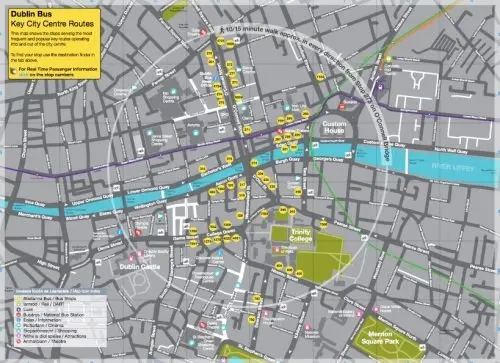
Dublin Bus operates an expansive network of routes traversing the city center and surrounding suburbs. Because the official website lacked a definitive policy statement regarding household pets, a formal inquiry was submitted to customer service.
The response, received on July 24, 2016, illuminated a decentralized enforcement model:
"All guide dogs and assistance dogs are permitted on all of Dublin Bus services however it is up to the discretion of the driver to decide whether any other dog is allowed to board the bus."
This discretionary model places the burden of responsibility squarely on the pet owner and the empathy or mood of the individual driver. Practical experience suggests that small dogs secured inside dedicated pet carriers are rarely challenged. Similarly, small dogs held securely in an owner’s arms enjoy a high probability of acceptance. However, larger leashed dogs represent a gamble, as boarding is entirely subject to the driver’s immediate assessment of passenger capacity, animal temperament, and potential disruption.
August 4, 2016: Clarifying Irish Rail and DART Regulations
Navigating the rail network requires distinguishing between the coastal DART lines, regional commuter trains, and long-distance intercity services. While Irish Rail publishes a clear policy for intercity routes, its applicability to the DART and suburban commuter lines remained unclear on corporate web portals.
An official query addressed to Irish Rail yielded a comprehensive clarification on August 4, 2016. The authority confirmed that the foundational rules governing intercity travel extend to the suburban and coastal networks:
"Small dogs can be carried free of charge in the passenger compartment of services provided they travel on the owners lap. Guide dogs and Assistance dogs are permitted to travel on all Iarnród Éireann services without restriction. Accompanied dogs, other than those described above, can only be conveyed on Intercity services in a Guards Van (non-passenger compartment) if available (e.g. Dublin/Cork and Dublin/Belfast services only). Charges will apply."
This clarification confirmed that small dogs sitting on laps travel seamlessly across the DART and commuter systems. However, it also underscored the logistical nightmare for owners of larger breeds, who must rely on the presence of a traditional Guards Van—a luggage and parcel carriage increasingly absent from modern rolling stock—and accept the distressing separation of traveling in a non-passenger compartment.
Supporting Context & Metrics: Mode-by-Mode Breakdown
Understanding the mechanics of Dublin’s transit infrastructure requires a granular look at each operator, their specific rules, and the operational metrics that shape their pet policies.
1. Dublin Bus: The Urban Network
- Coverage: Extensive core and suburban route network.
- Pet Access: Conditional and discretionary.
- Service Animals: Fully permitted without restriction.
- Pet Dogs: Permitted solely at the discretion of the vehicle driver.
- Best Practices: Small dogs in carriers or held securely in arms have the highest success rate. Larger dogs face unpredictable access.
2. LUAS Light Rail: The Strict Exclusions
- Coverage: Two distinct networks—the Red Line and Green Line—serving major urban corridors.
- Pet Access: Prohibited.
- Official Policy: "No animals are allowed on board with the exception of guide dogs."
- Impact: Pet owners living along the LUAS corridors must seek alternative bus routes or walking options, as light rail integration for companion animals remains entirely blocked.
3. DART and Commuter Rail (Iarnród Éireann)
- Coverage: Coastal corridors running from Howth and Malahide in the north to Greystones in the south (DART), supplemented by regional commuter lines.
- Pet Access: Friendly for small lap dogs; challenging for large breeds.
- Small Dogs: Permitted free of charge inside passenger compartments, provided they remain on the owner’s lap throughout the journey.
- Large Dogs: Restricted exclusively to Intercity services equipped with a Guards Van (such as Dublin-Cork and Dublin-Belfast routes), subject to additional fees and physical separation from the owner.
4. Bus Éireann: The Intercity Paradox
- Coverage: Long-distance coach services connecting Dublin to the rest of the republic.
- Pet Access: Prohibited for pets, despite branding irony.
- Note on Branding: Much like Greyhound lines in the United States, Bus Éireann utilizes an iconic hound logo. However, corporate guidelines explicitly state that the canine imagery does not translate to pet-friendly seating policies. Only certified assistance animals are permitted on board.
Official Statements and Institutional Perspectives
The divergence in pet travel regulations across Dublin reflects a broader philosophical debate within public transit administration: balancing passenger comfort, allergy management, and animal welfare against the growing demand for pet-inclusive urban mobility.
Representatives from public transit bodies consistently emphasize that the primary mandate of mass transit is the safe, efficient movement of human passengers. Consequently, accommodations for companion animals are frequently treated as secondary privileges rather than core service offerings.
- The Safety and Hygiene Argument: Operators maintaining strict bans, such as the LUAS management team, cite potential passenger allergies, limited floor space during peak commuting hours, and the unpredictability of animal behavior in high-density environments.
- The Discretionary Compromise: Dublin Bus’s reliance on driver discretion points to a pragmatic, decentralized approach. Rather than implementing a blanket ban or an unmanageable free-for-all, the system empowers front-line staff to assess real-time conditions—such as vehicle crowding—before granting boarding rights.
- The Infrastructure Constraint: Irish Rail’s policy regarding larger dogs highlights an infrastructural bottleneck. Modern high-speed rail designs prioritize passenger seating over freight and luggage space, rendering the traditional "Guards Van" obsolete on many routes. As a result, accommodating large dogs on intercity networks has become logistically prohibitive.
Future Outlook: Evolution of Pet-Friendly Transit in Dublin
As Dublin continues to expand as a modern, cosmopolitan European capital, urban planners face mounting pressure to modernize infrastructure in alignment with shifting lifestyle demographics. Pet ownership rates have surged, and urban residents increasingly view their companion animals as integral family members rather than backyard property.
Potential Policy Shifts on the Horizon
- LUAS Network Integration: While current regulations bar pets from light rail trams, transit advocates frequently point to continental European cities—such as Berlin, Vienna, and Paris—where dogs of all sizes are welcomed on metro and tram systems under conditions like leash use, muzzle requirements, or child-fare ticket purchases. As Dublin integrates its Red and Green LUAS lines and expands track capacity, public pressure for a modernized pet policy is expected to mount.
- Standardizing Bus Protocols: Moving away from the ambiguous "driver’s discretion" model toward a transparent, standardized framework would benefit both passengers and bus operators. Establishing clear rules—such as permitting leashed dogs during off-peak hours or requiring small carriers—would eliminate commuter anxiety and ensure uniform enforcement across the Dublin Bus fleet.
- Infrastructure Adaptation: For intercity rail services, the ongoing acquisition of new rolling stock presents an opportunity to reevaluate luggage and animal accommodation spaces, potentially offering designated pet-friendly carriages similar to those tested in other international rail markets.
Conclusion
Navigating Dublin with a dog requires patience, research, and flexibility. While small dog owners can utilize the DART, commuter trains, and select bus services with relative ease, owners of larger breeds must navigate a complex web of restrictions, exclusions, and infrastructural limitations. As urban mobility standards evolve, the hope remains that Dublin’s transit network will eventually transition from a fragmented "mixed bag" to a cohesive, uniformly pet-friendly system.