
Executive Overview
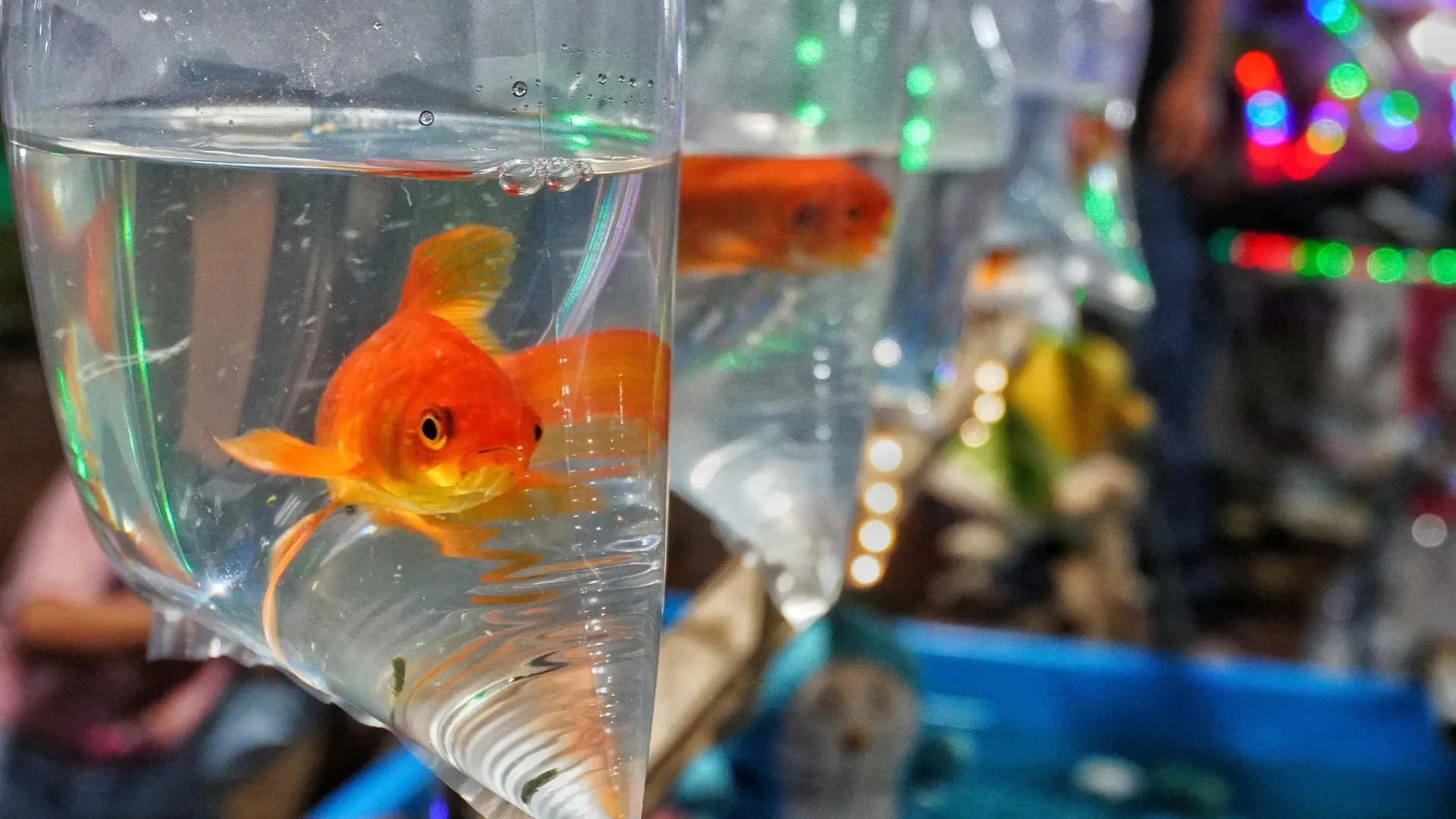
For millions of households worldwide, the humble goldfish (Carassius auratus) is the quintessential first pet. Often housed in small glass bowls, decorative garden ponds, or standard tabletop aquariums, these seemingly innocuous creatures are frequently viewed as gentle, low-maintenance companions. However, a groundbreaking, peer-reviewed study recently published in the Journal of Animal Ecology shatters this benign image. Conducted by an interdisciplinary team of researchers from The University of Toledo and the University of Missouri, the study provides the most robust experimental evidence to date regarding the hidden ecological perils of released or escaped goldfish.
According to the findings, when goldfish find their way into natural waterways—whether through intentional dumping by well-meaning pet owners or accidental escapes during heavy flooding events—they do not merely survive; they thrive at the expense of native flora and fauna. More alarming still, the research reveals that these invasive fish can trigger a "regime shift" in freshwater lakes, pushing aquatic ecosystems across irreversible ecological tipping points into degraded, turbid, and biologically impoverished states.
The implications of this study extend far beyond academic circles. They serve as an urgent clarion call for pet owners, natural resource managers, policymakers, and environmental agencies across the globe. As the global pet trade continues to facilitate the unprecedented movement of aquatic species across continents, the goldfish emerges not as a harmless domestic pet, but as a high-priority invasive species capable of inflicting widespread, long-lasting damage on fragile freshwater habitats.
Detailed Chronology and Experimental Methodology
To understand how a domestic pet can transform into an ecological tyrant, a detailed look at the methodology behind the Toledo-Missouri study is required. For decades, anecdotal reports have suggested that discarded goldfish grow to massive sizes and disrupt local ponds and lakes. Yet, definitive, empirical scientific proof isolating the specific impacts of goldfish from other environmental stressors has remained surprisingly scarce.
To bridge this critical knowledge gap, Dr. William Hintz, associate professor in UToledo’s Department of Environmental Sciences and Lake Erie Center, alongside Hannah Barrett and Dr. Rick Relyea of the University of Missouri, designed a sophisticated, large-scale experiment.
Replicating Real-World Complexity: The Mesocosm Approach
Field observations in natural lakes are frequently confounded by shifting weather patterns, varying pollutant inputs, and complex, uncontrolled food webs. To overcome these variables, the research team utilized large outdoor freshwater mesocosms. These artificial enclosures were meticulously engineered to mimic real-world lake conditions, bridging the gap between small laboratory aquariums and uncontrollable natural water bodies.
By employing outdoor mesocosms, the researchers could precisely control the introduction of species while allowing natural ecological processes—such as sunlight exposure, temperature fluctuations, and primary productivity—to unfold naturally.
Testing Across Diverse Trophic States
Freshwater lakes are not uniform; they vary dramatically in their nutrient profiles. To ensure the study’s findings were broadly applicable, the researchers tested the effects of goldfish across two distinct freshwater conditions:
- Oligotrophic Waters: Nutrient-poor environments characterized by clear water, low primary productivity, and limited plant nutrients.
- Eutrophic Waters: Nutrient-rich environments typically marked by high concentrations of phosphorus and nitrogen, frequent algal blooms, and high biological productivity.
Across both oligotrophic and eutrophic experimental lakes, the introduction of goldfish Carassius auratus wreaked havoc. The team used a combination of additive and substitutive experimental designs. This advanced statistical and biological approach allowed the investigators to successfully separate the specific ecological impacts directly attributable to goldfish from the general effects of simply having a higher overall abundance of fish in a given system.
The results were unequivocal: while minor aquatic vegetation changes could occasionally be correlated with general fish abundance, the most severe, systemic ecological degradation was directly and exclusively linked to the presence of goldfish.
Supporting Context, Metrics, and Mechanisms of Destruction
The transformation of a delicate ecosystem into a degraded state does not happen by accident; it is driven by specific biological and behavioral characteristics inherent to goldfish. When released into the wild, Carassius auratus unleash a cascading series of negative impacts on their new environments.
The Mechanism of Habitat Degradation
When goldfish escape or are dumped into open waters, they undergo a rapid physiological and morphological change. Unshackled from the spatial constraints of a tank or small pond, and with access to abundant natural food sources, goldfish can grow exponentially into surprisingly large specimens.
As these fish forage, they engage in a behavior known as "benthivorous feeding." Goldfish actively root through benthic (bottom-dwelling) lake sediments in search of invertebrates, plant roots, and organic matter. This constant stirring of the sediment unleashes a chain reaction:
- Turbidity Spikes: Sediment particles are suspended into the water column, dramatically reducing water clarity and blocking sunlight essential for native submerged aquatic vegetation.
- Nutrient Release: Stirring up the bottom mud releases locked-up nutrients like phosphorus and nitrogen back into the water, fueling explosive, unsightly, and sometimes toxic algal blooms.
- Prey Depletion: Goldfish consume massive quantities of native macroinvertebrates and zooplankton, stripping the food web of organisms that naturally keep algae in check.
- Direct Competition: Native fish species find themselves directly outcompeted for food, spawning sites, and shelter, leading to population declines across indigenous aquatic communities.
The Threat of the "Regime Shift"
Perhaps the most chilling concept highlighted in the research is the "regime shift." In ecology, a regime shift occurs when an ecosystem pushed beyond its tolerance threshold reorganizes into a fundamentally different state.
In a healthy lake, clear water, abundant aquatic plants, and a balanced web of predators and prey maintain stability. However, the relentless bioturbation and nutrient-loading caused by invasive goldfish erode this resilience. Once the tipping point is crossed, the lake flips into a turbid, algae-dominated state.
Crucially, the study emphasizes that restoring an ecosystem after a regime shift is exceptionally difficult, highly complex, and financially prohibitive for local municipalities and conservation agencies. Preventing the initial introduction of the species remains vastly more effective than attempting remediation down the line.
Official Statements and Expert Perspectives
The collaborative nature of the study brought together leading experts in environmental science, aquatic ecology, and freshwater conservation. Their collective insights underscore the gravity of the findings and point toward necessary shifts in public policy and personal responsibility.
Dr. William Hintz, lead investigator of the study and associate professor at The University of Toledo, did not mince words when discussing the motivations behind the research and its primary takeaway for the general public:
"It is critically important to inform the public that their pets can become pests that will harm freshwater ecosystems. The evidence is now clear — releasing a goldfish into the wild might be seen as an act of kindness, but it can turn into a major ecological threat."
Dr. Hintz emphasizes that the cultural perception of releasing a pet—often framed as "setting it free" to live a natural life—is profoundly misguided. Rather than granting the animal freedom, the act introduces a biological stressor that destabilizes entire aquatic networks.
Echoing these concerns, co-author Dr. Rick Relyea—professor in the University of Missouri College of Agriculture, Food and Natural Resources and director of Mizzou’s Johnny Morris Institute of Fisheries, Wetlands and Aquatic Systems—highlighted the sheer physical adaptability and disruptive behavior of the species:
"If goldfish are released into the wild, they rapidly grow into very large fish that stir up lake sediments, consume large numbers of prey, and compete with native fish."
Relyea’s remarks point to a core challenge in managing invasive species: the goldfish’s remarkable hardiness. Tolerant of low oxygen levels, extreme temperature fluctuations, and poor water quality, Carassius auratus can survive harsh winters and polluted waters that would easily kill native sportfish and sensitive aquatic organisms.
Future Outlook, Recommendations, and Mitigation Strategies
With the publication of this definitive research, conservationists and natural resource managers are calling for an immediate, multi-pronged approach to mitigate the threat posed by invasive goldfish. Left unchecked, growing feral populations in lakes, rivers, and stormwater retention ponds threaten to degrade urban and rural watersheds alike.
1. Strengthening Public Education and Pet Industry Accountability
The root cause of the goldfish invasion crisis is human behavior. Consequently, long-term solutions must begin at the point of purchase.
- Pet Store Partnerships: Retailers and pet shops should provide explicit educational materials at the time of sale, informing buyers of the long-term lifespan and ultimate potential size of goldfish, as well as the strict illegality and environmental danger of releasing pets into natural waterways.
- Community Outreach: Municipalities and local conservation authorities must launch targeted awareness campaigns debunking the myth that releasing a fish is a humane act.
2. Providing Safe Surrender Alternatives
Pet owners who can no longer care for their goldfish need accessible, practical alternatives to dumping them in local ponds. Researchers recommend:
- Returning unwanted fish to local pet stores, many of which will accept healthy surrenders.
- Connecting with local aquarium hobbyist clubs or online community networks to find willing adopters.
- Consulting state or provincial wildlife authorities regarding authorized disposal protocols for unwanted exotic pets.
3. Prioritizing Early Detection and Rapid Response (EDRR)
Natural resource agencies must elevate goldfish on priority invasive species lists. Traditional management strategies often focus on species like zebra mussels, Asian carp, or Eurasian watermilfoil, while ornamental fish receive less regulatory scrutiny.
- Monitoring Programs: Agencies should implement routine electrofishing and environmental DNA (eDNA) sampling in high-risk water bodies, such as urban park ponds and lakes adjacent to residential developments.
- Rapid Removal: When feral populations are detected early, aggressive eradication efforts—such as netting or chemical treatments in enclosed water bodies—can prevent populations from expanding into interconnected river systems.
Conclusion
The research from The University of Toledo and the University of Missouri fundamentally changes our understanding of Carassius auratus. No longer can the goldfish be viewed purely as a harmless domestic ornament. As global trade continues to blur geographic boundaries and introduce non-native species into fragile habitats, individual actions—such as the simple decision of how to part with an unwanted pet—carry profound ecological consequences. By heeding the warnings of Dr. Hintz, Dr. Relyea, and their colleagues, the public and policymakers can work together to protect freshwater ecosystems from the hidden perils swimming quietly beneath the surface.