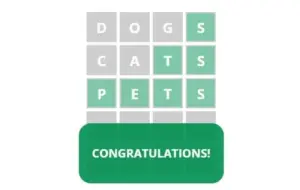

The landscape of professional continuing education and cognitive engagement for veterinary practitioners has undergone a subtle yet significant transformation. In an era dominated by high-stakes clinical burdens, diagnostic complexities, and the relentless emotional toll of veterinary medicine, innovative platforms are emerging to bridge the gap between rigorous scientific literacy and restorative recreation. At the forefront of this micro-movement is WordRX, a specialized, puzzle-based lexical application engineered exclusively for the veterinary community.
Designed to test, preserve, and expand clinical vocabulary—ranging from ubiquitous everyday clinic terminology to obscure anatomical curiosities acquired during rigorous years in veterinary school—WordRX operates at the intersection of professional development and gamified recreation. While digital word games have saturated the general consumer market since the viral explosion of platforms like Wordle, the veterinary sector has long lacked a tailored intellectual outlet that resonates specifically with the linguistic idiosyncrasies of animal healthcare professionals.
This article provides an exhaustive examination of WordRX, analyzing its pedagogical underpinnings, the psychological benefits of lexical retention games within high-stress medical environments, and the mechanics of its gameplay. Furthermore, we explore the broader implications of gamified learning within veterinary medicine, the historical evolution of medical terminology, and the future outlook for digital tools designed to support the mental acuity and operational readiness of veterinarians, veterinary technicians, and clinical researchers alike.
Detailed Chronology: The Genesis and Evolution of Veterinary Lexical Gamification
To understand the advent of WordRX, one must trace the convergence of digital gaming mechanics, mobile learning initiatives, and the unique structural demands of modern veterinary education and practice.
Phase I: The Pre-Digital and Traditional Memorization Era (Pre-2010s)
For generations, the acquisition of veterinary terminology was an arduous, analog endeavor. Veterinary students relied heavily on exhaustive flashcards, Latin and Greek root dictionaries, and massive tomes like Dorland’s Illustrated Medical Dictionary or specialized veterinary equivalents. The learning process was entirely hierarchical and academic, designed for high-stress board examinations such as the North American Veterinary Licensing Examination (NAVLE). Once practitioners entered the clinic, this vast repository of technical language was continuously reinforced through daily application—yet ironically, specialized terminology outside a practitioner’s specific sub-specialty (such as large animal surgery versus small animal internal medicine) quickly atrophied.
Phase II: The Gamification Wave and Mobile Micro-Learning (2015–2020)
As smartphones permeated clinical spaces, medical educators began experimenting with micro-learning applications. Flashcard apps like Anki and Quizlet gained immense popularity among veterinary students. However, these tools remained strictly utilitarian, lacking the psychological pull of intrinsic entertainment. The broader tech landscape was revolutionized by the viral success of daily web-based word puzzles, proving that adults craved low-friction, high-reward intellectual challenges that could be completed in under five minutes.
Phase III: The Conceptualization and Launch of WordRX (2021–Present)
Recognizing a distinct void in the market for veterinary-specific cognitive micro-breaks, educational developers and veterinary professionals collaborated to conceptualize WordRX. Moving away from generic vocabulary lists, the platform was built around a curated database of terms spanning parasitology, pharmacology, anatomy, surgical instruments, and rare pathological phenomena.
The rollout was intentionally low-pressure: developers explicitly marketed WordRX not as a high-stakes proficiency test, but as a mental palette cleanser. Over successive iterations, the puzzle engine was refined to incorporate intelligent hint systems, dynamic difficulty scaling based on word rarity, and a streamlined interface accessible across desktop and mobile browsers during hectic clinical shifts.
Supporting Context & Metrics: The Cognitive Demands of Veterinary Practice
To fully appreciate the utility of a tool like WordRX, one must examine the cognitive ecosystem of the modern veterinary clinic. Veterinary medicine is characterized by a unique combination of rapid decision-making, emotional labor, and immense multi-disciplinary vocabulary retention.
The Linguistic Burden of Veterinary Practice
Unlike human medicine, where specialists generally narrow their communicative scope to a single species, general practitioners in veterinary medicine must navigate an astonishingly diverse lexical landscape. A single morning in a mixed-animal or small-animal clinic might require a veterinarian to discuss:
- Pharmacology: Differentiating between pharmacokinetic profiles of various non-steroidal anti-inflammatory drugs (NSAIDs) across feline, canine, and avian patients.
- Parasitology: Identifying the morphological distinctions between various tick-borne pathogens or gastrointestinal helminths.
- Anatomy: Navigating complex anatomical nomenclature that varies dramatically between species (e.g., equine distal limb anatomy versus canine musculoskeletal structures).
- Pathology: Describing neoplastic growths, dermatological lesions, and hematological abnormalities using precise clinical terminology during client communication and inter-clinic referrals.
Cognitive Fatigue and Micro-Interventions
Studies in veterinary psychology consistently highlight high rates of burnout, compassion fatigue, and cognitive exhaustion. Practitioners are frequently subjected to fragmented work environments characterized by constant interruptions, emergency triage, and emotionally charged euthanasia discussions.
In high-stress cognitive environments, the brain’s executive functioning resources become severely depleted. Educational psychologists have long championed the concept of active micro-breaks—brief, non-taxing cognitive diversions that require mental focus entirely detached from immediate stressors. WordRX functions precisely as this type of micro-intervention. By engaging the brain’s linguistic processing centers with familiar yet stimulating clinical terms, users experience a brief psychological shift that interrupts the cycle of clinical rumination without inducing mental fatigue.
Official Mechanics: How to Play WordRX
WordRX is engineered for intuitive accessibility, requiring no lengthy onboarding or instructional manuals. Designed with a clean, distraction-free interface, the game challenges users to deduce a hidden veterinary-related word within a restricted number of sequential attempts.
[Target Word Selection] ---> [Initial Clinical Guess] ---> [Color-Coded Feedback] ---> [Iterative Deduction] ---> [Resolution]The Core Rules of Engagement
- The Veterinary Lexicon Database: Every target word featured in WordRX is strictly drawn from the lexicon of veterinary science. Players will encounter terms ranging from standard clinical vocabulary (e.g., SUTURE, TARSUS, BOLUS) to specialized terminology picked up in vet school, industry discussions, or advanced patient exams (e.g., PYOMETRA, ZOONOSIS, CHYLOTHORAX).
- Attempt Limitations: Players are granted a finite number of guesses (typically six) to identify the correct term. This constraint transforms a simple vocabulary check into a strategic puzzle where every letter placement matters.
- Color-Coded Feedback Matrix:
- Green: Indicates that a letter is correct and placed in the exact right position within the target word.
- Yellow: Indicates that the guessed letter is present within the target word, but currently placed in the incorrect position.
- Gray: Indicates that the letter does not appear anywhere within the target word, allowing the user to immediately eliminate possibilities.
- Deduction and Refinement: Using the iterative feedback provided by each color-coded row, players narrow down the phonetic and morphological possibilities. The game encourages clinical intuition—asking players to recall anatomical prefixes, suffixes, and common pharmacological endings (such as -caine, -mab, or -azole).
Expert Perspectives and Industry Insights
While WordRX is intentionally positioned as a lighthearted recreational tool rather than a formal continuing education (CE) accredited course, educational specialists and veterinary professionals have weighed in on its latent benefits for the profession.
Dr. Elena Vance, a veterinary educator and clinical communication specialist, notes:
"We often underestimate the power of passive language preservation. When veterinarians step out of school, their active vocabulary narrows to match their specific clinical caseload. Tools like WordRX playfully force practitioners to reactivate unused neural pathways associated with comparative anatomy, rare parasitology, and pharmacology. It keeps the broader language of our profession alive in the back of our minds."
Furthermore, clinical psychologists observing healthcare workplace culture emphasize the importance of destigmatizing downtime.
"In veterinary medicine, there is a pervasive cultural expectation of relentless productivity," explains industrial-organizational psychologist Marcus Chen. "When staff members take a break, they often feel guilty if they aren’t studying medical journals or catching up on administrative tasks. WordRX offers a brilliant psychological workaround: it feels like play, but it honors their professional identity. It is intellectually stimulating without being burdensome."
Veterinary technicians and support staff have similarly embraced the platform. Because veterinary teams operate as highly integrated units where cross-departmental communication is vital, understanding complex clinical terminology empowers technicians, receptionists, and veterinary assistants to communicate more fluently with both veterinarians and pet owners.
Future Outlook: The Next Generation of Veterinary Cognitive Tools
As digital health technologies and professional wellness initiatives continue to mature, the trajectory of platforms like WordRX points toward broader integration within veterinary ecosystems.
1. Curated Specialty Modules
Future iterations of veterinary lexical games are expected to introduce specialized thematic modules. Practitioners may soon be able to select specific difficulty tracks tailored to their distinct fields of expertise—such as Equine Practice, Small Animal Surgery, Exotic & Zoo Animal Medicine, or Veterinary Pathology. This modular expansion will allow users to either reinforce their daily clinical focus or venture outside their comfort zones to explore unfamiliar veterinary disciplines.
2. Integration into Veterinary Academic Curriculums
Forward-thinking veterinary colleges are beginning to explore how gamified micro-learning can supplement traditional pedagogy. By embedding low-stakes vocabulary challenges into student portal systems or mobile companion apps, academic institutions can help pre-clinical students master the daunting volume of anatomical and pharmacological terminology required for board exams without inducing severe academic burnout.
3. Community Building and Collaborative Challenges
The social dimension of digital word puzzles remains one of their most powerful engagement drivers. Future developments for WordRX may feature collaborative or comparative leaderboard metrics, allowing veterinary clinics to form internal teams, compete against peer practices across the globe, and foster a sense of shared community across geographic boundaries. In a profession historically plagued by isolation, even a lighthearted daily word game can serve as a connective tissue uniting veterinary professionals worldwide.
Conclusion
WordRX represents a harmonious convergence of professional pride, linguistic curiosity, and mindful recreation. By distilling the rich, complex, and often esoteric language of veterinary medicine into an engaging, five-minute daily puzzle, it offers practitioners a much-needed mental respite that honors their rigorous academic backgrounds. Whether used as a morning brain-teaser over coffee, a quick mental reset between surgical procedures, or a collaborative team challenge in the clinic breakroom, WordRX ensures that the vibrant vocabulary of veterinary medicine remains sharp, active, and celebrated.